



We didn't plan to attend a funeral
We drove to Lichfield to visit the second part of The Longest Yarn exhibition, which was on show in the Cathedral until the end of the month. Since we were in Staffordshire last month, we’ve been thinking that we’d like to visit the city, so when I spotted the poster for the show, we agreed, it was a must do.
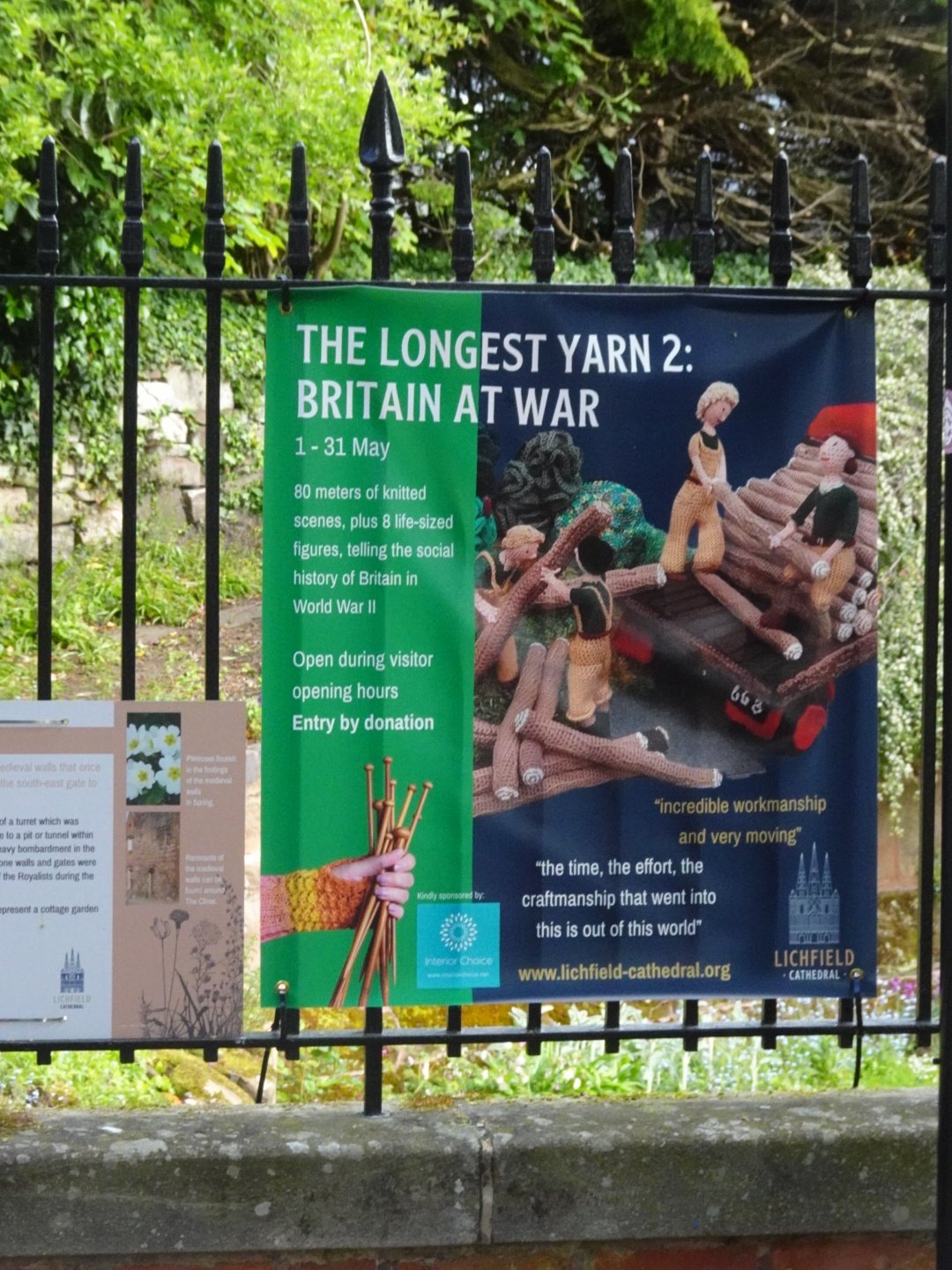
You may recall my visit to the first part of The Longest Yarn in September 2024. I was enchanted by the story and, of course, by the craftsmanship and creativity involved. When I read there was to be a “part two” I looked out for it and was glad to see it installed now about two hours drive from here.
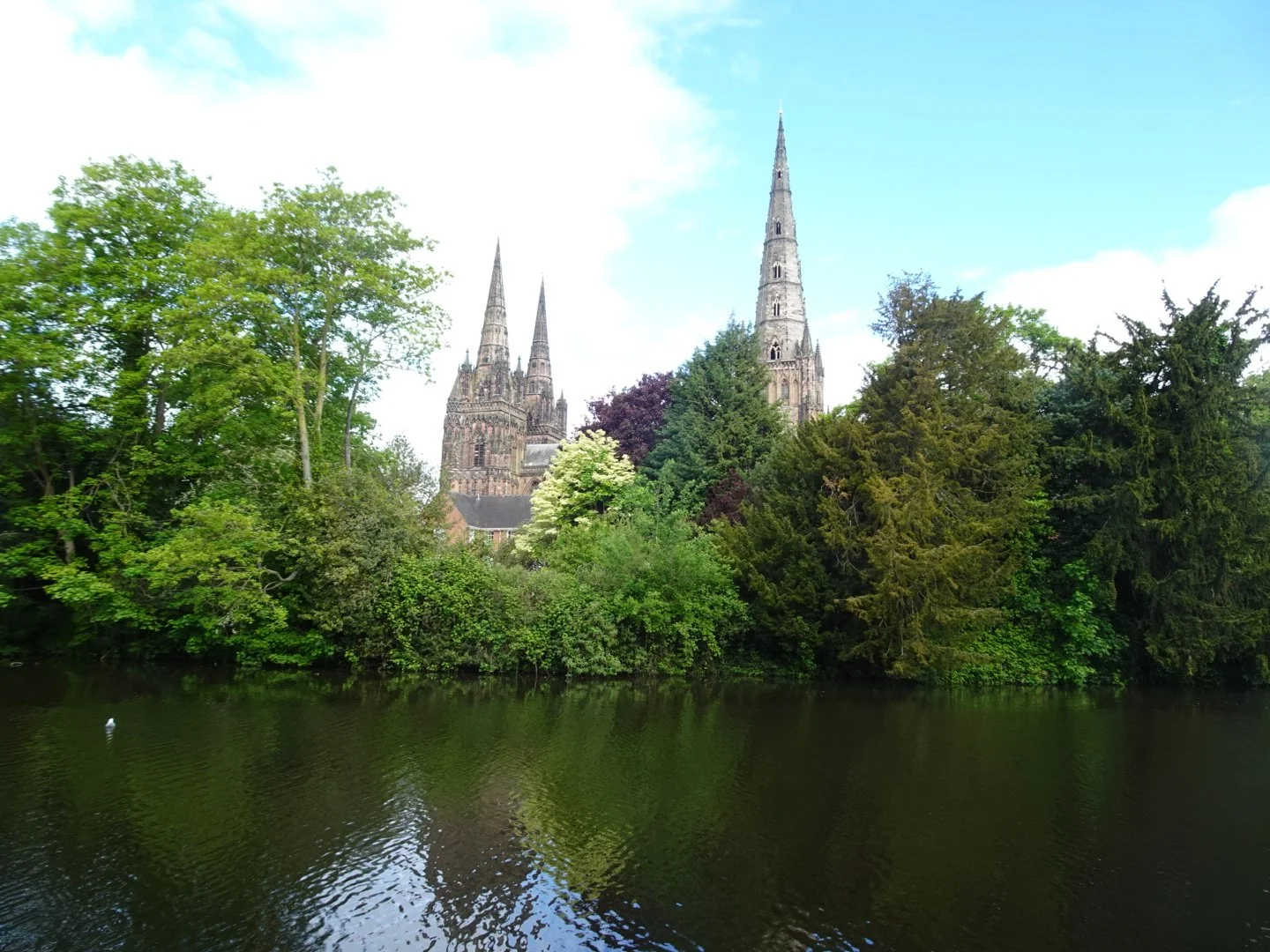
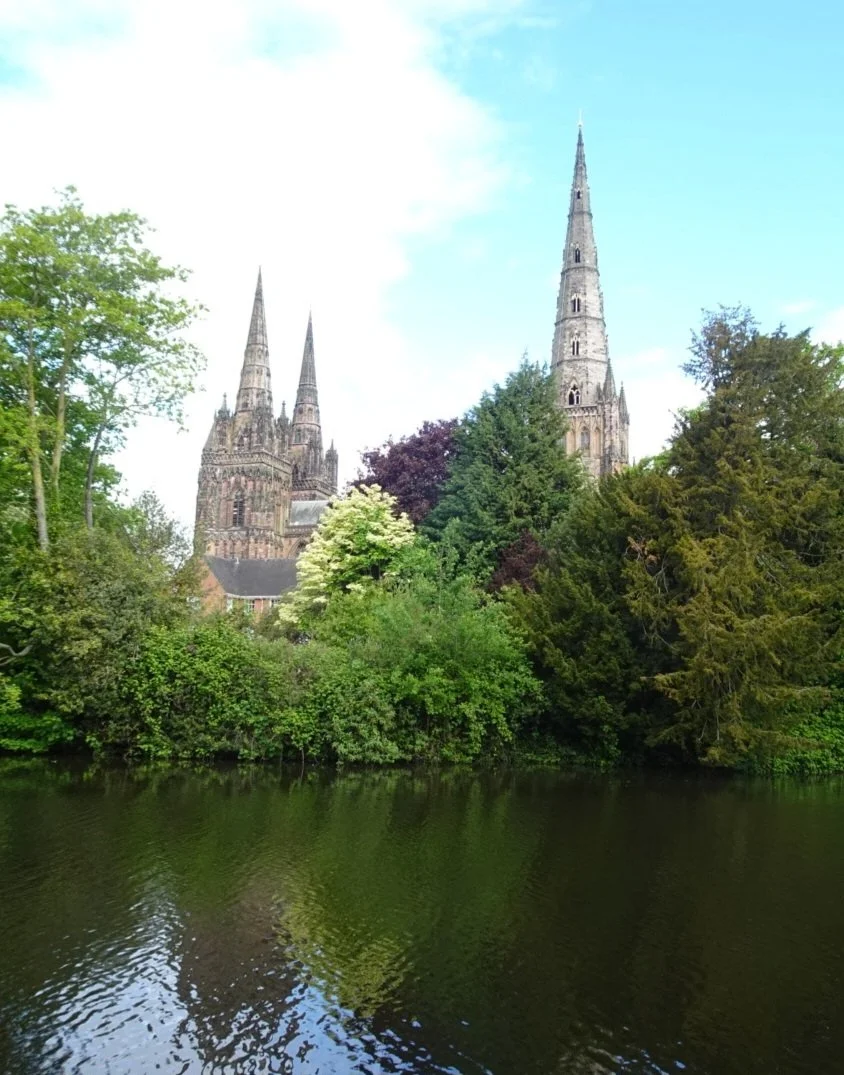
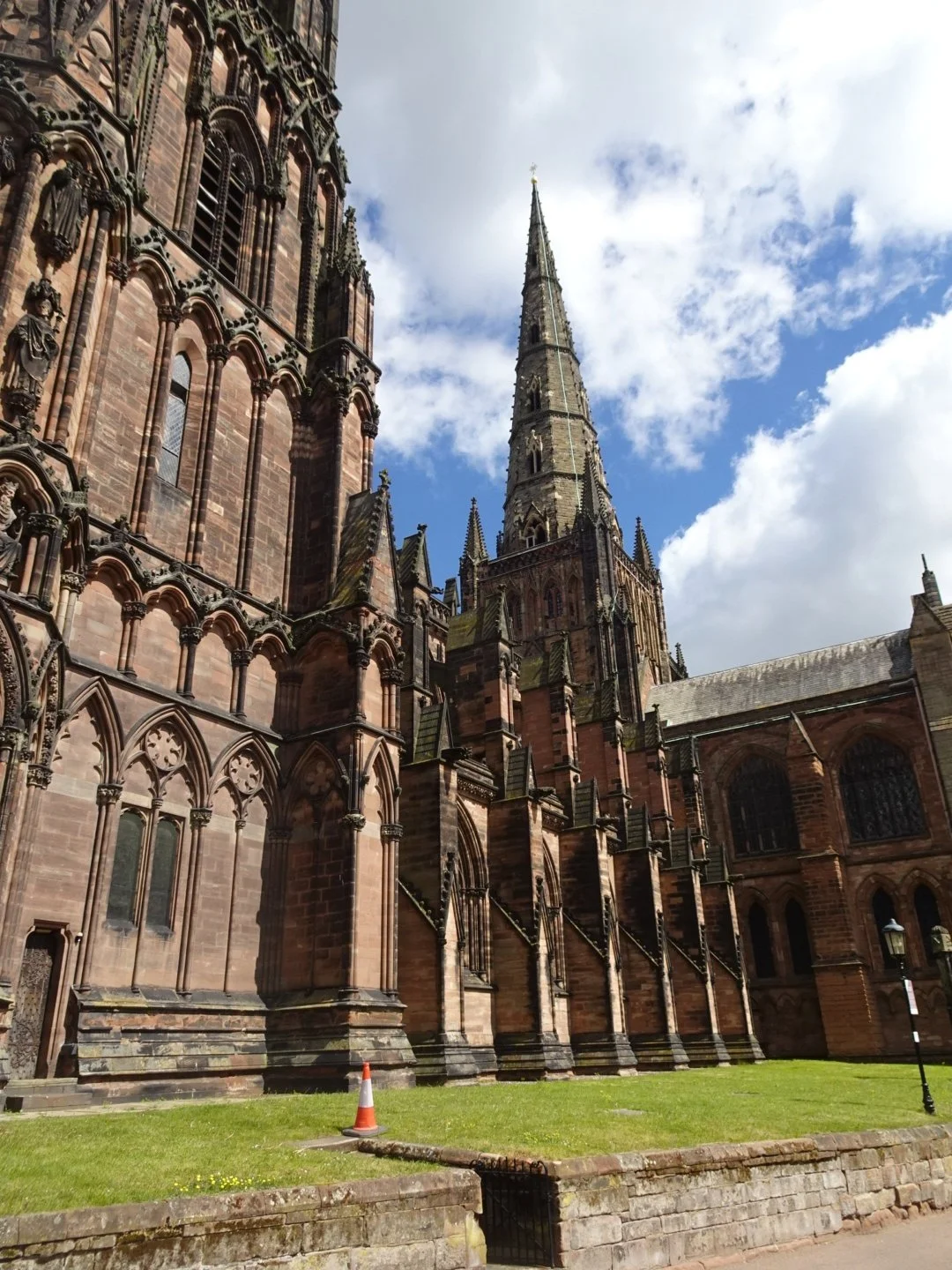
Lichfield Cathedral’s distinctive spires were visible from the car park and we enjoyed the beautiful view as we walked to it along the Minster Pool Walk.
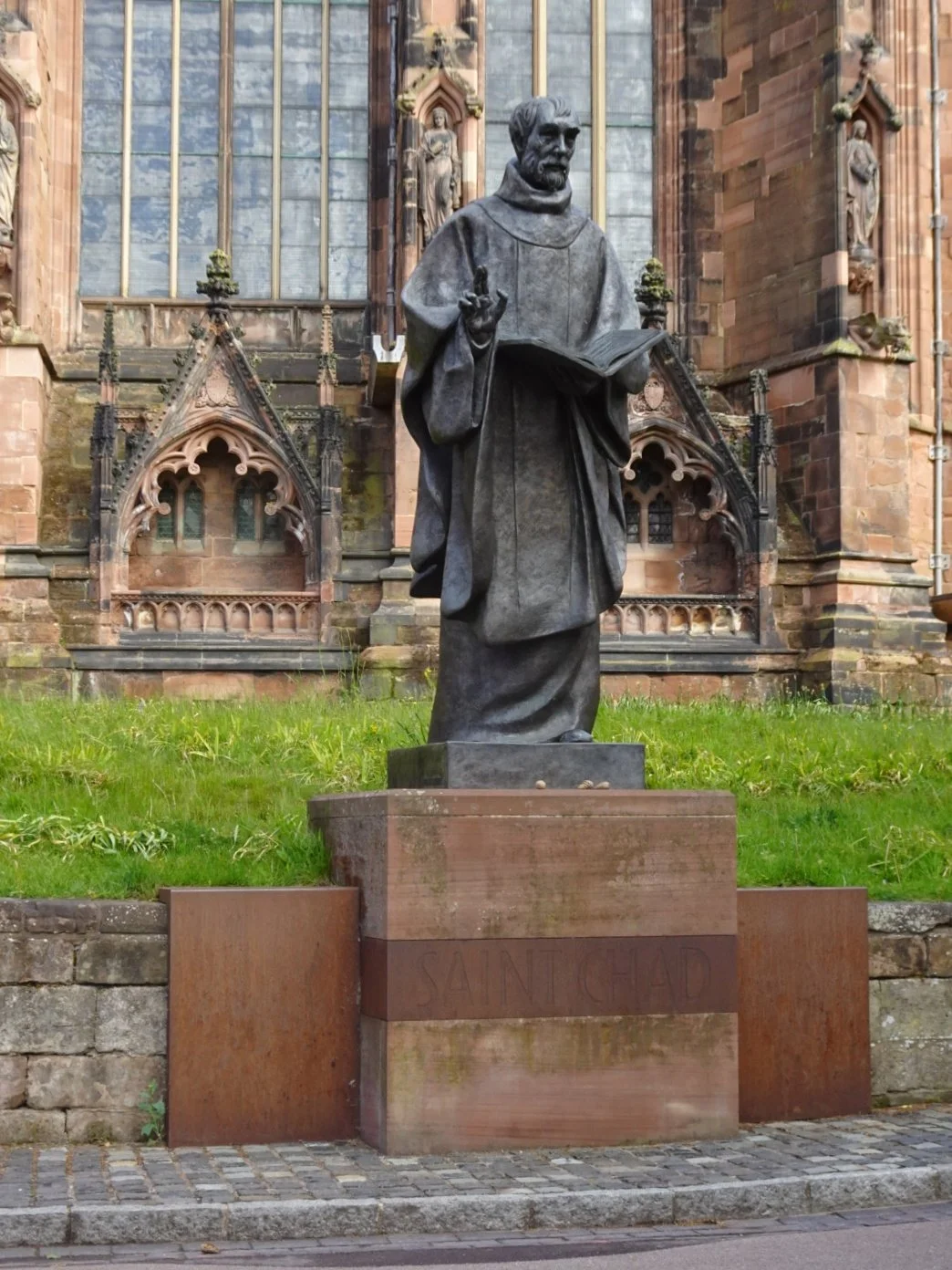
Turning into the Cathedral Close, the first sight was the statue of St Chad, the Saint and Bishop to whom the Cathedral is dedicated.
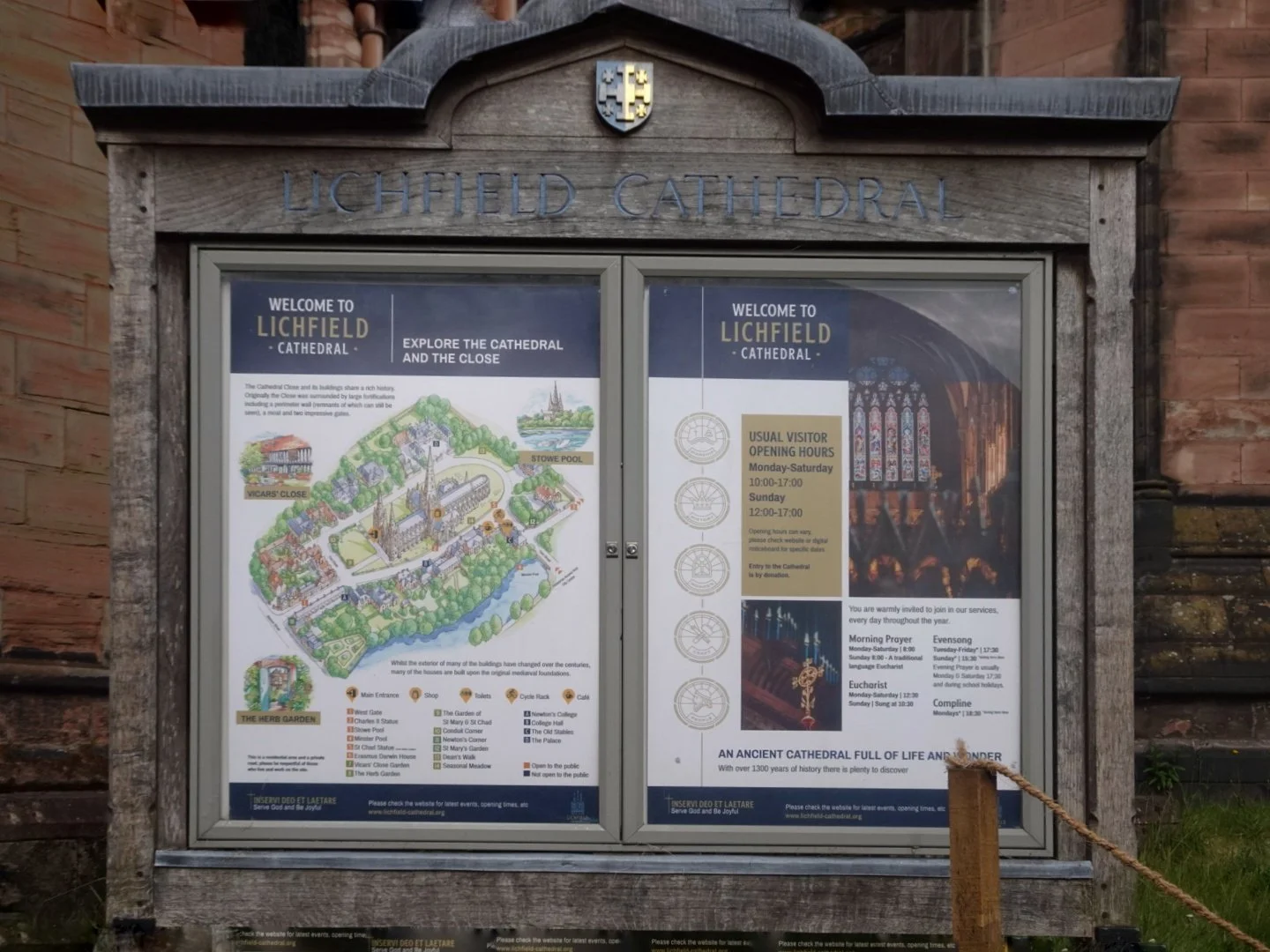
We had oodles of time before the exhibition opened, but my memory of the queue to see the first part in Southwell was strong enough to persuade us to arrive early! So we dawdled a bit, looking around and taking photos as we looked for the entrance. As we did, we noticed several smartly dressed gentlemen here too, possibly dressed for a funeral? They seemed to be going in through the Choir, but looking at the plan here on the board persuaded us that we needed to head on in the direction we were going.
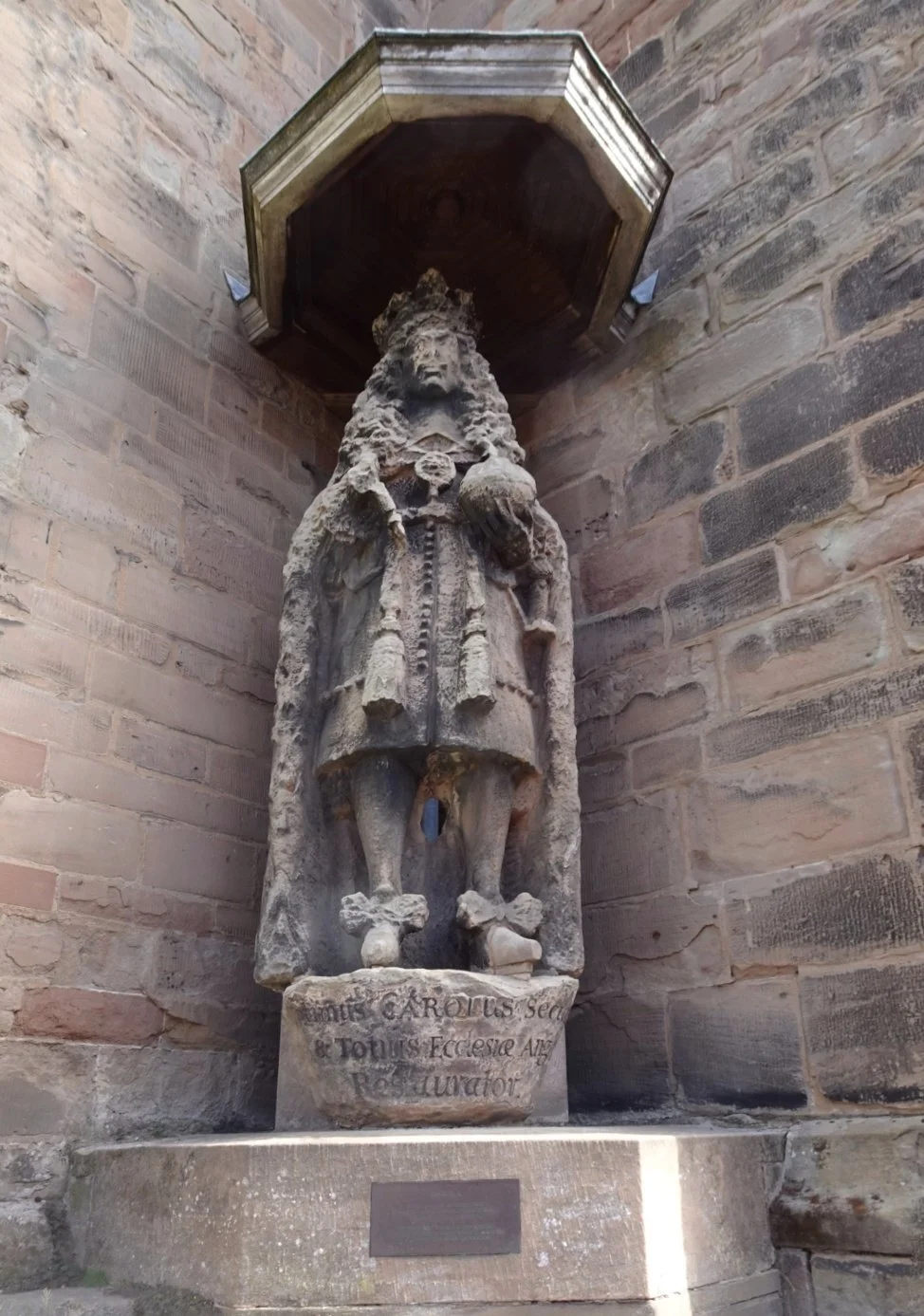
As we did, we passed by another striking monument, this one to Charles II, heavily eroded from 300 years of English weather! He’s commemorated having contributed to the restoration of the cathedral after the Civil War. The brass plaque explains that he “gave money and timber towards the repair of this cathedral”.
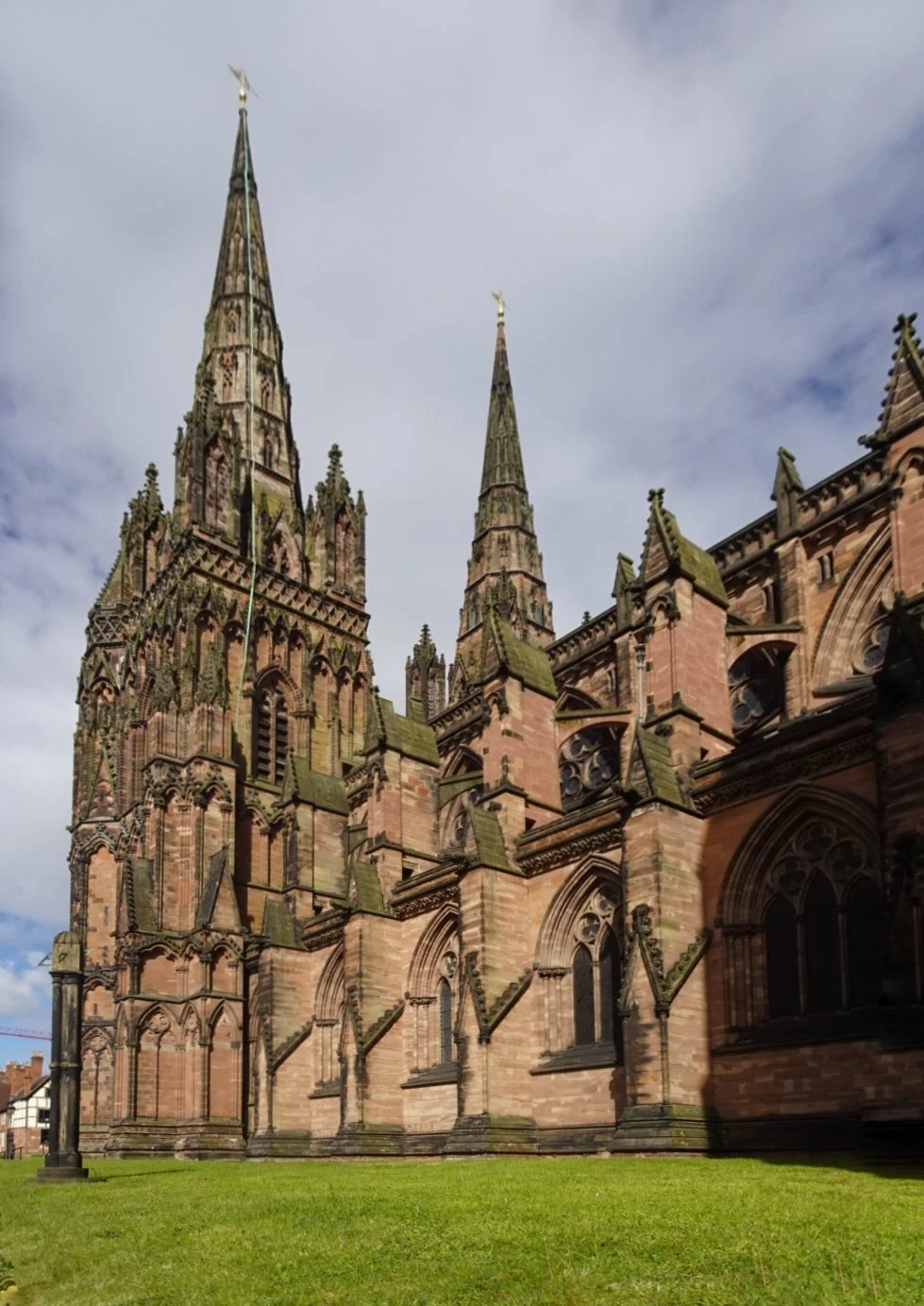
The rose coloured sandstone is so distinctive and looked lovely in the sunshine. We were glad to have some time to look around and didn’t feel we need rush on inside.
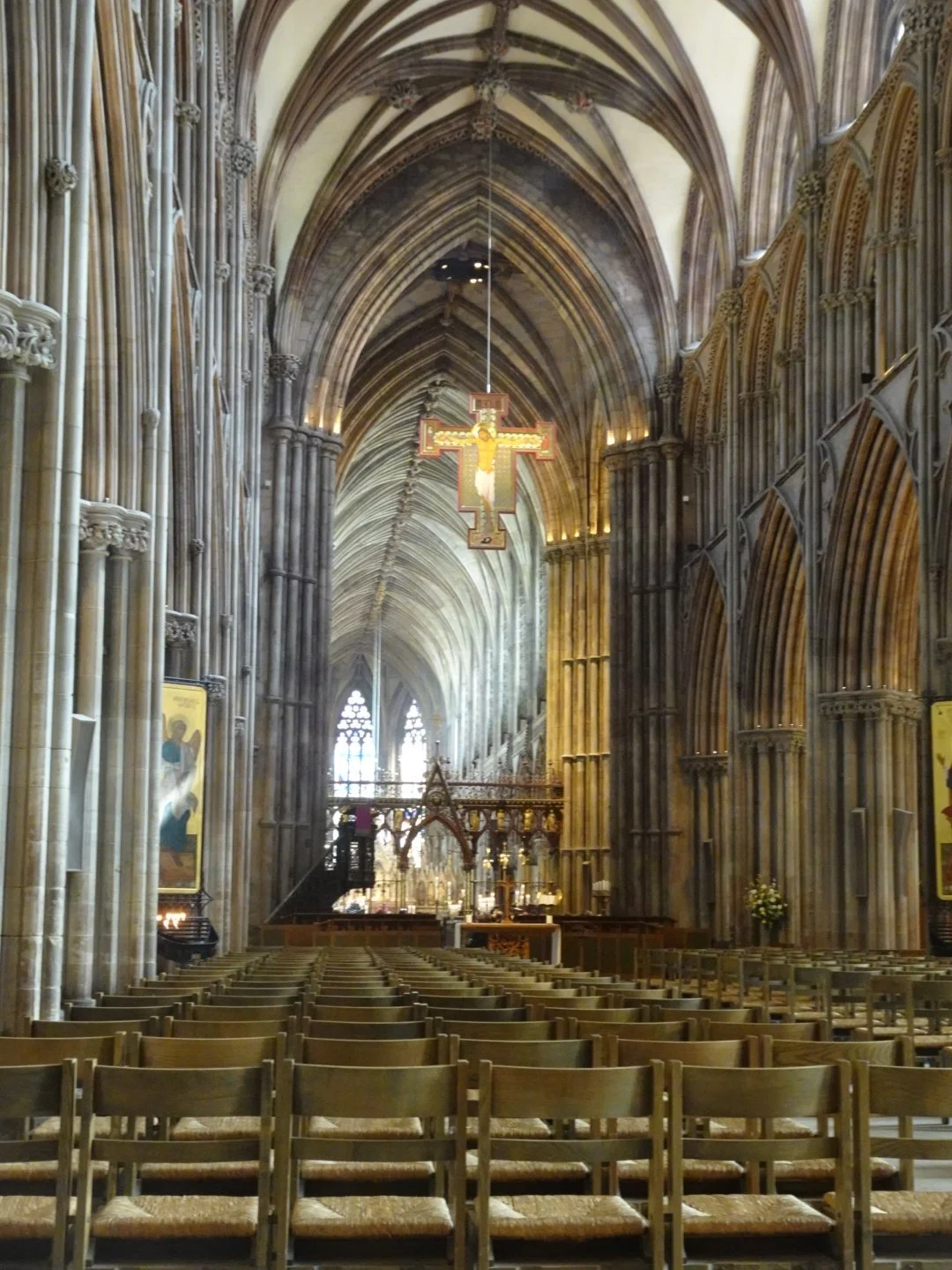
When we did venture in through the West Door however, we were greeted with a magnificent sight - and a gentleman steward who asked “are you here for the funeral?”
“Errrmmm, no,” as we looked around to check that we’d actually come to the right place. Thankfully there was one of the posters alongside a knitted figure. “We’ve come to see the exhibition”.
In the next five minutes we learned there was a funeral taking place in the Cathedral this morning and, having checked the exhibition website, that it wouldn’t open until 11.15am rather than the 10am we had understood.
Aaah. Then perhaps we would sit here at the back and simply wait, for after all, there could hardly be a more attractive and interesting place to spend an hour, could there? The Gentleman Steward agreed and was happy for us to sit like two church mice, making no fuss or sound between us.
And that was how we learned about local farmer Roy and his life (though his sister called him Sunny Jim). The music and the eulogies were lovely, he was clearly a well loved man who played an important part in both his family and his community, one role being a steward of this Cathedral. He’d died aged 91 and we felt quite privileged to have been present at his funeral. When the final hymn was announced as Jerusalem, a tear might well have rolled down my cheek.
A few minutes later, the Cathedral emptied and we were shown to the exhibition entrance. No queue at all - of course.
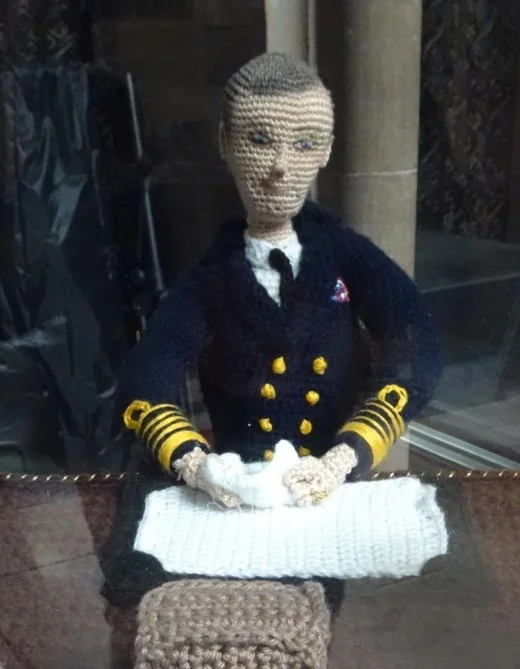
The theme of this exhibition was “Britain at War” and once again, there were eighty glass cases positioned on top of their travelling boxes. We began with the King’s speech and declaration of war.
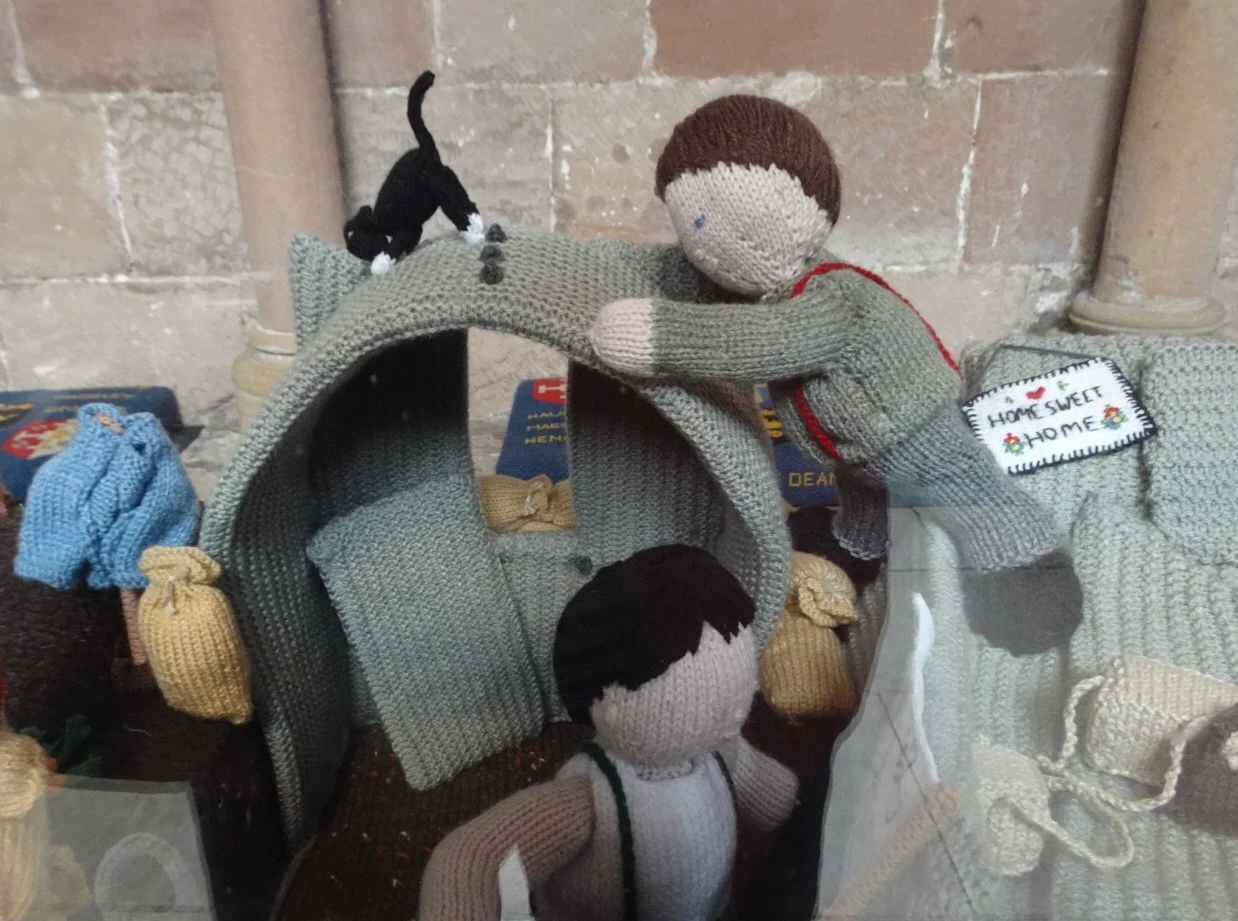
My first impression was a little less enthusiastic than in Southwell, for I knew what to expect and made immediate comparisions. Not a good idea! The vignettes I remembered from Southwell were those which made the greatest impression of course and I’d forgotten the others. Here, not all the figures were on the same scale and some were larger, which made them more doll-like and in some cases a bit lumpy. The light wasn’t so good for taking photos and there were a lot of reflections, but we enjoyed working our way through the stories of taping up the windows and learning to use gas masks. Above is the scene of the delivery of Anderson shelters (named after the Home Secretary of the time), which people built into their gardens for safety and survival.
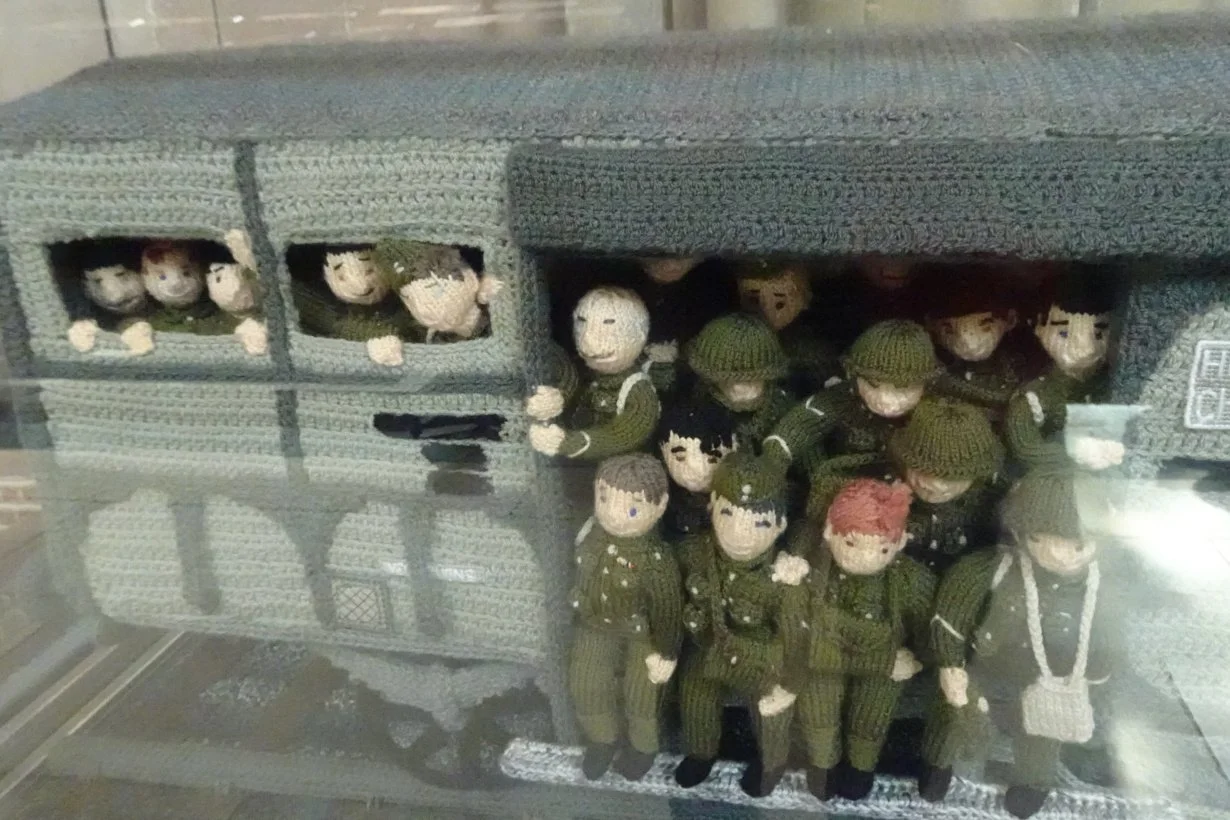
Soon, however, we were captivated by a troop of small figures, each one different, filled with character and beautifully made.
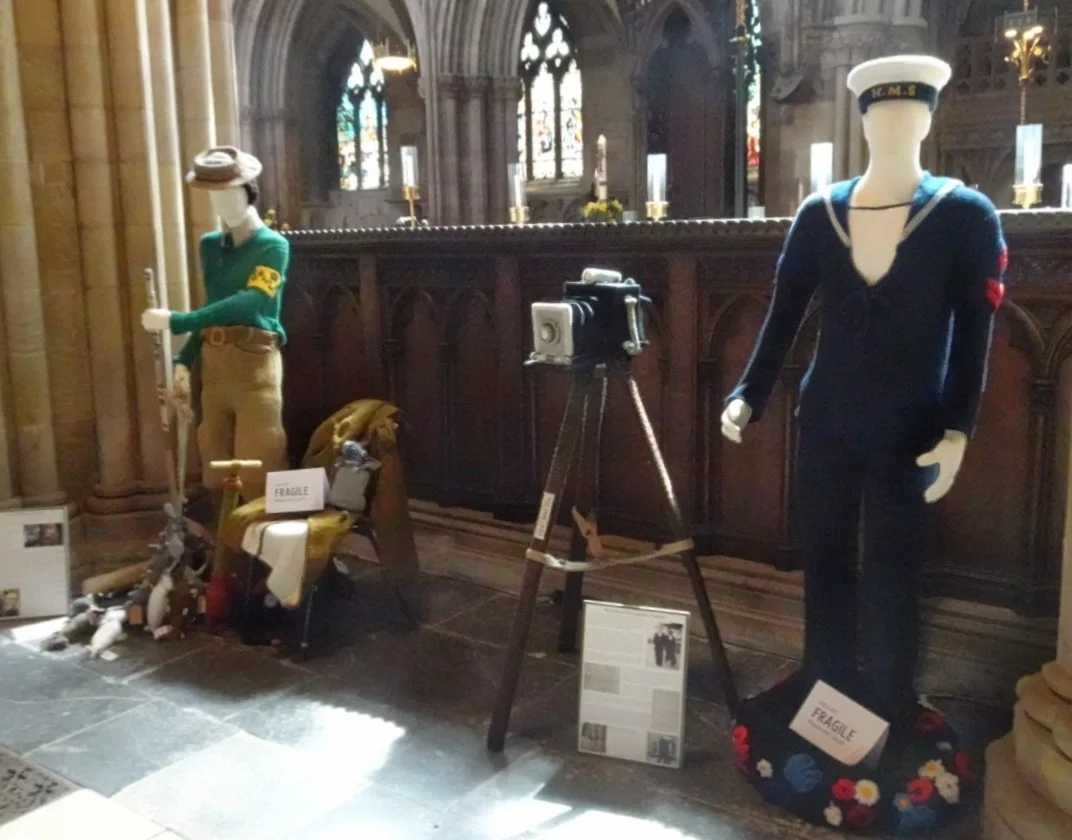
Our eyes had also been drawn to a life size figure at the entrance to the Cathedral, but as the funeral was taking place, my camera stayed in my bag. That had been the figure of ATS Sgt Lillian Featherstonhaugh, who’d worked in a military hospital in Belfast during WWII. But here amidst the showcased vignettes were two more of those life sized figures: William John Leitch (Paddy) who’d been a Royal Navy Photographer and Daphne, an 18 year old “Land Girl” who had joined the Land Army as a rat catcher, helping to protect Britains food supply during the Blitz. I particularly love how individuals are depicted like this, giving us a chance to learn of their service.
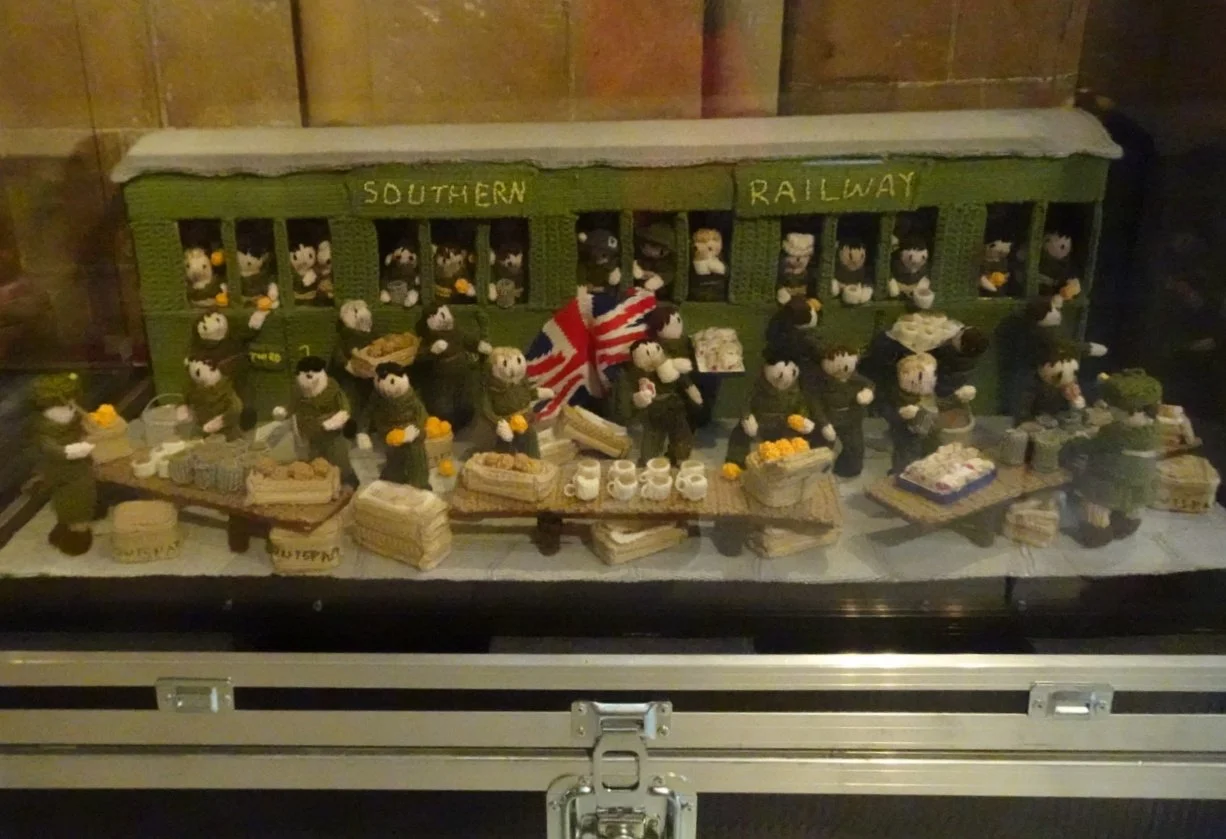
On then to the deployment of the British Expeditionary Forces on their way to France in 1939.
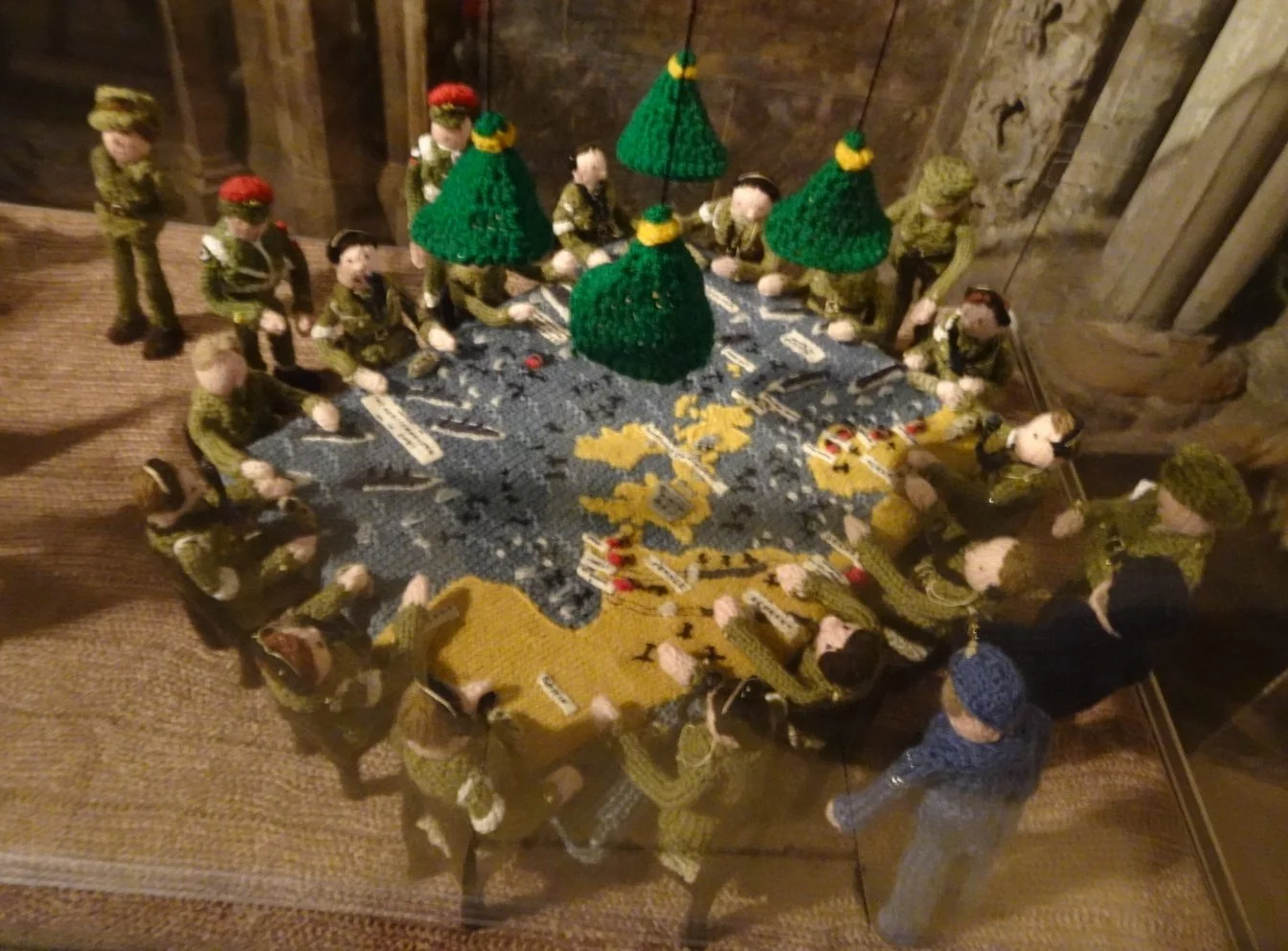
Then the New War Cabinet, meeting with Churchill as First Lord as tensions were rising.
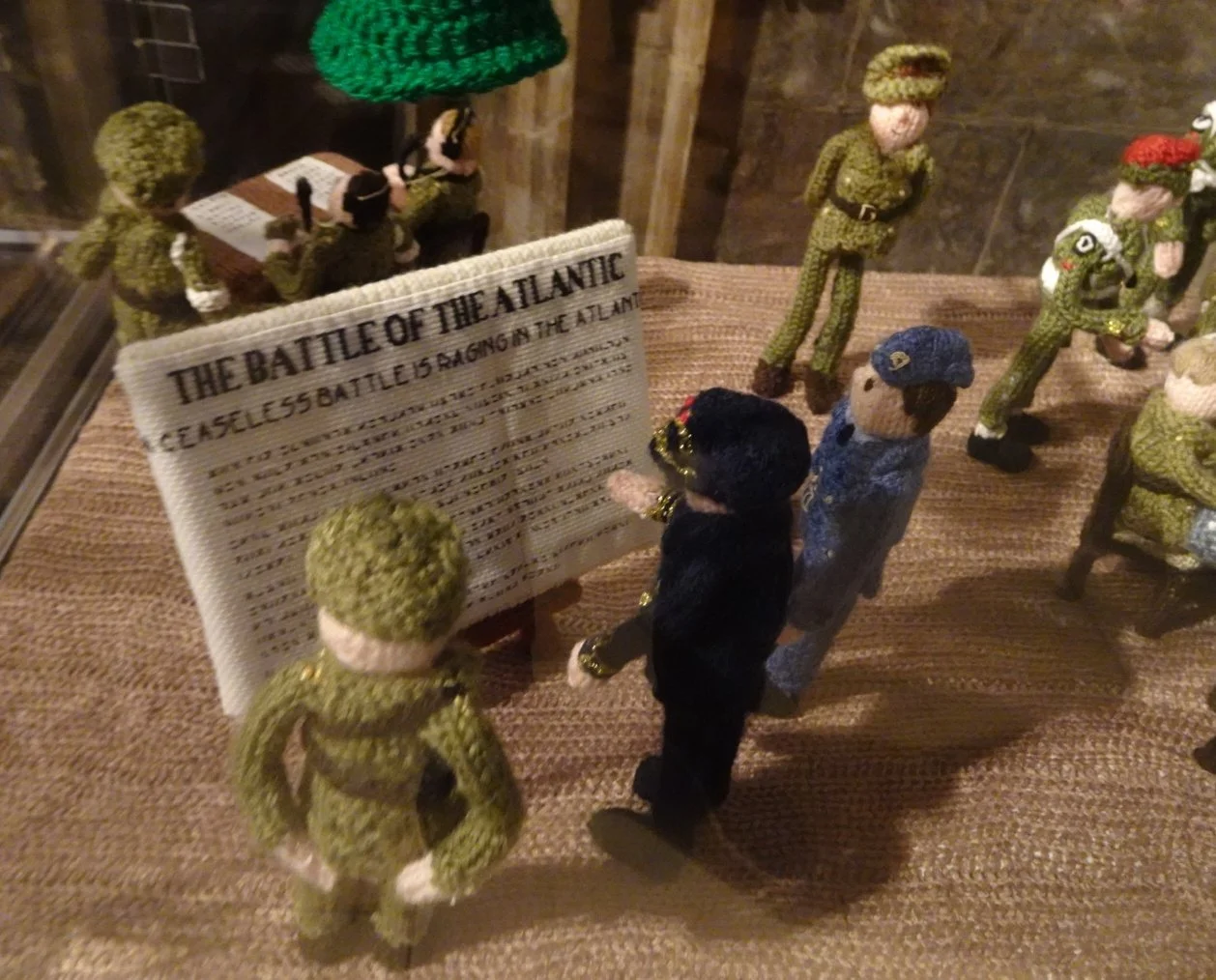
We continued through the beginning of the Battle of the Atlantic
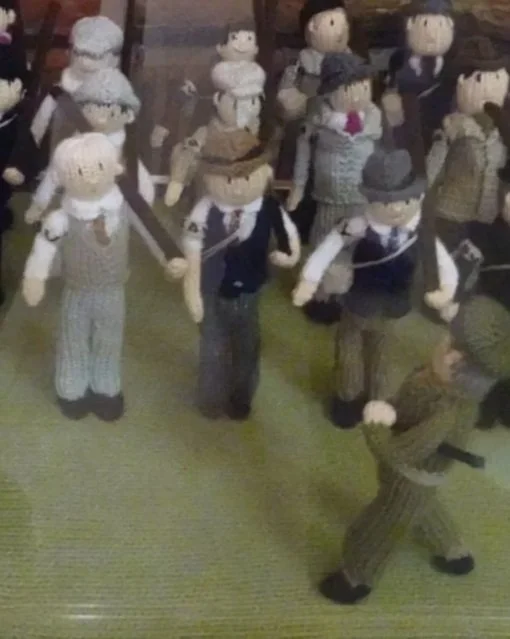
and the formation of “Dad’s Army”; the Home Guard, made up from volunteers too old to be conscripted.
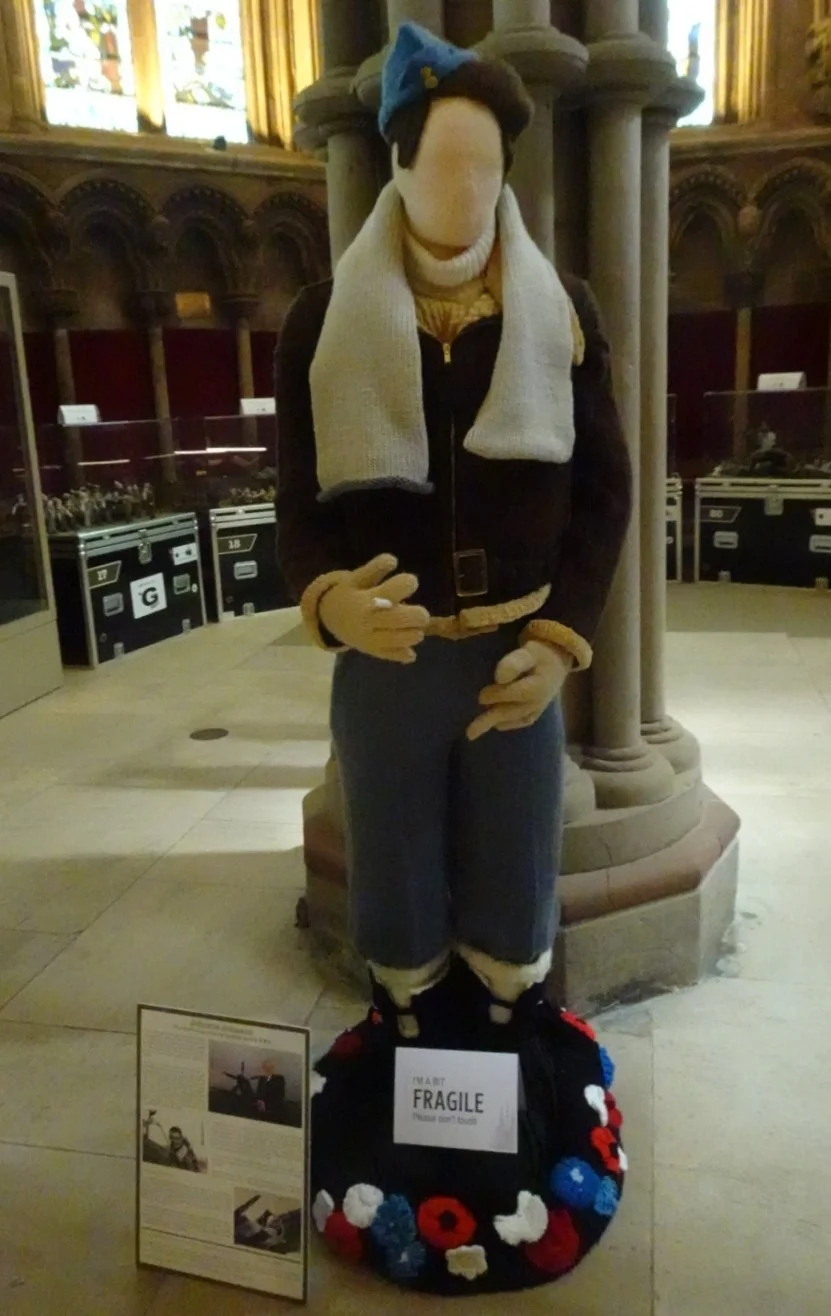
Here was another of the life sized characters; this is Johnnie Johnson, the RAF’s top Spitfire Ace who scored 34 solo kills, led D Day flights and never lost a Wingman or got shot down.
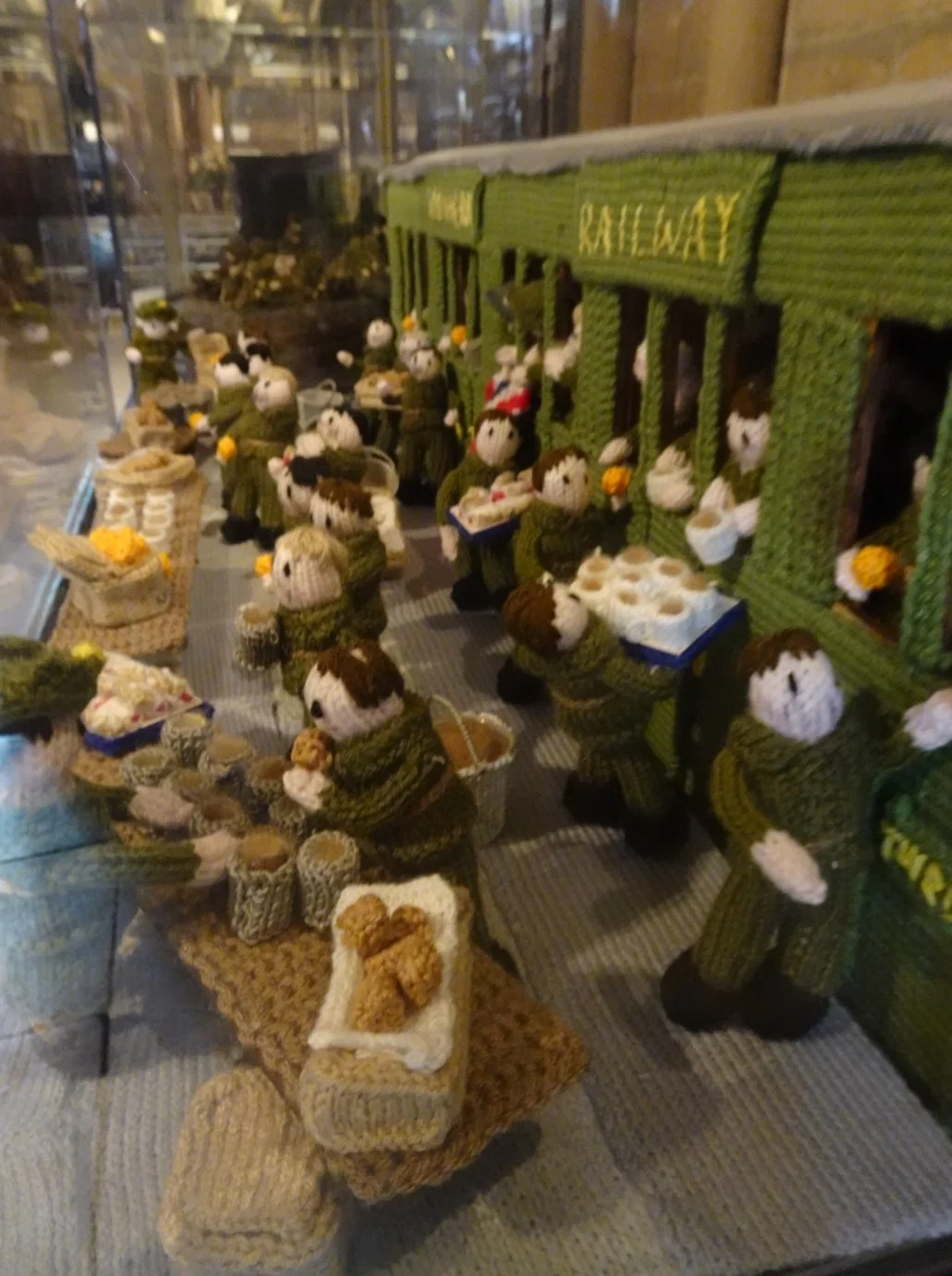
As we stopped to turn a corner and look at Johnnie Johnson’s figure, I happened to look back at the last vignette and the scene of the train. As I did I noticed the tiny details of sandwiches and mugs of tea. One could make several visits to these small treasures and see something different every time.
But having started in the exhibition alone, we now had a horde of people coming up behind us, so we moved on…
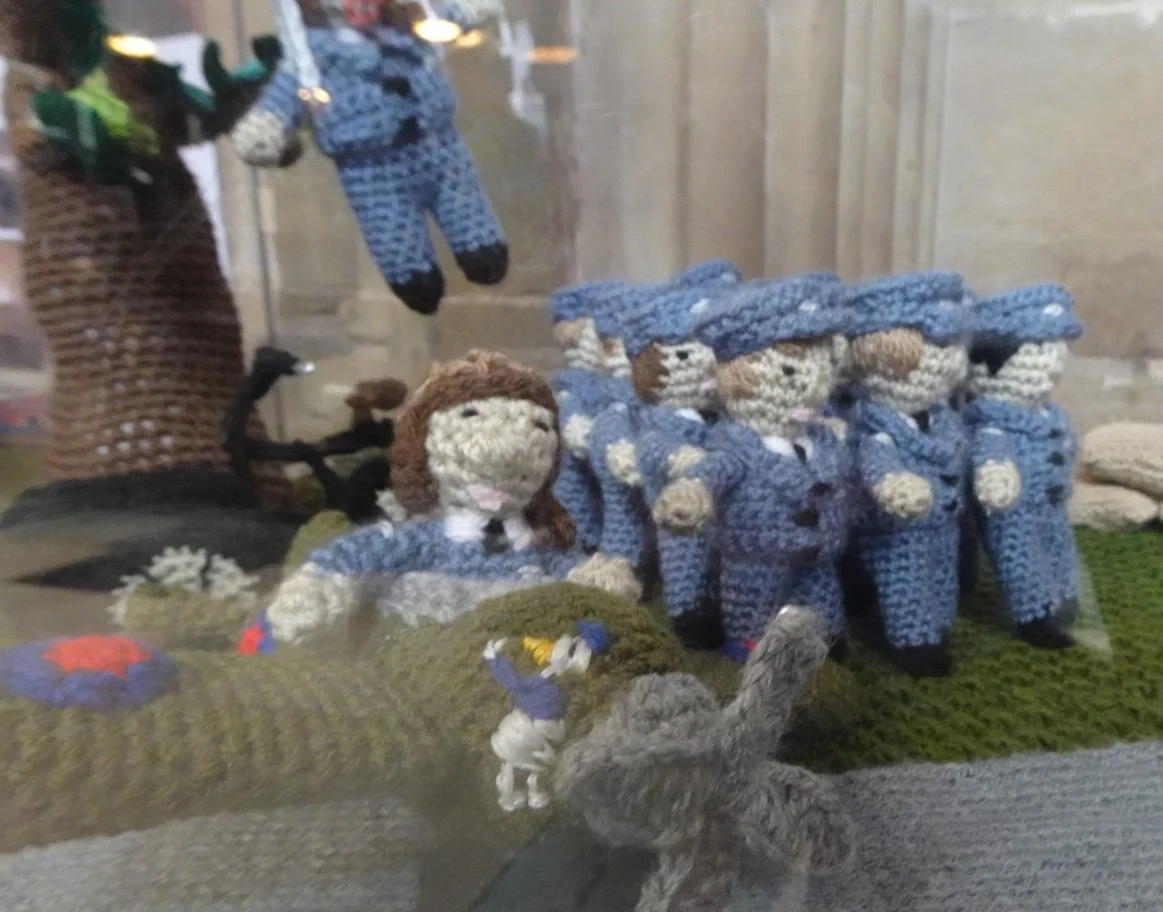
I rather enjoyed the scene of the ATA - the Air Transport Auxiliary, who ferried military aircraft from factories to RAF bases and included many women in their ranks.
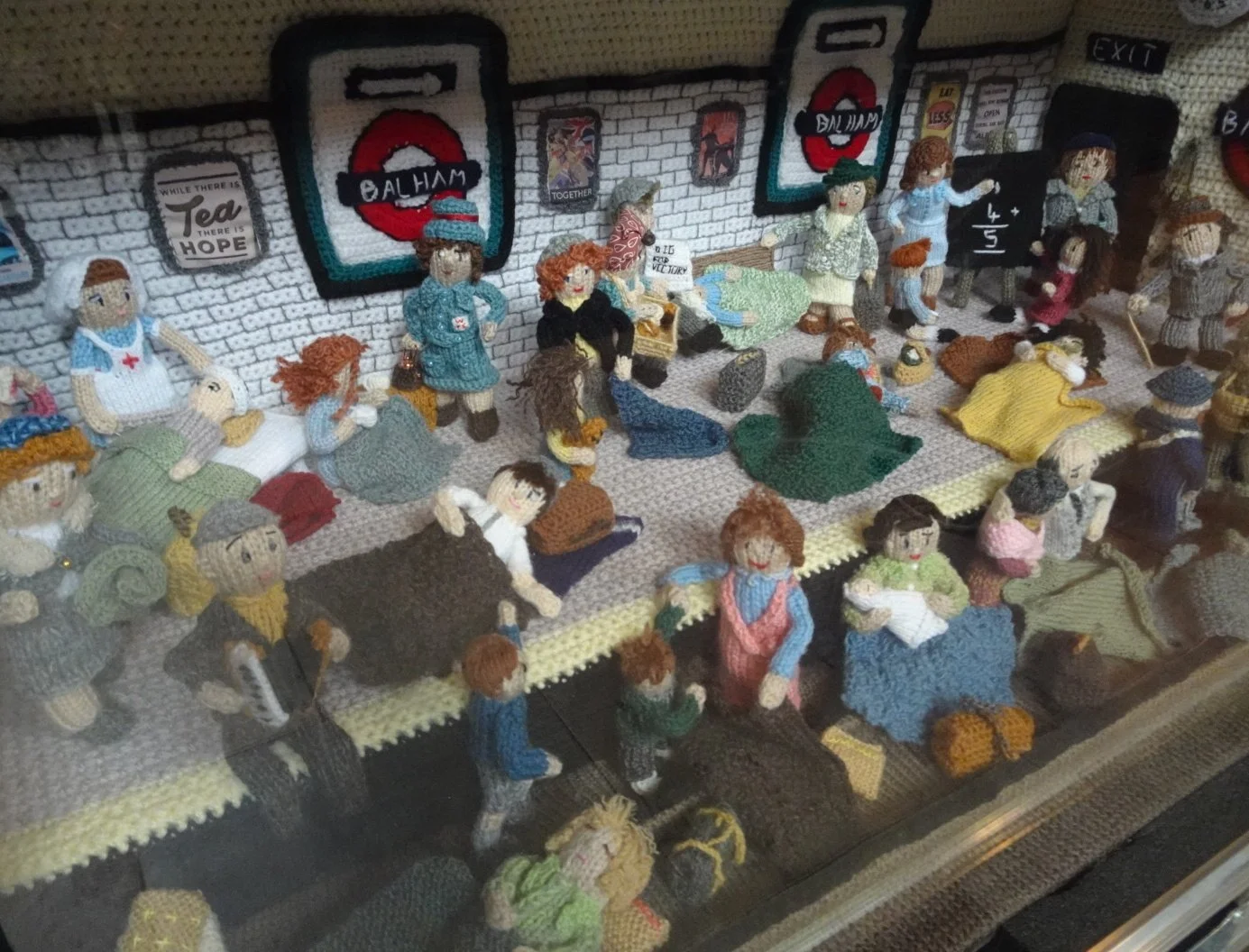
Of course, there are way too many scenes to include here, but I couldn’t leave out this one, of Londoners sheltering in the Underground.
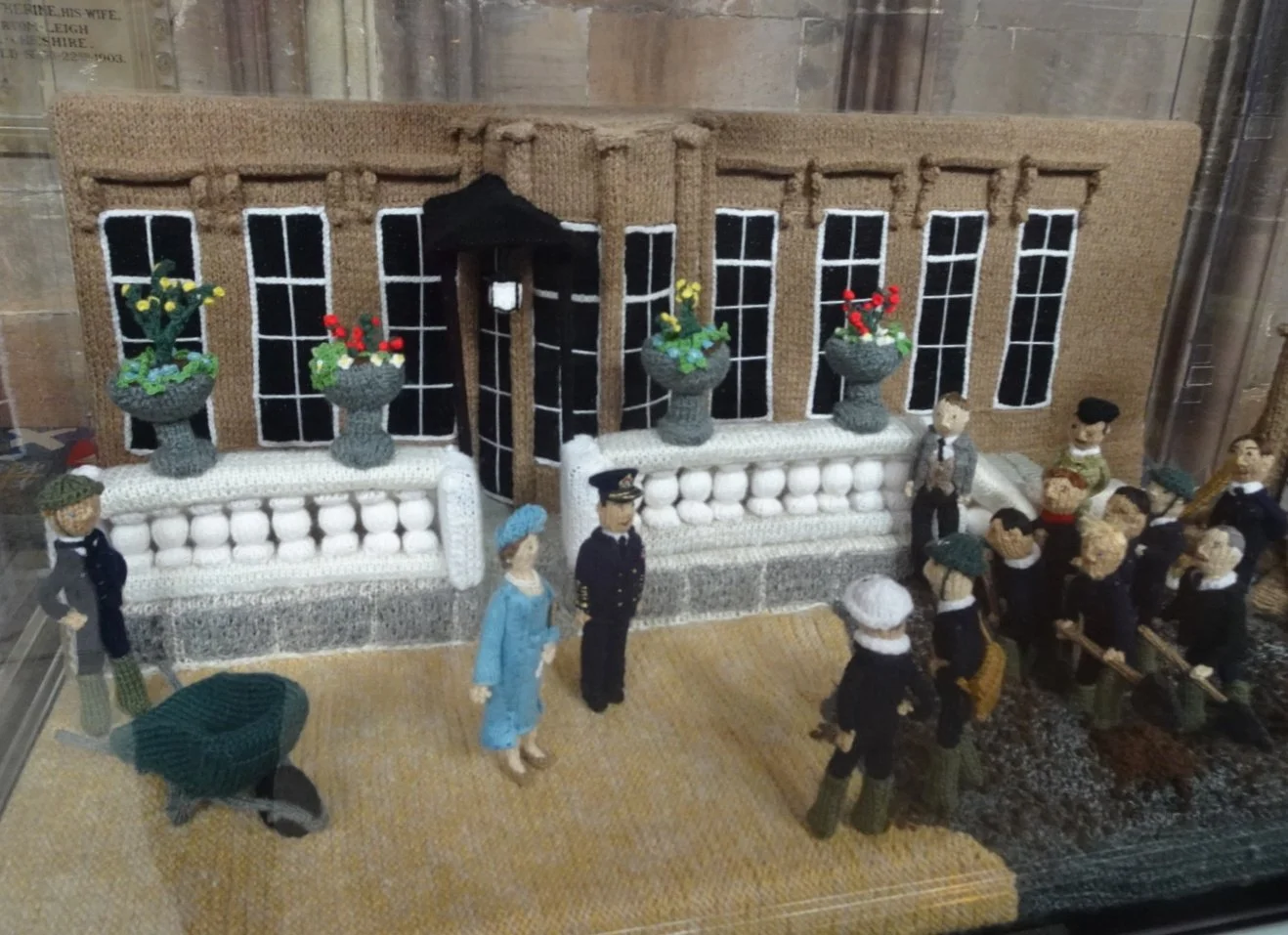
Or this one, of the King and Queen outside Buckingham Palace, which had been bombed and which prompted Queen Elizabeth (later the Queen Mother) to say “it makes me feel I can look the East End in the face”.
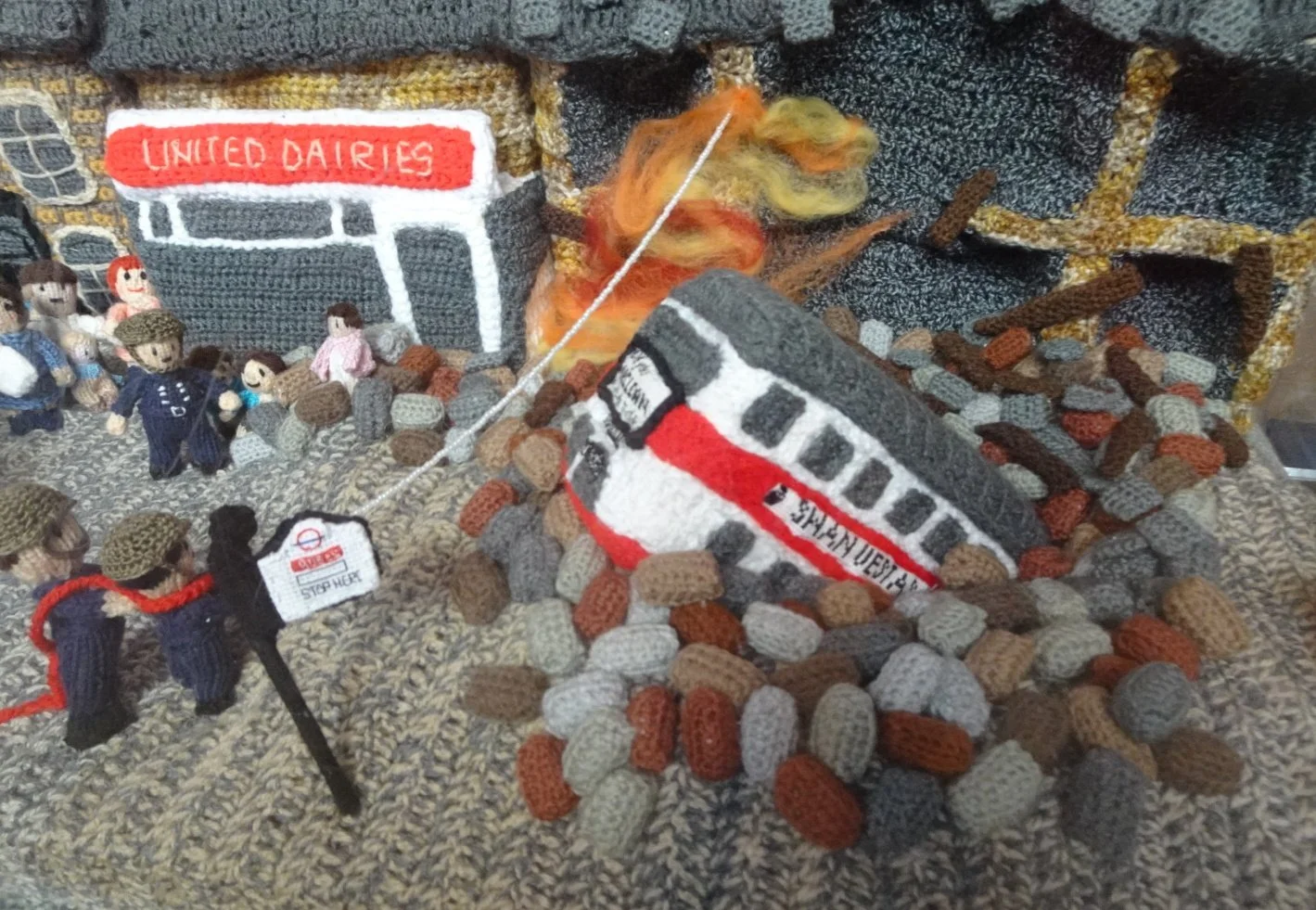
There was a clever depiction of another familiar scene: The Balham Bus Crash here too. In 1940 a bomb hit Balham Station, killing 66 people and creating a huge crater into which a bus fell. A quick search online for images of the event emphasises how accurate these depictions are and confirms the skills of the makers. Quite remarkable.
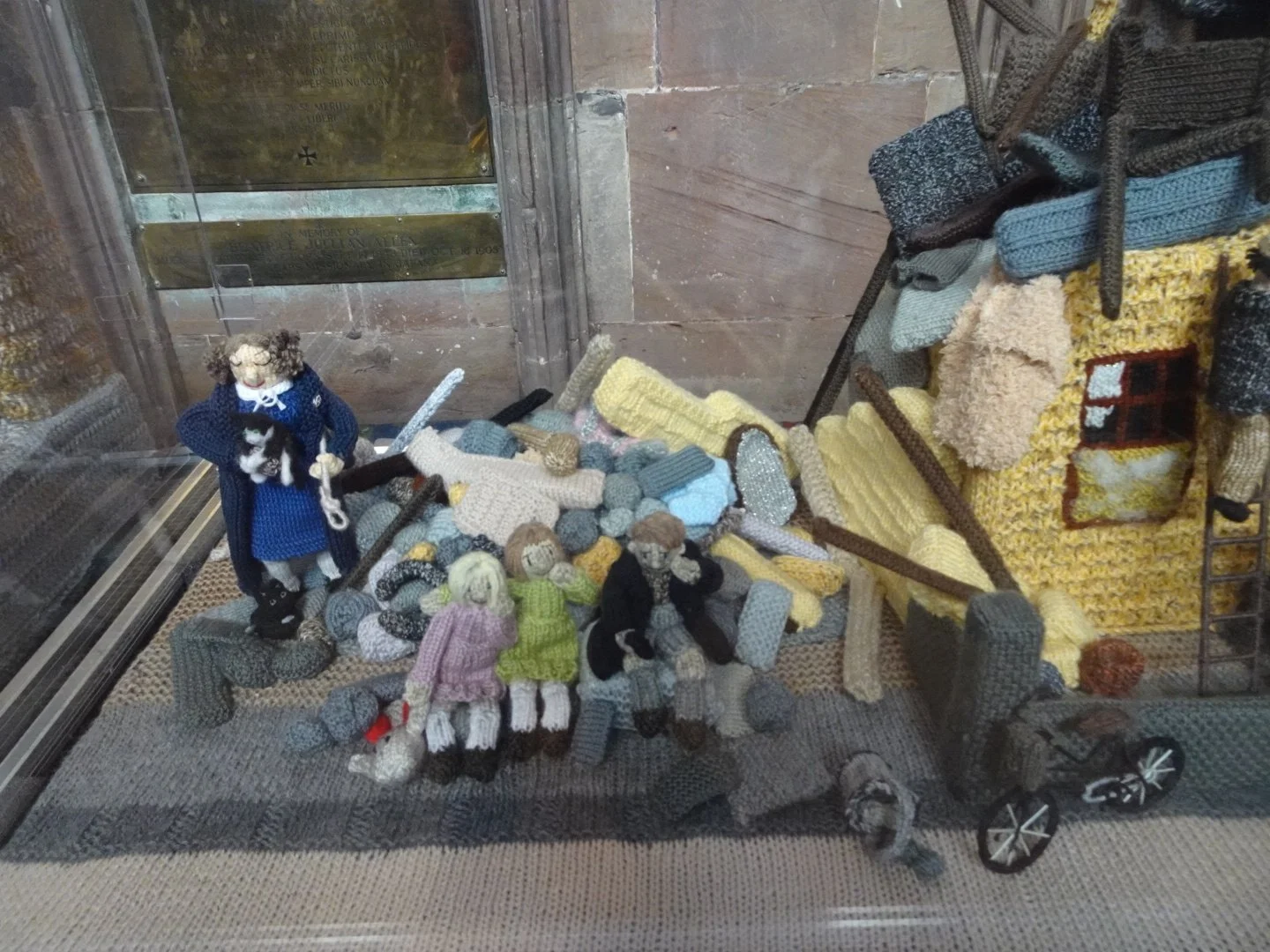
I really love the detailed storytelling and it doesn’t get much better than in this next vignette, entitled “stories from the London Blitz”. The woman is Iris Davis, who rescued cats from bombed ruins. She’s shown, cat in her arms, alongside children known as the Dead End Kids, who bravely hung around bomb sites aiding rescues. It’s remarkable to have such stories recorded and shared here like this, isn’t it?
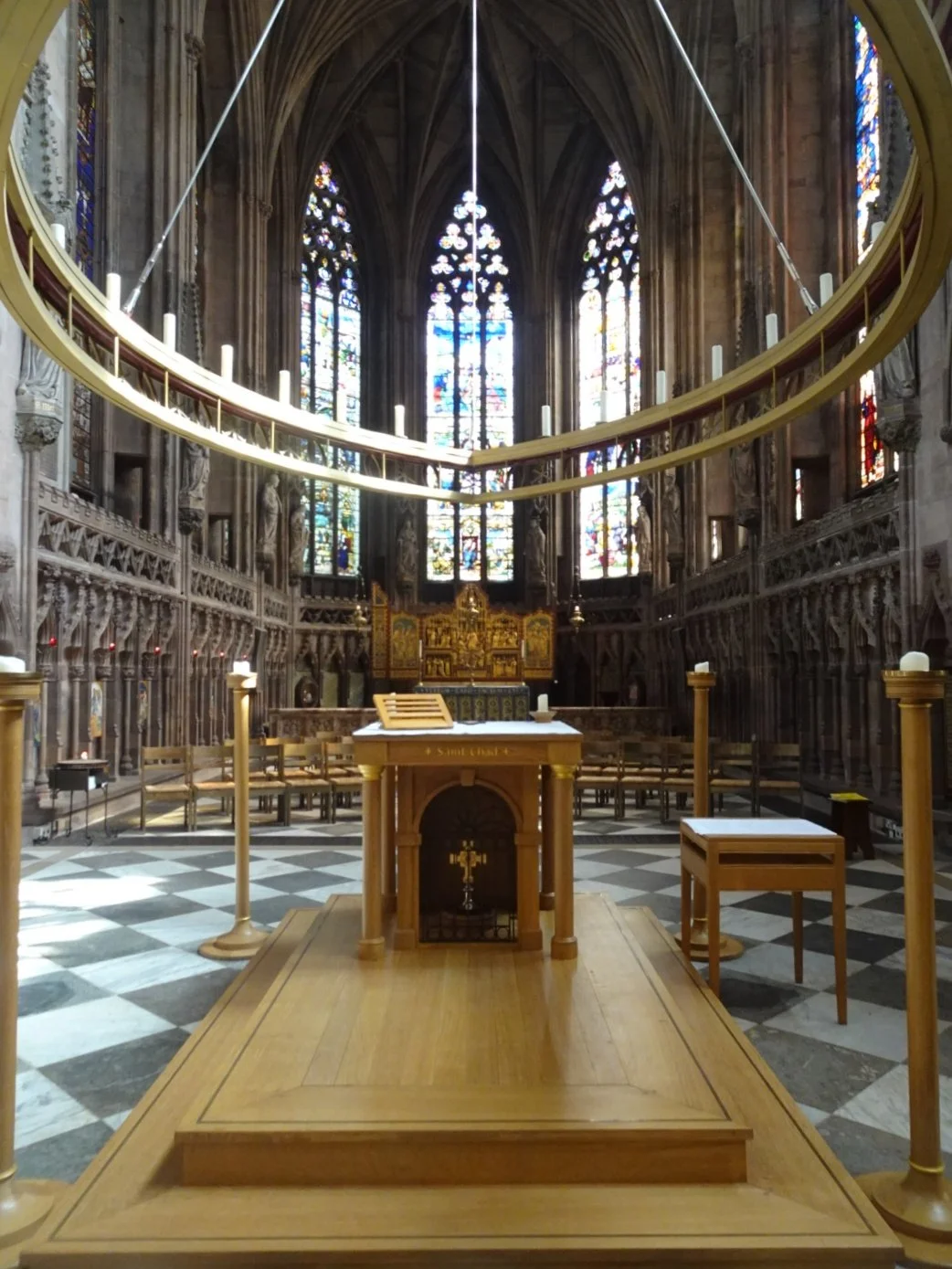
It was time to turn another corner, this time to look around us at the wider setting. The Cathedral is beautiful - both ancient and modern, and though it was a challenge to take it all in, a few quiet minutes came as a welcome break.
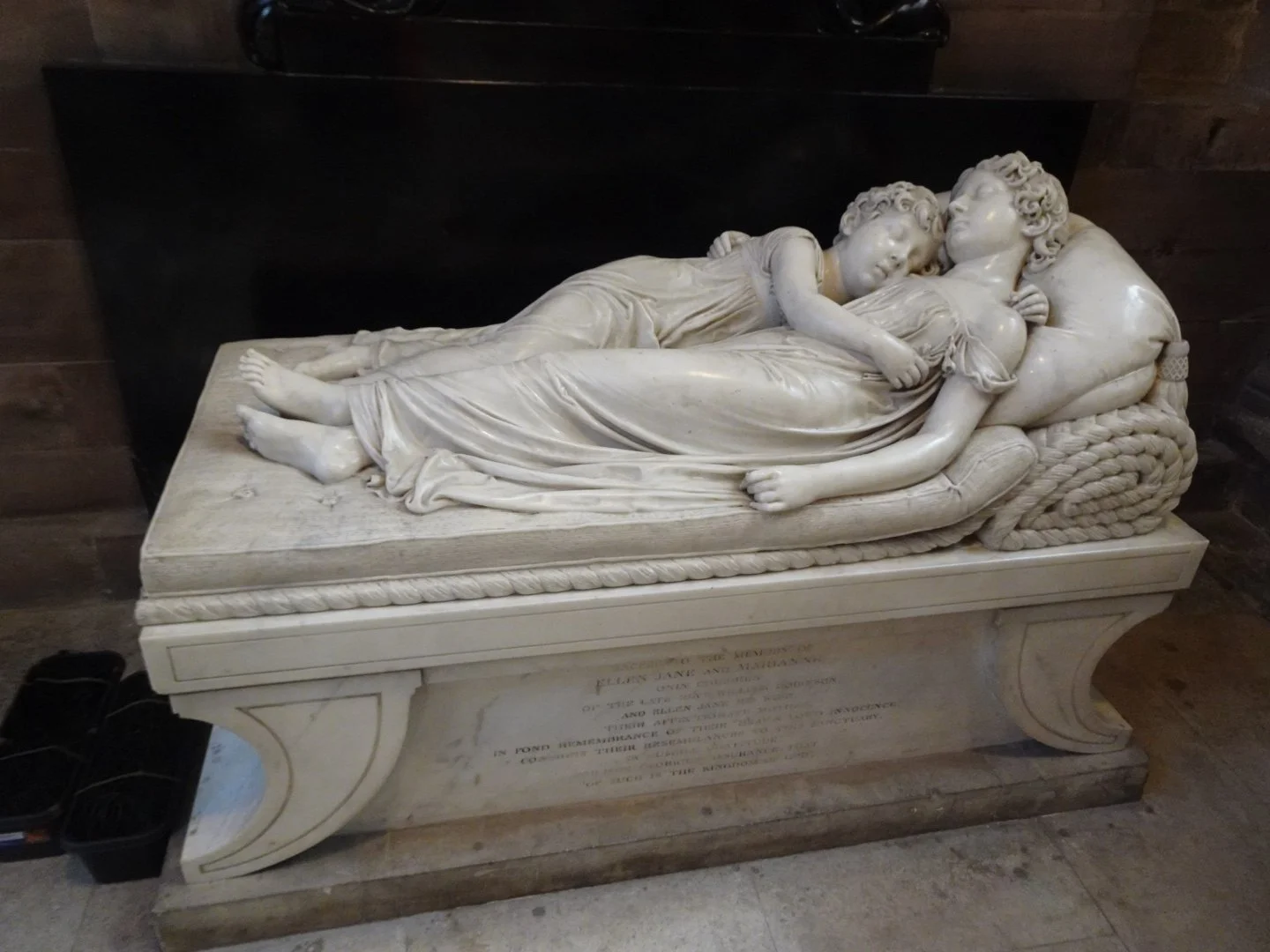
In the corner here was a marble sculpture entitiled “the Sleeping Children” and alongside it was an explanation of the background to the work. It’s a tragic story of the two daughters of the Reverend William Robinson, who became a prebendary of the Cathedral but who contracted tuberculosis and died shortly afterwards, in his thirties. A year later, one of the daughters died following a tragic accident and shortly afterwards, the other daughter sickened and died. The sculpture was commissioned by the distressed wife and mother, who had lost her entire family within a few short years.
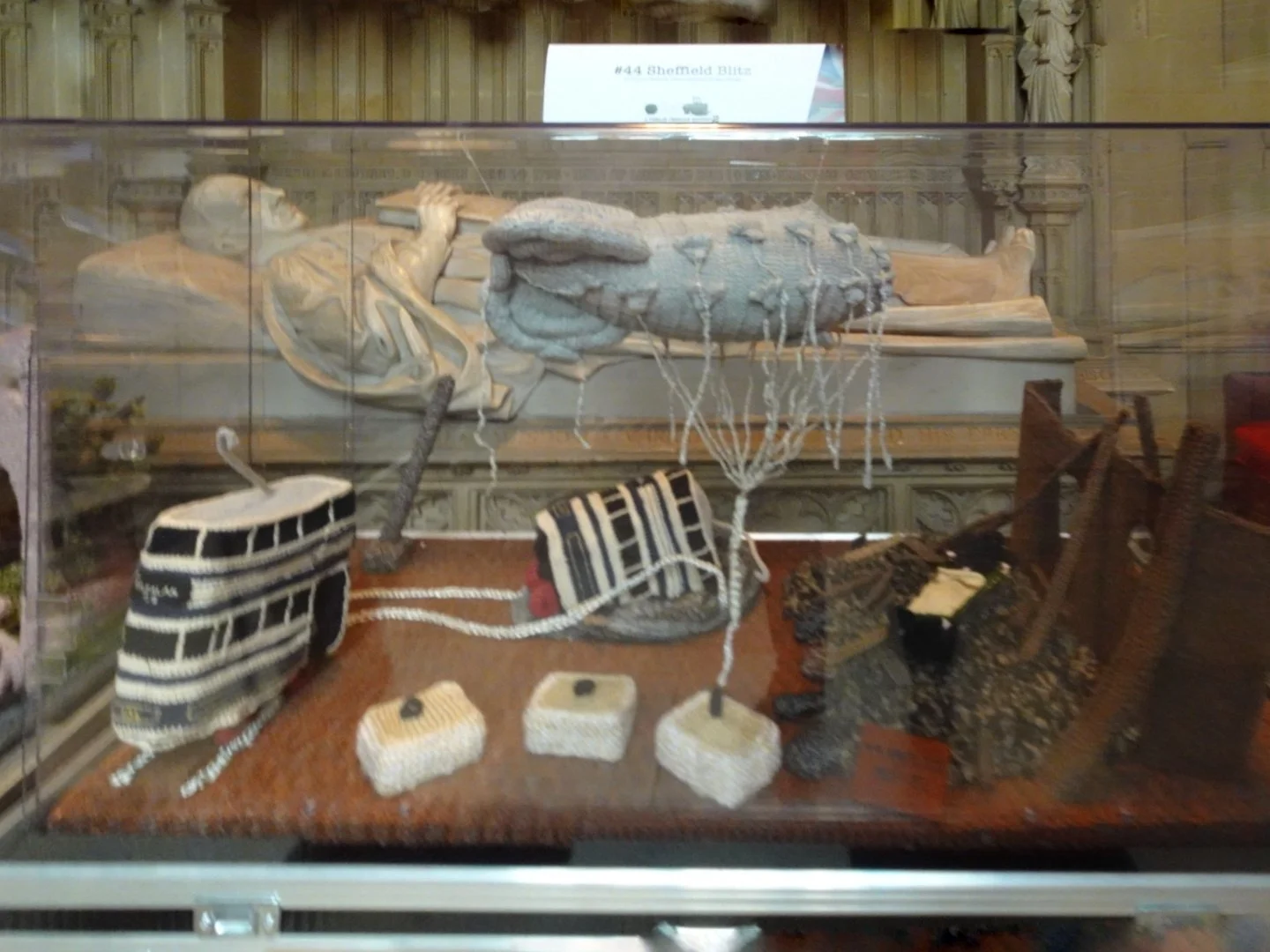
The dark mood resulting from reading of such tragic events was soon lifted by this next exhibit, intended to depict the Sheffield Blitz. The positioning of the display case unintentionally creates an overlay for the figure in the sculpture behind it. I recognised it as a barrage balloon from my parents’ descriptions of these huge things which floated above the parks and gardens in Hull during WWII.
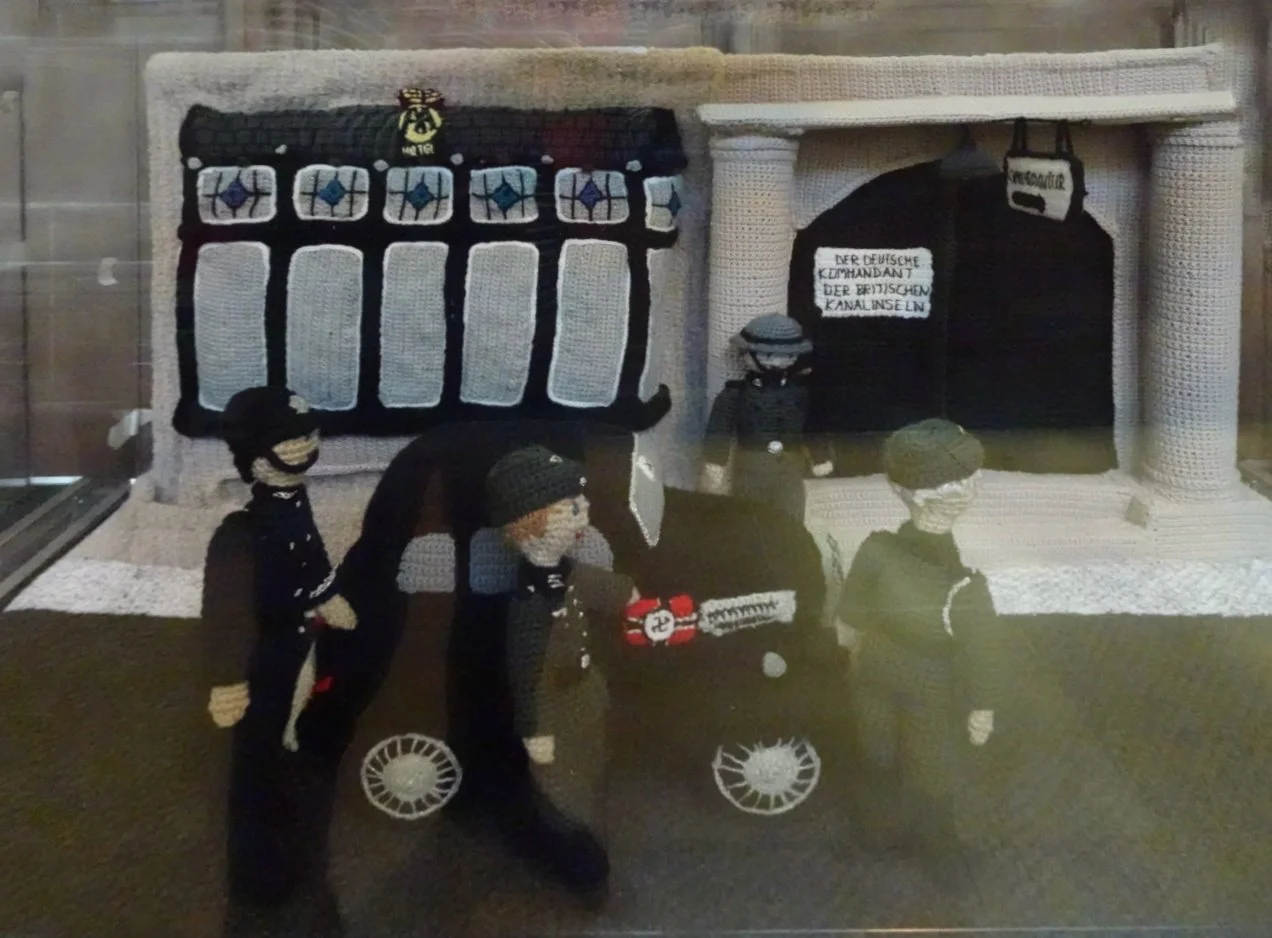
We moved on to the invasion of the Channel Islands.
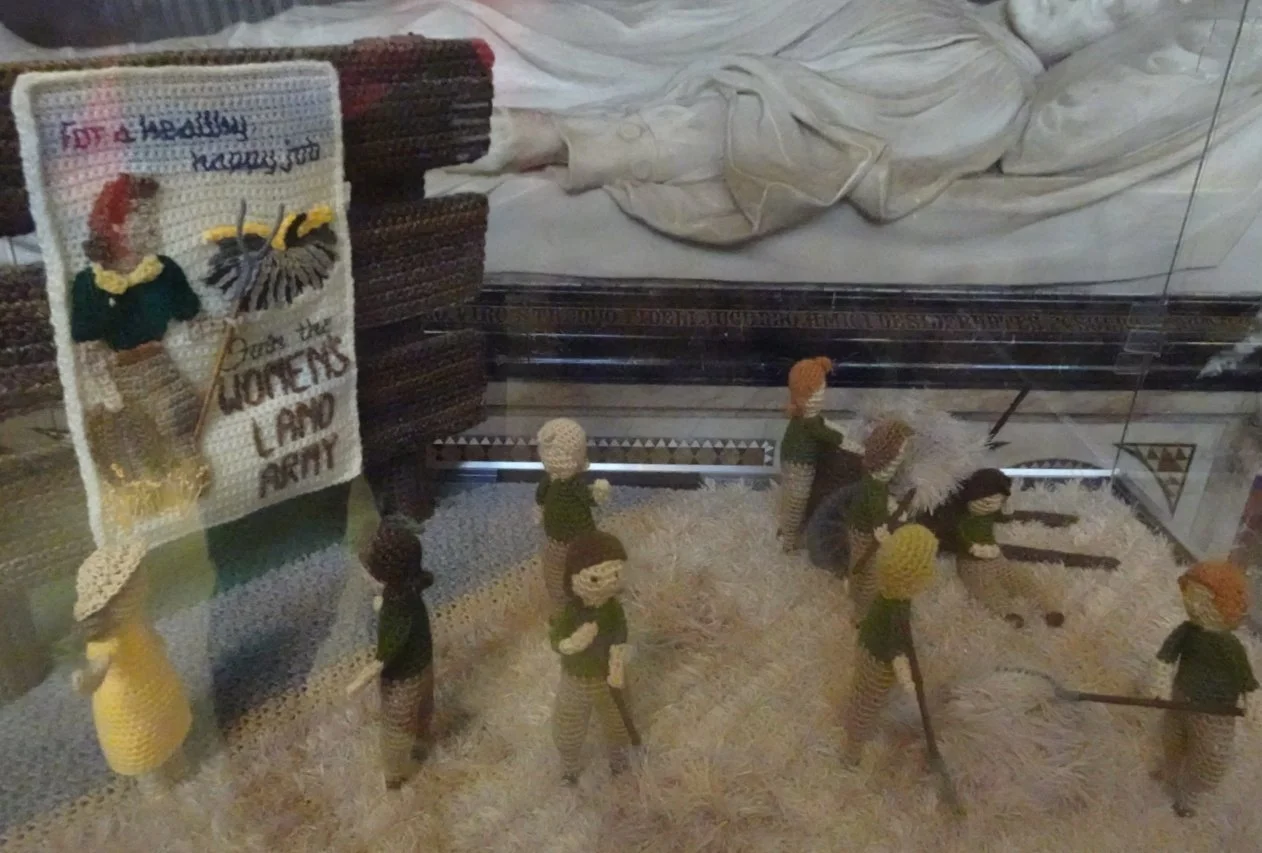
Then to conscription for the Women’s Land Army, of which my Mum was a member. I was a little disappointed by this scene, especially when I saw the next one…
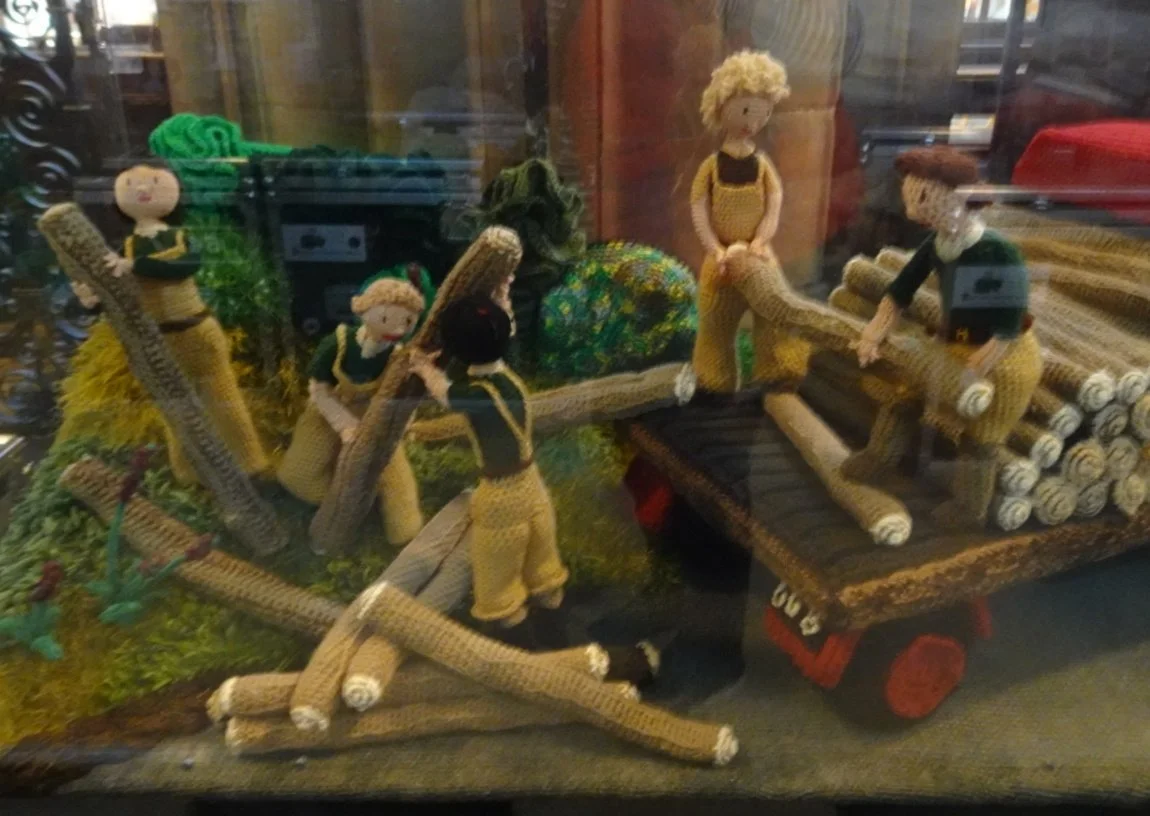
of the “Lumber Jills” or Women’s Timber Corps.
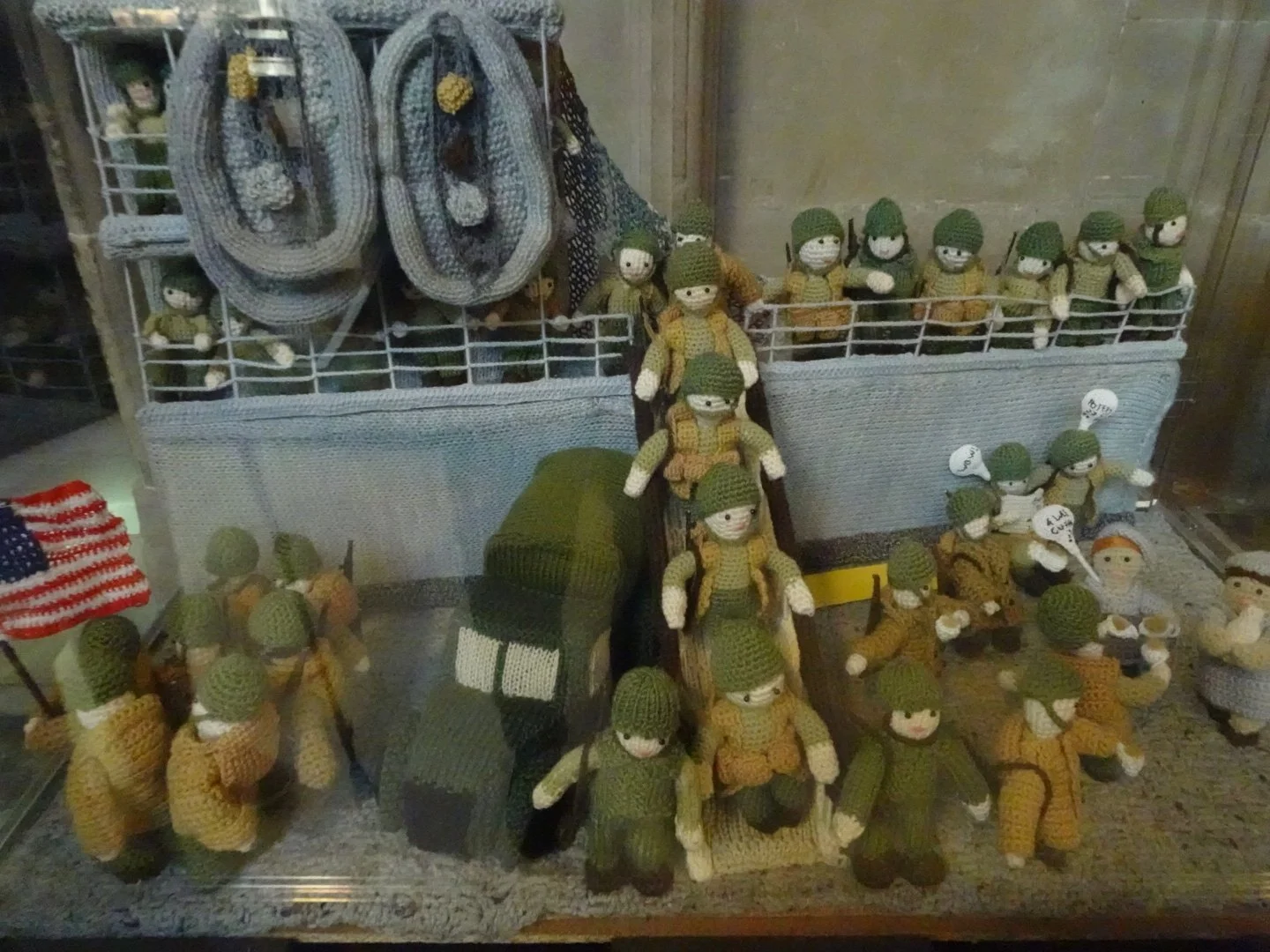
The first Americans were shown arriving in 1942…
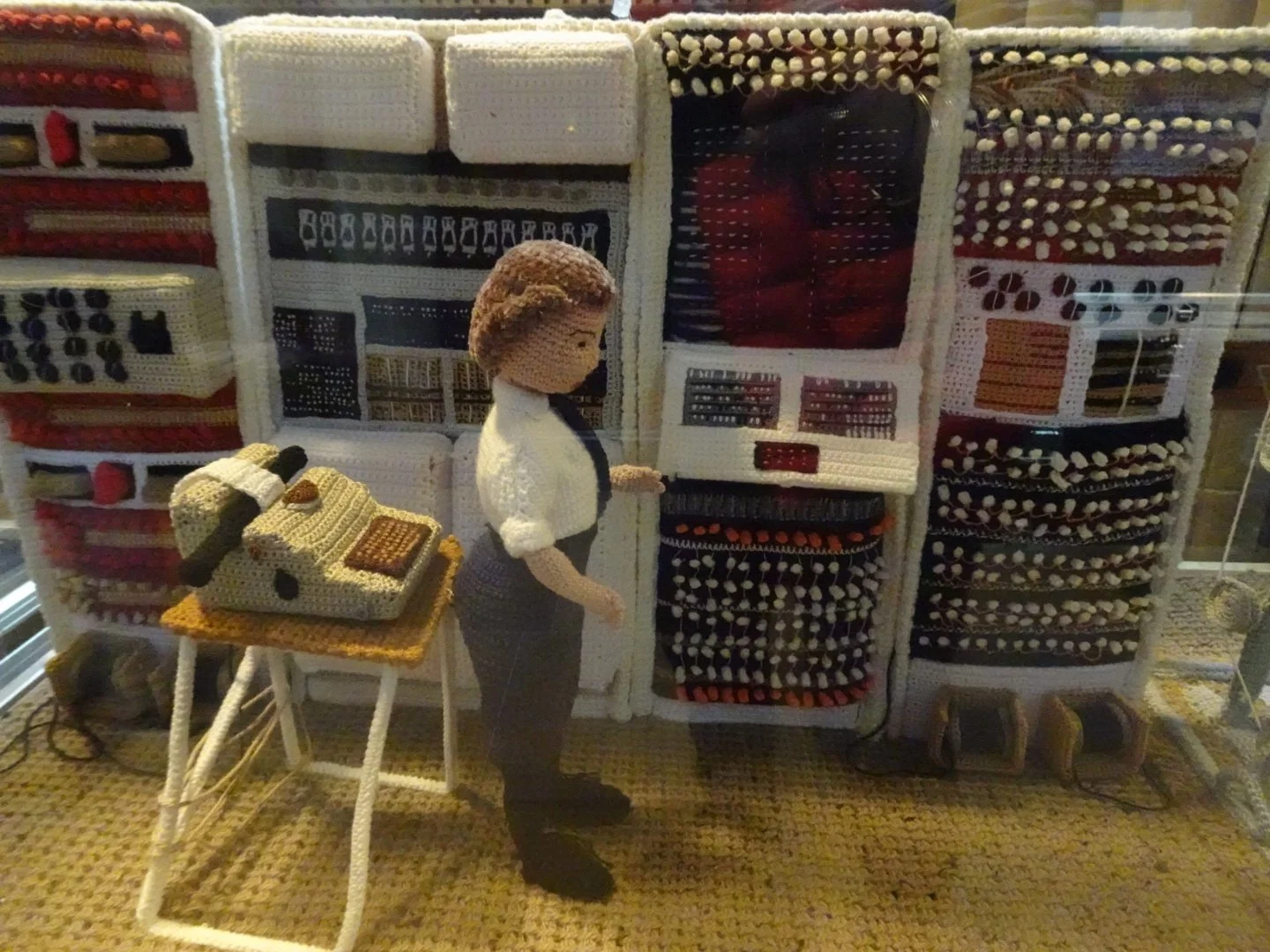
and one of my favourite vignettes was nearby: one of the codebreakers at Bletchley Park.
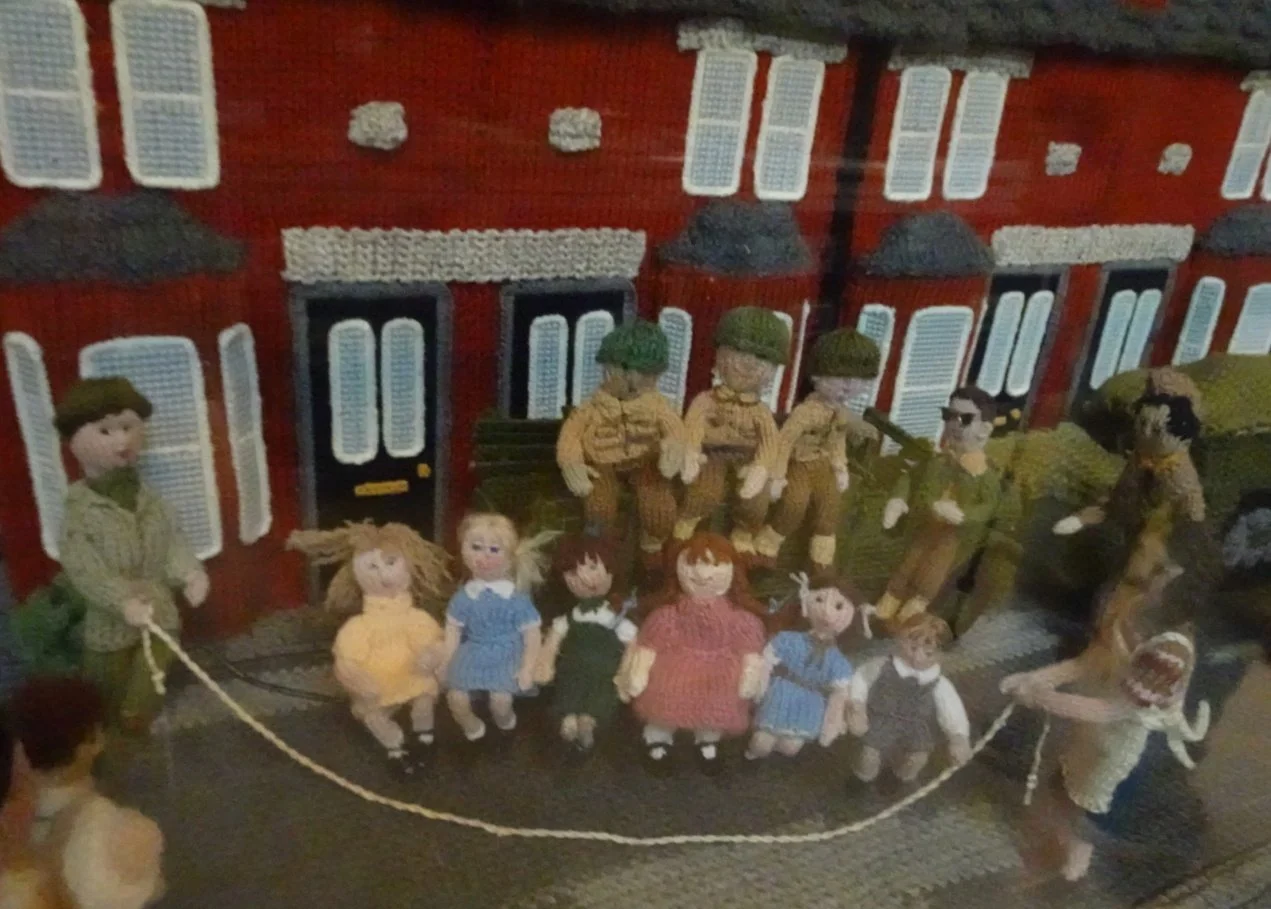
In 1944, there were 2 million Allied troops in Southern England and this shows the children having no shortage of people there to turn their skipping rope.
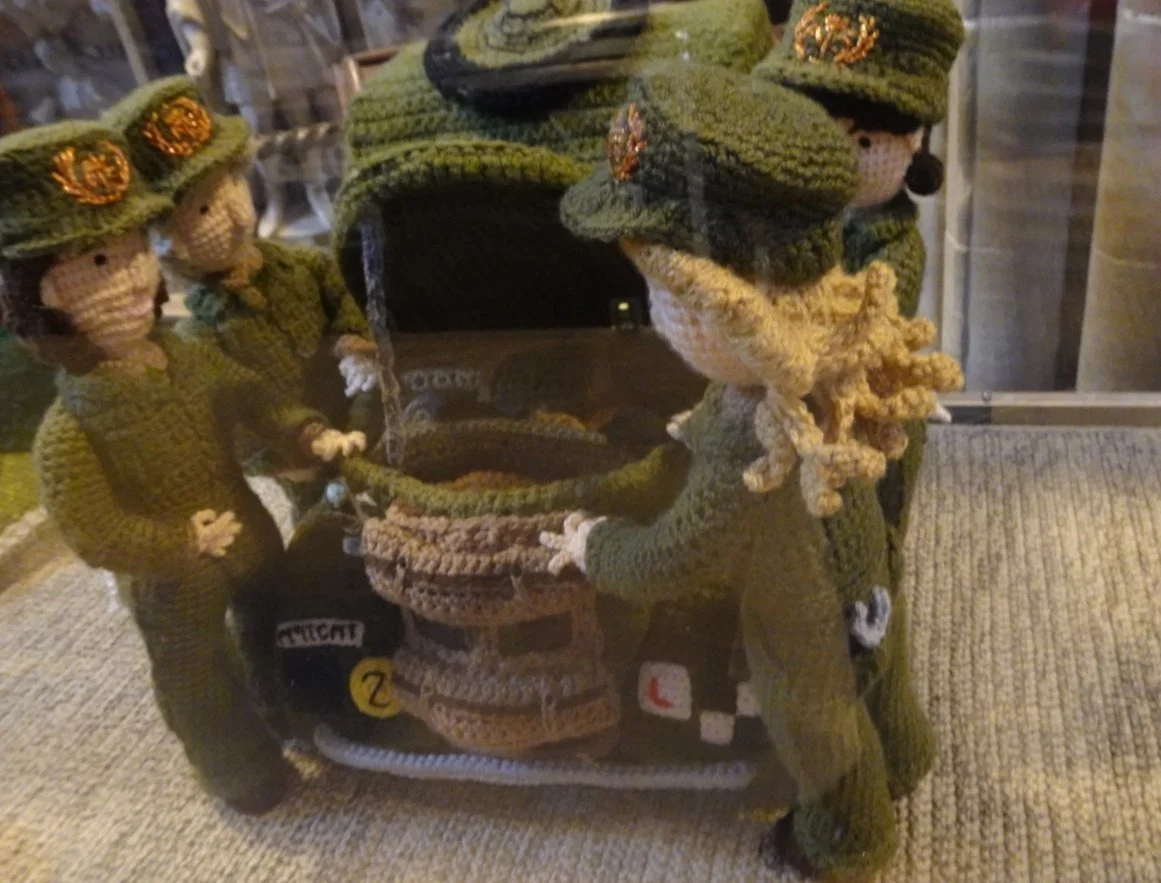
Princess Elizabeth is shown here as an ATS woman, working on an Army vehicle.
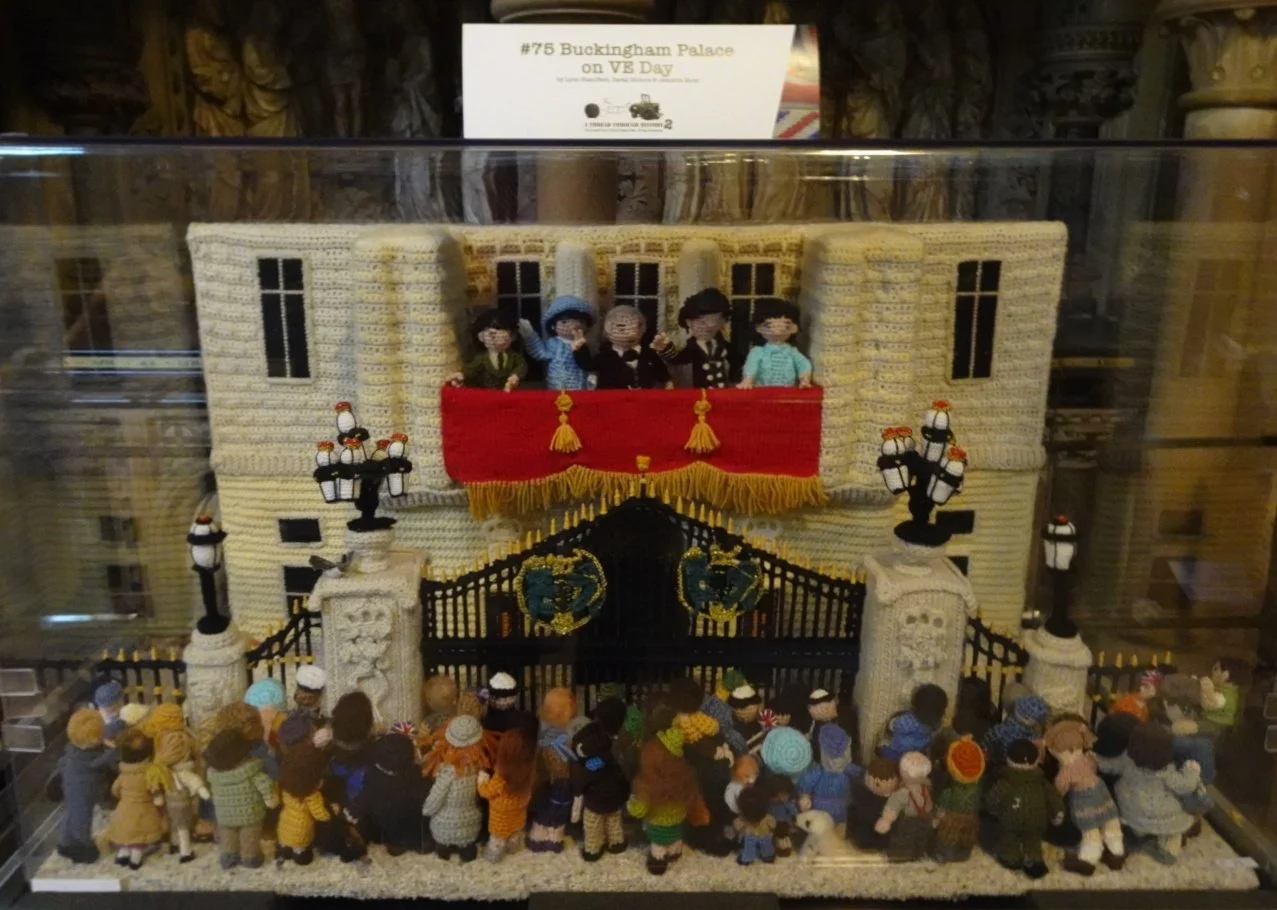
And then a few scenes further along, there’s VE Day in front of the Palace, where the Princesses Elizabeth and Margaret are incognito amongst the crowds whilst their parents take the salute on the balcony. It’s a well known image, beautifully represented here.
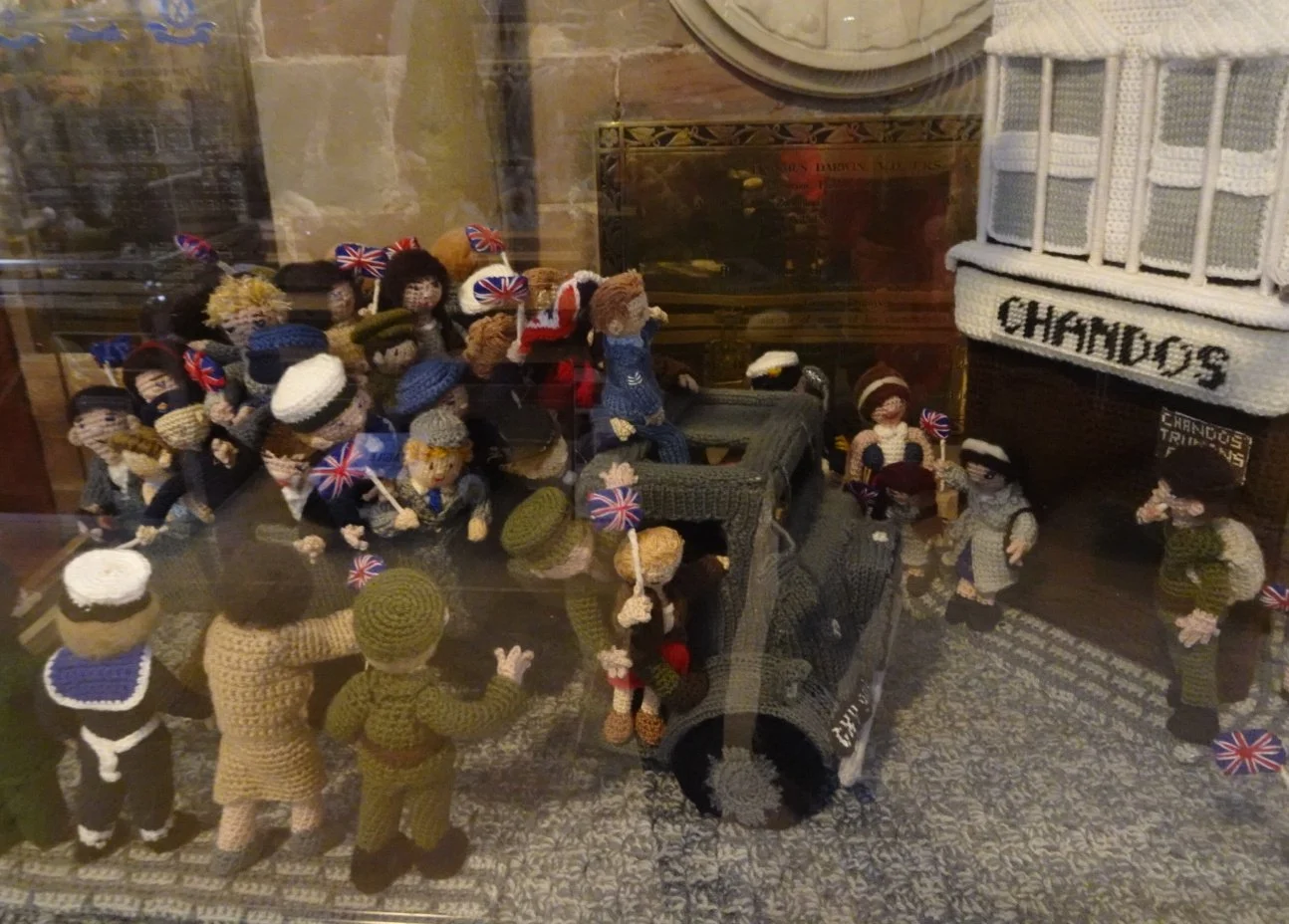
There followed several more interpretations of well known wartime images, such as this one called “the lorry on the Strand”
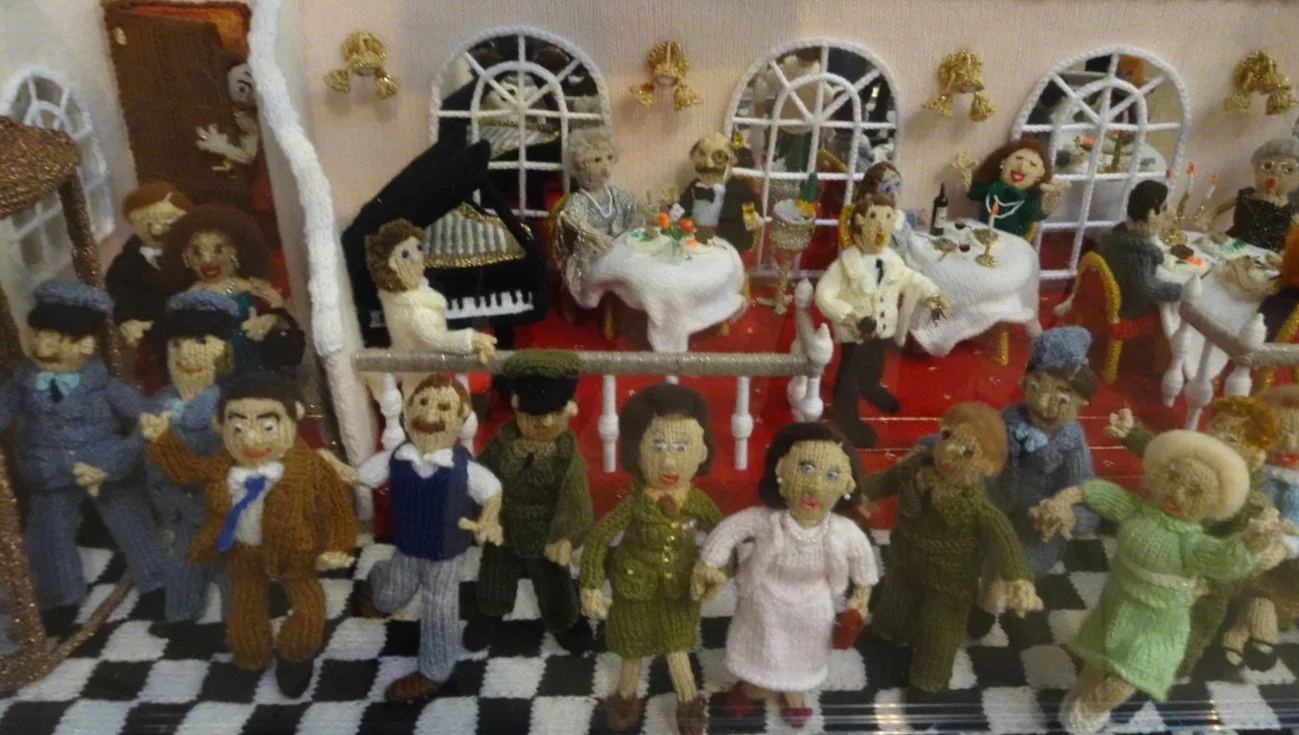
and here, “The Conga through the Ritz” with the two Princesses in attendance
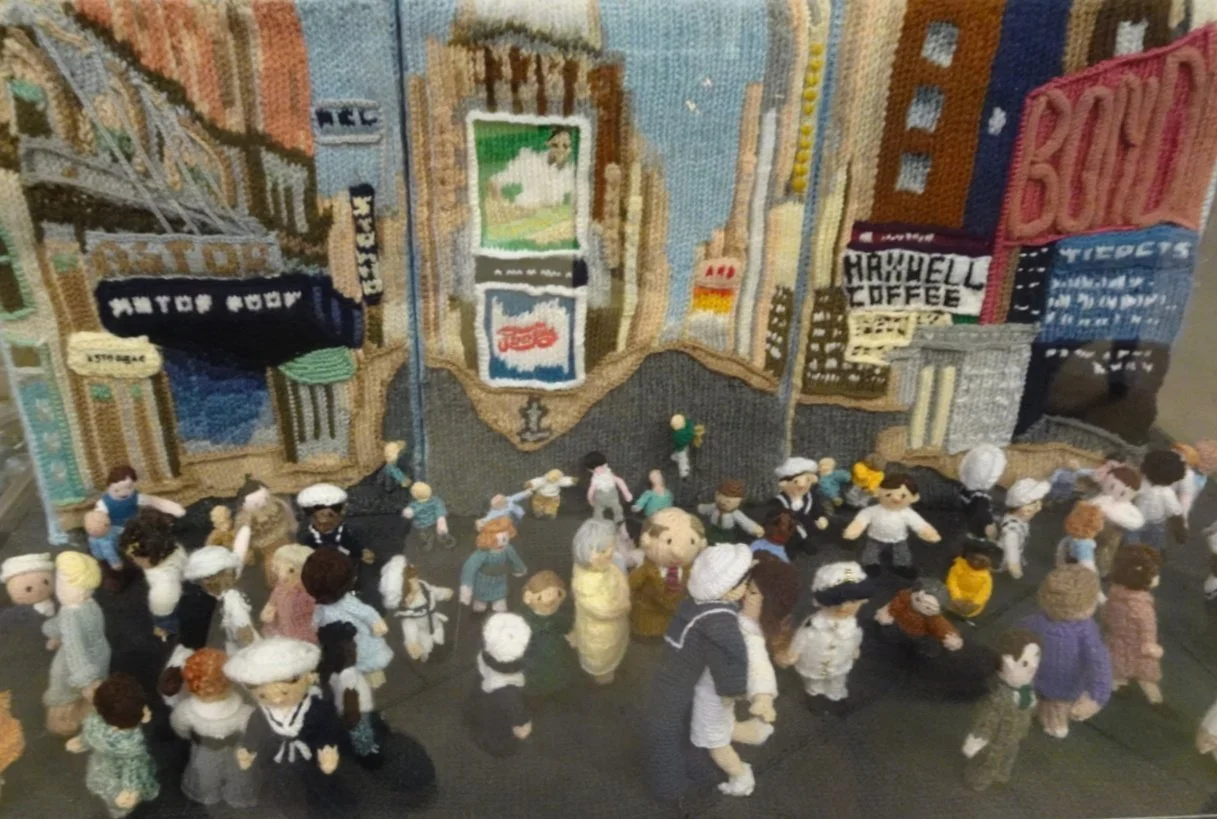
The Kiss is a well known image that I hadn’t associated with Times Square, but here we are, the last glass case of the set, #80.
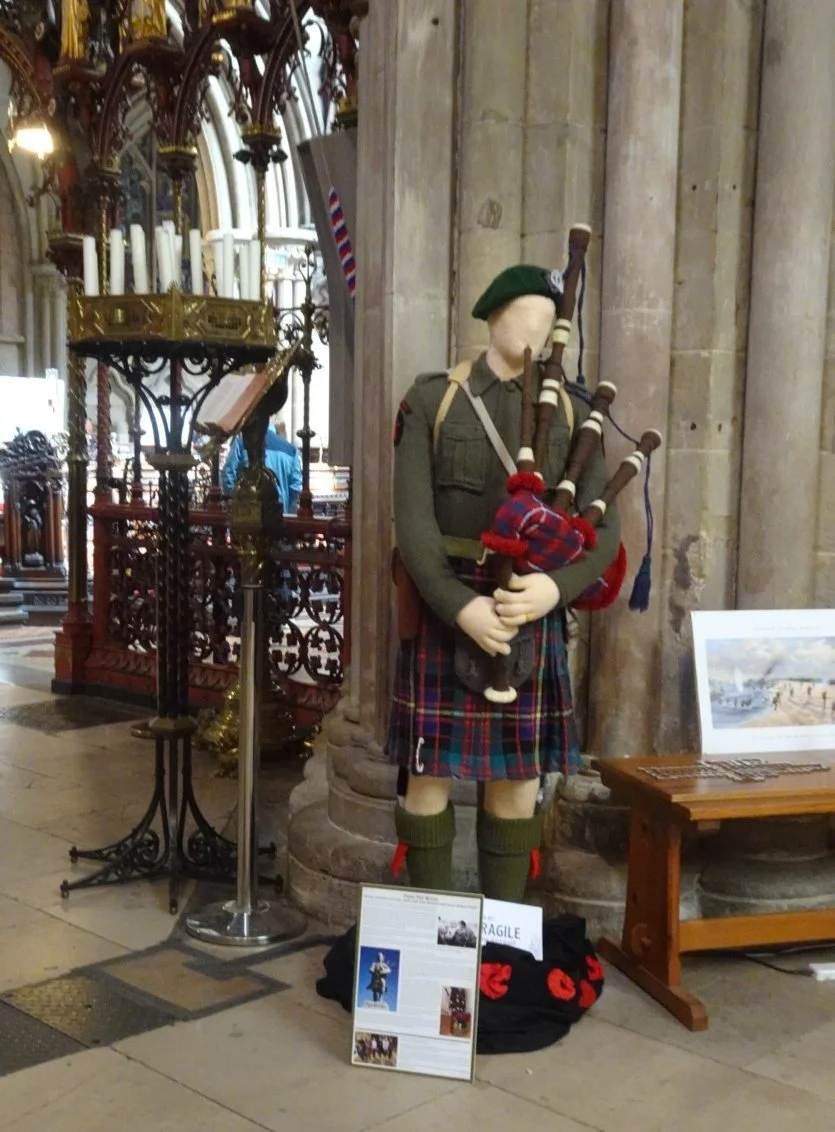
There was, however, one last image that I couldn’t miss. The piper is Bill Millin, unarmed and wearing his kilt, boosting morale and defying danger as he played bagpipes on D Day. Recognise the name? He’s one and the same piper who was shown in one of the vignettes in The Longest Yarn: D Day. How lovely to see him here again.
And that was that. Quite a breathtaking morning and certainly one to remember. Coffee and bacon butties in the nearby Cathedral Cafe gave us time to reflect on what we’d seen and experienced in the last few hours.
That reflective mood was soon overwritten by Friday afternoon traffic on the M5!
C’est la vie.