



A glorious place to remember
In the run up to our stay in Staffordshire, we’d been chatting with our friends about possible places to visit and things we might do. The idea of three days of “busy doing nothing” wasn’t an option, because we all share that same “can’t sit still” characteristic!
Our first choice all round was to take the opportunity to explore the National Memorial Arboretum, a place about which we’d heard but really, knew nothing.
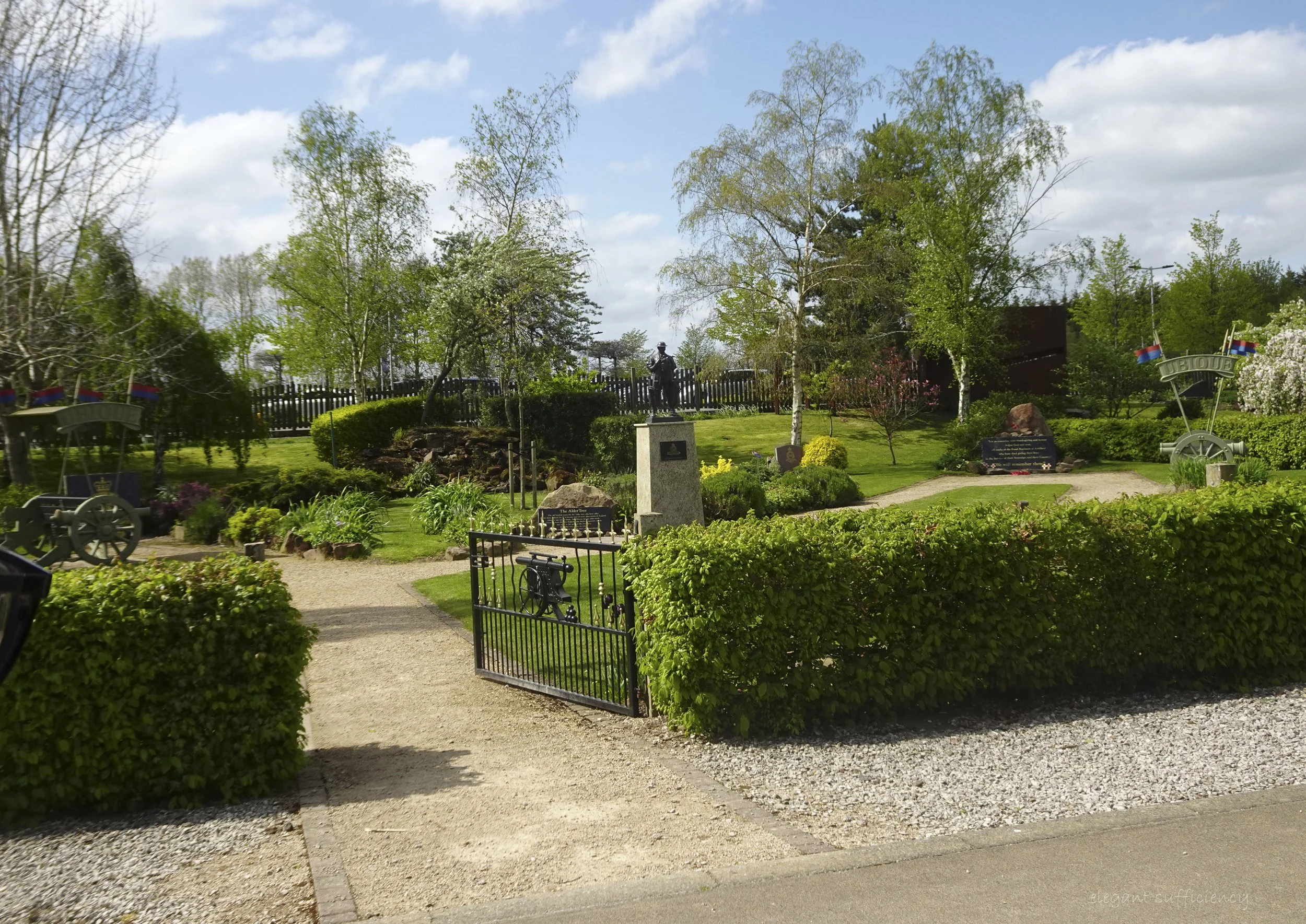
One thing was immediately apparent. This was an enormous site and if we were to get a good overview, then we needed to take a tour. We booked places on the “land train” and hopped on board for a forty minute overview.
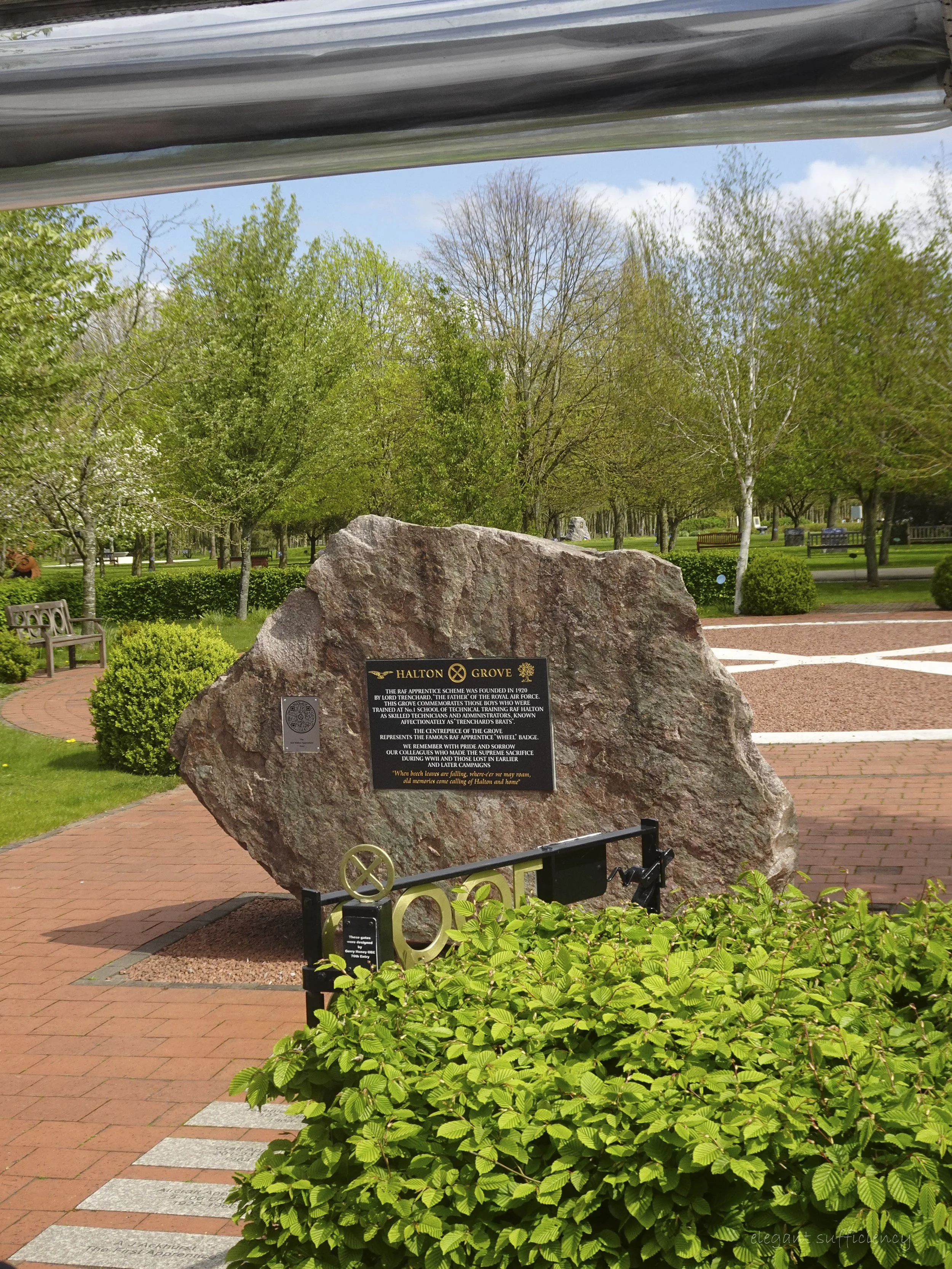
As a result, many of my photographs are “framed” like this one of the Halton Grove Memorial
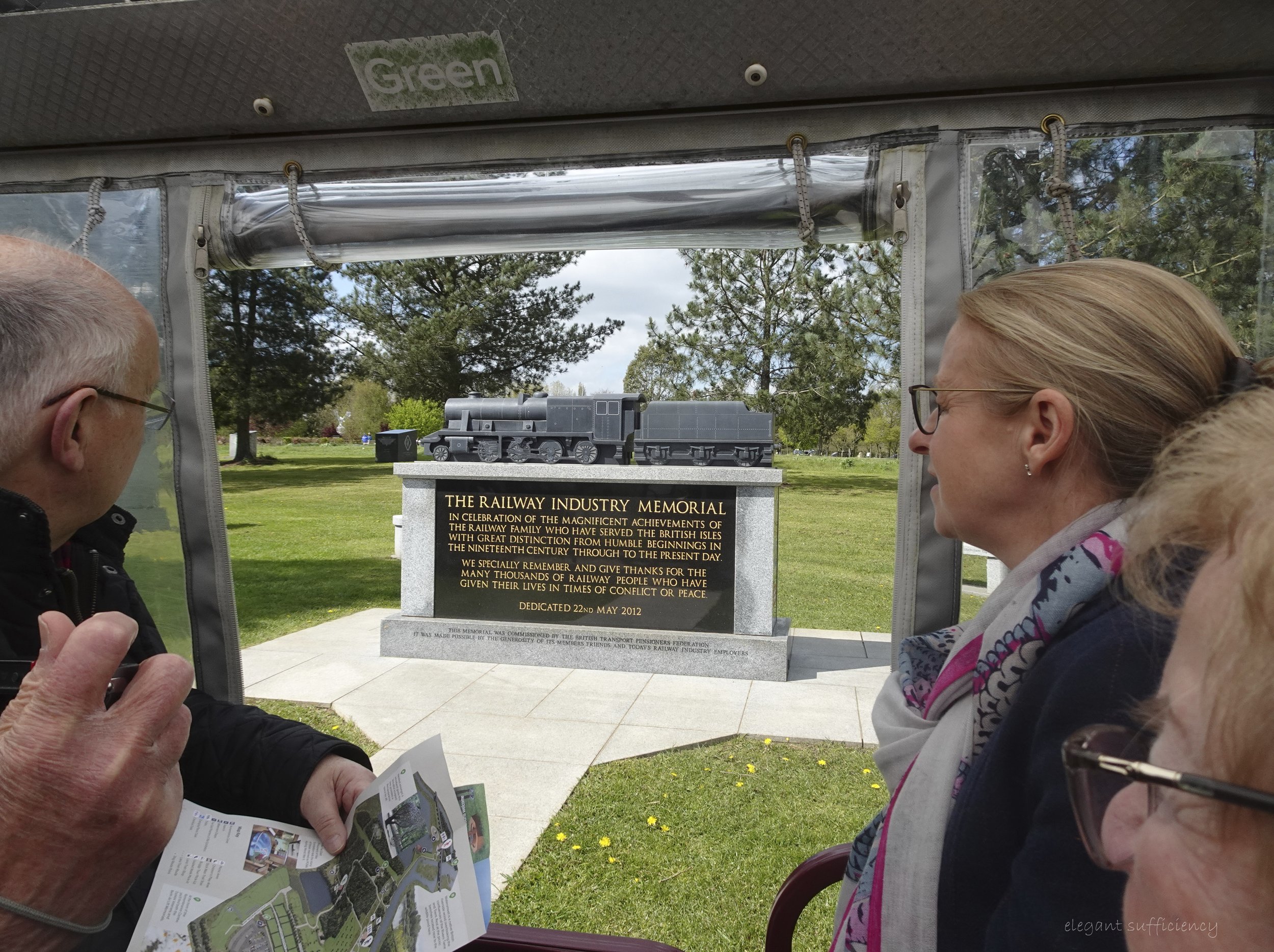
or like this!
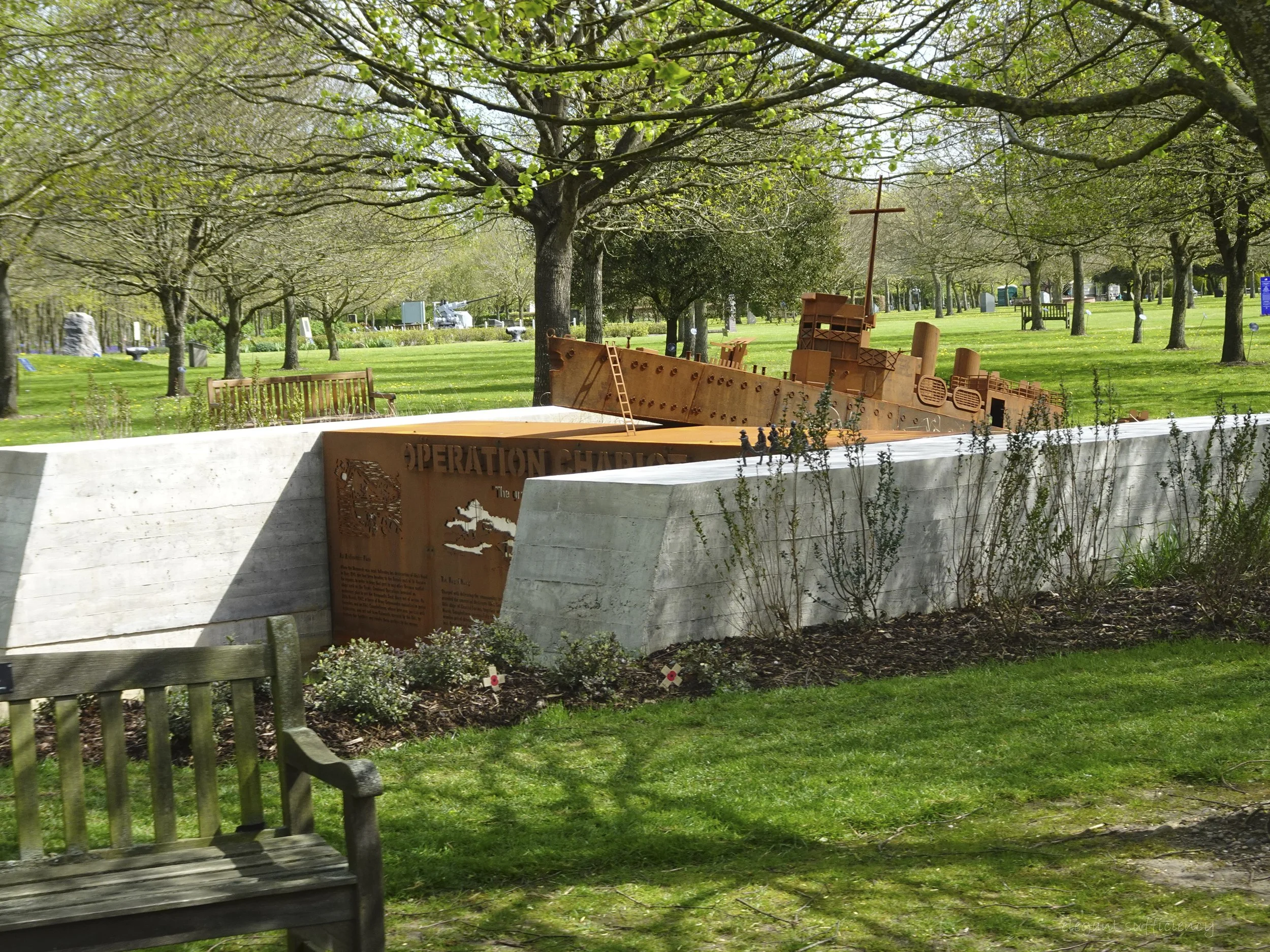
Taking photographs of the recently installed Operation Chariot memorial from a moving vehicle, however slowly it was creeping along, wasn’t easy and the angle was far from optimal. If only I could have missed that bench…
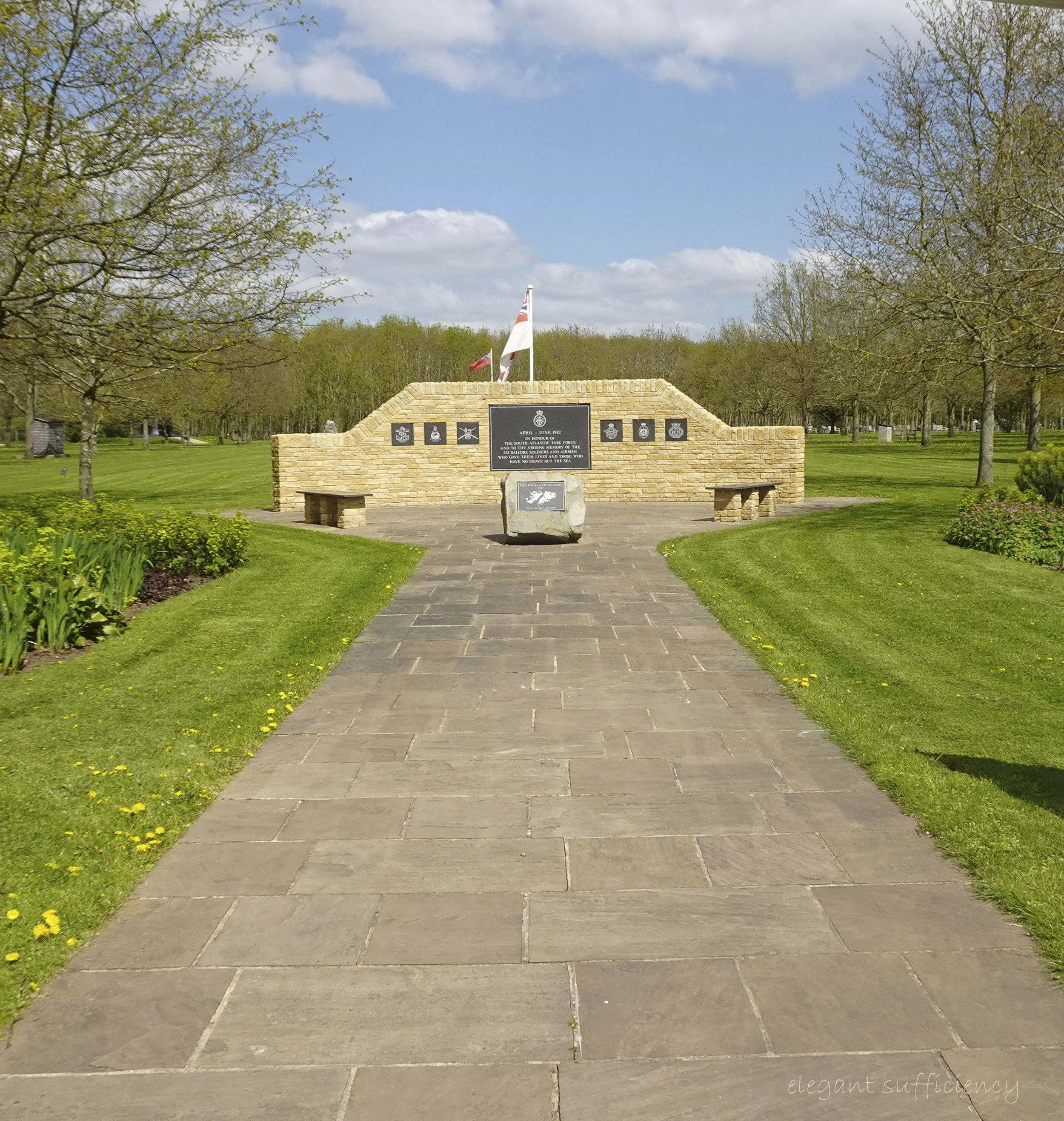
I was pleased when I saw my photograph of this particular memorial needed little editing though. It’s a memorial to the Falkland Islands Campaign, the proper title being the “South Atlantic Medal Association memorial and the Antelope Garden” the Falkland Islands Campaign Memorial I believe.
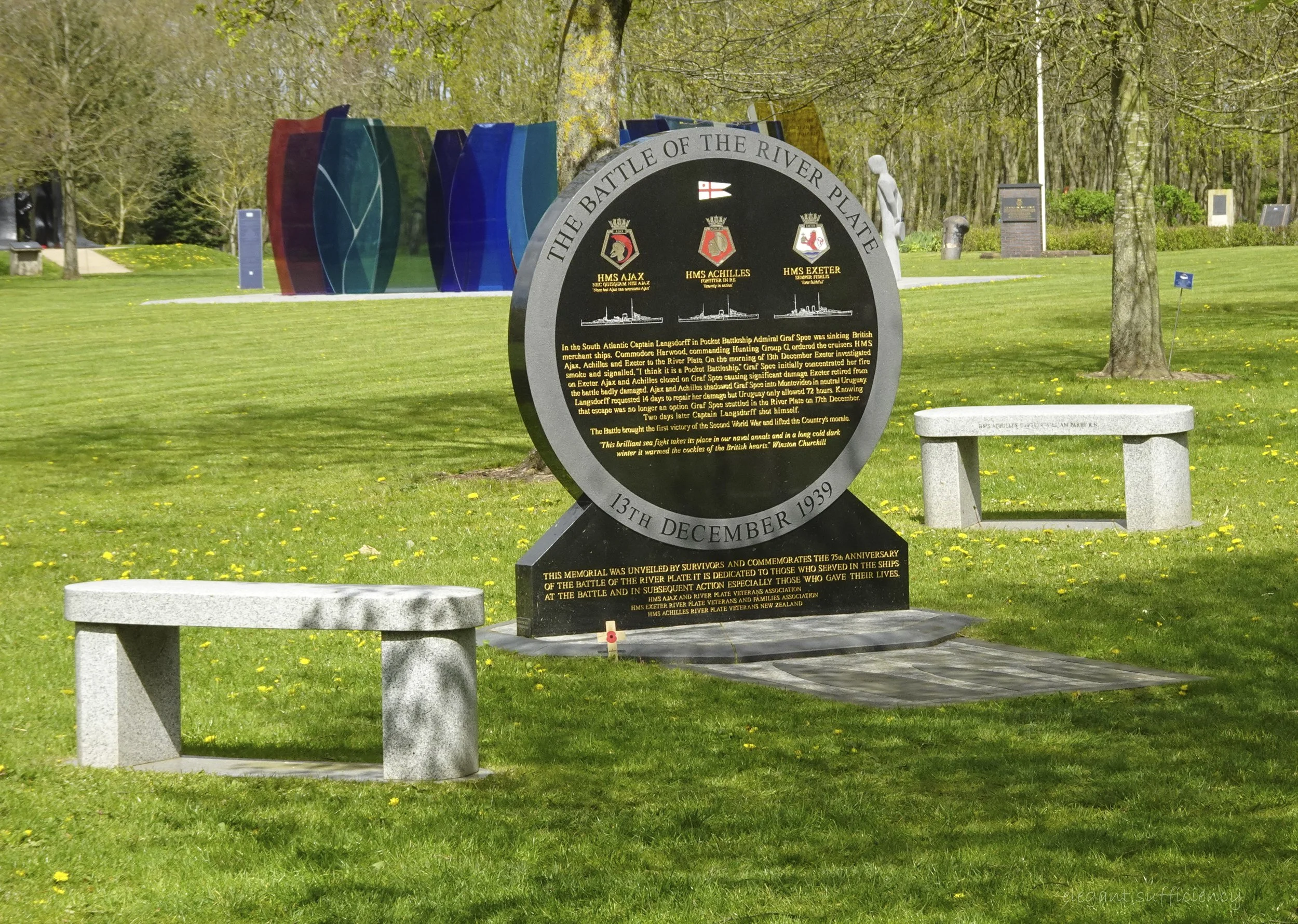
And just nearby was the memorial to the Battle of the River Plate, which prompted memories of being on board a P&O ship many years ago, sailing between Buenos Aires and Montevideo and past the site of that battle, when the Captain flew the Union Jack and played the National Anthem. It’s also clearer in this picture how the memorials vary in style and substance. Some are immediately recognisable whereas others are designed in a more creative way, such as the colourful glass National Naval Memorial there in the background.
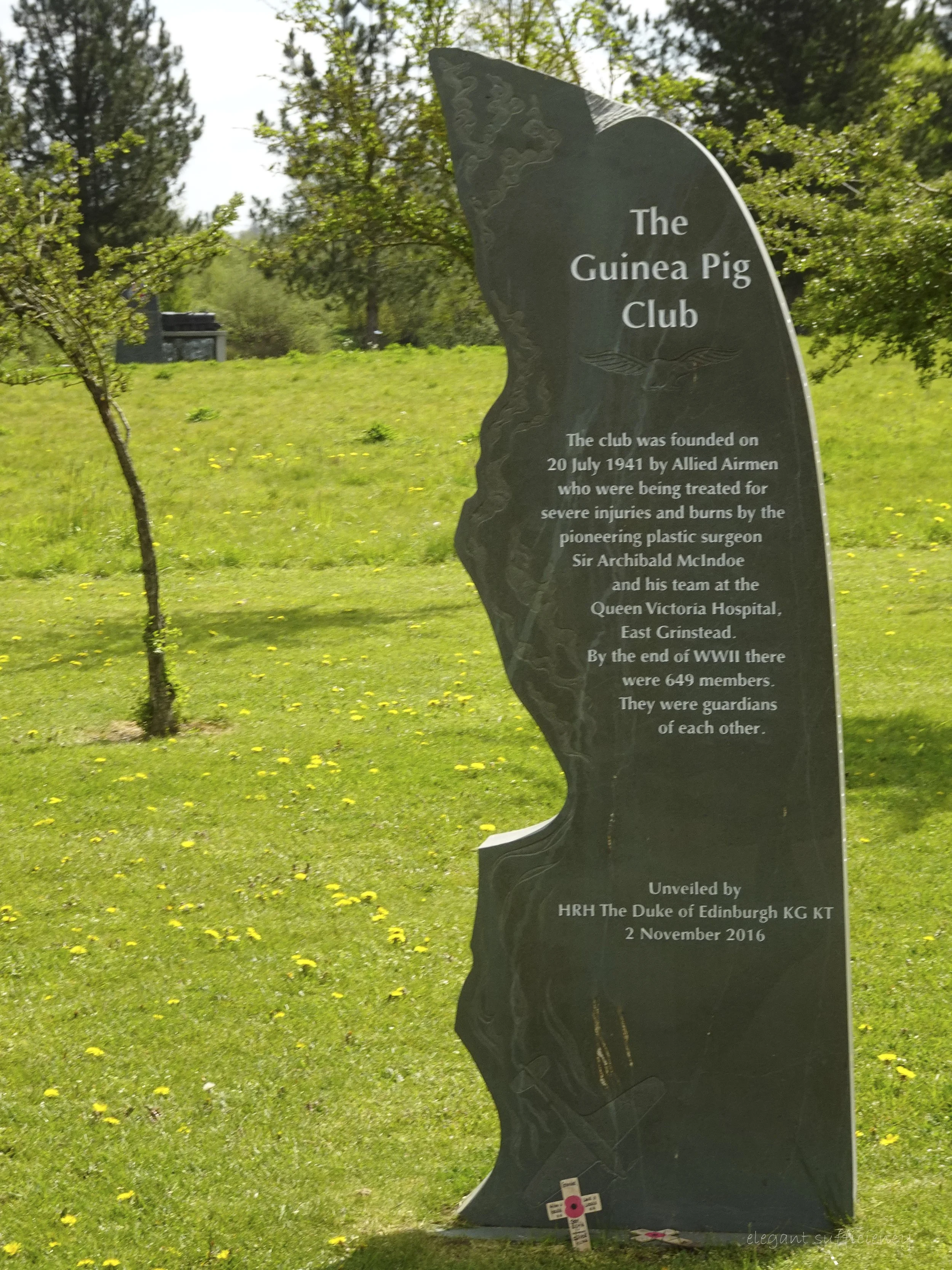
Passing by memorials such as this one is a great prompt to find out more about them.
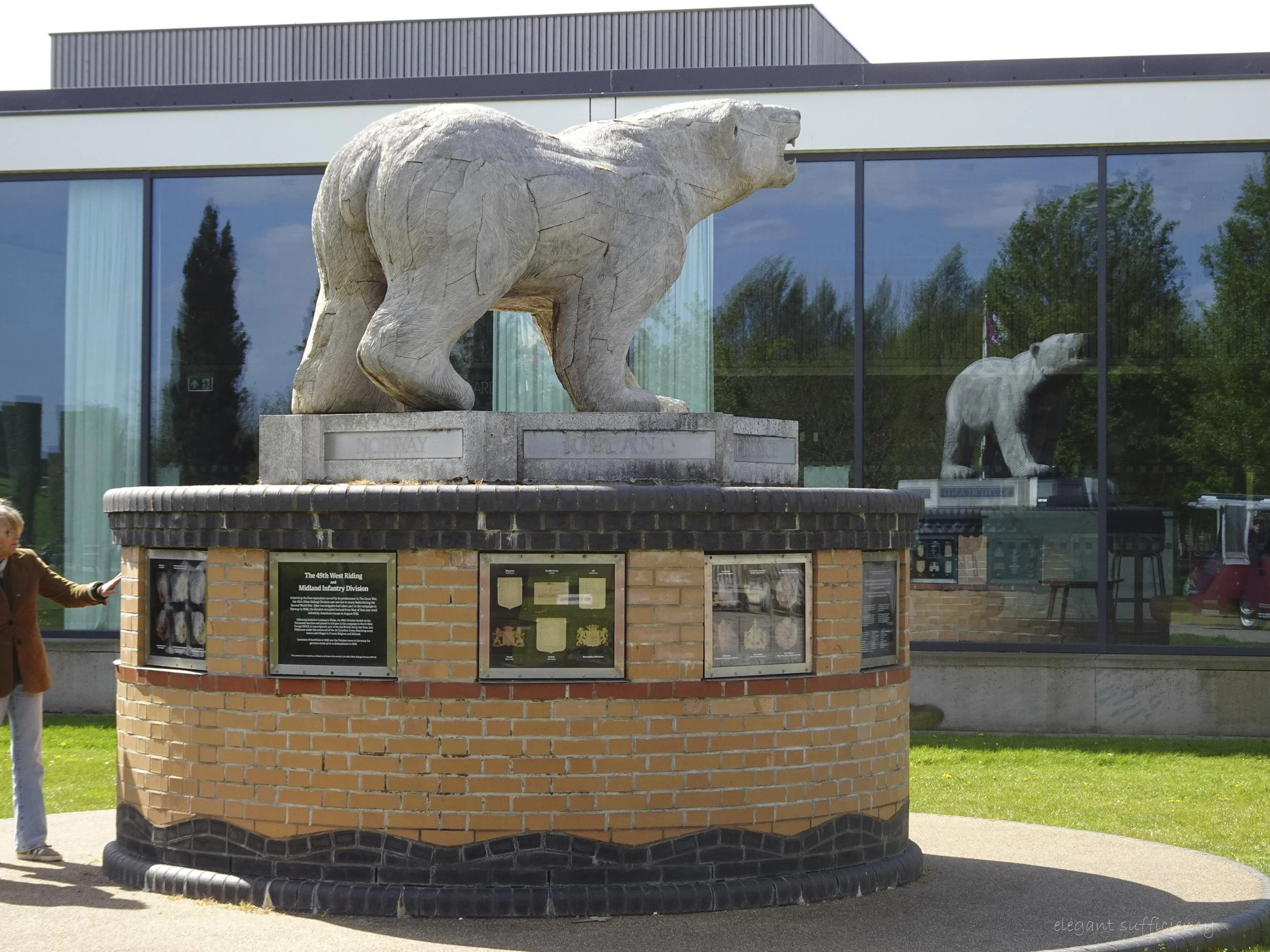
Returning to the Visitor Centre at the end of our tour, we caught a glimpse of the first memorial to be installed here at the Arboretum, the Polar Bear.
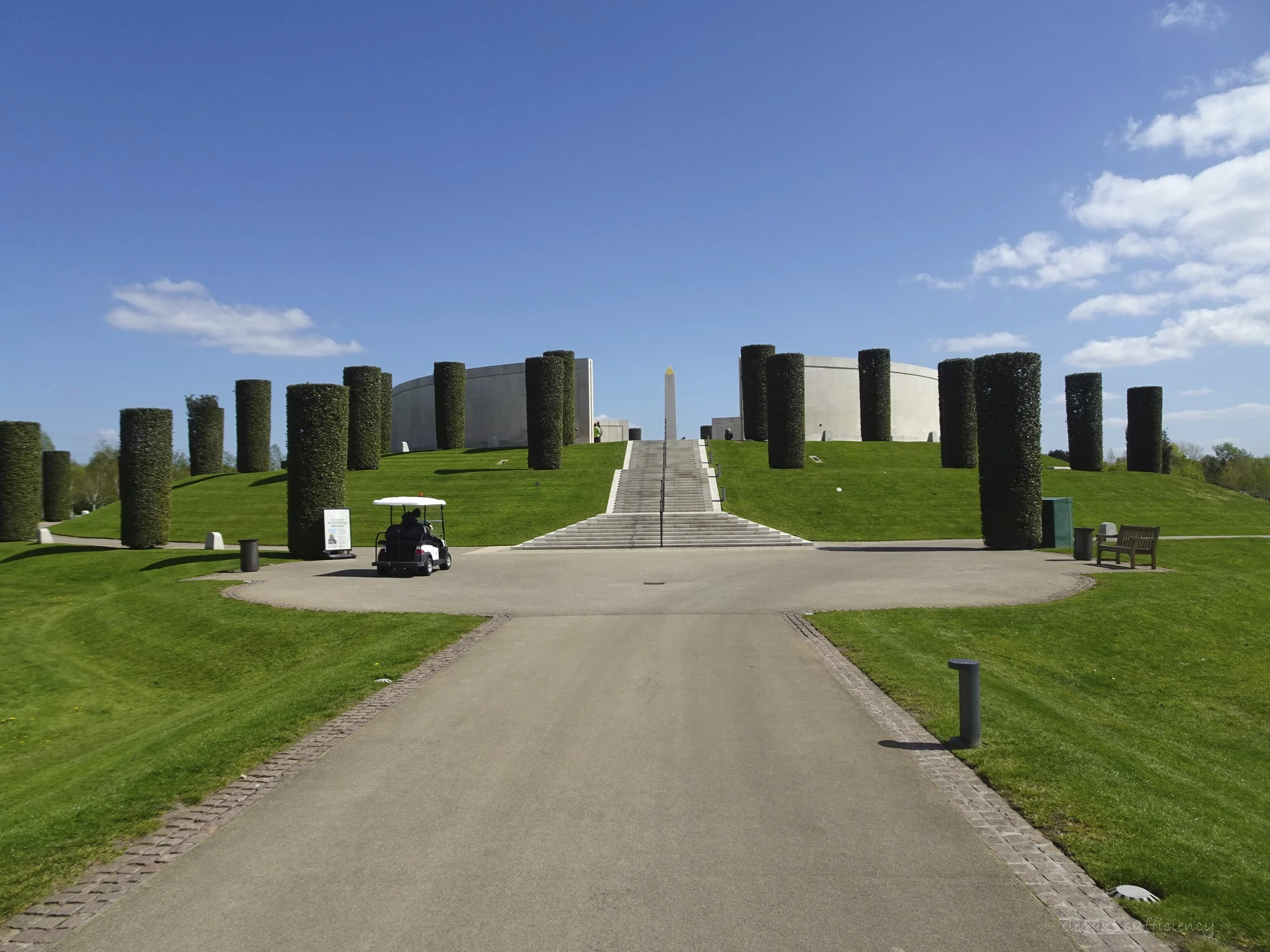
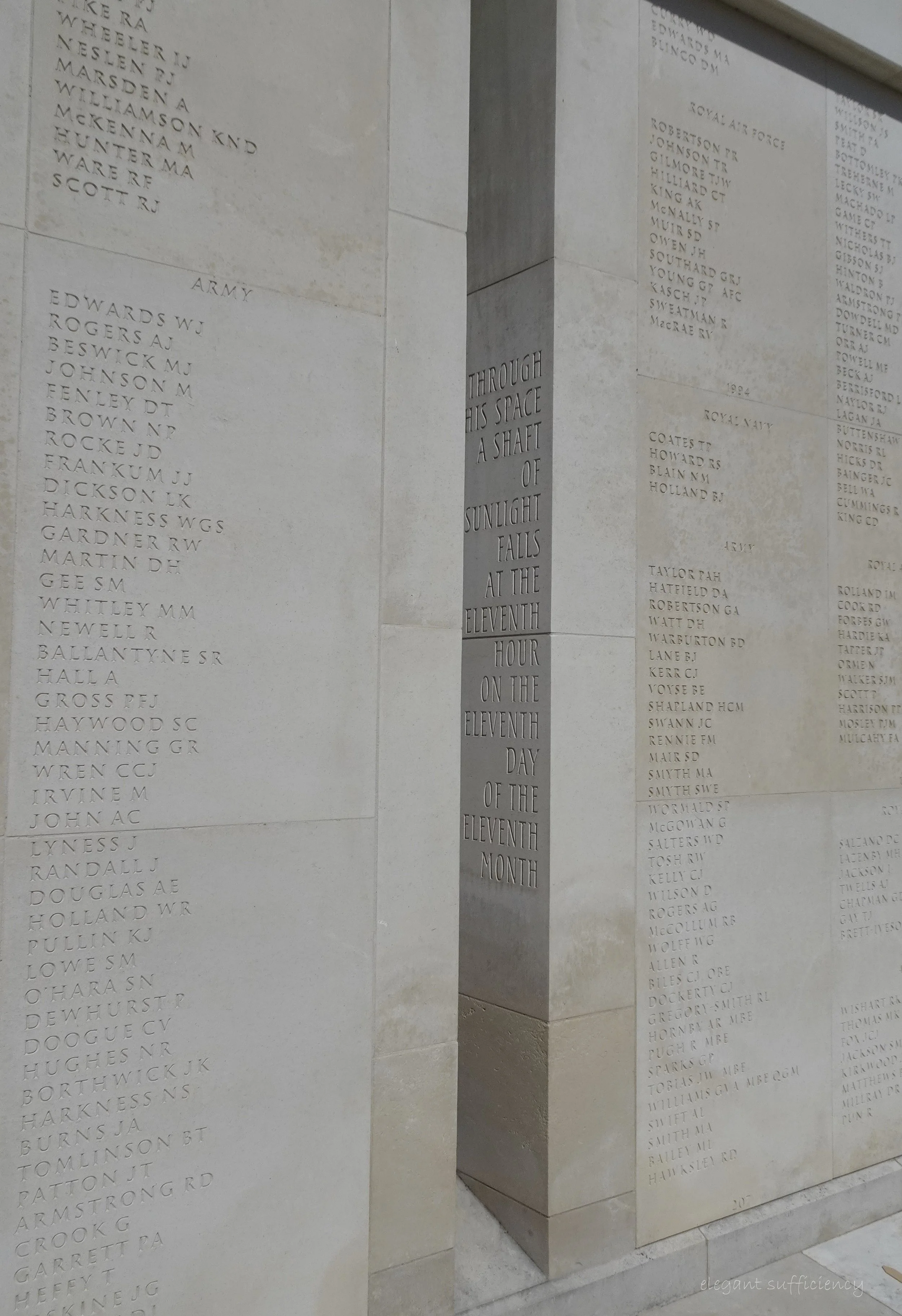
From here, there was a fine view along the central path to the largest structure here, appropriately the principal Armed Forces Memorial, where over 16 000 names are inscribed on the stones. These are the people who have given their lives in the service of the country since the end of the Second World War.
As we stood at the foot of the steps leading to the memorial, the driver of the small buggy waiting there offered a ride to the top; a kind offer we gladly accepted.
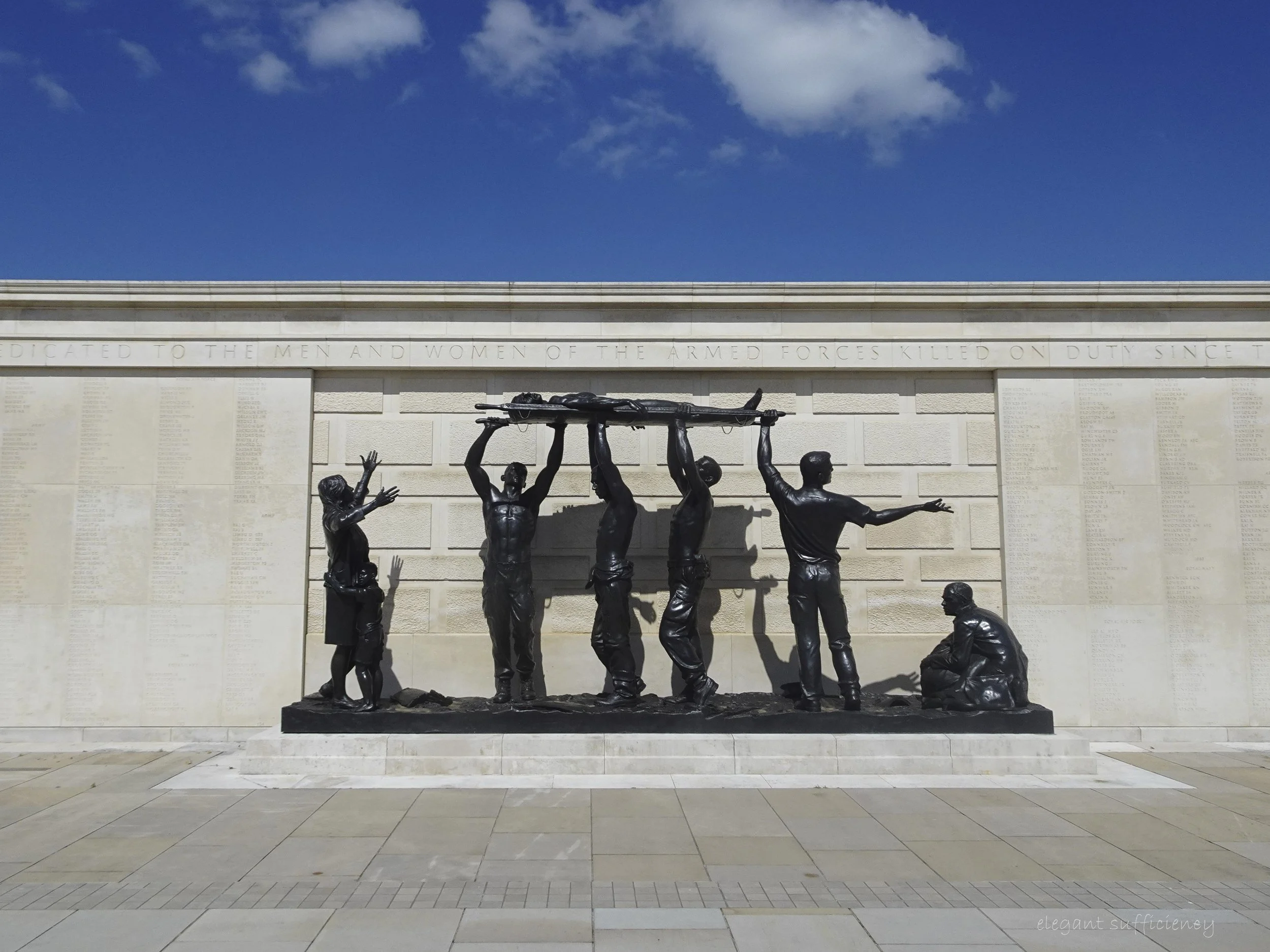
In the central area of the memorial, there are two bronze sculptures on each side and a central bronze wreath. Since it’s impossible to capture such an immense structure, I was glad to come across this 3D tour on the Arboretum website. As always, when standing in such a place, thoughts take a different focus; the hundreds of names, many of our generation too.
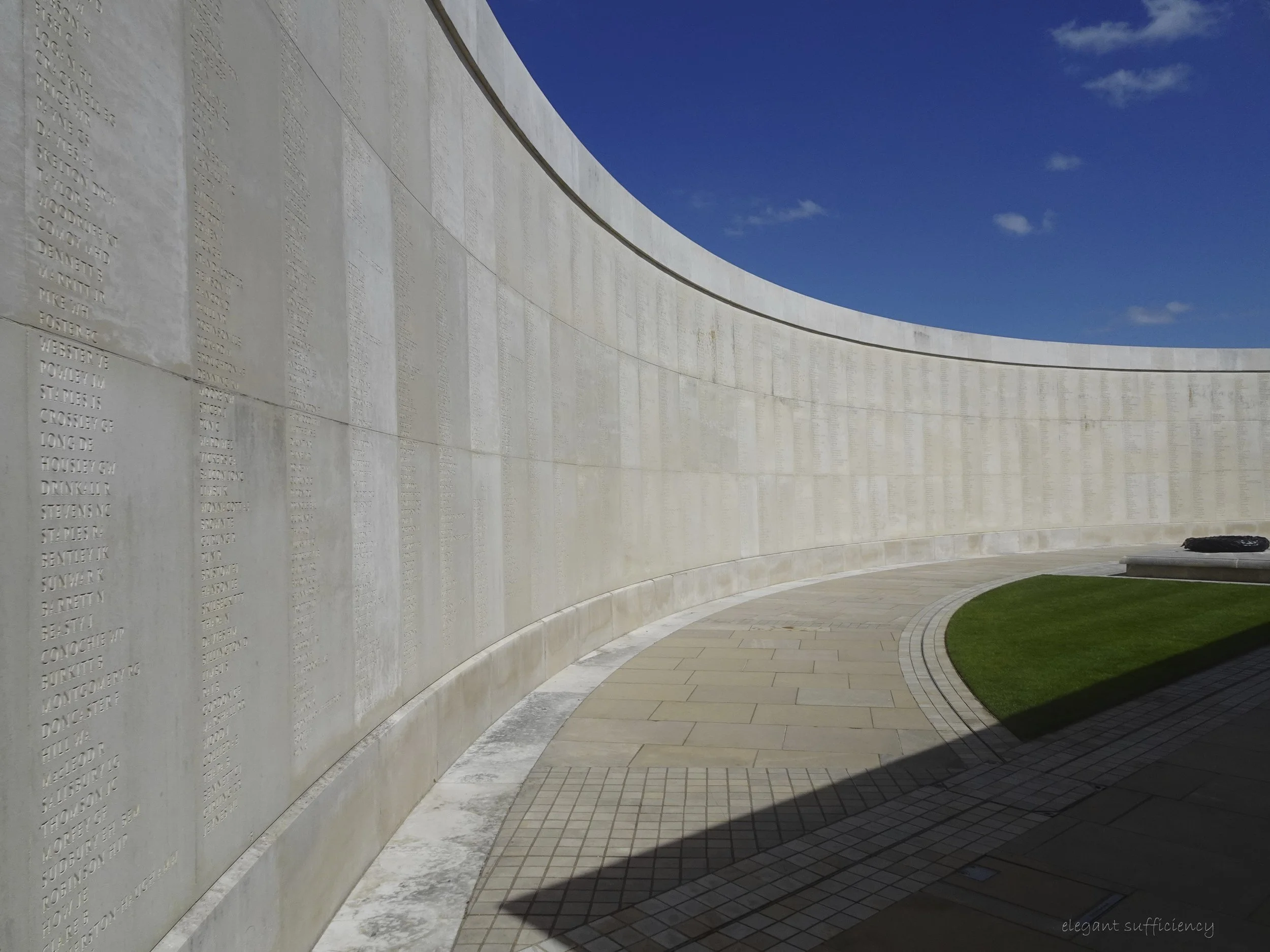
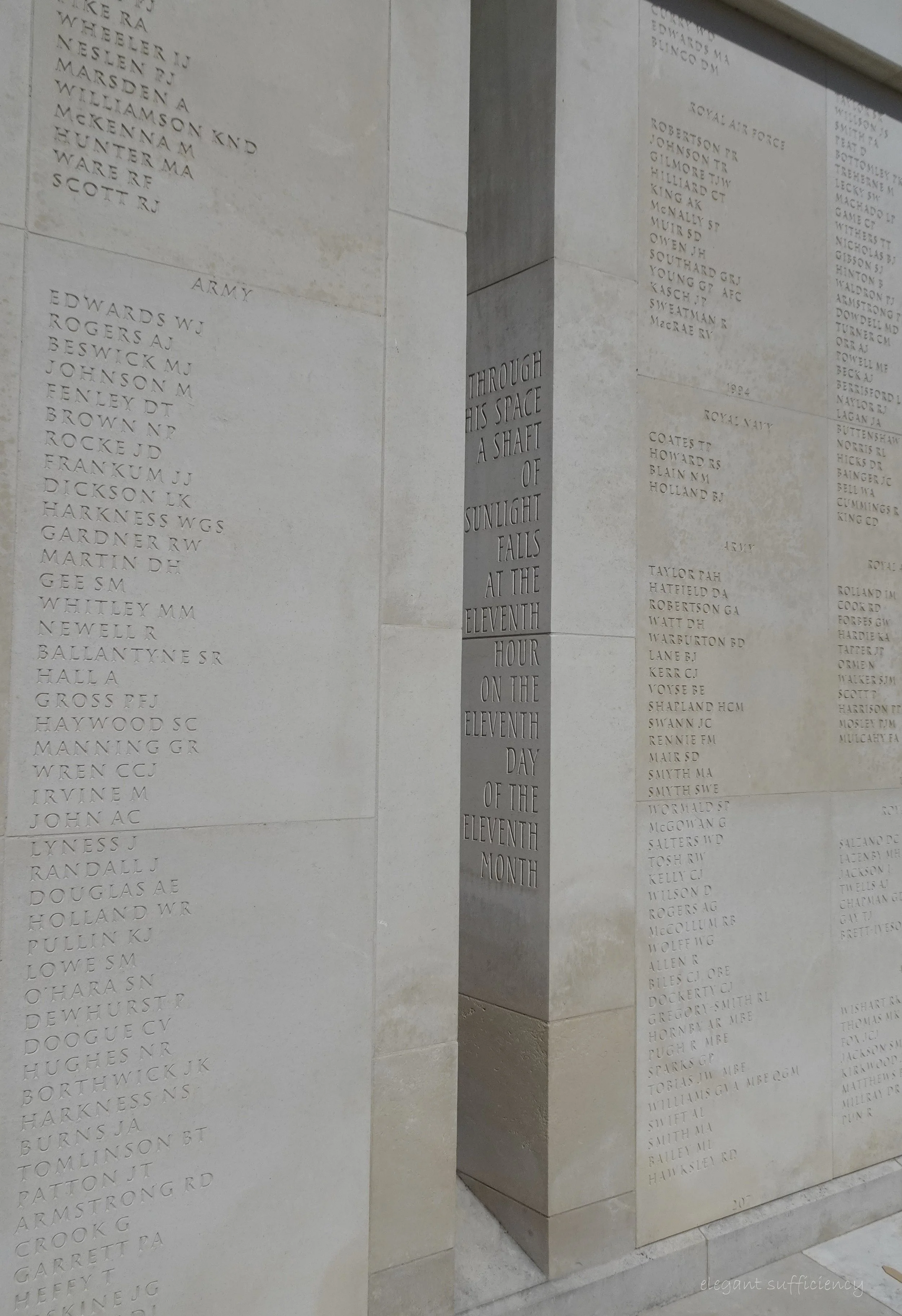
Three quarters of those two curved walls are covered in names, thankfully fewer in more recent years. The memorial was constructed to accommodate many more names, though, as my Hero observed as we stood quietly alongside, if only we could believe that space would never be needed.
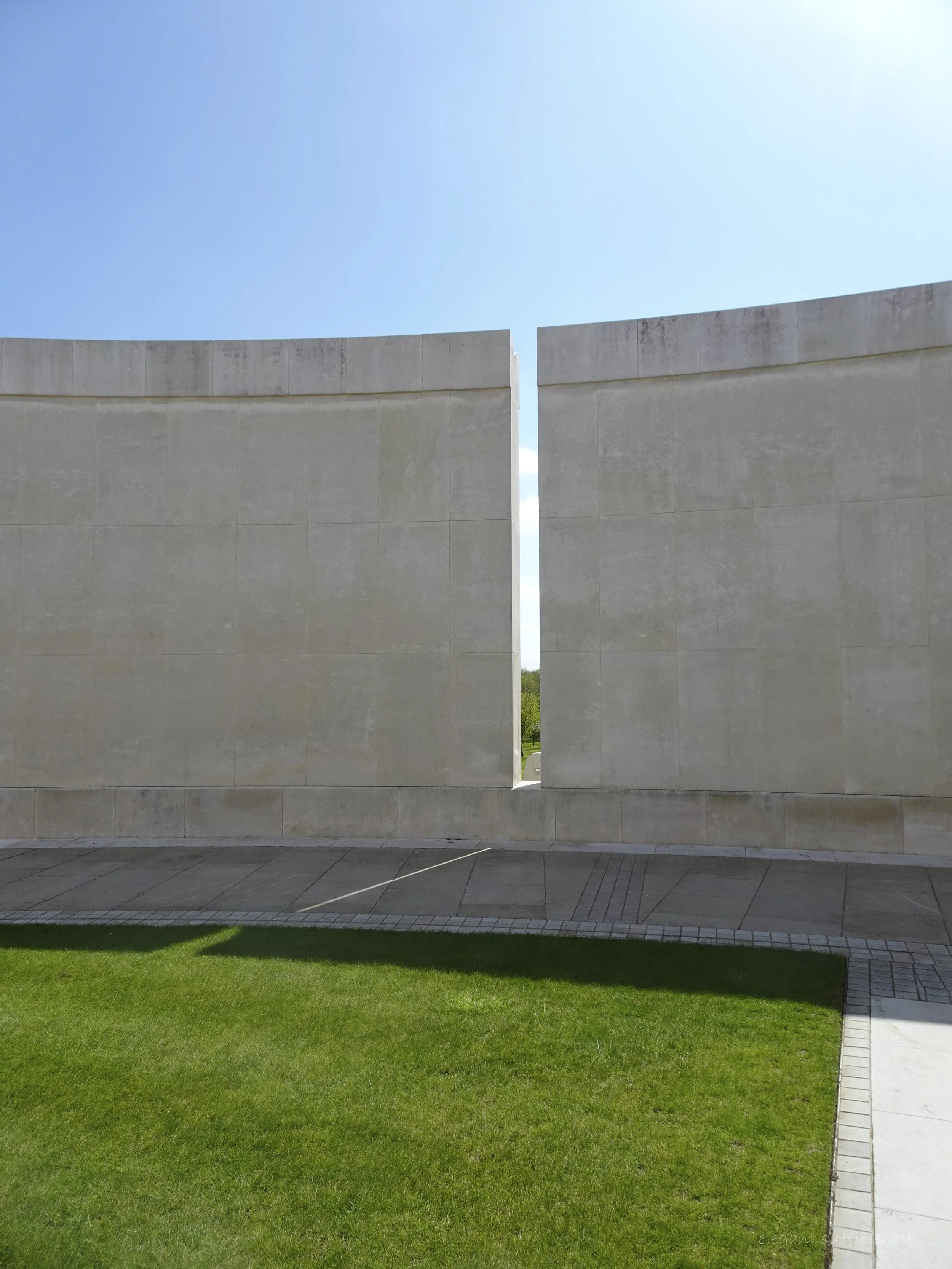
There’s a gap in the curved wall on one side of the memorial
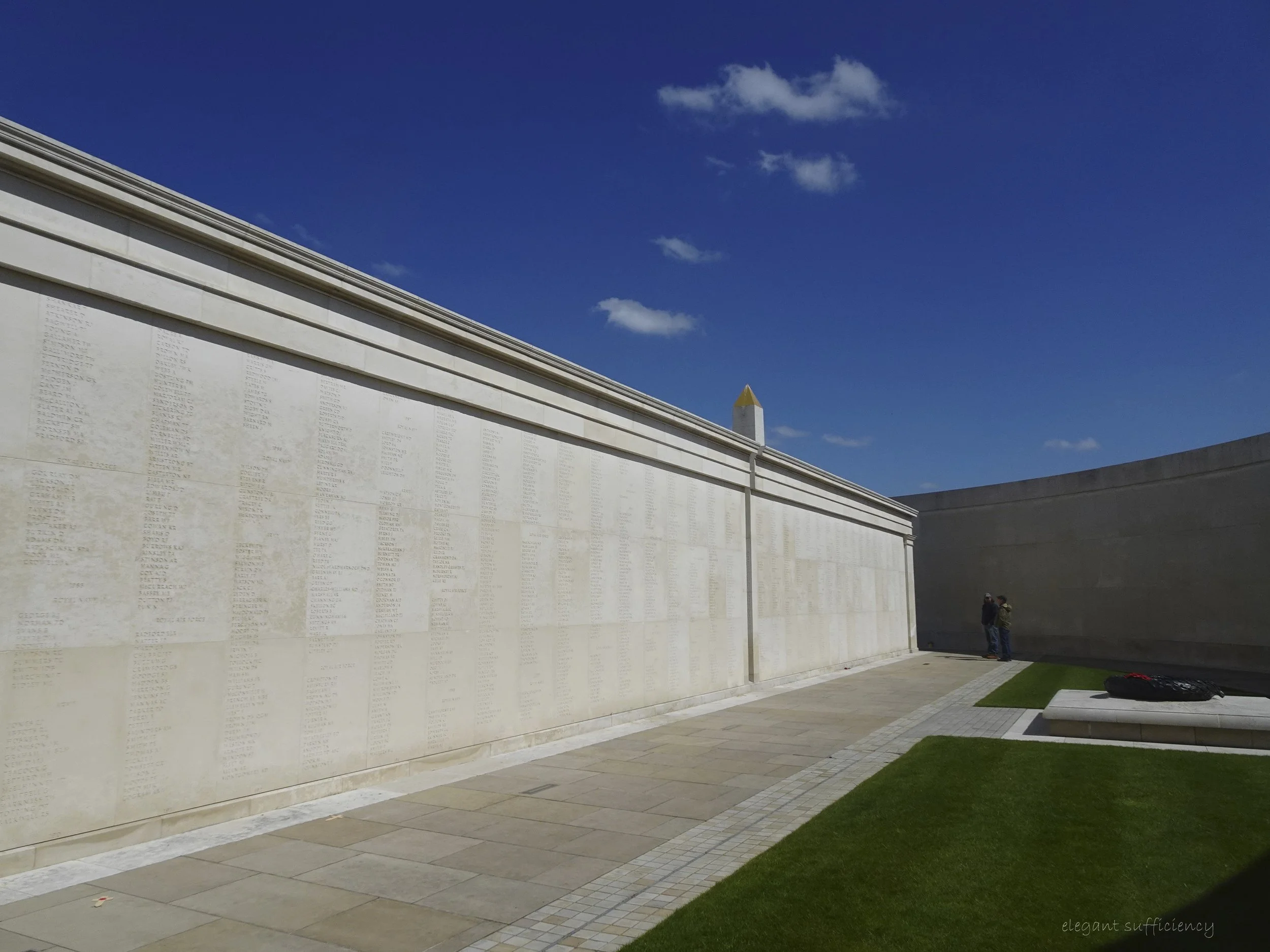
and this lines up with another gap on the inner wall opposite. On Armistice Day, the 11th of November, at 11 o’clock each year, the sun shines directly through those gaps and onto the bronze wreath in the central area. We’d seen news reports of the ceremony here and will appreciate them all the more having been here ourselves.
We’d been here on such a glorious day, under bright blue skies - “so lucky with the weather”. With another hour or so to spare, we each went our separate ways to enjoy a cup of tea in the sunshine, to visit the shop or take a closer look in the exhibition in the Visitor Centre.
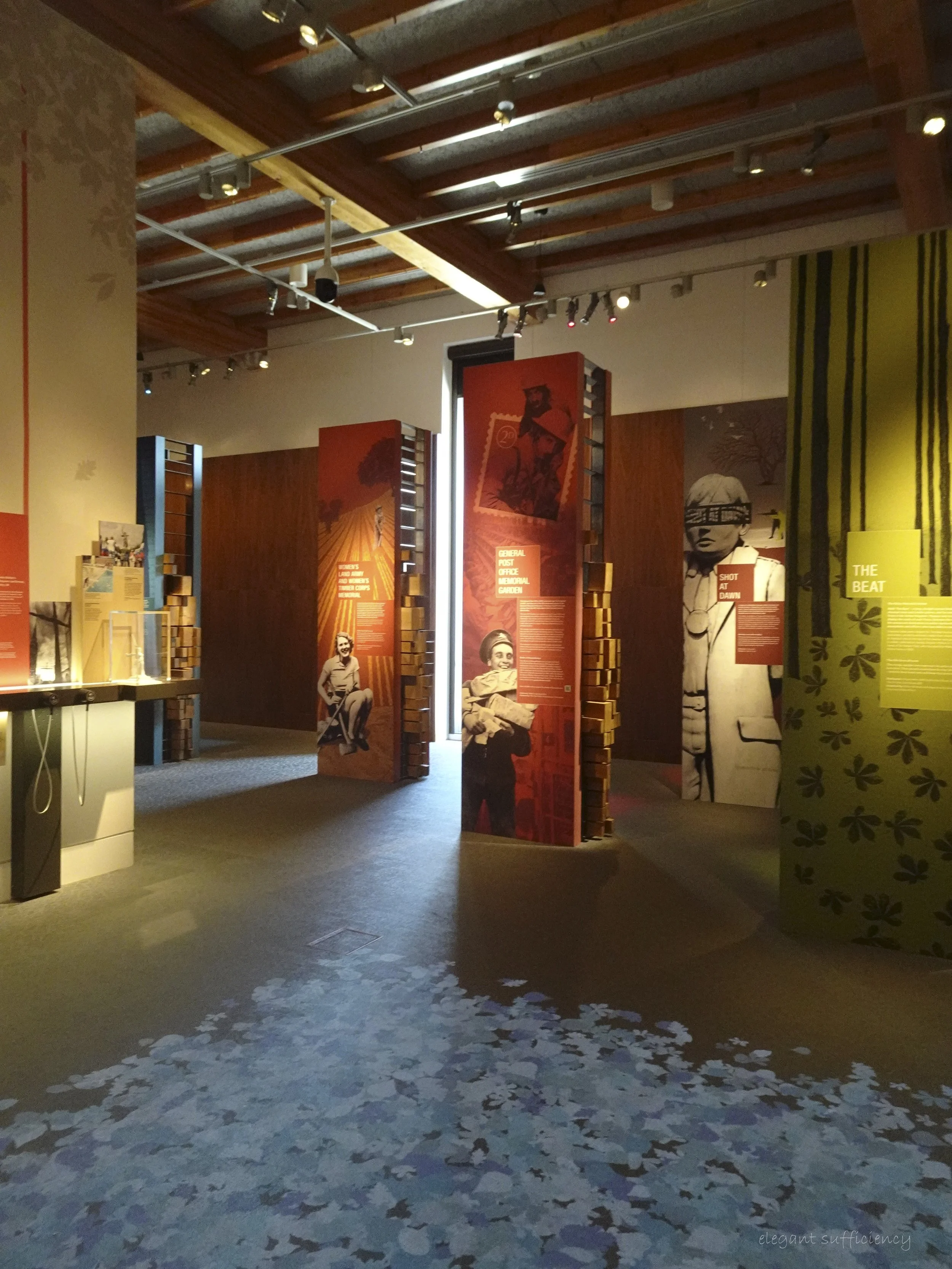
One aspect of the Arboretum we’d all commented upon was the team of wonderful volunteers, one of whom I chatted to in the exhibition. I’m fortunate in that none of my immediate family have lost their lives in the service of their country, so in many ways, there wasn’t a particular memorial to resonate with me. However, there in front of me was a panel about the Women’s Land Army, in which my Mum served. The mother of the gentleman to whom I chatted had also been a “land girl”, moving from inner London to a farm in Essex, where she met his father and stayed for the rest of her life.
We said goodbye to the Arboretum staff expressing confidence that this wouldn’t be our last visit, because of course, as soon as we were ready to leave we learned of other places we’d like to see. Not only that, but I later learned that Edith Rigby’s story is also told here in the exhibition - something I’d certainly have looked out for had I known.
It’s always good to leave a place thinking “aaah, next time…” isn’t it?