



1,313,843 pieces of eight
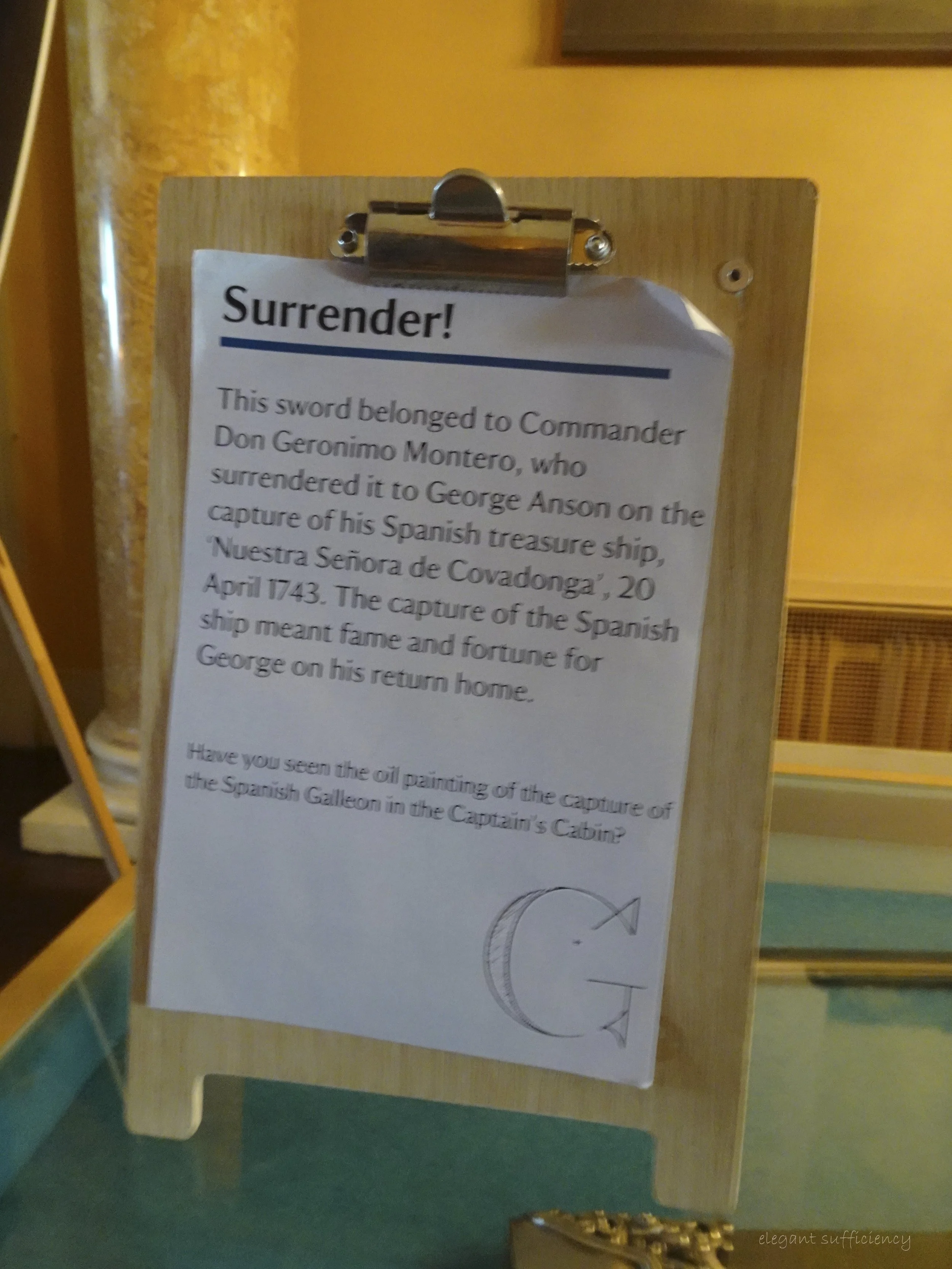
…the sum of money captured by Commodore George Anson from the Nuestra Señora de Covadonga, encountered off Cape Espiritu Santo on 20 June 1743.
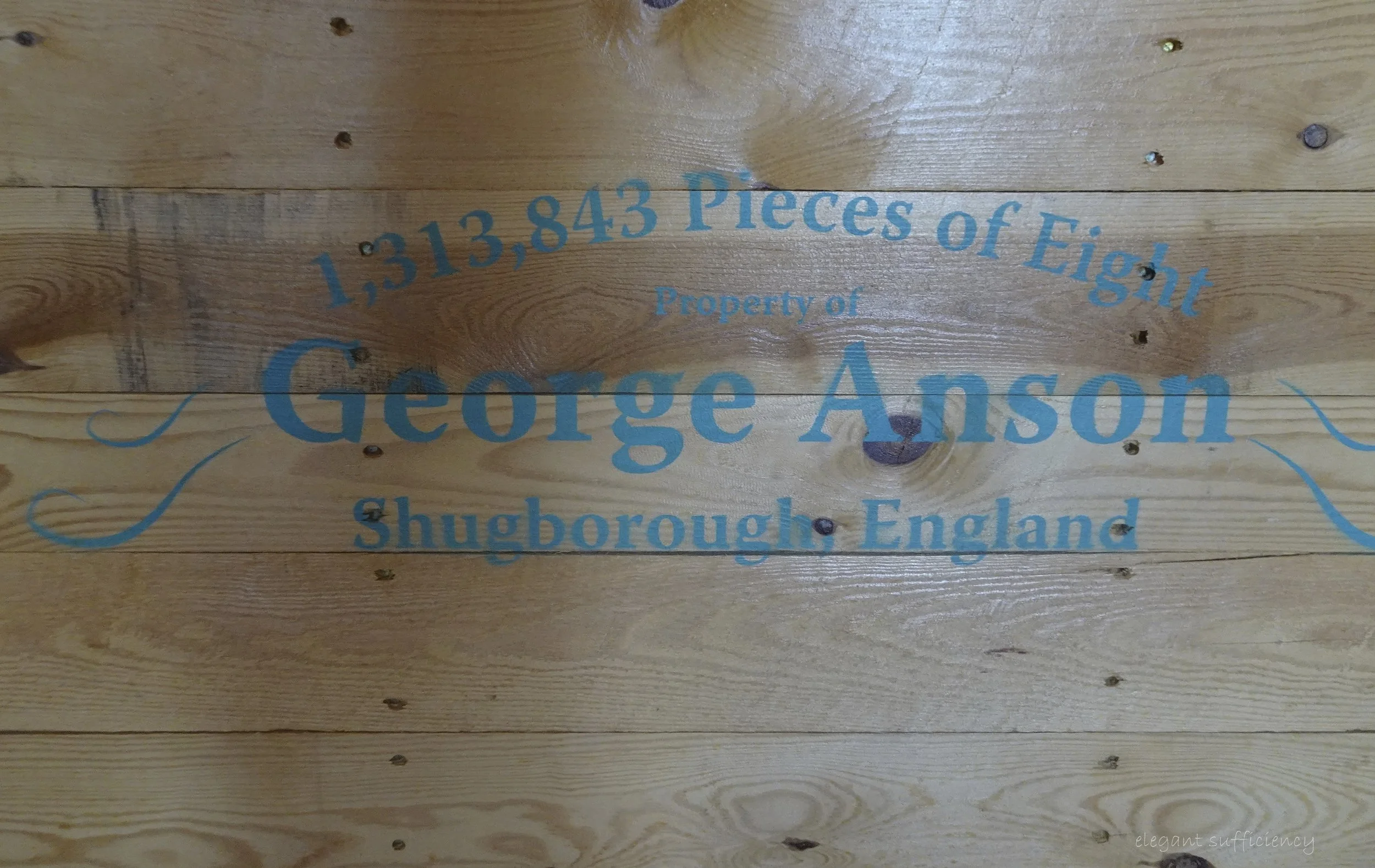
Such wealth not only brought George Anson a comfortable life, but considerable political influence and recognition, becoming known as the Father of the British Navy. He was the key character we learned about when visiting Shugborough Hall, where he was born in April 1697.
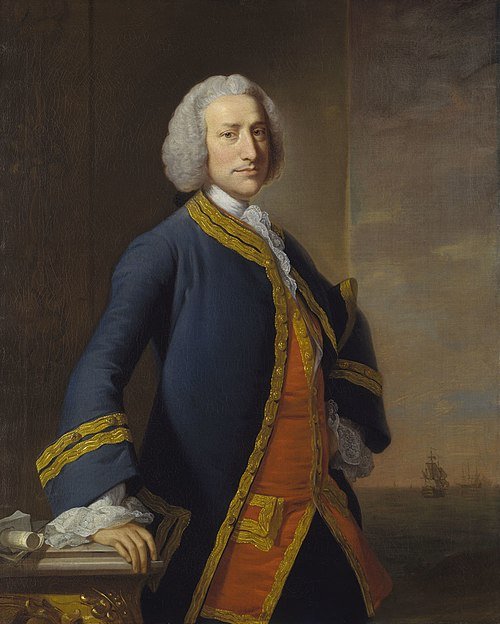
I am not known for my interest in, or knowledge of, history, but with the evidence of this man’s fascinating life all around me, it was impossible to be anything but captivated.
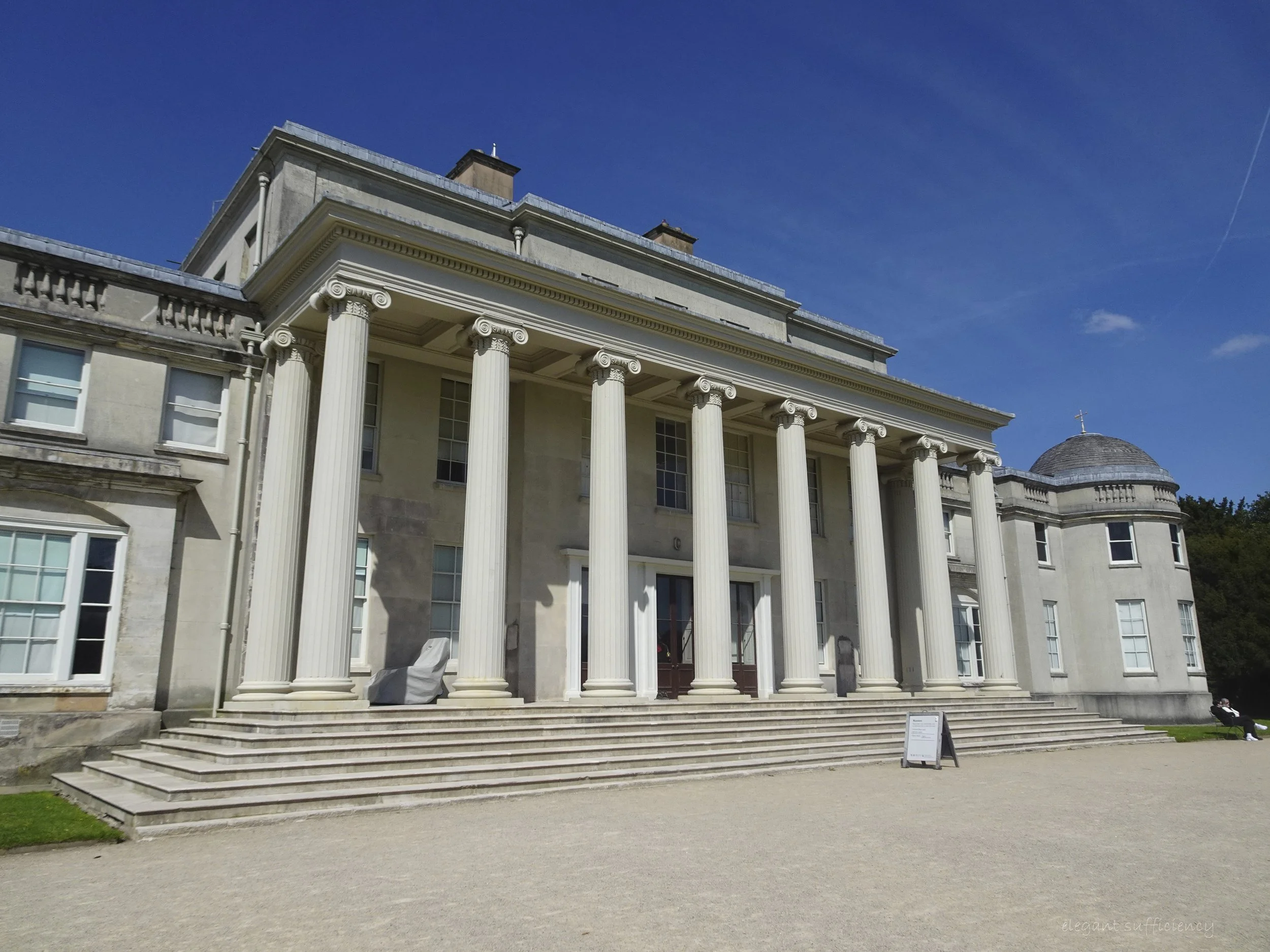
My knowledge of Shugborough was as the home of Patrick Anson, the 5th Earl of Lichfield who had been a well known photographer in the 1980s onwards. It was Patrick Lichfield who took the photographs of the Royal Wedding in 1981, for example. His private apartments were to be found upstairs, but more about that later.
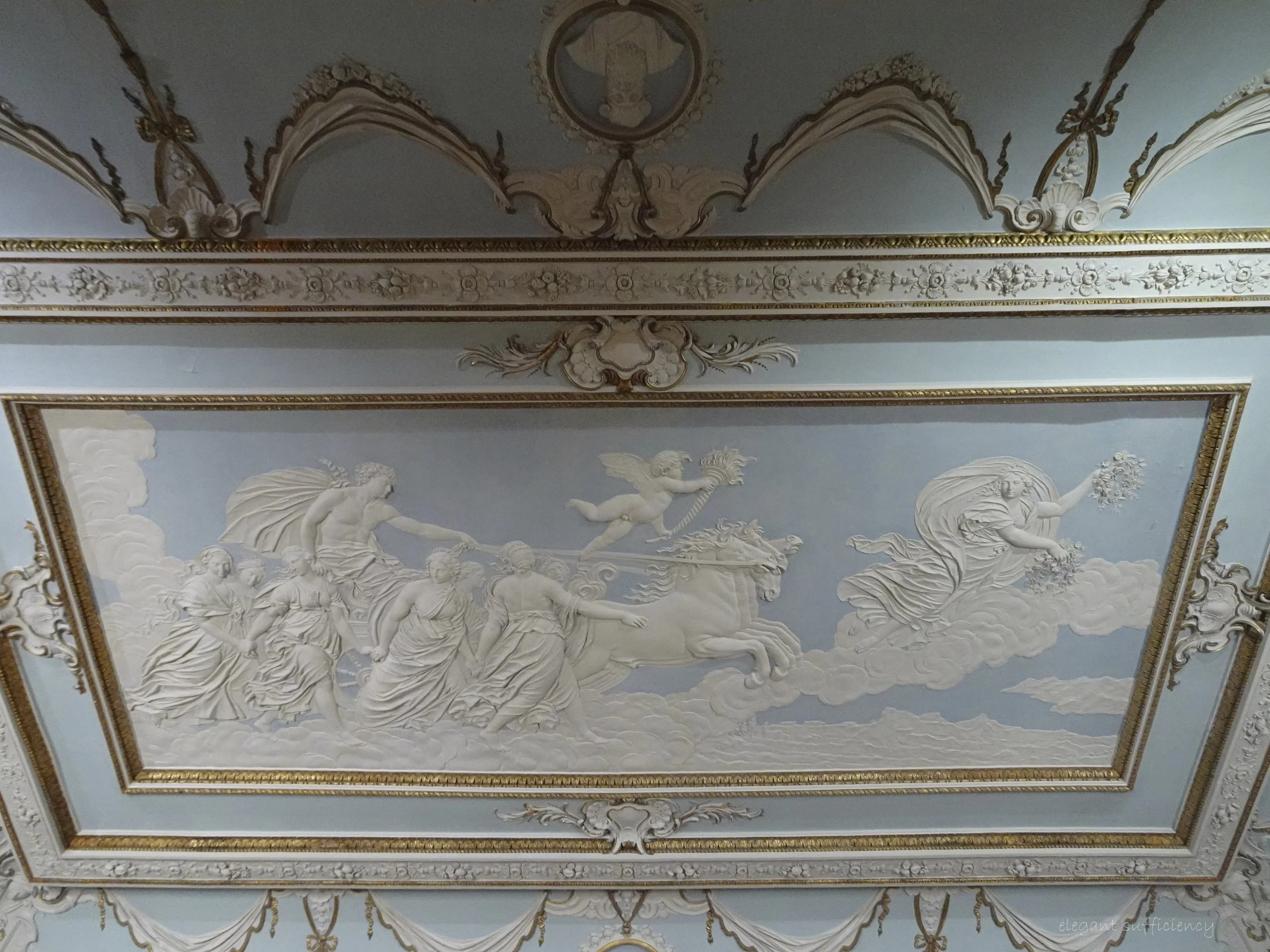
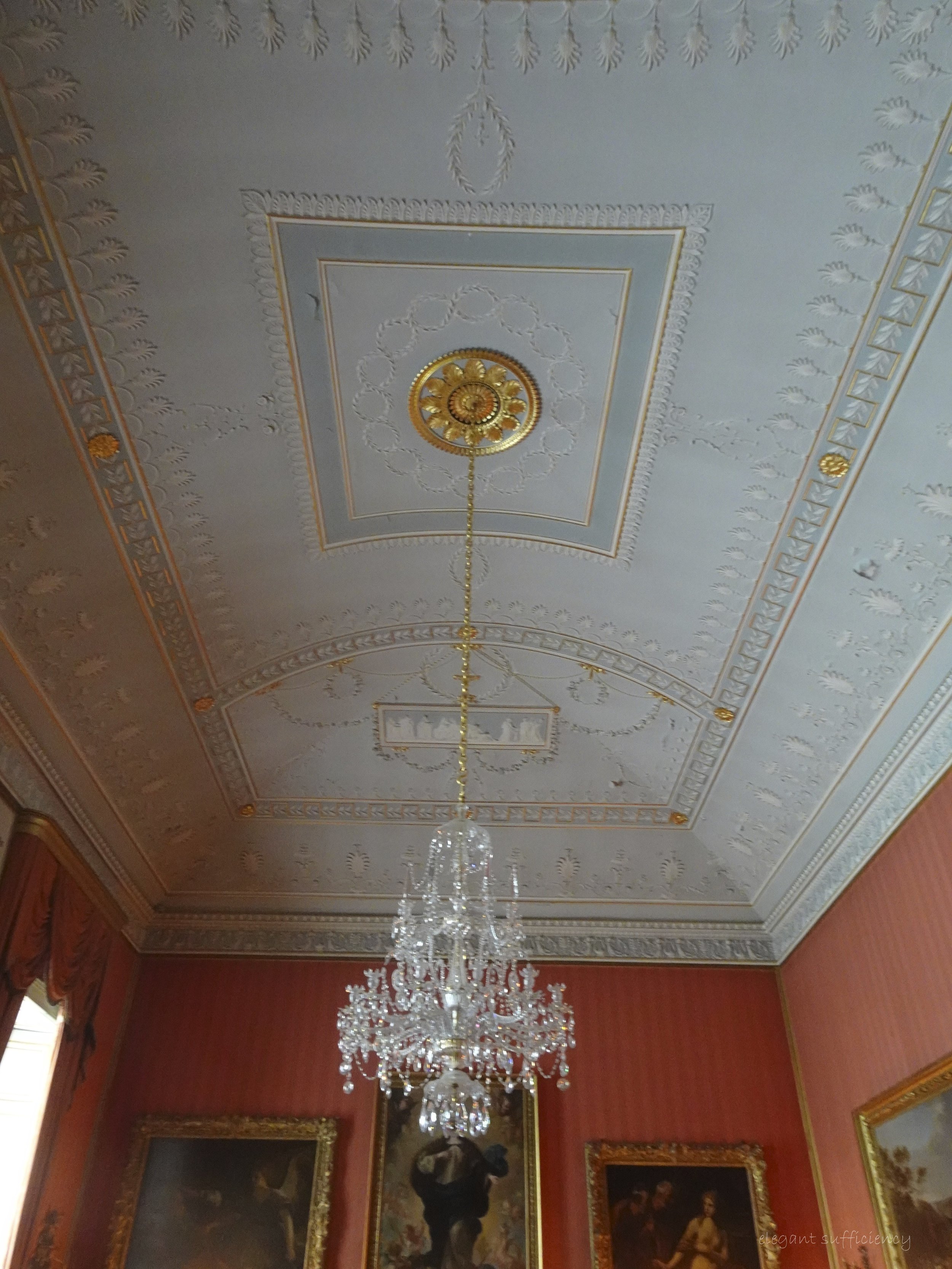
Our visit to the house began on the ground floor and the state rooms there, created by George Anson’s elder brother Thomas, who gave up his legal career to embark on a Grand Tour. The dining room ceiling in particular is spectacular.
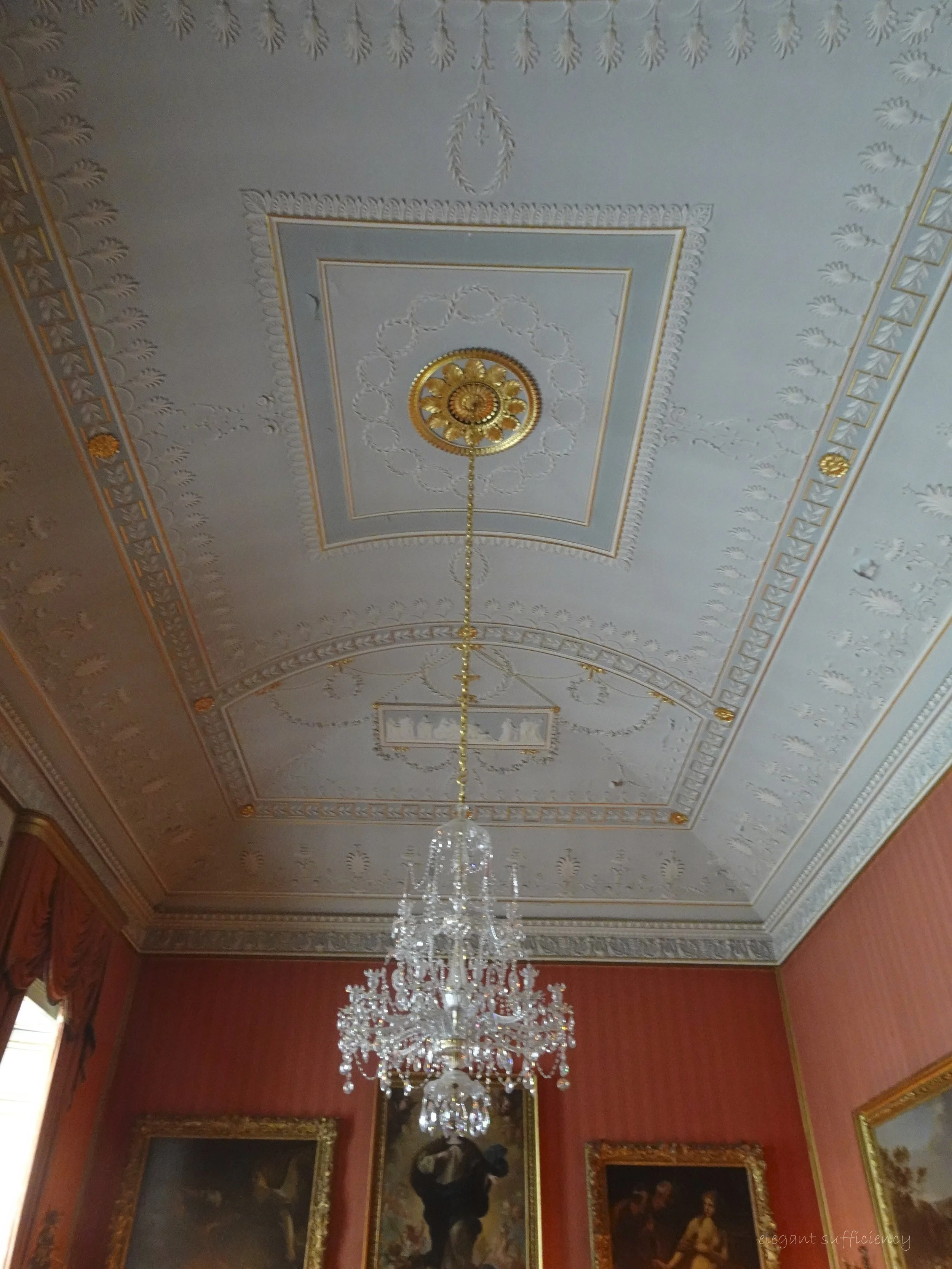
The ceiling in the adjacent Red Drawing room was similarly magnificent and these two rooms might have held my attention for the whole morning, had there not been more to see (and plenty of other people wanting to take a look as well!)
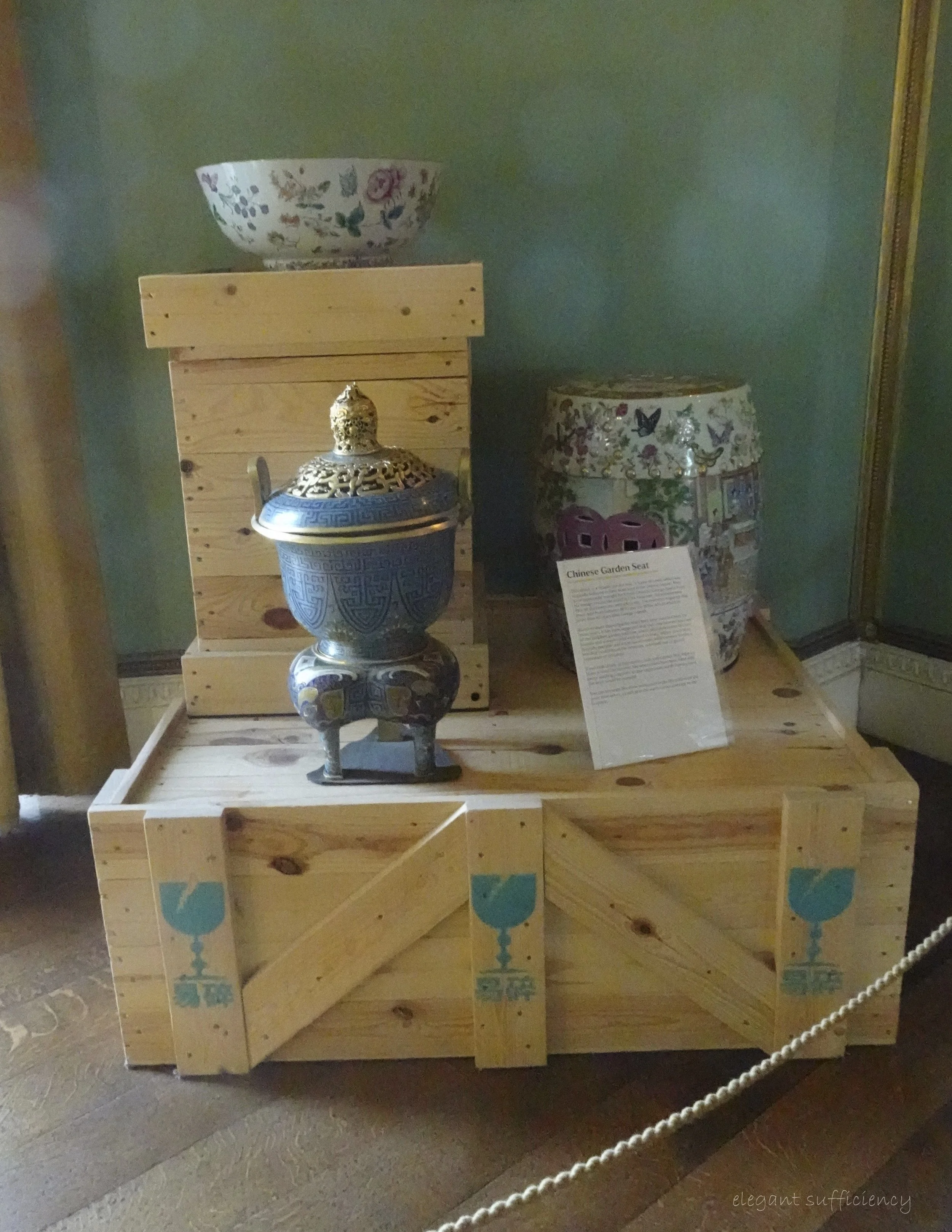
Moving on from the formal, state rooms, there followed a series of story-telling displays, each featuring several well chosen items which illustrated life in the Hall around the time of George and Thomas. The printed explanation on this staging refers to the “Chinese Garden Seat” behind it, which could be filled with sweet smelling herbs and flowers to “mask the odour of the sitter” 🫢
Another glass case nearby contained a key treasure which was creating a great deal of interest.
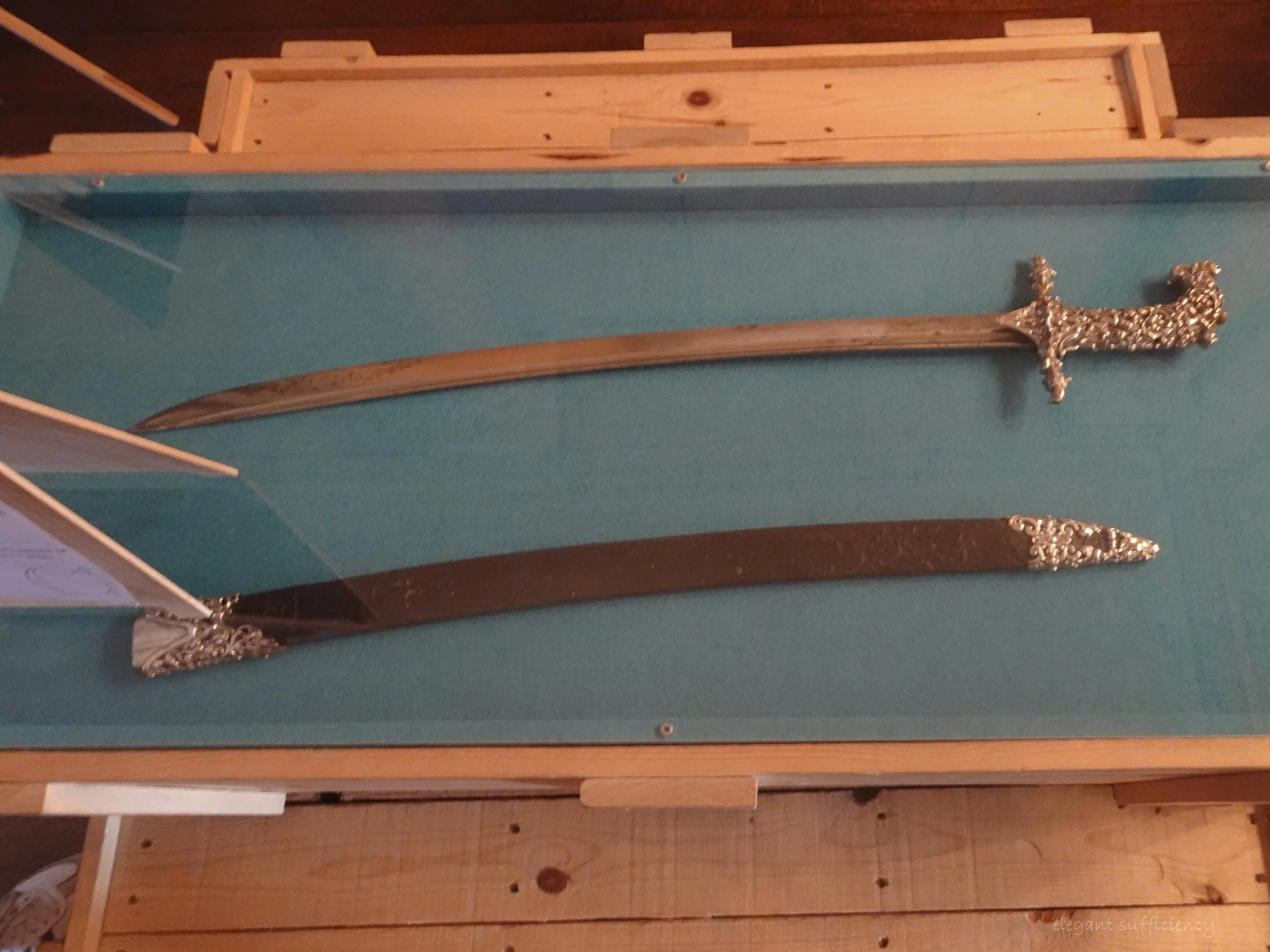
The story of the sword was told on the clipboard
These were lively displays, very accessible to people of all ages and the volunteers nearby were ready and able to elaborate with stories and more information for those who asked.
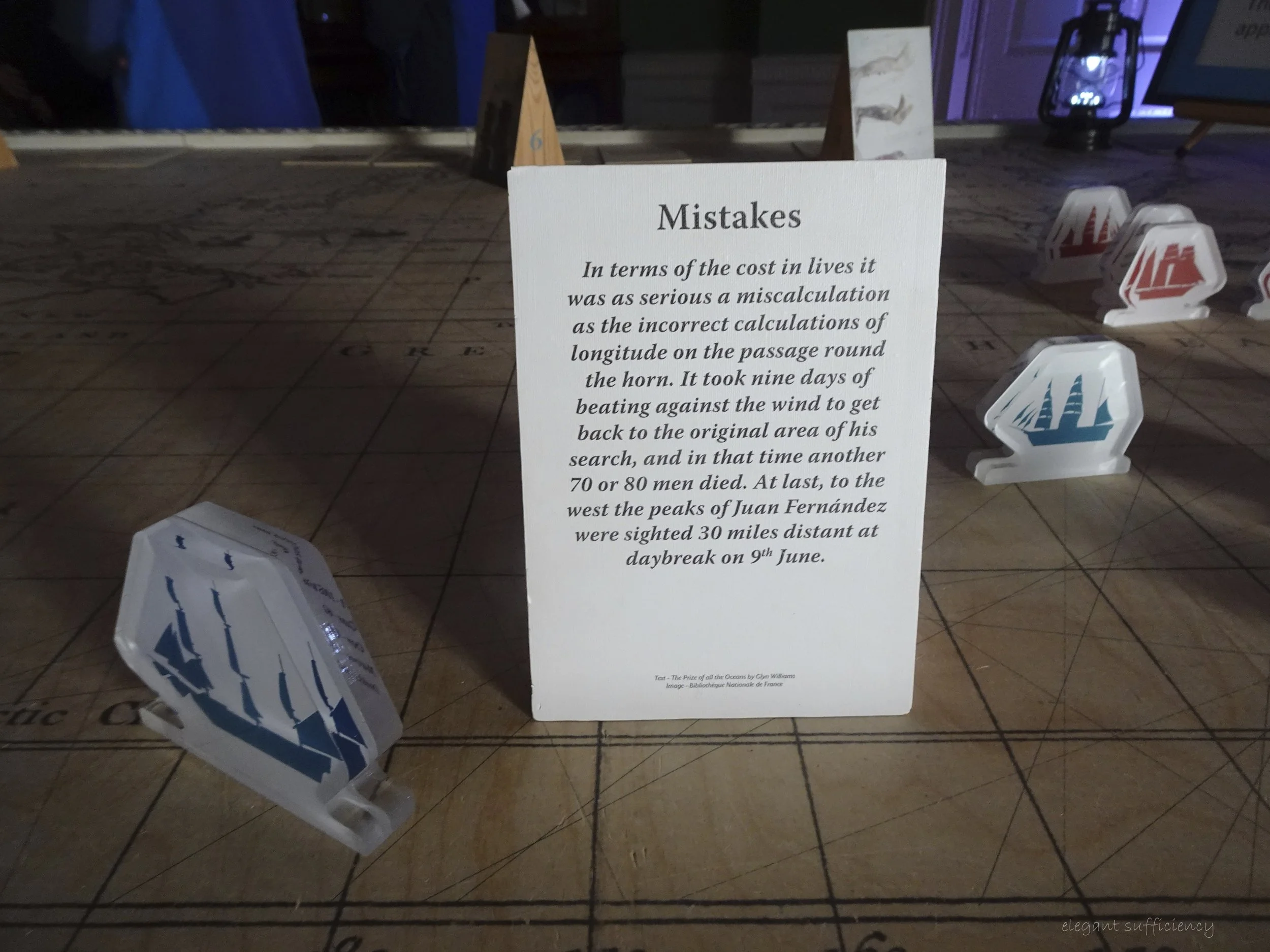
We were especially appreciative of the gentleman standing by the large map table in the next room, who explained the progress of George Anson’s circumnavigational voyage in 1741. The information was presented in several forms, the most effective being a timeline showing the number of men on each ship. Sadly, each of the lines representing the eight ships reflected the decline in numbers before, in some cases, the line stopped altogether. We appreciated the expert’s explanation; when almost every man on board had succumbed to death or disease, that ship would be abandoned and any remaining personnel would be transferred to one of the other vessels in the fleet. Reading the account of the voyage is really not for the faint of heart and the story illustrates well just how far we’ve come in terms of both seafaring and medicine, thank goodness.
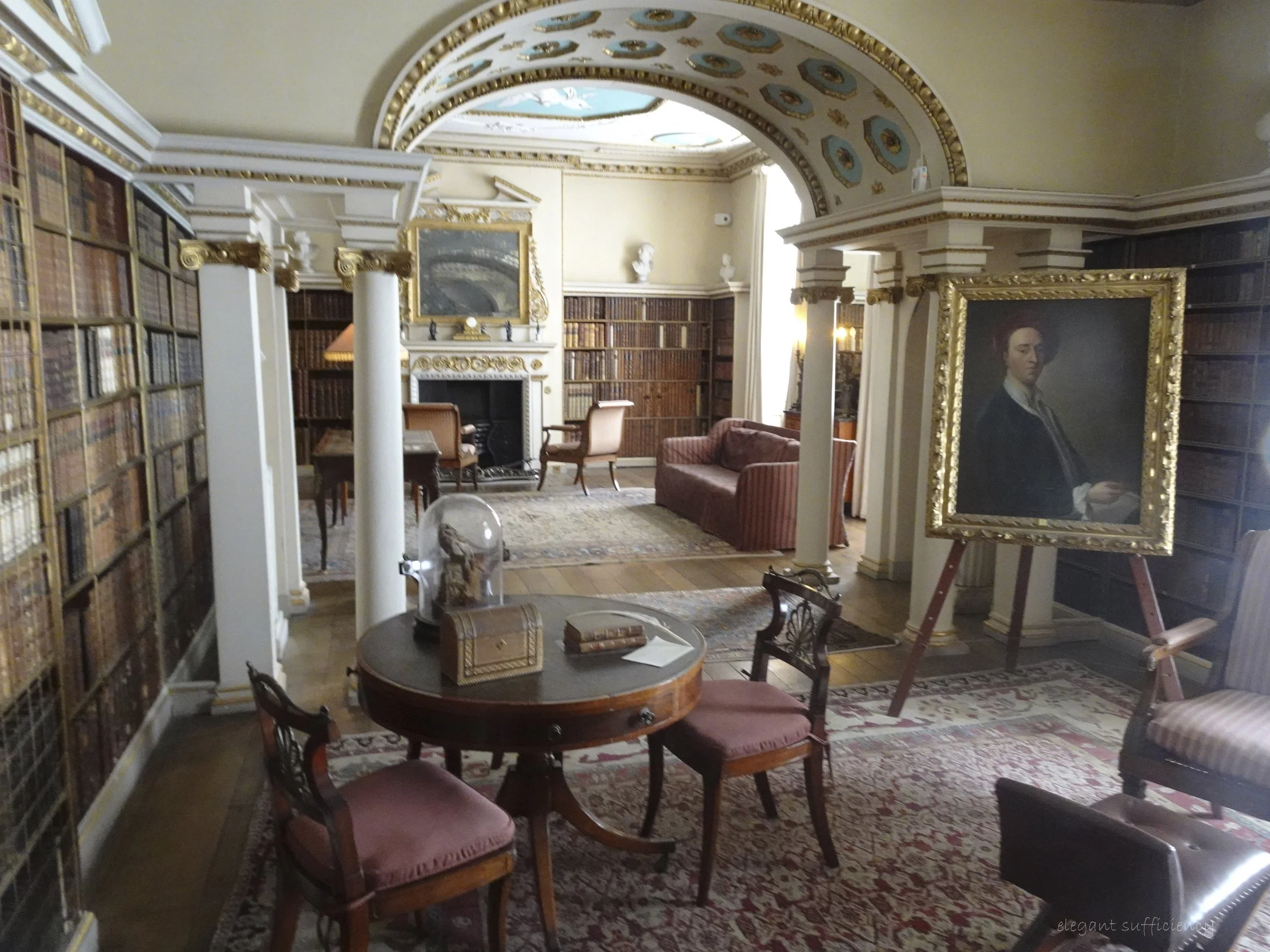
Wandering through the library, we made our way to the staircase which led to the modern - well, 1980s! - apartment which Patrick Lichfield and his family occupied until his death in 2005. No photographs were allowed in this part of the Hall, where one or two displays of Lord Lichfield’s photographs were shown alongside some key pieces of memorabilia (some 1980s fashion!)
When the idea of visiting Shugborough had been discussed, I had felt less than enthusiastic, though went along with the flow, because who knows what we might find there. Isn’t it often the case that such places often turn out to be so much more than they promise?! In particular, I appreciate the way in which our National Trust offers so much more than just a series of historic buildings to look at, but takes it all a step further to illustrate the background to the treasures with such creative storytelling. I mean, who’d have thought that I would have left Shugborough with the intention of finding out more about an 18th century naval officer?