



Girls and boys
We don’t often divide into gender groups, but this sunny April morning, it was a transport museum that attracted the boys and a pottery factory, the girls. When three of the four boys are former public transport professionals, the attraction of the National Tramway Museum was clear. That might also have explained the appeal of Emma Bridgewater to Olga and I 😉
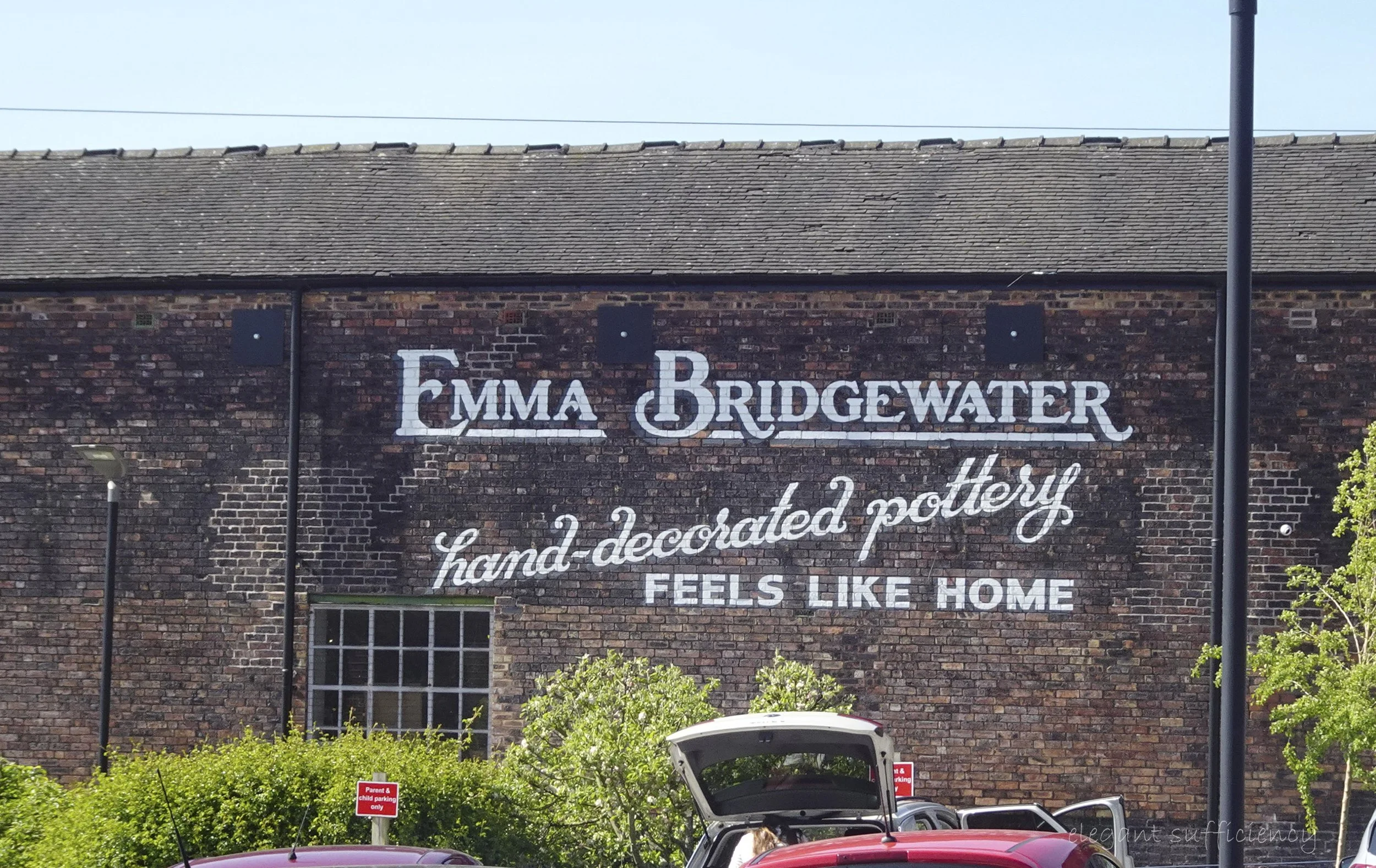
It’s not so far from The Tawny, and we drove there in the hope of getting a place on a factory tour, because we hadn’t booked in advance. We knew that there was another pottery just up the road too and kept that idea up our sleeve, just in case. Stoke on Trent is the centre of The Potteries, an area of the country long associated with the industry.
Arriving in the factory car park, it didn’t seem to be too full and we remained optimistic as we headed over to the entrance.
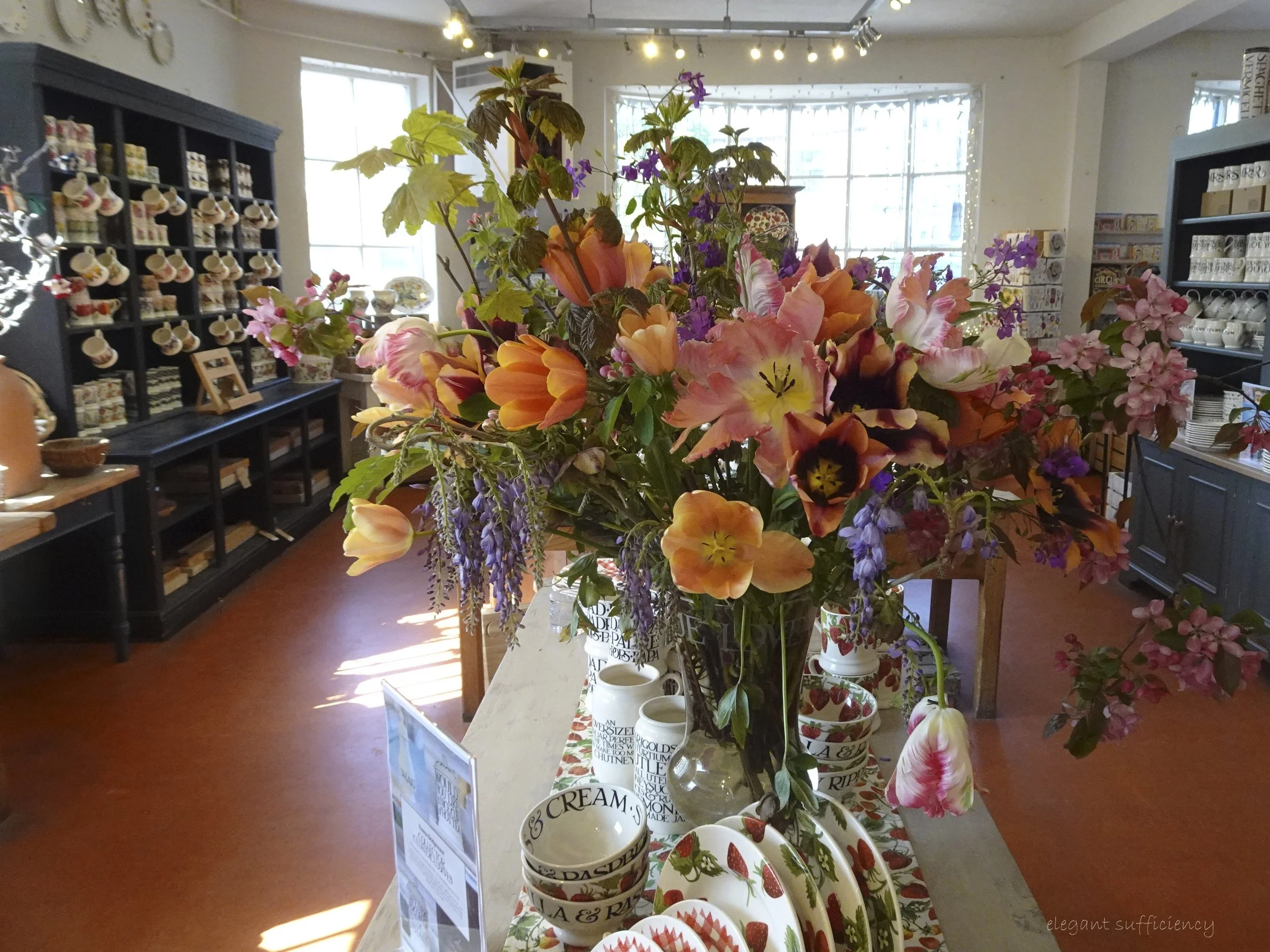
Stepping inside the gift shop, the immediate blast of colour was stunning. Not only the pattern and colour of the familiar pottery designs but the abundance of flowers here. We hadn’t expected that and were utterly captivated by each one of several lavish arrangements. One of the staff explained that the factory gardener had given a presentation the previous day and these were his work. His name, Arthur Parkinson, they said, suggested someone rather older and more traditional than the chap who also works with Sarah Raven and who clearly had endeared himself greatly with everyone here.
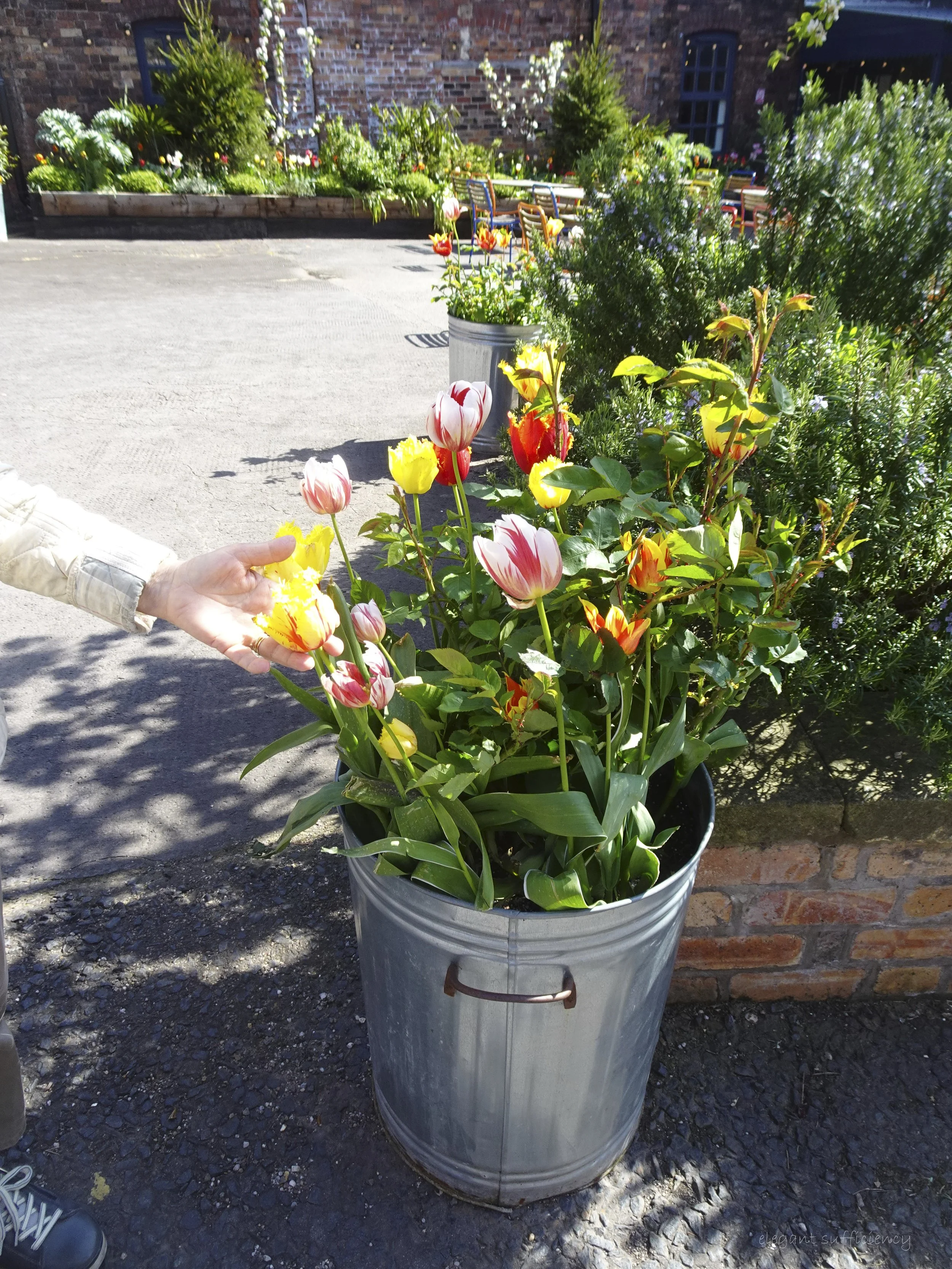
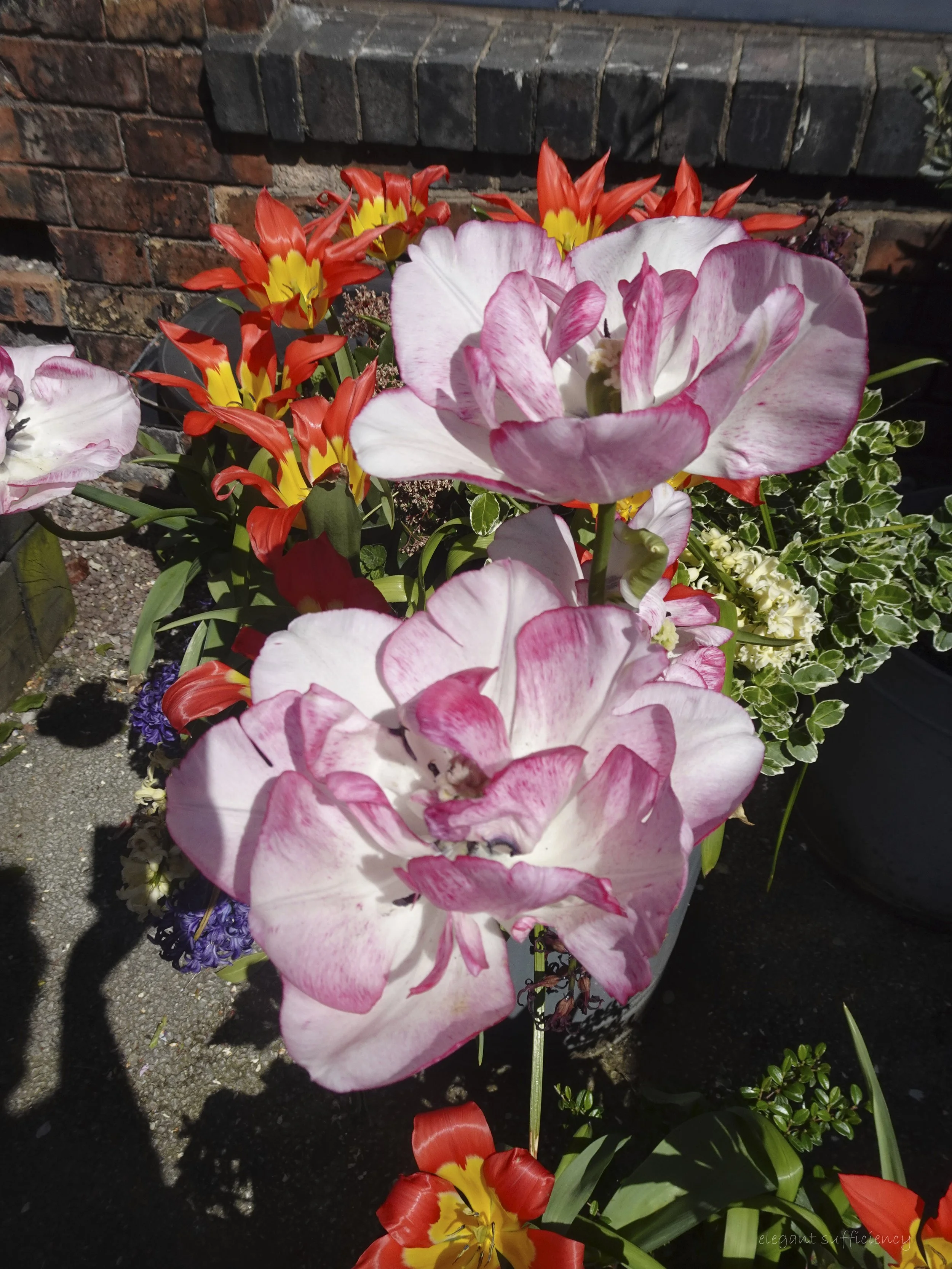
As soon as we went out into the factory courtyard, it was clear why! We’d happily have spent an hour in the sunshine here, admiring the tulips and less familiar plants, all growing in such an industrial setting and looking great.
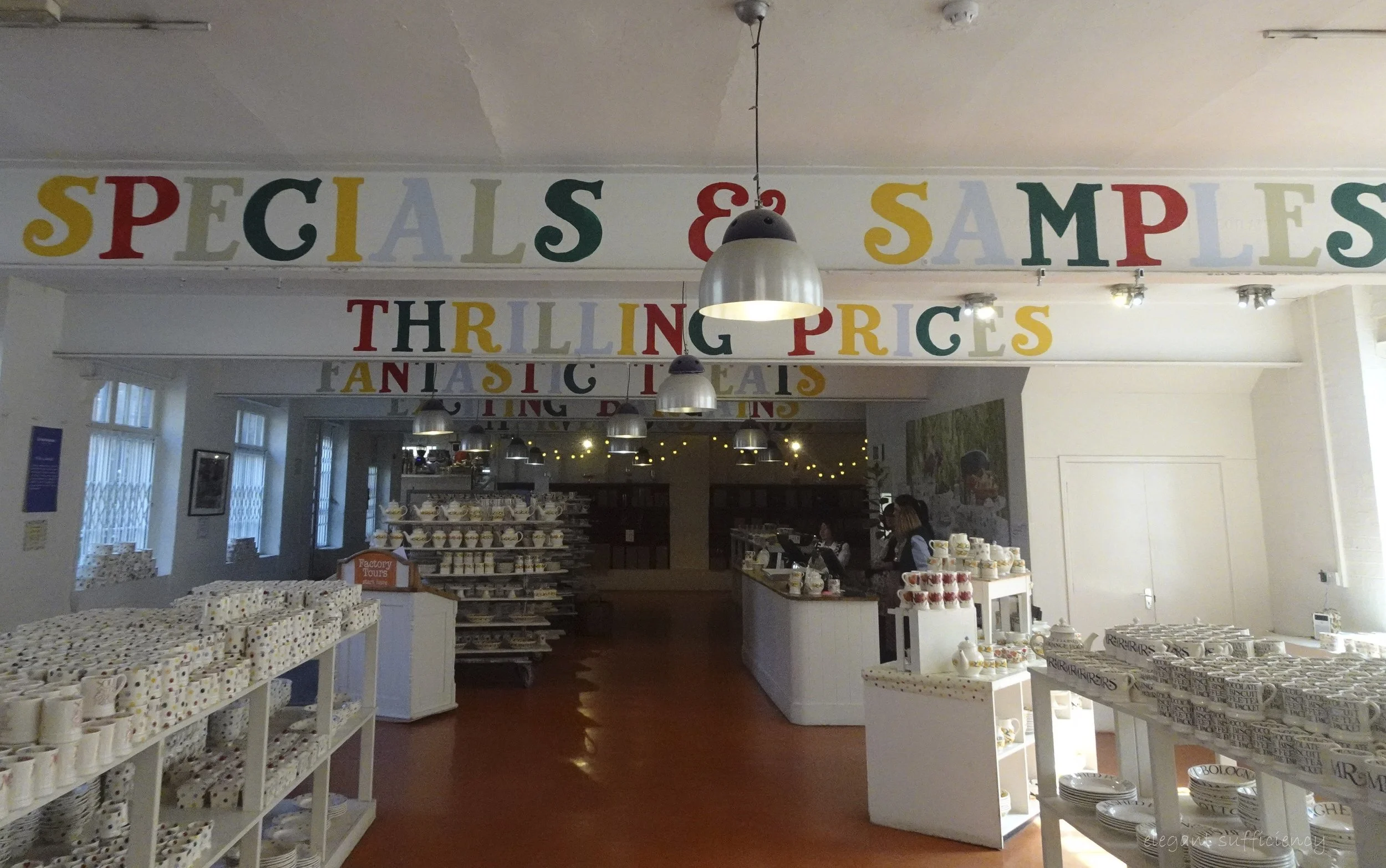
However, we needed to hotfoot it to the factory shop if we were to stand a chance of getting on a tour of the factory this morning, so we overcame the temptation to linger and seek a bargain or two and went straight to the desk. Might we be lucky? We certainly were! Two places booked on the tour leaving in just half an hour!
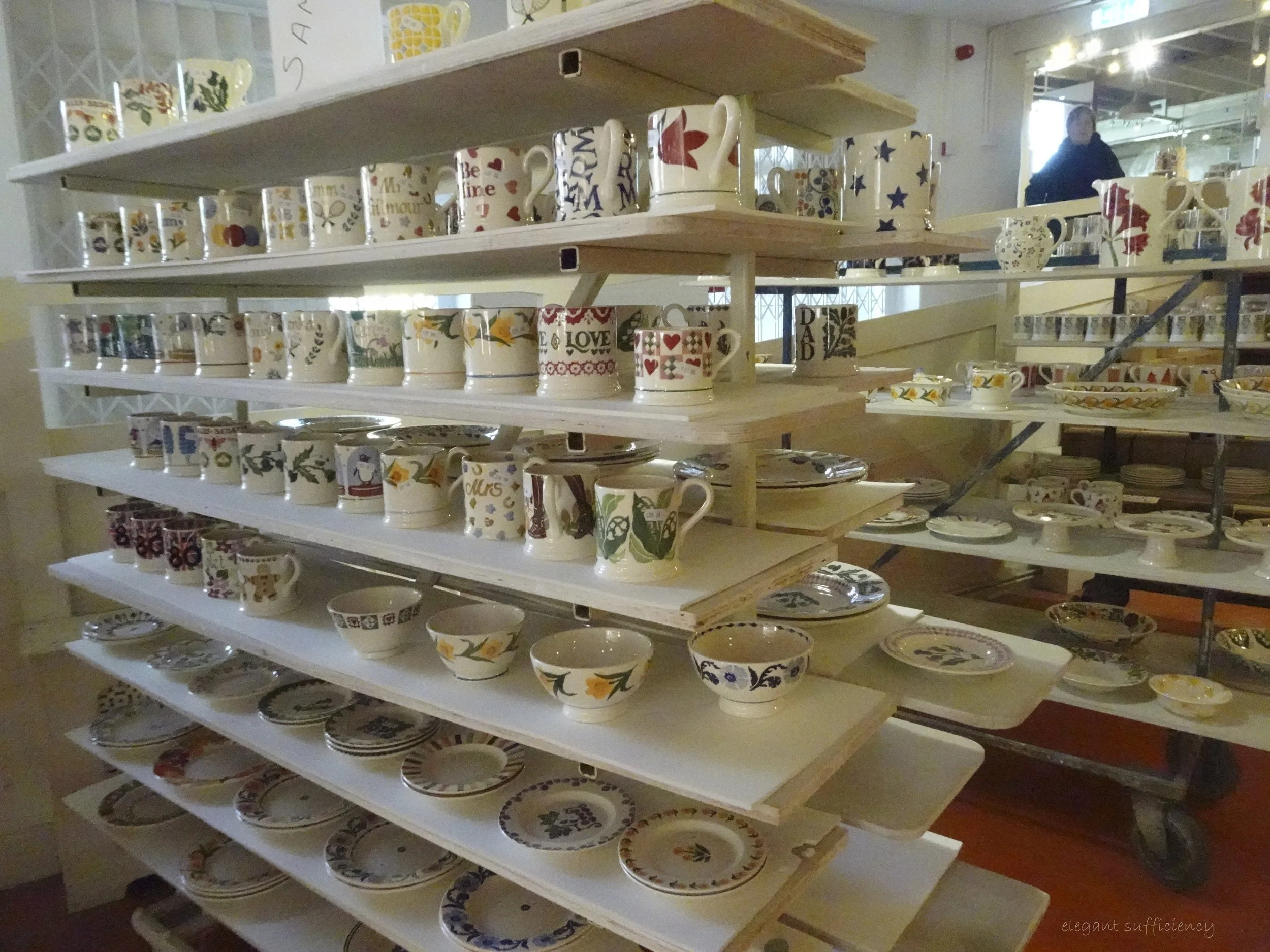
That meant we had time to look more closely at the samples and seconds here; to browse around some familiar designs and others we’d not seen before.
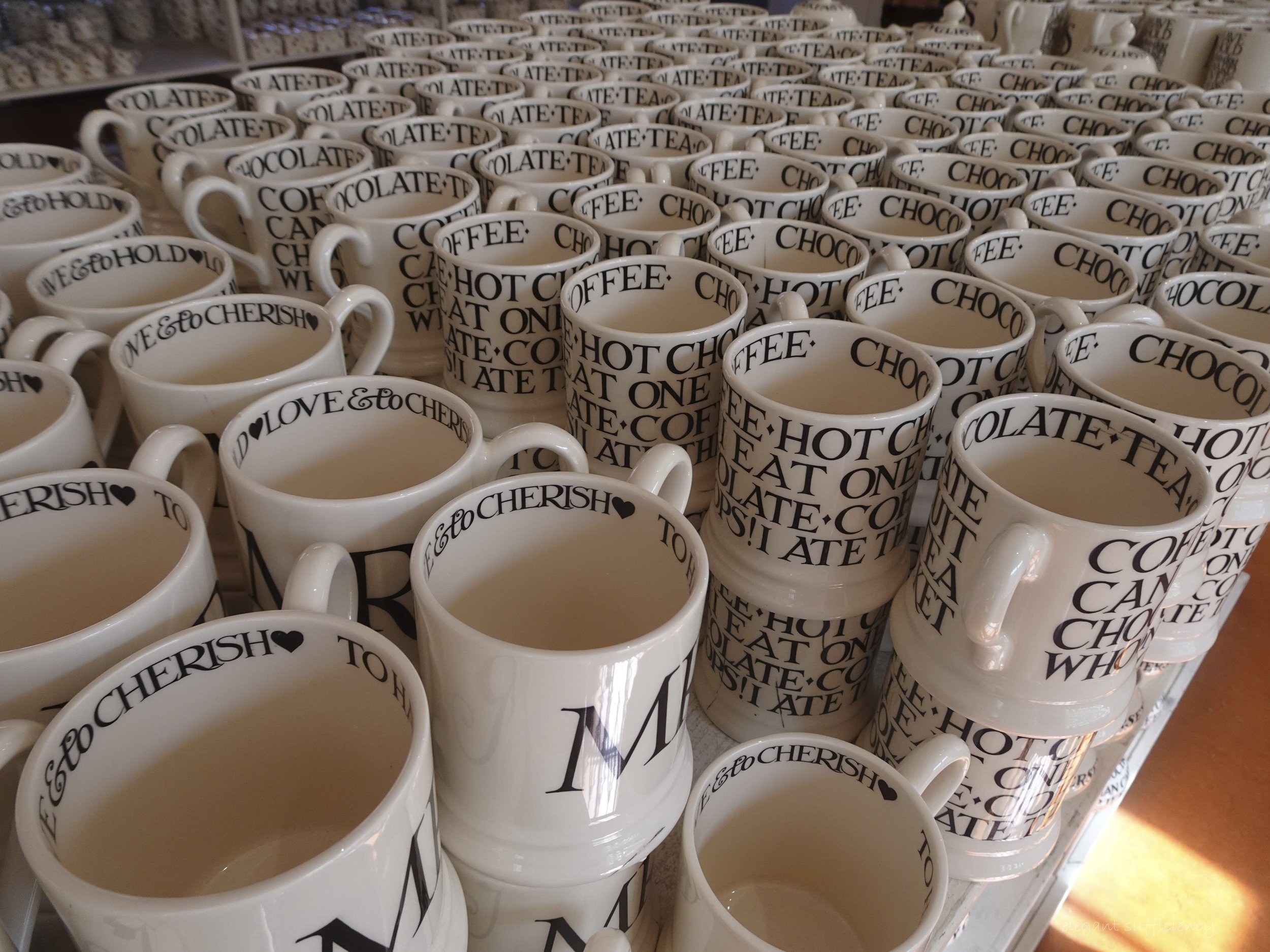
On another shelf there were those traditional and immediately recognisable mugs which have proved to be such reliable wedding gifts for new Mr and Mrs couples! With no upcoming weddings in the diary and our meeting time approaching, we made our way outside. We could come back later 😉
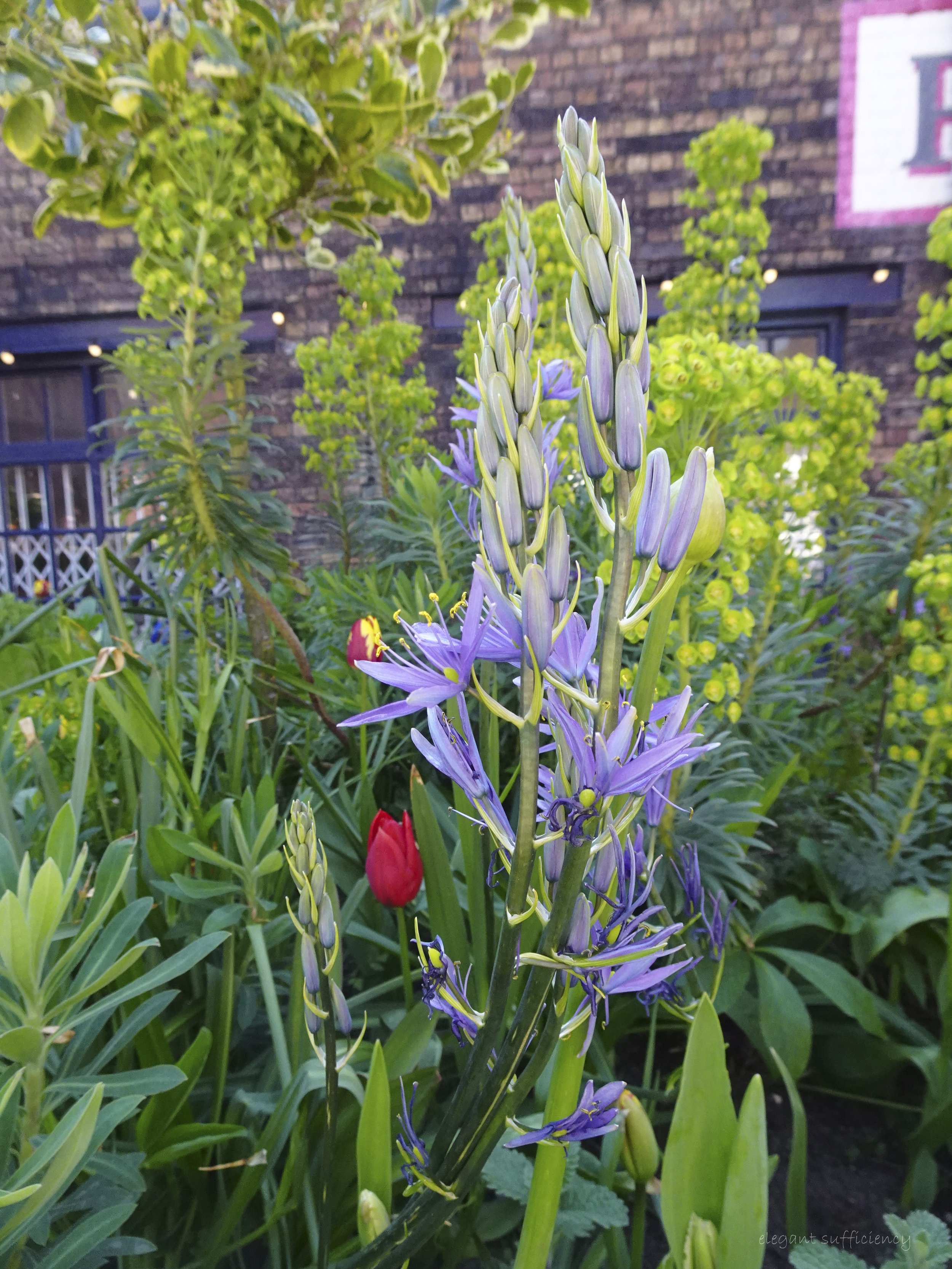
It wasn’t as though waiting in this glorious courtyard was anything but interesting. (Yes, I made a note to ask Amy what the blue flower is)
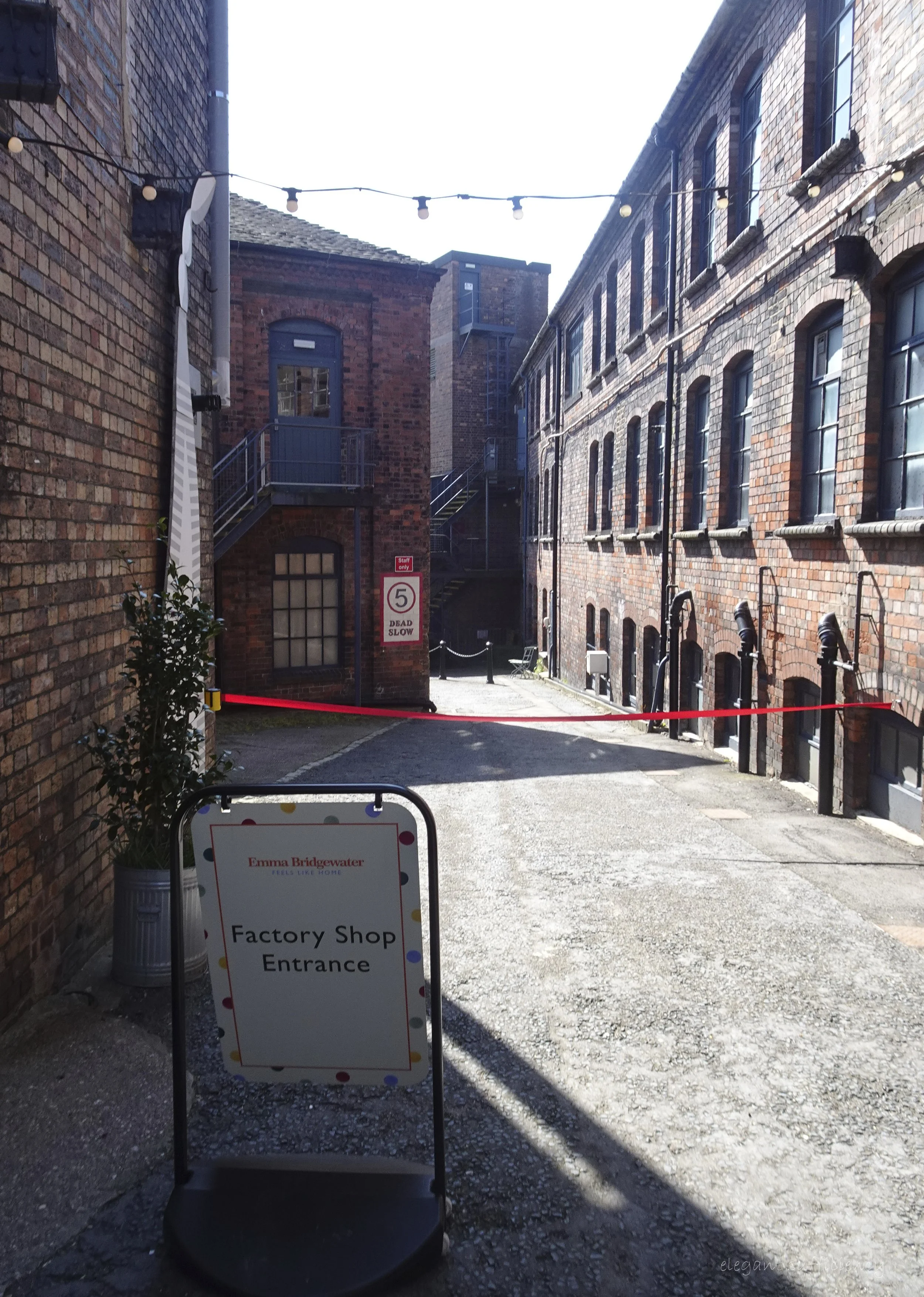
Our guide, with the easy to remember name Emma, explained the essential safety rules for our visit and led us around the corner and into the production facility.
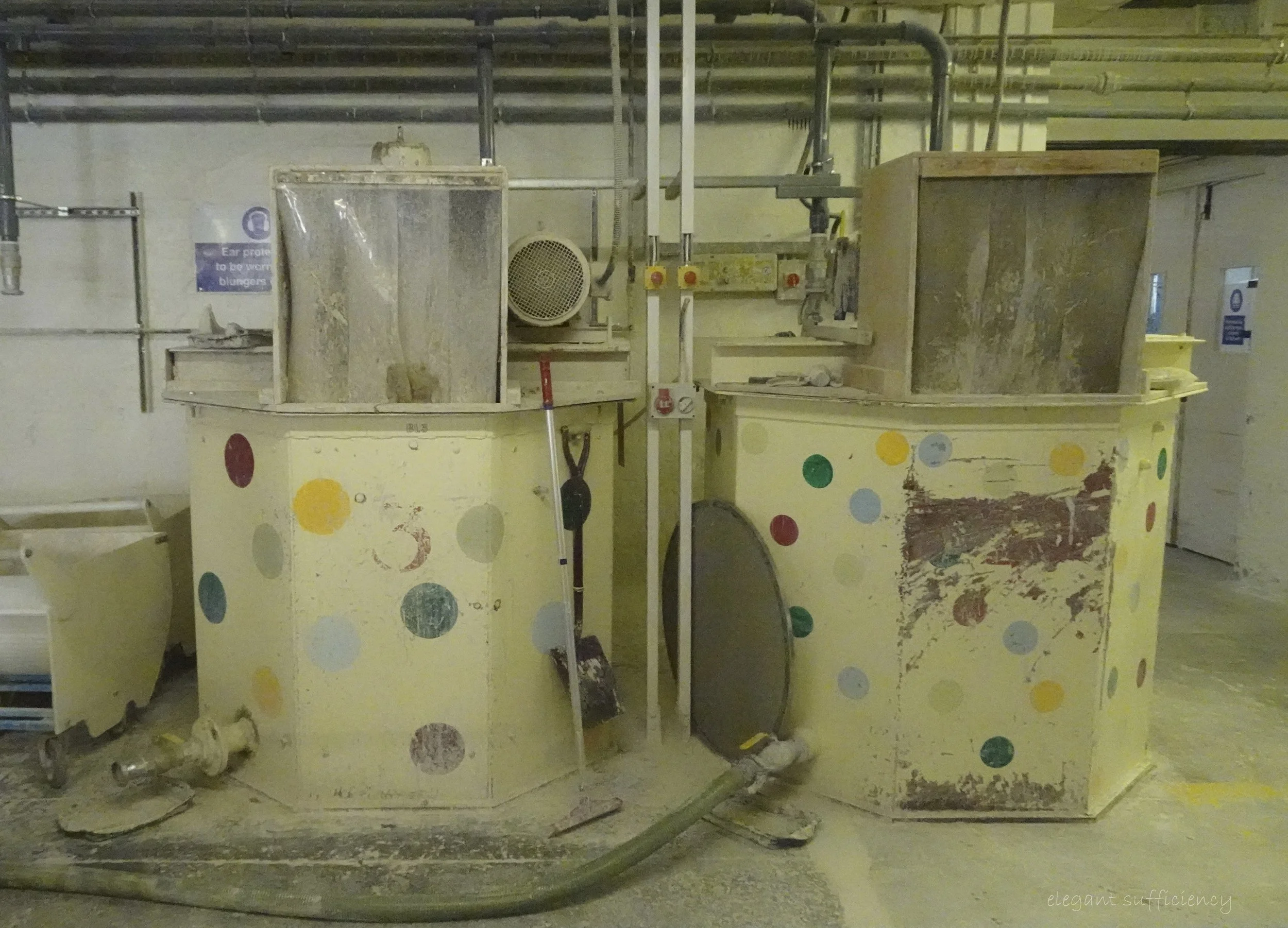
The first stage is the mixing of the slip, the liquid clay poured into the moulds in the slip casting technique used for most of the products made here. We smiled at the typical Emma Bridgewater pattern on the two blungers here. We learned so many examples of pottery language in the couple of hours we spent in Emma’s company!
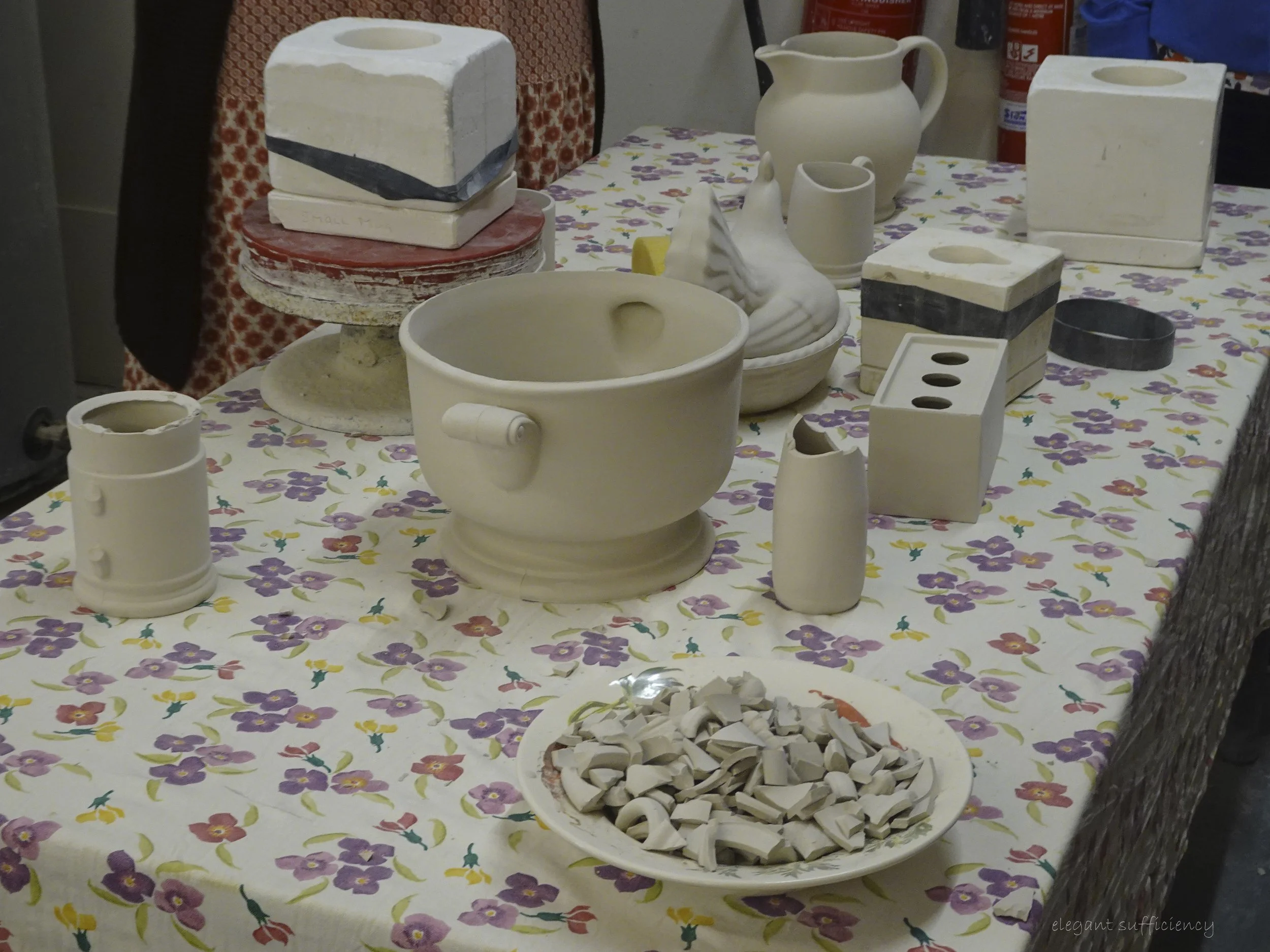
There follows a series of photographs taken on our tour of the production process. Emma proved to be a great guide, happy to explain what was going on and to introduce any unusual terminology as she went! Our first stop was by a demonstration table to learn about the slip casting technique. At this stage, the clay is still unfired and any mistakes and offcuts are sent right back to the start to be remixed in a blunger and recycled.
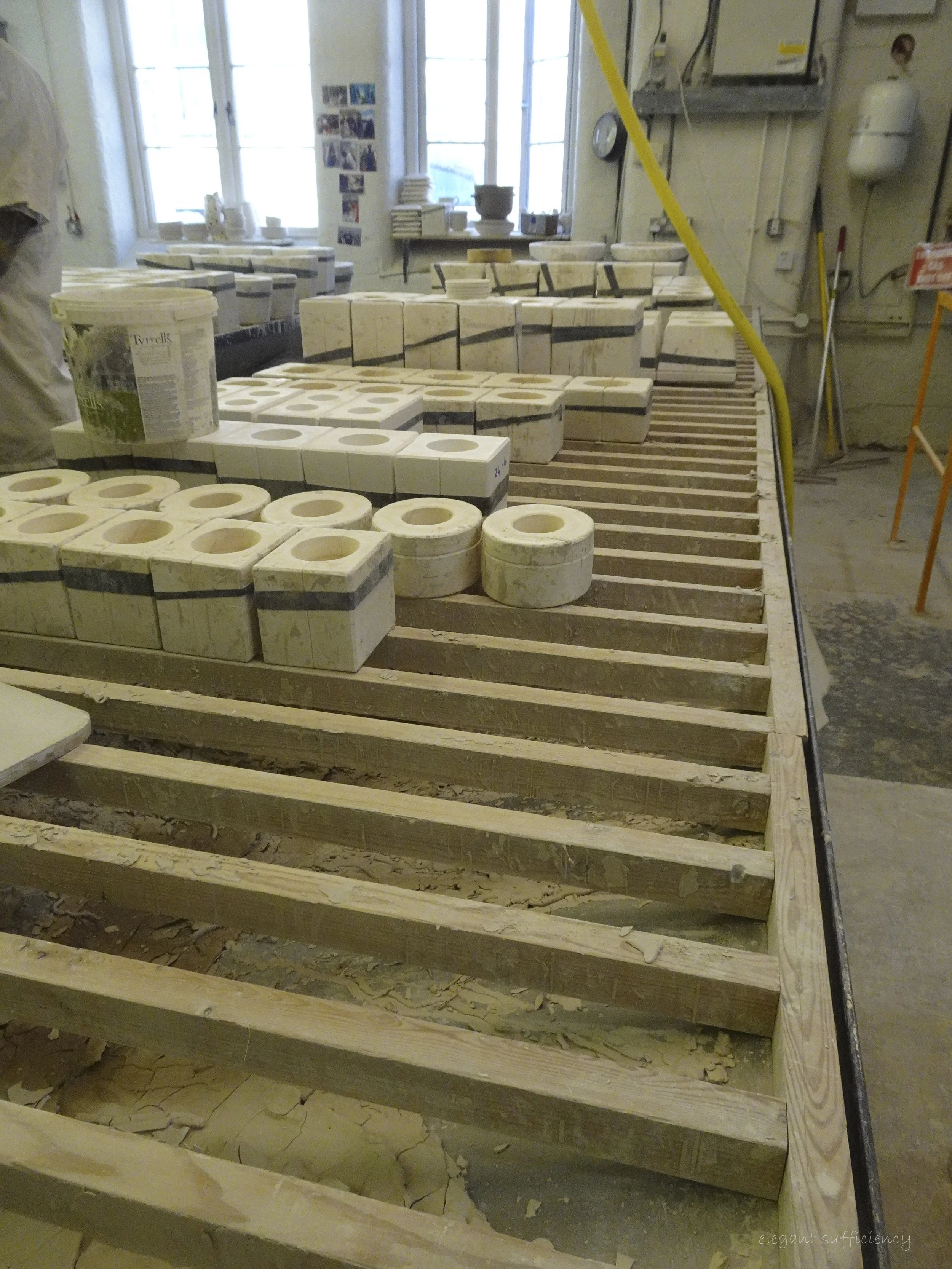
Having learned what was going on, we saw it all in action. Photographs were welcomed, provided there were no faces. Here, a young man was pouring the slip into the moulds, tipping the excess clay out after some minutes and then allowing them to dry. The slip moulds don’t last forever and have a surprisingly short life, so there’s a whole other industry nearby making them too.
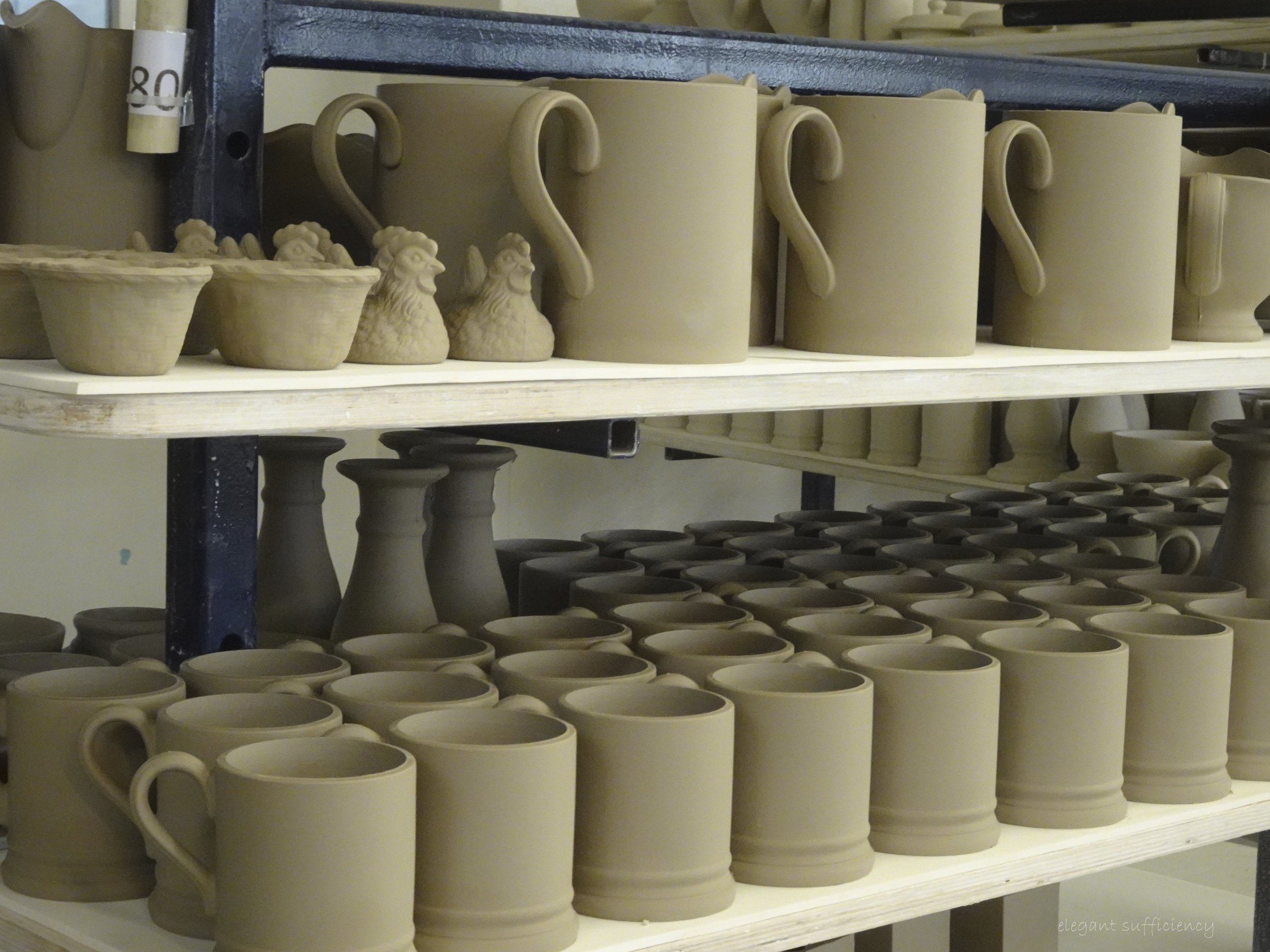
Having been allowed to dry for a few hours, the casting is removed from the mould and allowed to dry further.
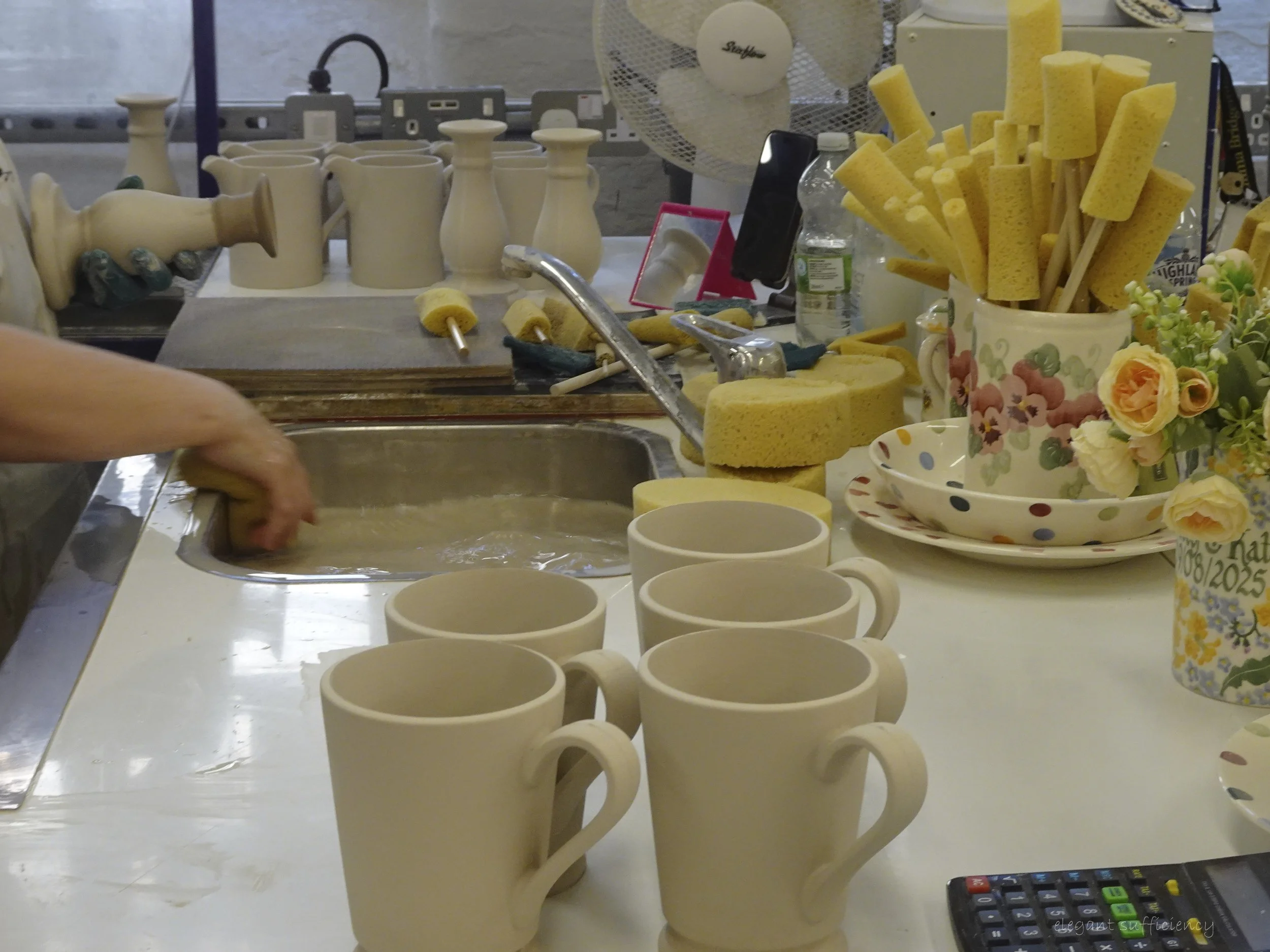
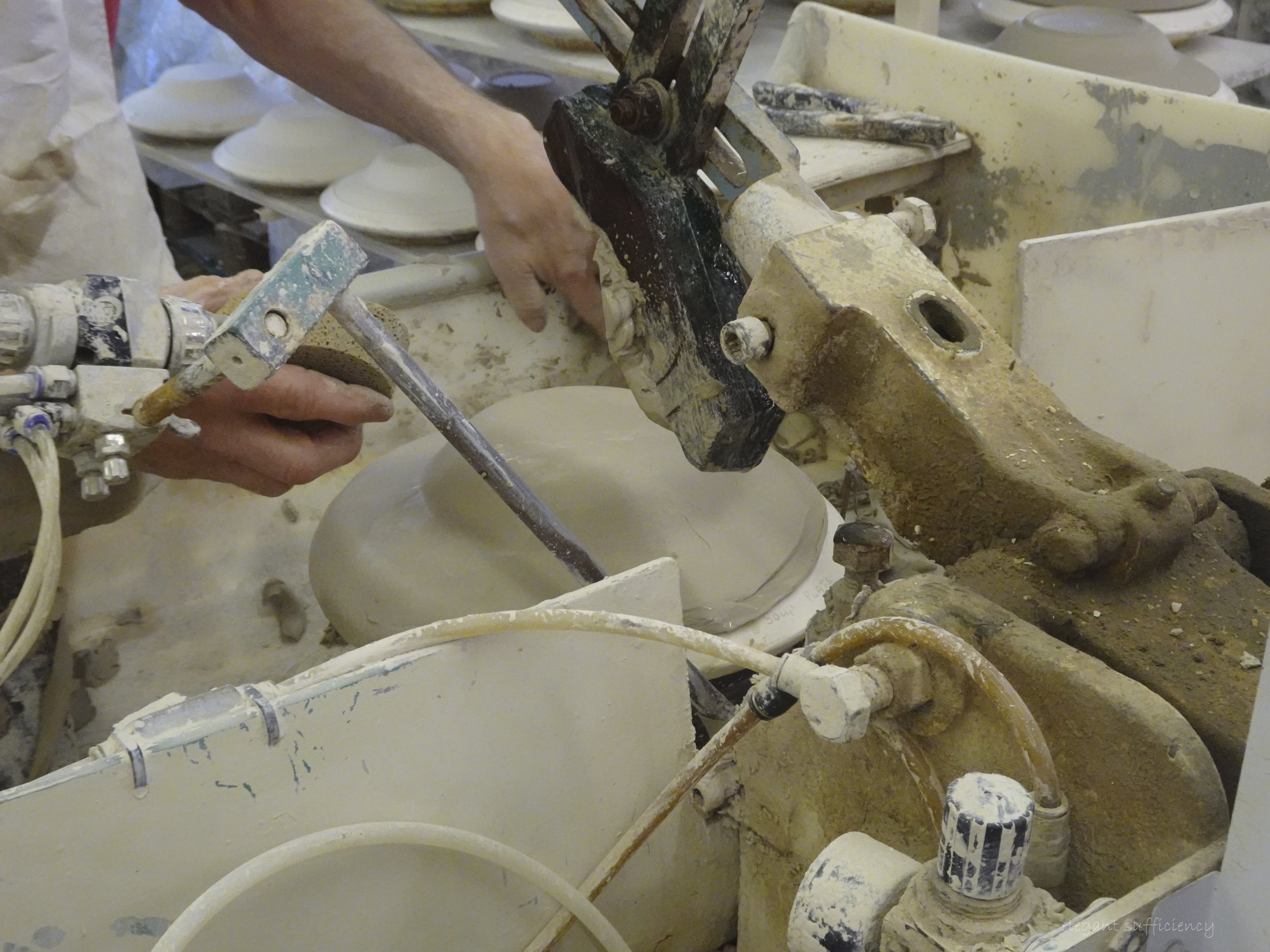
Next, we met the jiggerer, making plates. Considerable energy here, as he threw a flat piece of rather stickier clay onto the mould, rather like throwing some pizza dough. He then used a jigger (machine) to smooth the reverse side. The plates were left on the mould to harden and then followed a similar process to the slip cast items.
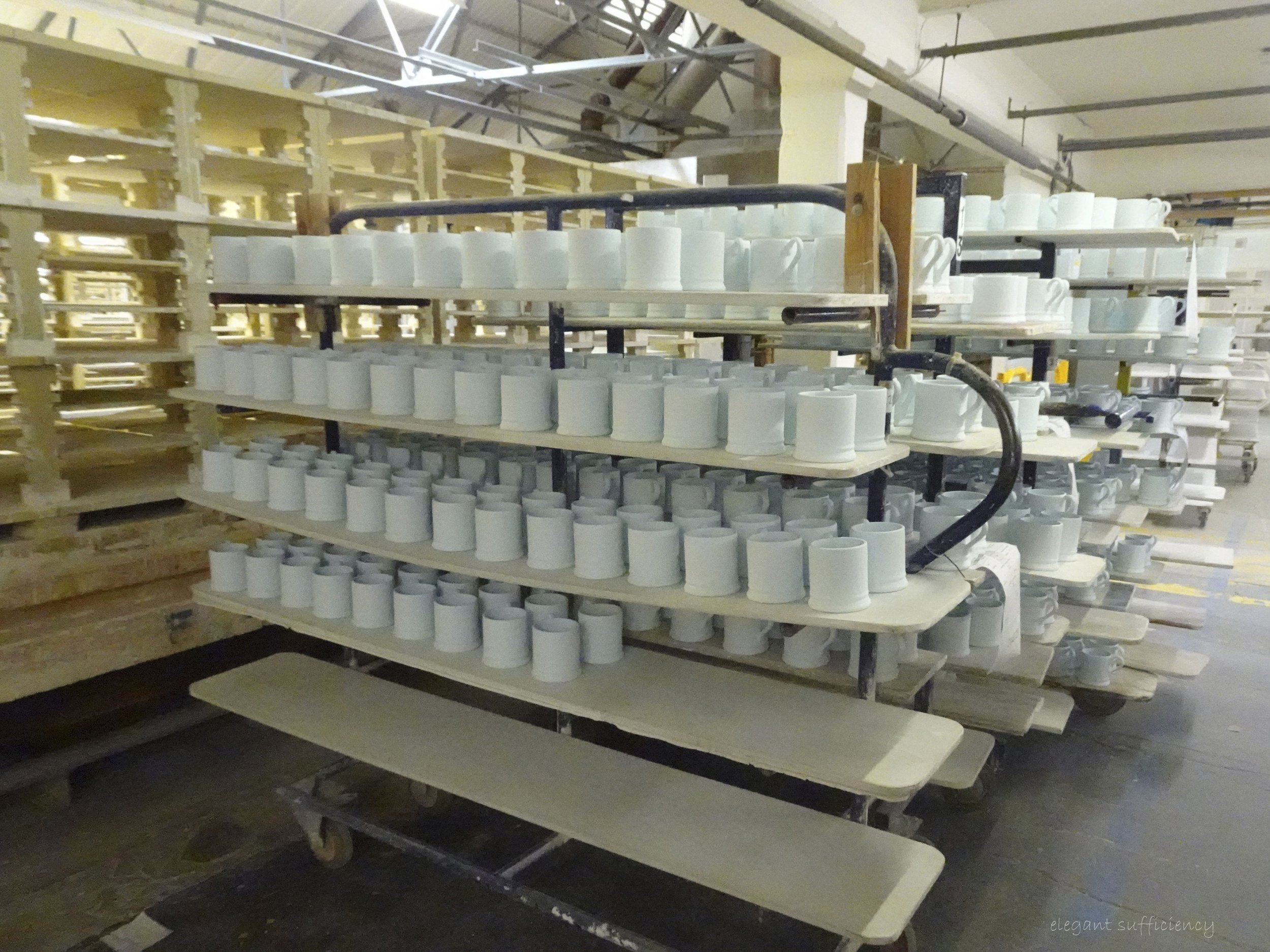
From there, we moved into the glazing workshop, past a few shelves (ware boards) of wares which had been given their initial coating of pale blue glaze. Emma explained that the blue is a natural pigment that disappears on firing and that everything here will be the characteristic cream when firing is complete.
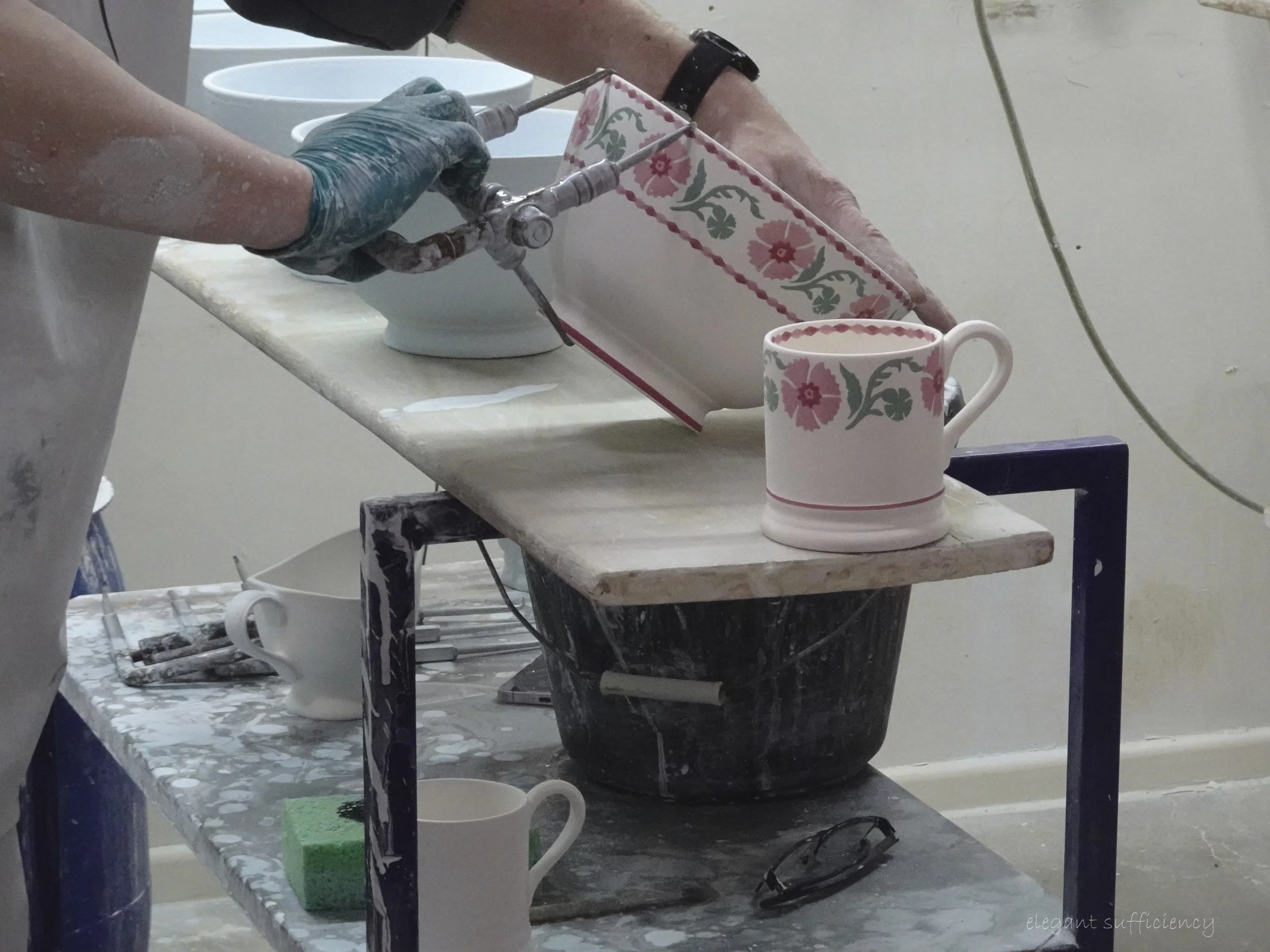
Applying the glaze is a skilled job and we were shown how this bowl and mug were dipped into the vat of pale blue liquid using a metal grip tool (which I’ll bet has a particular name too, but that one passed me by!) Once out, the dipper will use a small brush to cover the areas where the glaze didn’t reach (where the grip was in contact). The next step is to wipe the foot of the bowl so it doesn’t stick to the ware board in the kiln.
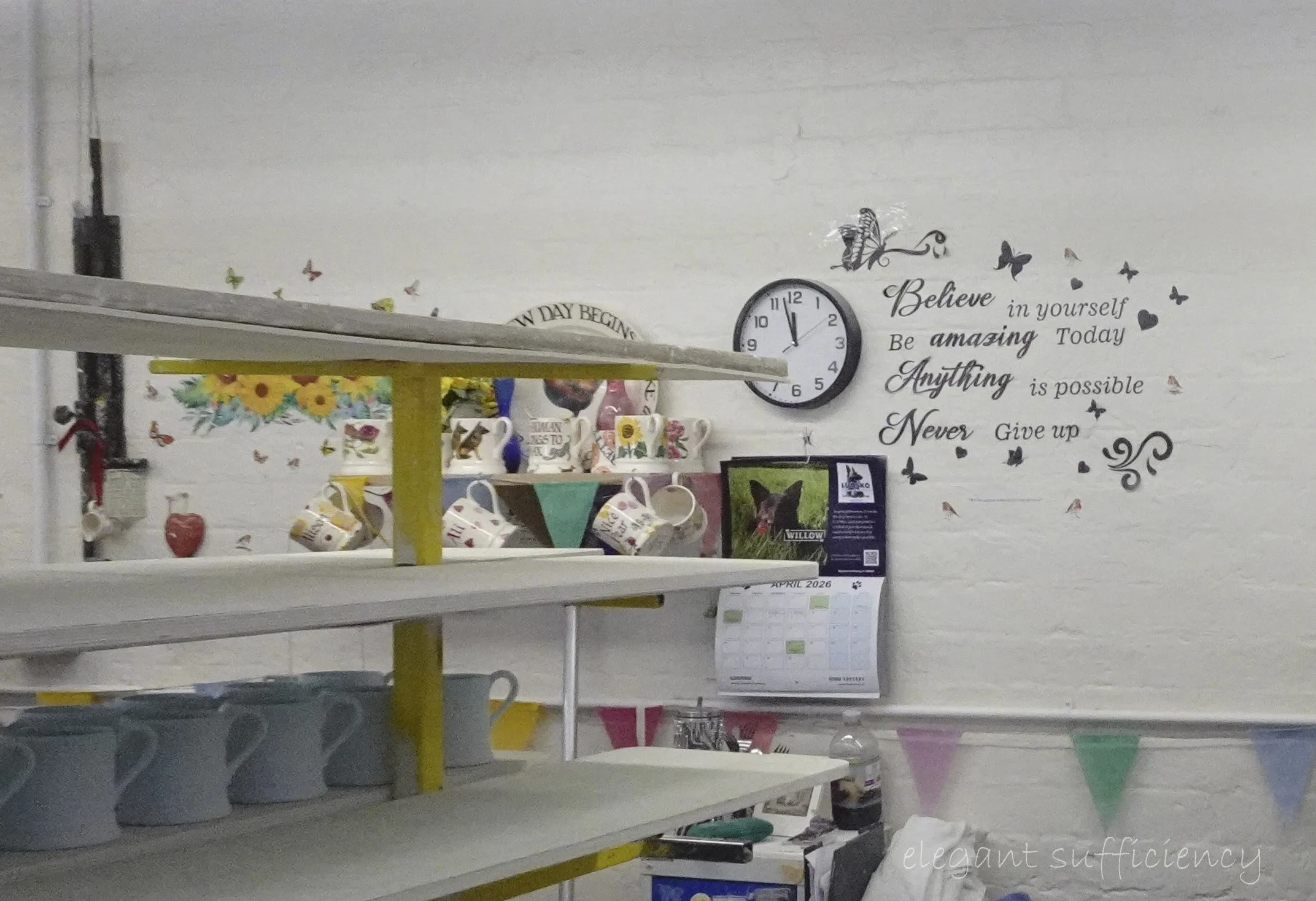
There was a whole team of dippers and foot wipers here and once again, I appreciated the way the workers had enhanced their workspace!
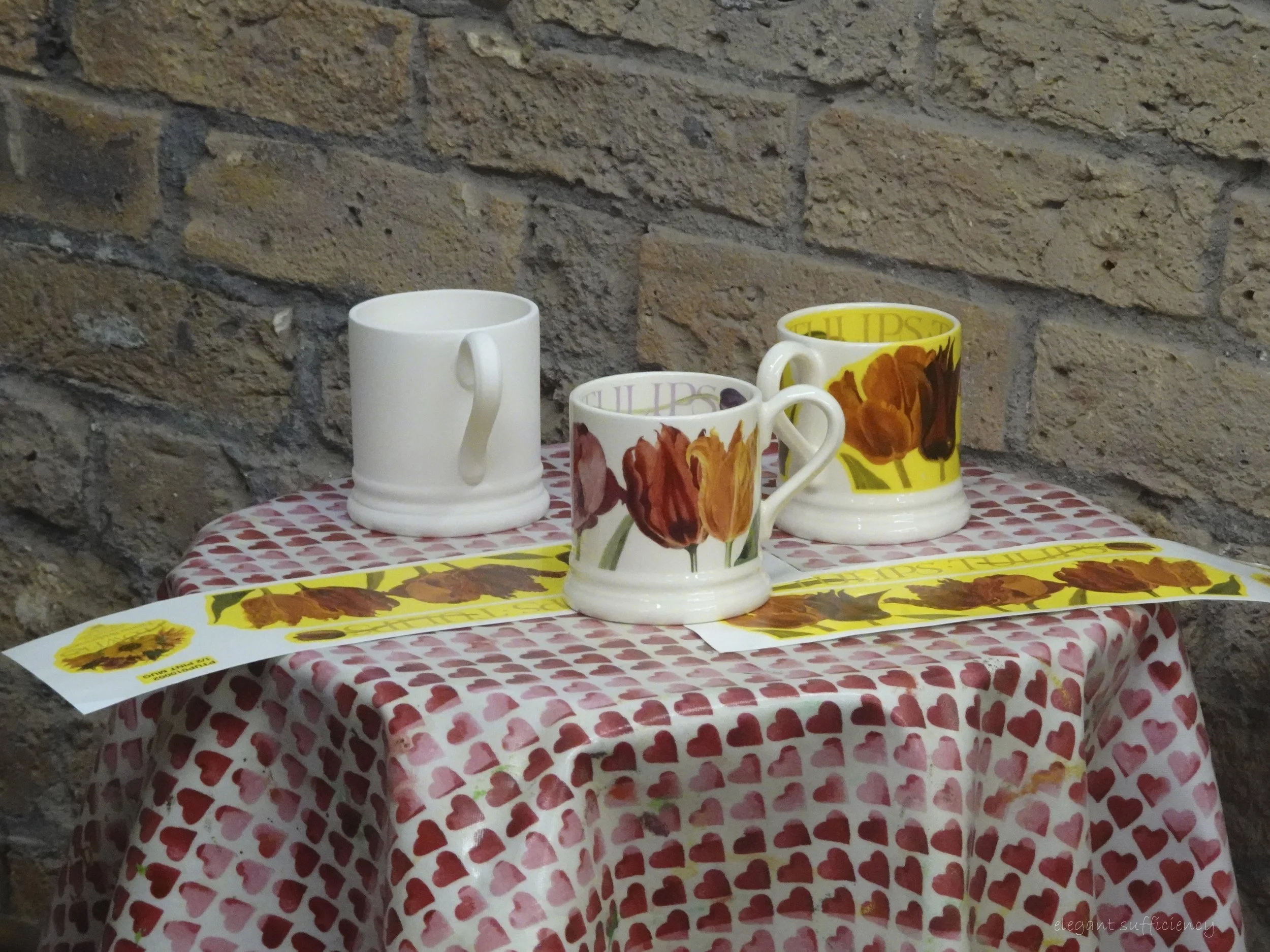
Most of the products here are spongeware in that the decoration is applied using a sponge. But in this area, transfer designs were being applied. Emma explained the process using the materials on another of the demo tables here.
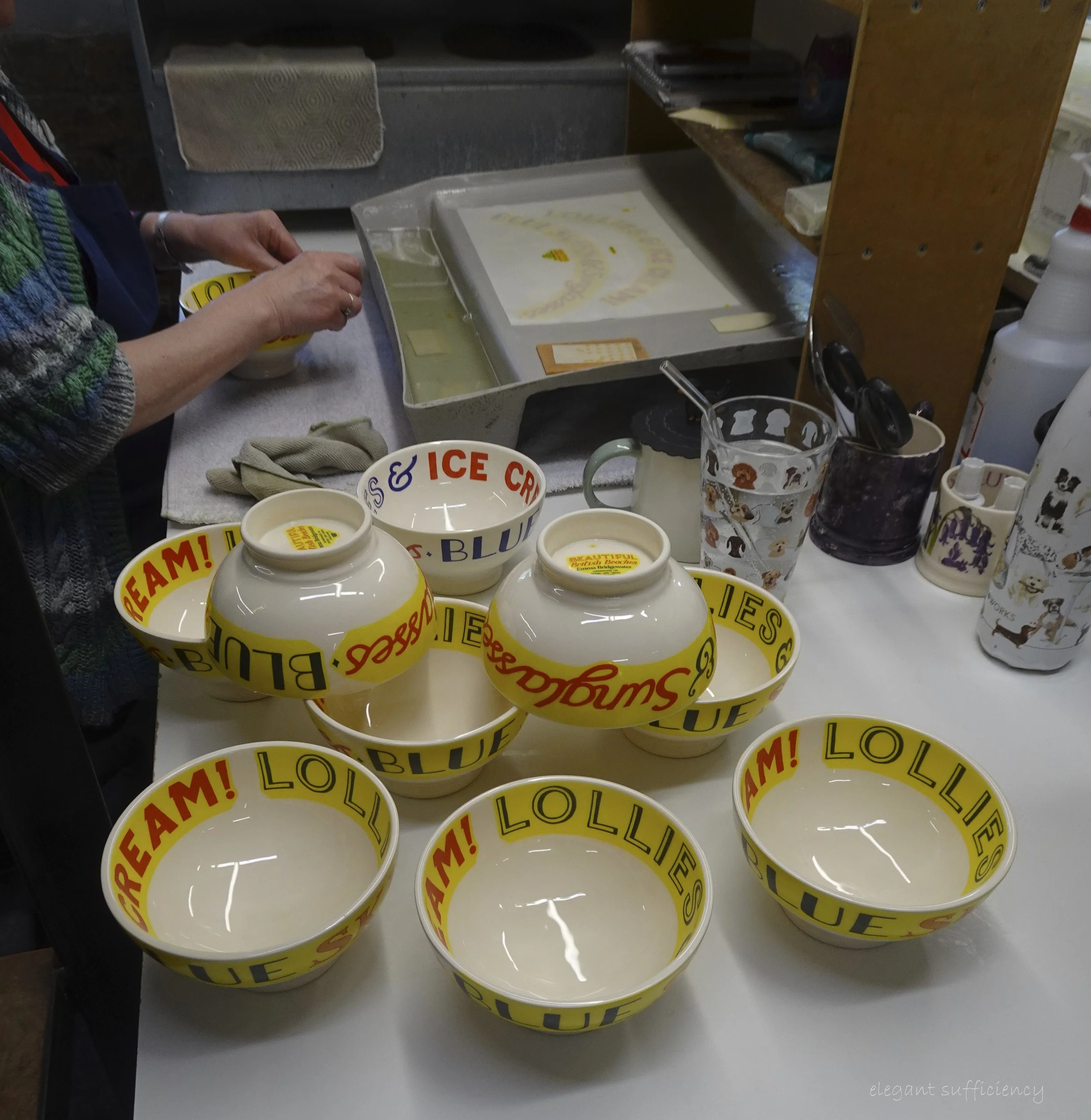
Then, having learned how it was done, we went to stand by Wendy, who was busy floating off the transfers in water before applying them to some bowls, remarkably quickly, I must say. They’d then go to be fired, when the yellow background would burn off, leaving the design in place.
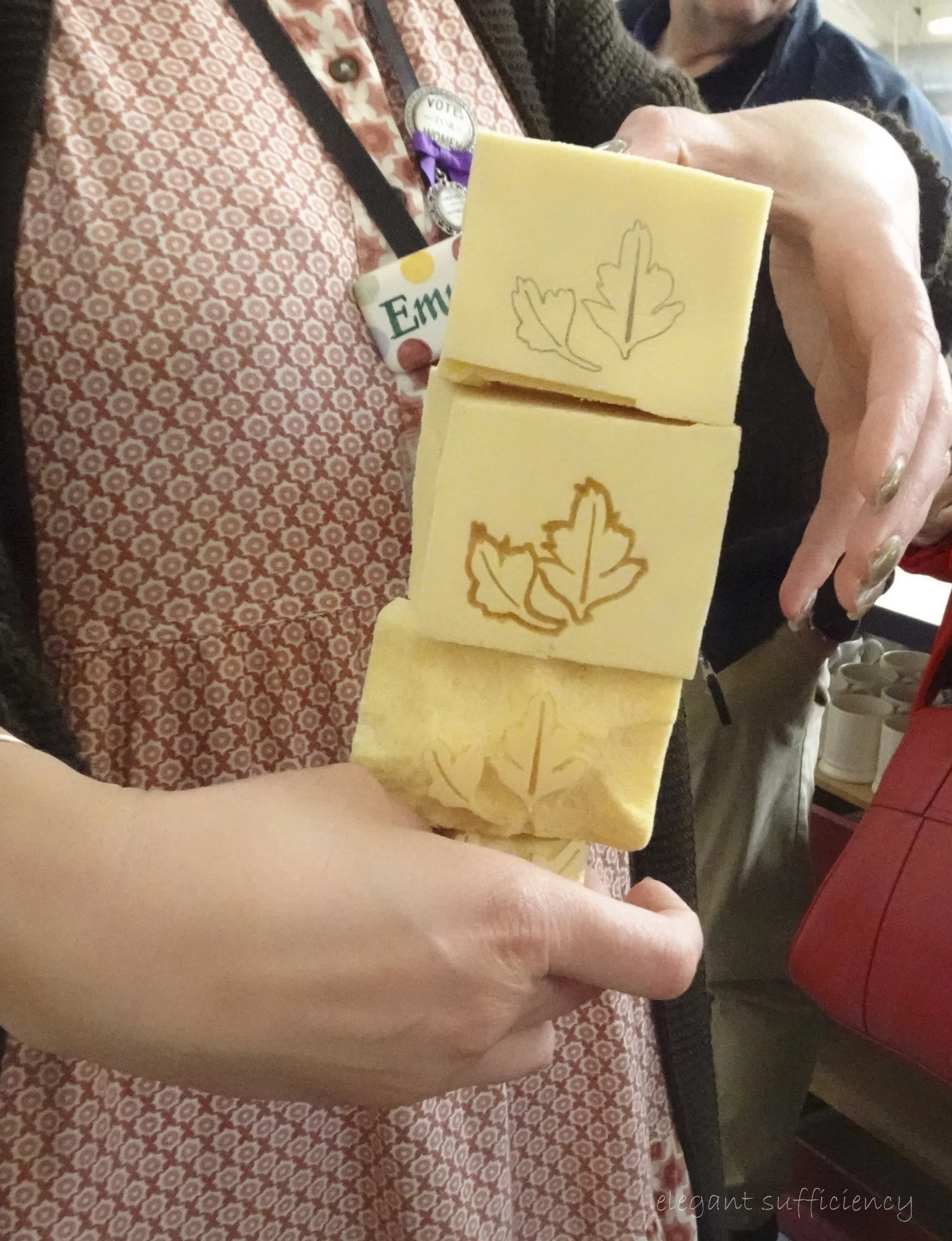
From here, we went to the sponge cutting corner. Each design of spongeware created here requires a specially created sponge, cut to the exact design. Emma explained that, though they have tried using a laser cutter, they still find the hand cut sponges work best. Like the slip moulds, each sponge has a limited life and the design soon breaks down.
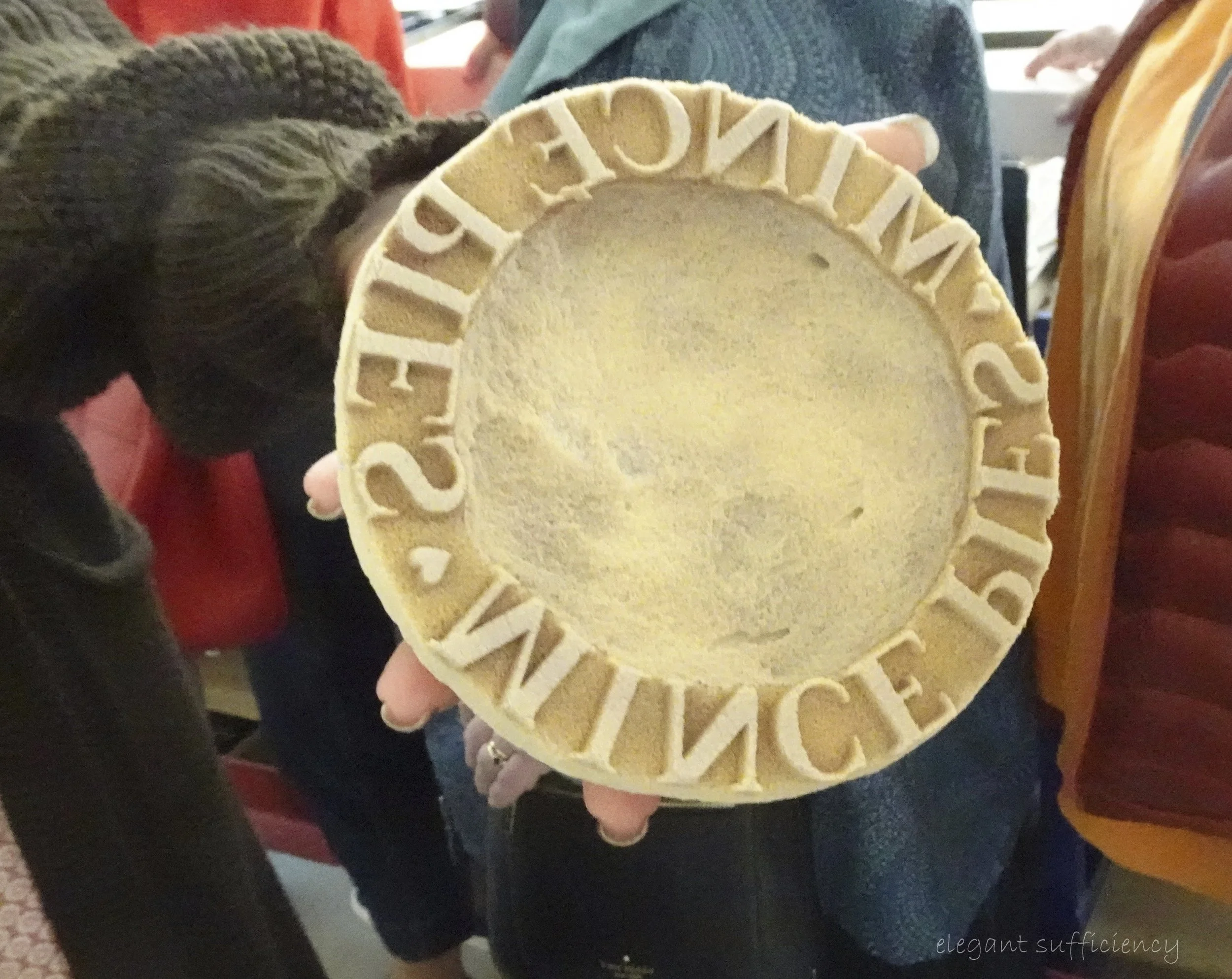
She showed us the example of the “mince pie” plate sponge, where the E has failed, making the sponge destined for the bin.
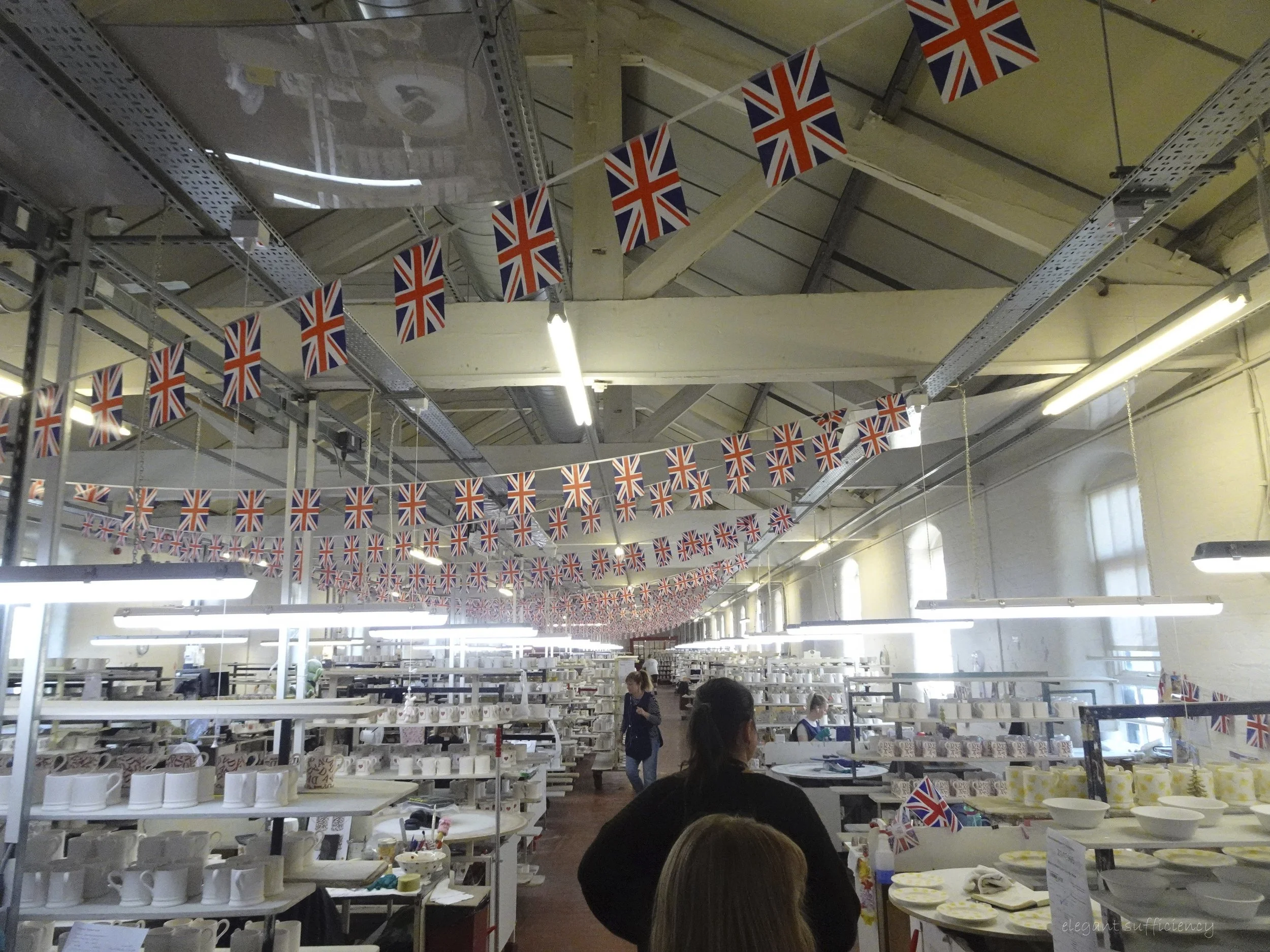
That introduction led us nicely into the decorating department, where all the spongers were busy.
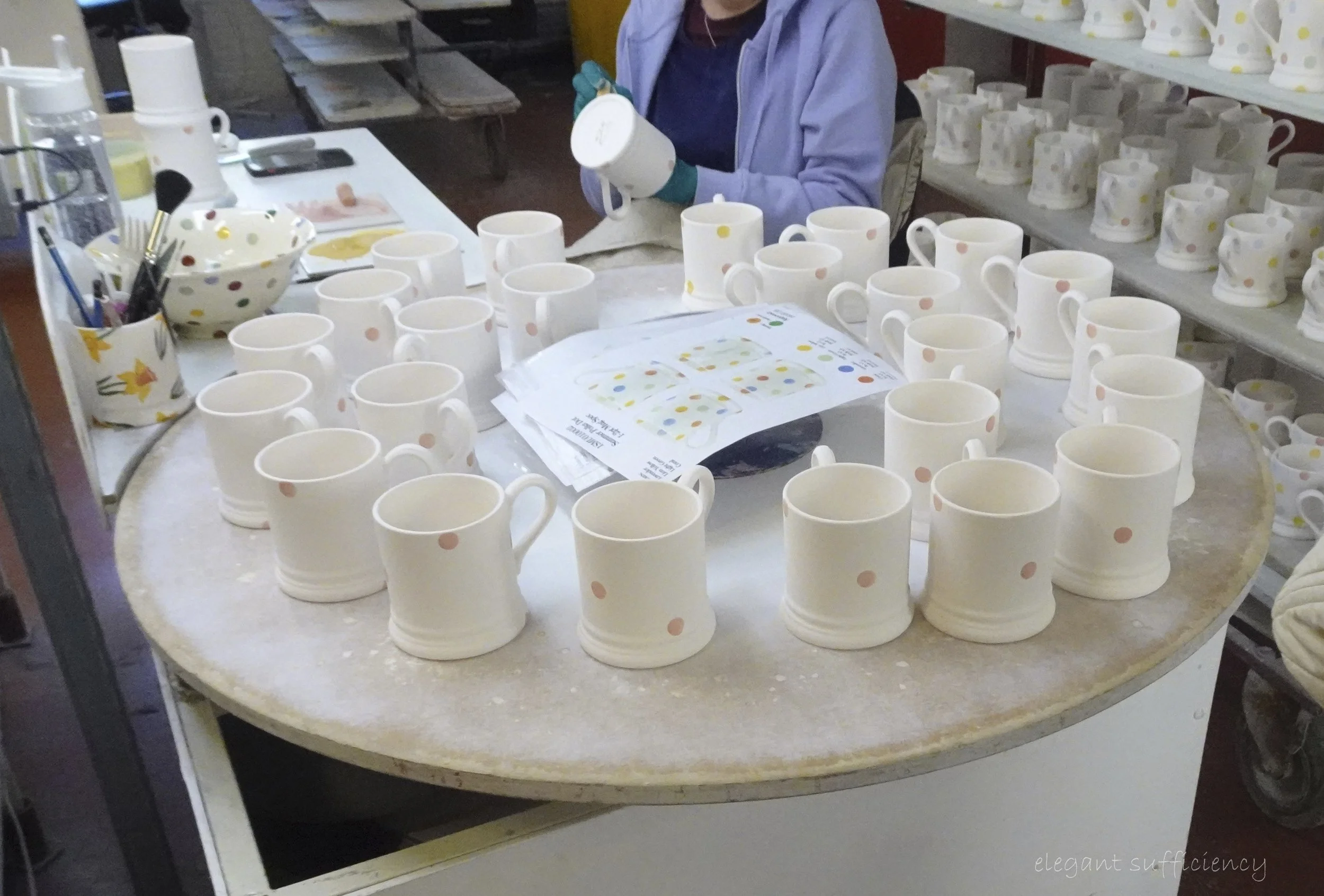
This lady was applying coloured dots for this traditional polka dot mug design. We learned that though each mug will feature the same number of dots, not all the spongers apply them in the same place! In the same way that not all mugs will be exactly the same thickness, due to variations in the slip casting process which is affected by the weather and the age of the slip cast mould. Aaaah, the joy of a hand made product!
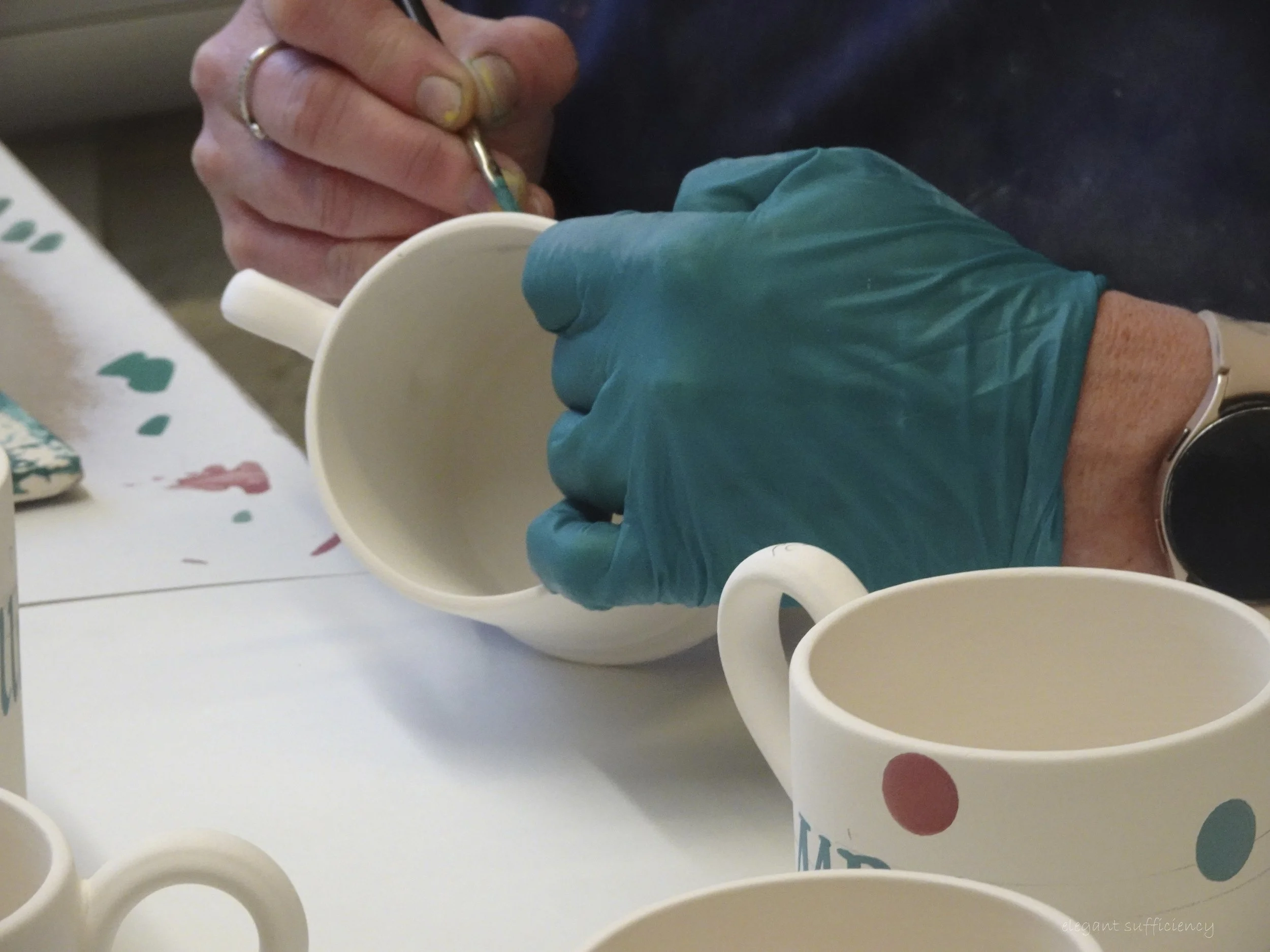
The last process we observed was the personalisation, where a lady who’d worked in this pottery for the last 33 years (under different owners) deftly wrote names and short phrases on custom designs. It’s she who will have written every name you see on an Emma Bridgewater design.
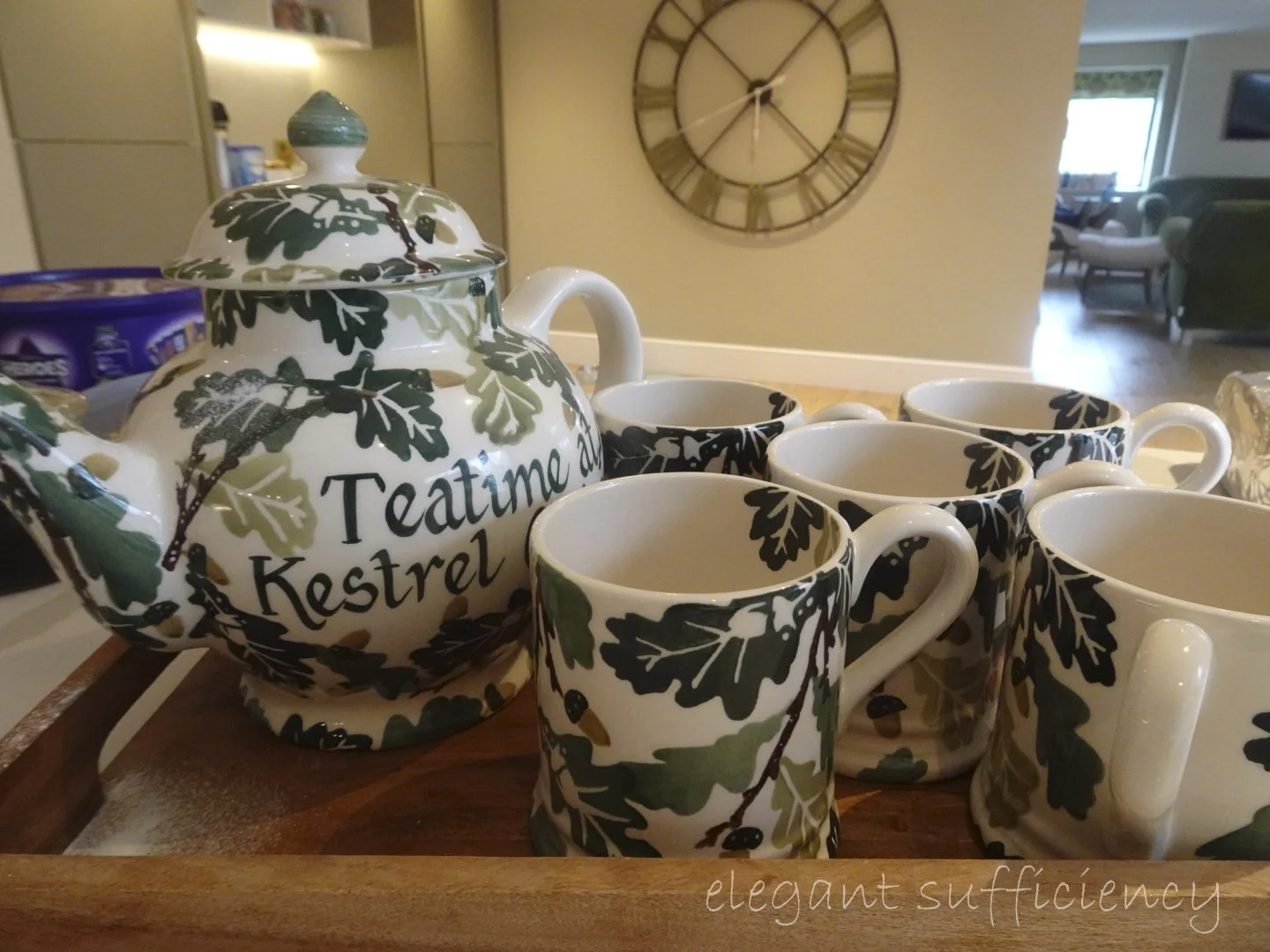
And “Teatime at Kestrel Cottage” on the teapot in the kitchen at The Tawny!
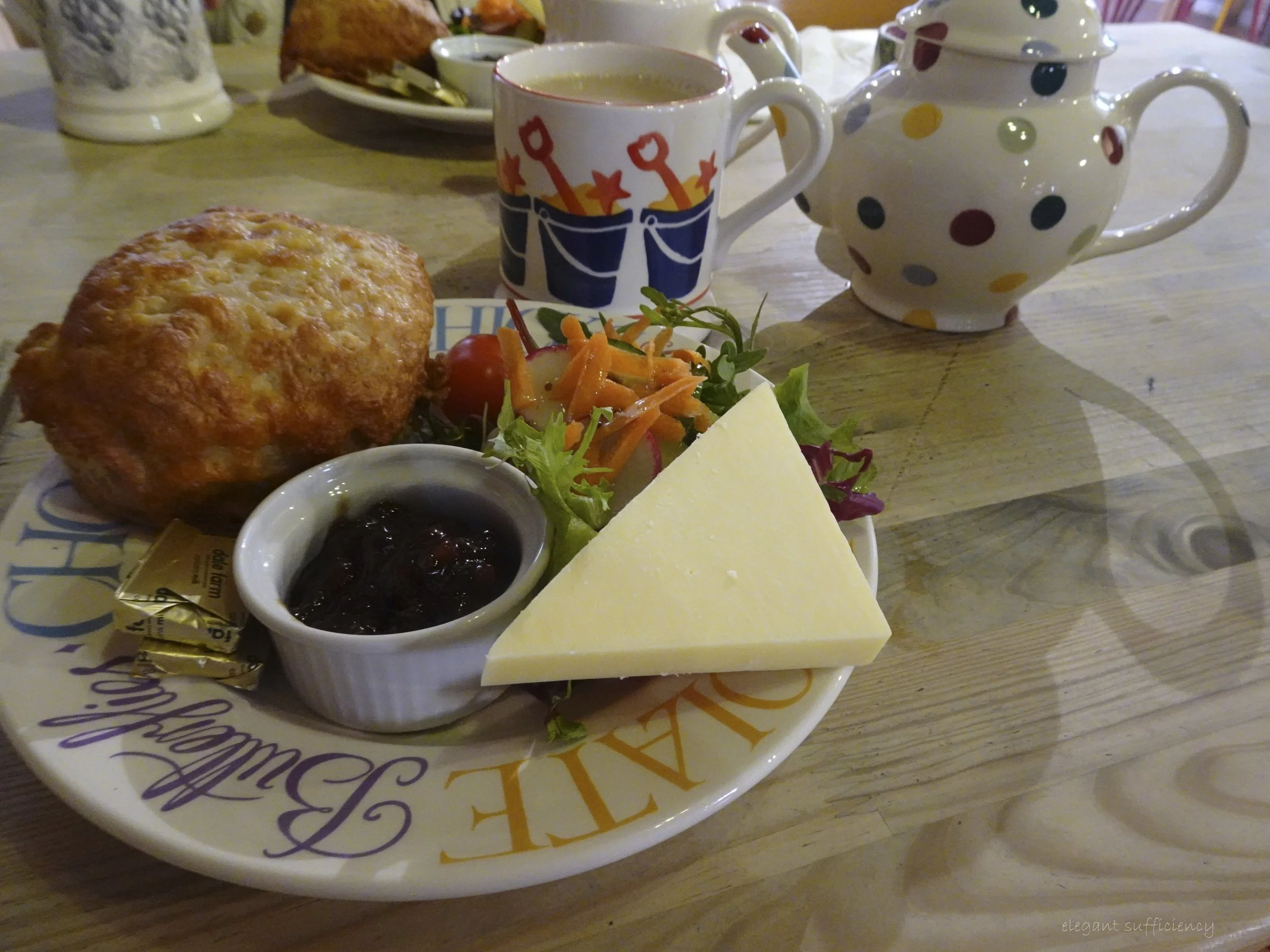
Thinking of teatime, by now, Olga and I were more than ready for a cuppa - or perhaps a late lunch. Thankfully, the cafe at the pottery had a lovely lunch menu from which to choose (cheese scone with cheese, salad and pickle) all served on, of course, a brightly coloured selection of Emma Bridgewater designs. We’d seen so much, we may have spent the next hour or more chatting about what we’d learned and how fascinating it had all been.
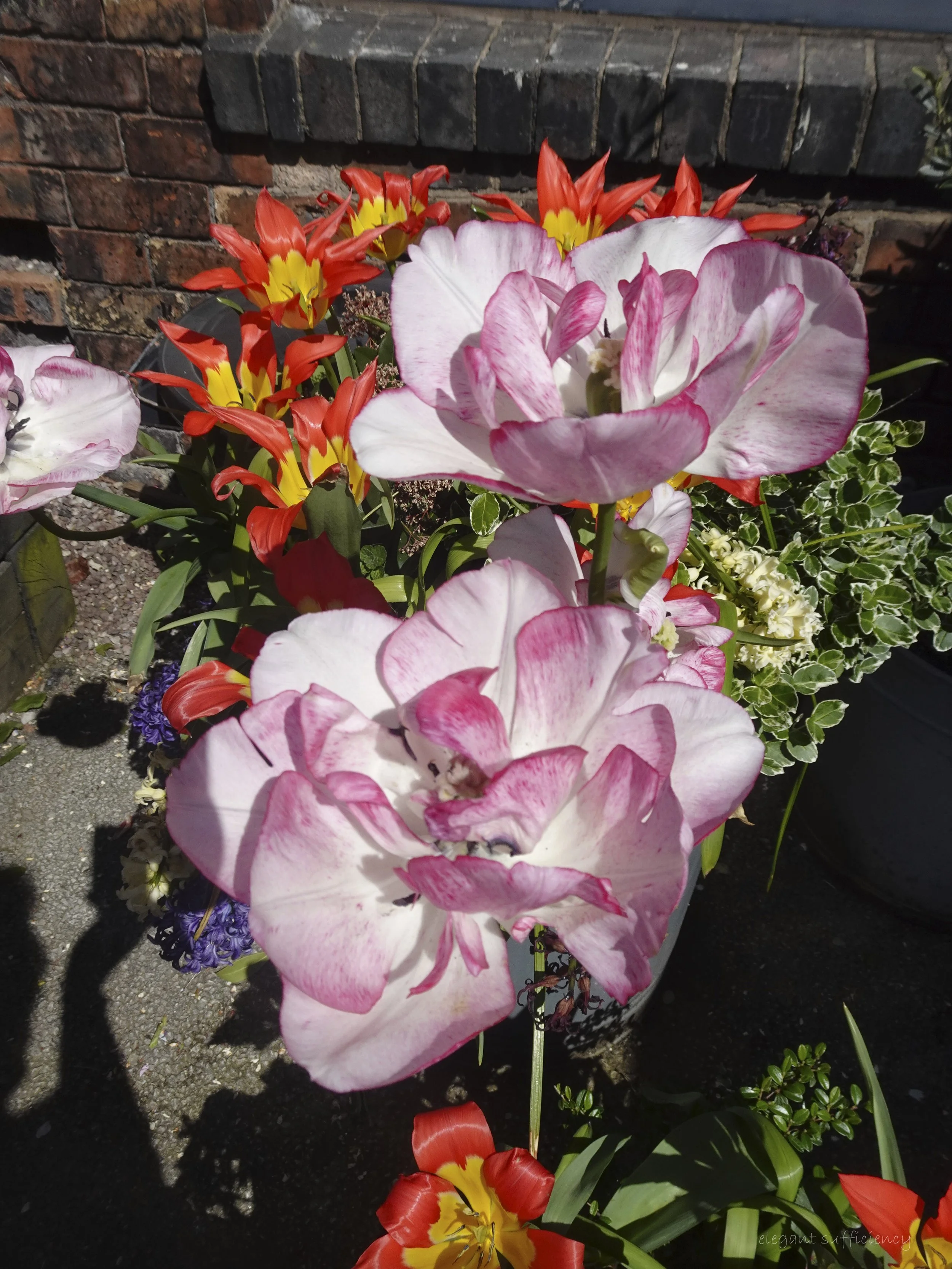
And making our way to the car afterwards, admiring Arthur’s tulips too!
What a great way to spend the day. Though the boys had also had fun at the Tramway Museum, Olga and I felt sure we’d made the right choice!