



Duvet day
Though not quite in the conventional sense of that phrase.
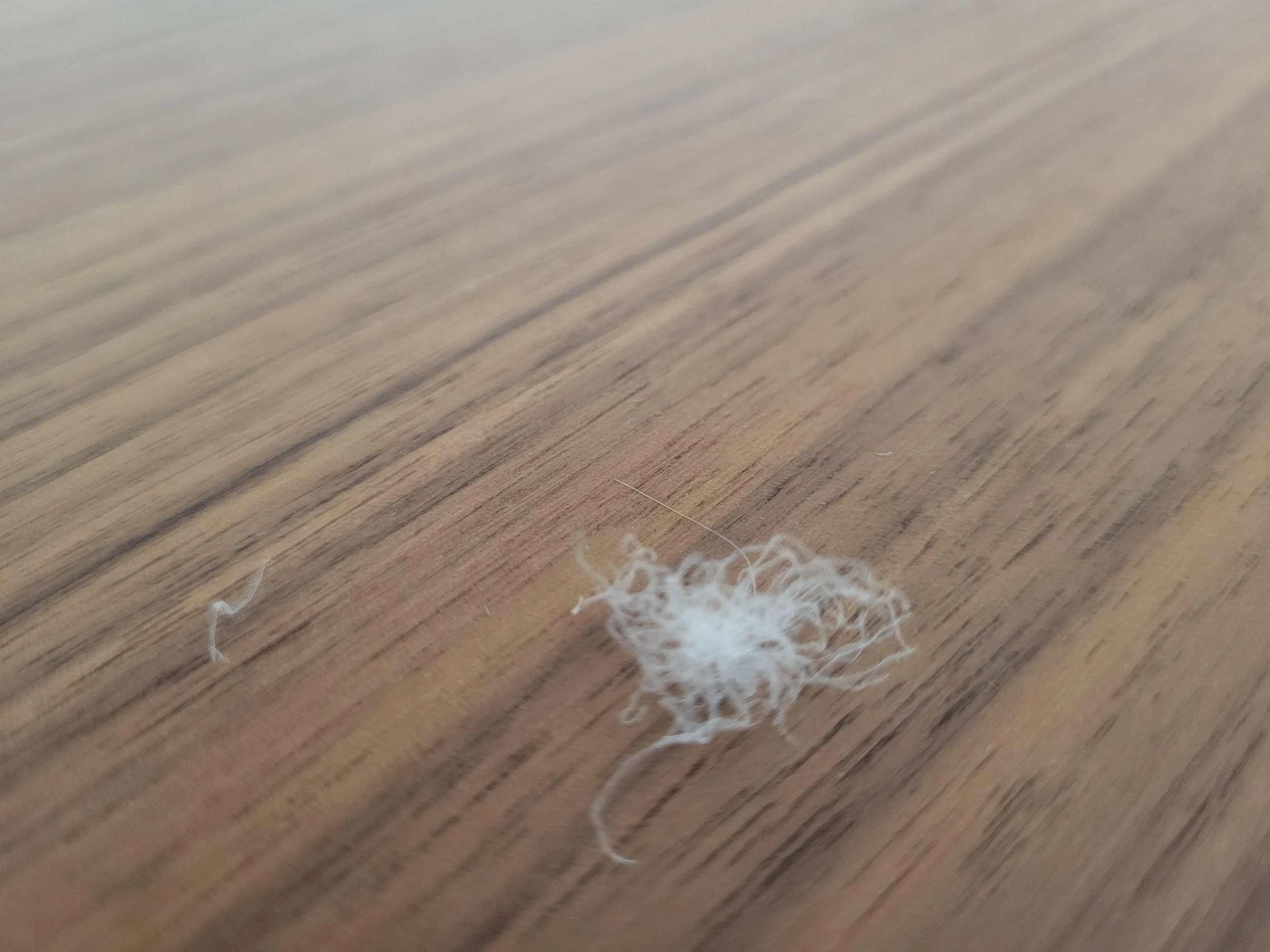
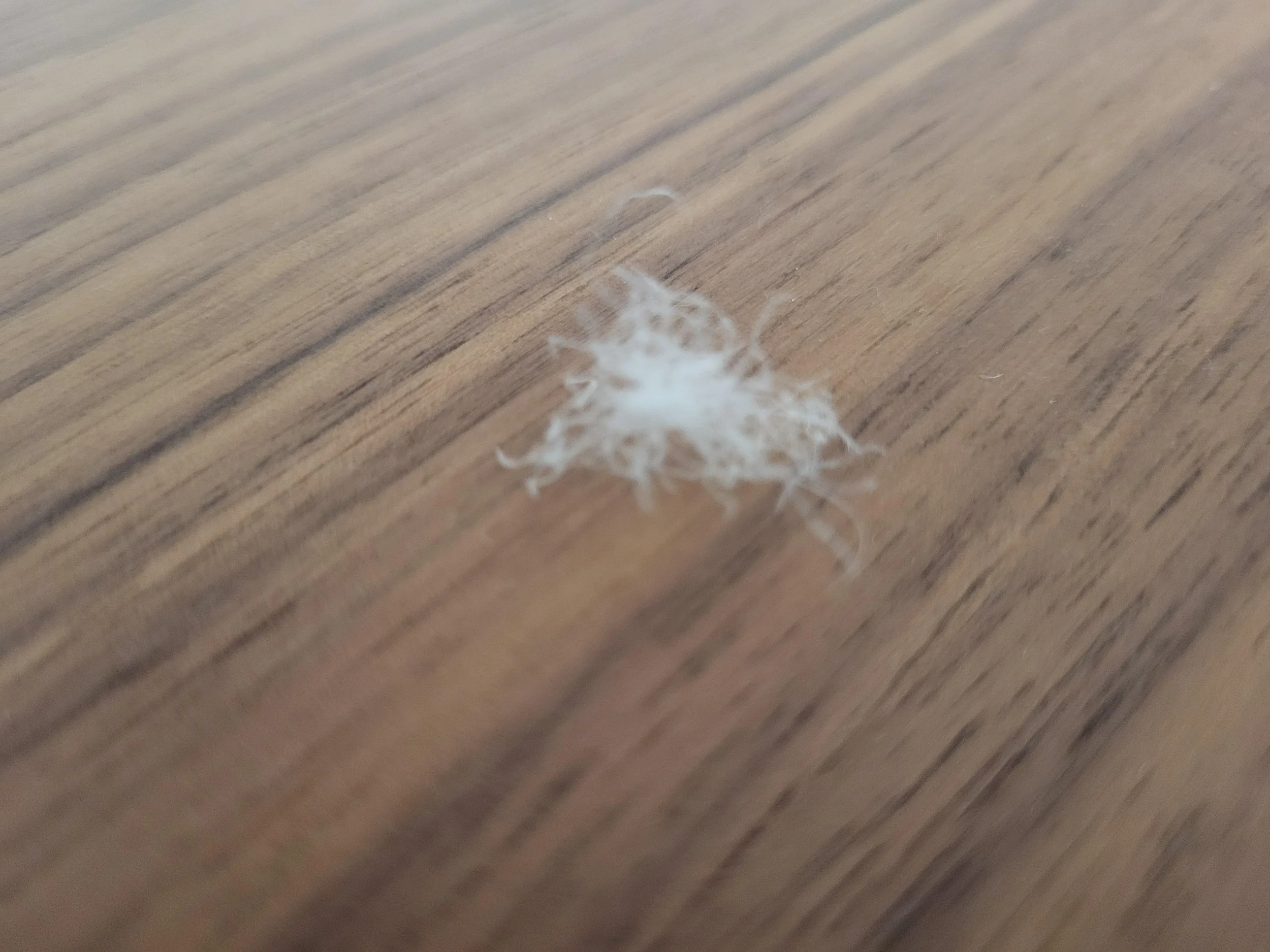
For quite some time, my Winter duvet has been in need of attention. Whenever I changed the cover, a few “fluffs” would escape. I use the word “fluff” because these are not feathers, but Goose Down, the contents of the filling of this wonderfully cosy duvet bought when I was either feeling extravagant or more likely, in a sale. For these days, such things are even more expensive than when I bought a matching pair for our bed some years ago. My Hero has long since moved on from his but I am very attached to mine, thinking of the experience of sleeping under it to be as close to sleeping beneath a cloud as it gets.
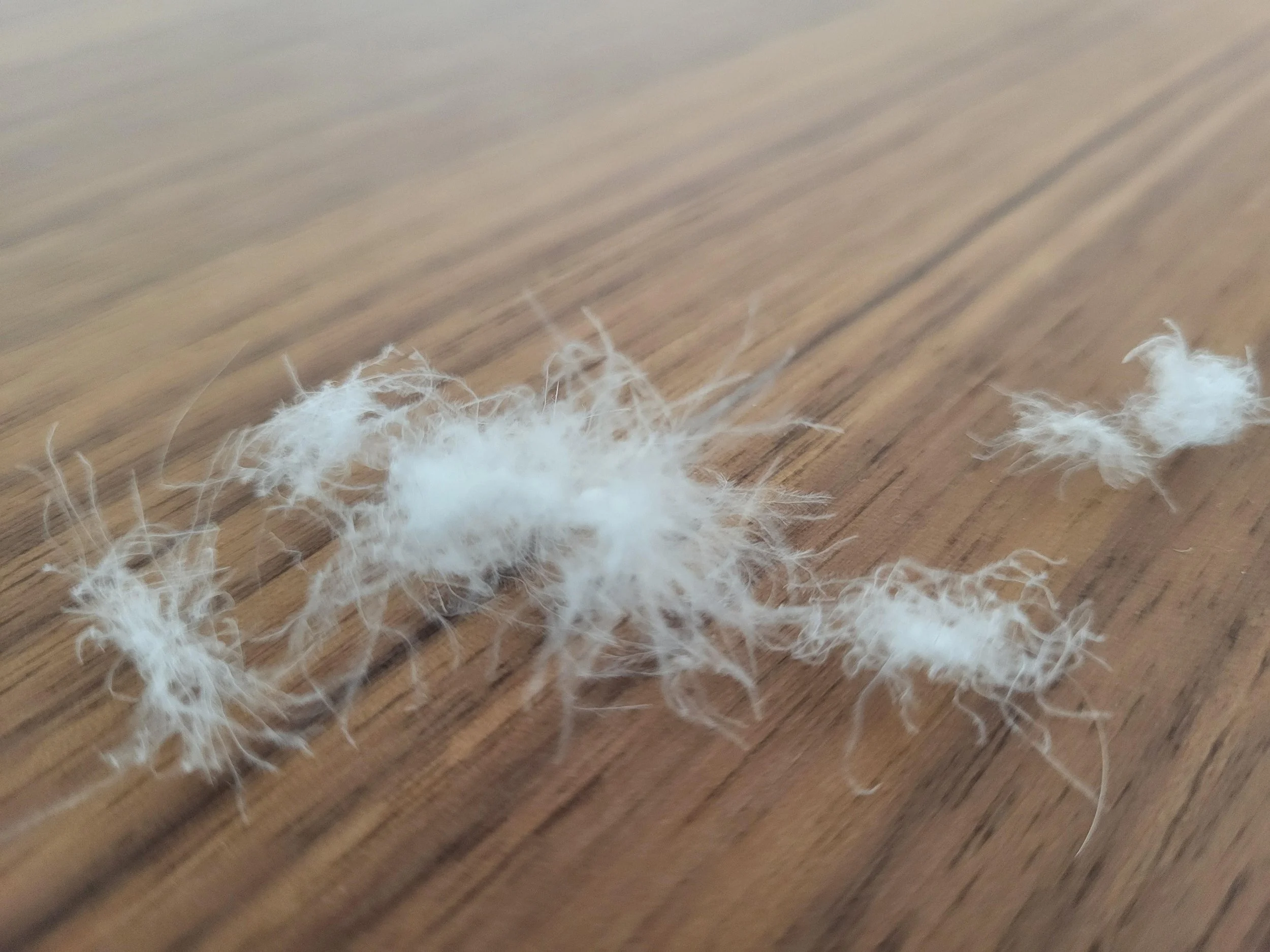
But each time we changed the bed, the fluffs would escape and several days later, I’d find gangs of them collected under the bed or in corners of the room. I viewed them as the down equivalent to Studio Ghibli’s “soots” as seen in “My Neighbour Totoro” because, for sure, these little fluffs had lives of their own, in my imagination if not for real!
It was time to take action.
Over the summer I looked for satin downproof ticking; closely woven down and featherproof fabric from which I could make a new cover. Mostly, ticking is striped and rather coarse, but I was searching for a finer, softer fabric, more in keeping with the original cover. Eventually, an enquiry to my favourite Empress Mills received a reply. “Sorry, not in stock right now, but email again in September and we’ll hopefully have some”.
I put a note in my diary.
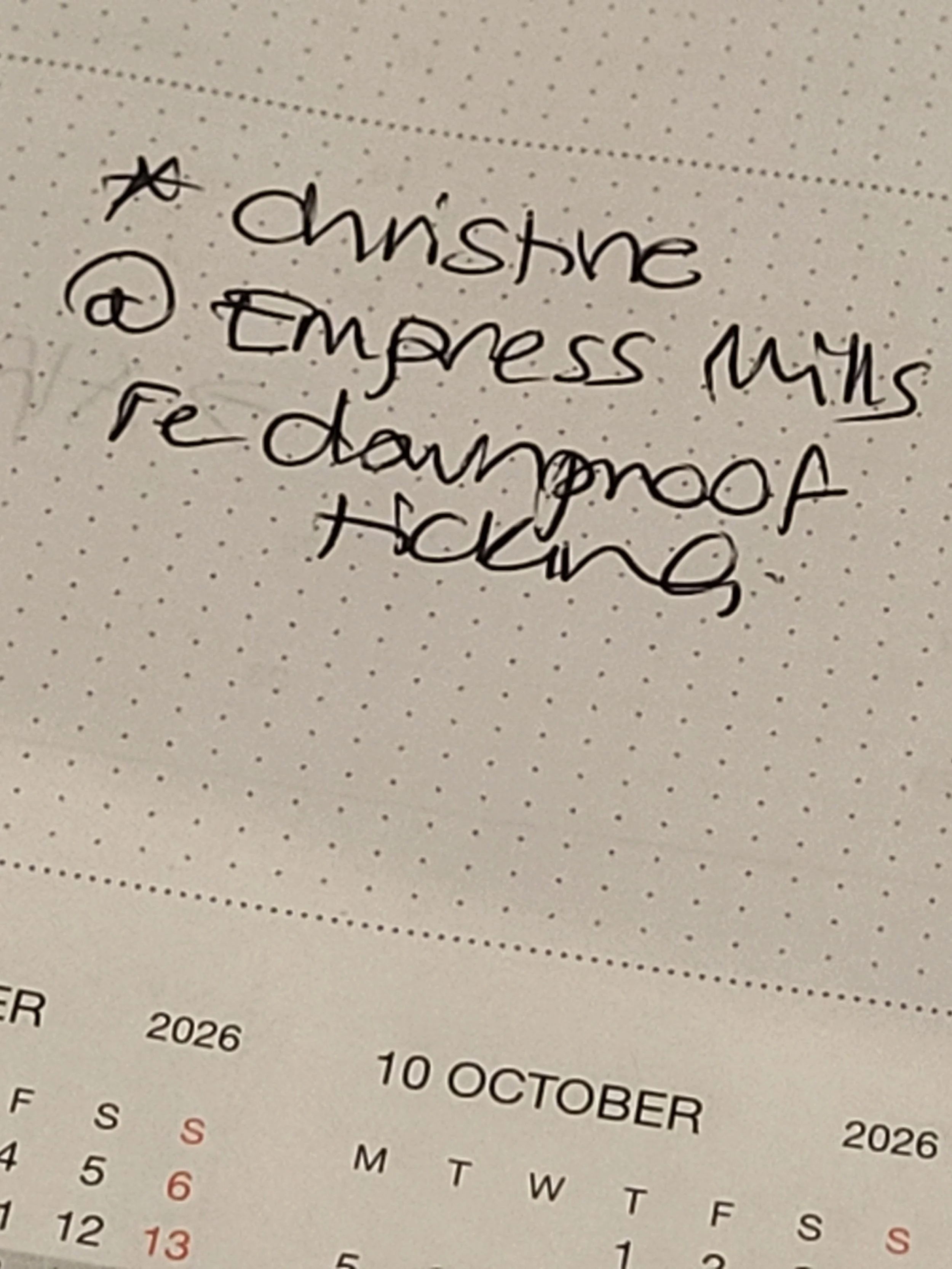
I emailed Christine and received an almost immediate reply. Yes, it was back in stock and of great quality. She quoted a price, with a discount for more than 3 m (I needed 4.5) and the deal was done.
Oooer. That meant that I had to work out how to do this!! For the next couple of weeks, once the ticking had arrived, I thought about how I’d begin. After all, I did not want to fill the whole house with fluff! Thankfully, the weather stayed mild and I was perfectly happy with my light, Summer duvet. But as the temperatures began to fall, I thought I could put off this job no longer.
The first bit was easy. So easy that I took no photos…just sewed a huge, 130cm x 200cm bag from the fabric, using French seams, because I knew how these fluffs would escape from the smallest hole.
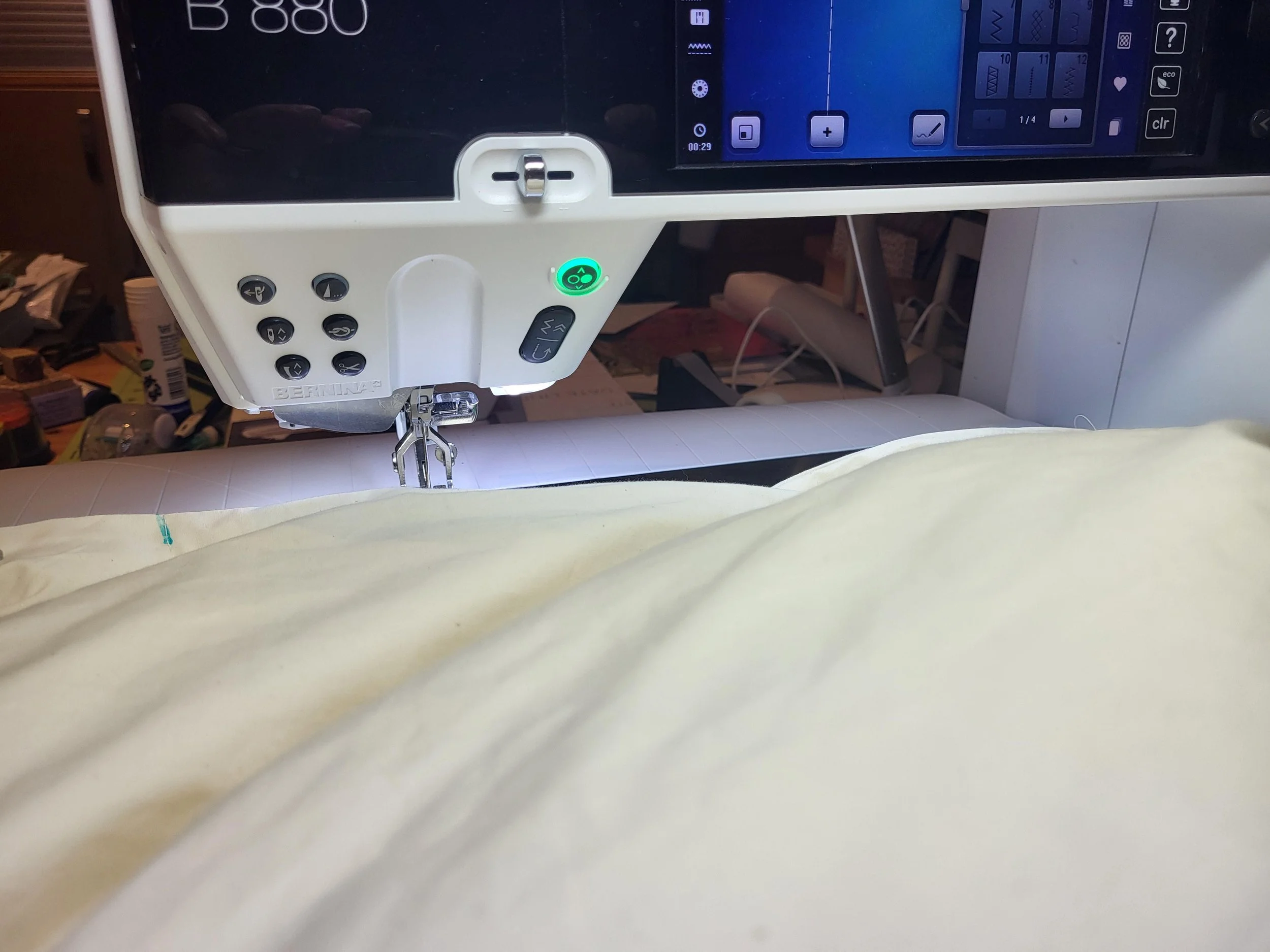
Having sewn the “bag” I tipped my duvet straight into it from the storage bag containing it and a few stray fluffs, deciding that I would leave the original cover in place. I then reached inside and used clips to keep the four corners in place, before clipping the edges all around.
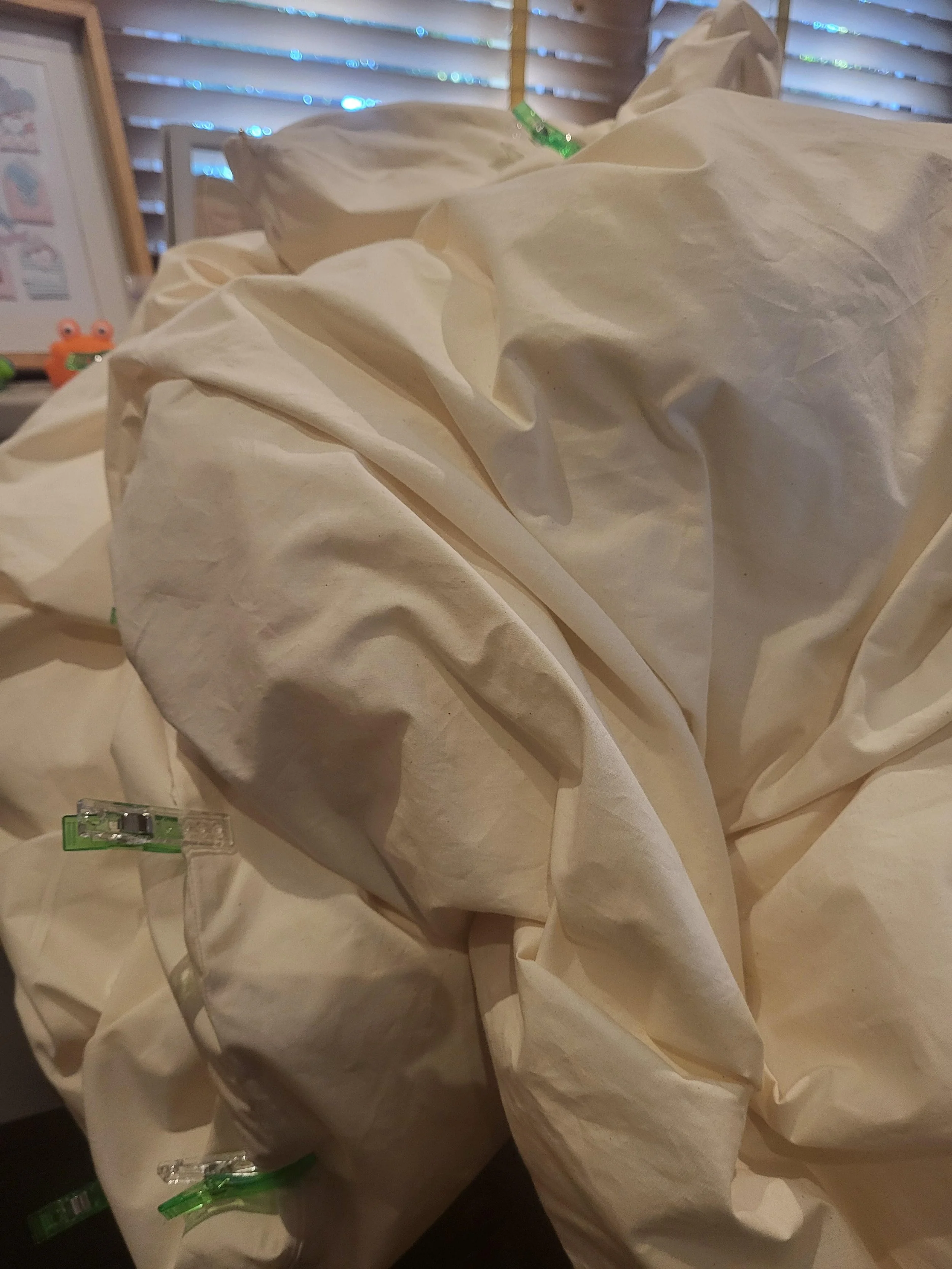
Not a single fluff escaped, though at times I felt i was being swallowed up by this whole thing, which seemed to be taking on a life of its own.
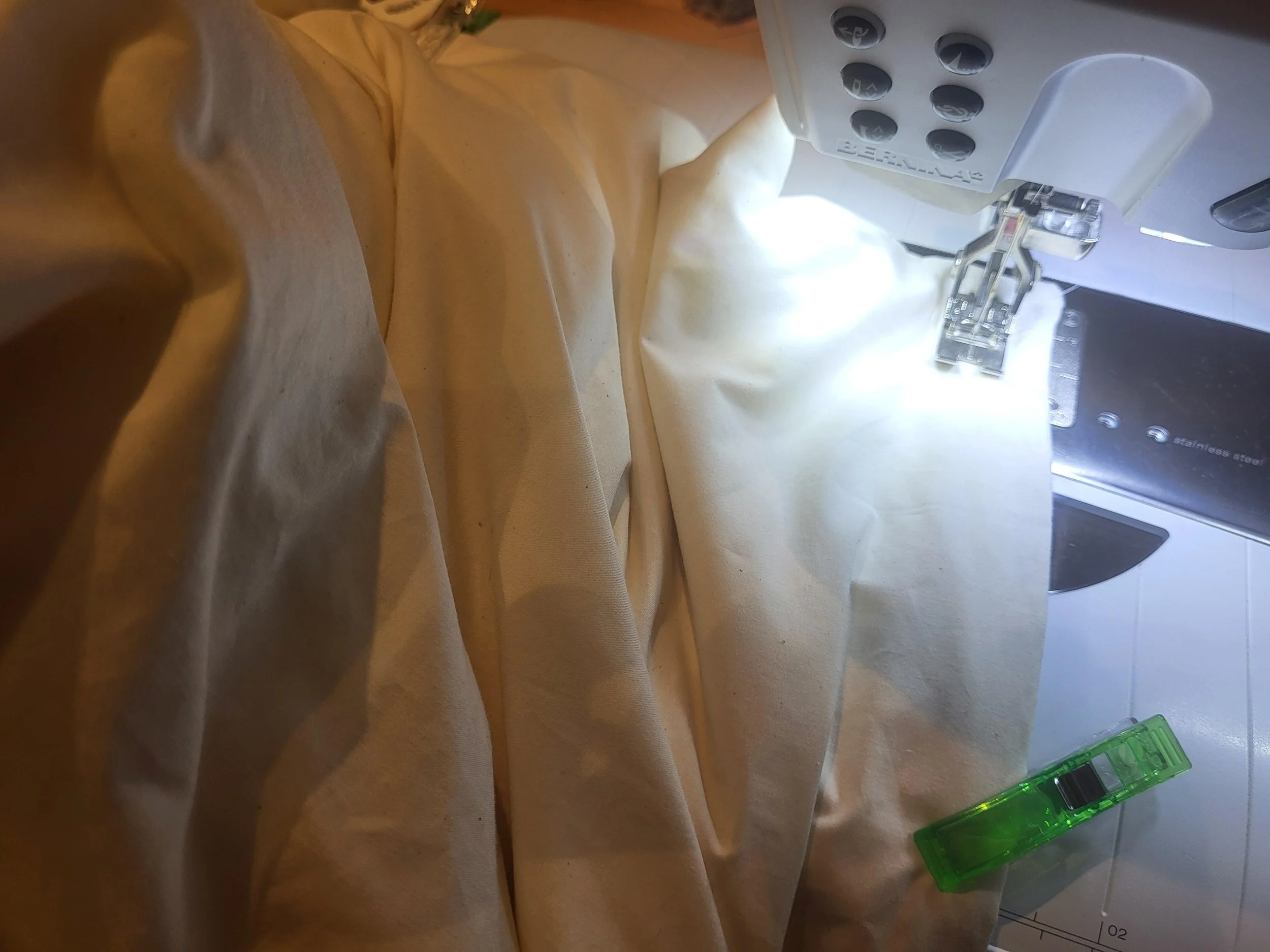
I got my sewing machine to hold onto it whilst I thought about the best way to close the opening I had left to get the quilt inside. I couldn’t work out how to do a French seam for that, so did what I often do and left it overnight!
I’m not sure I had the answer the following morning, but decided to simply go for it and sew a double line of small stitches, hoping that any fluff would fail to get through.
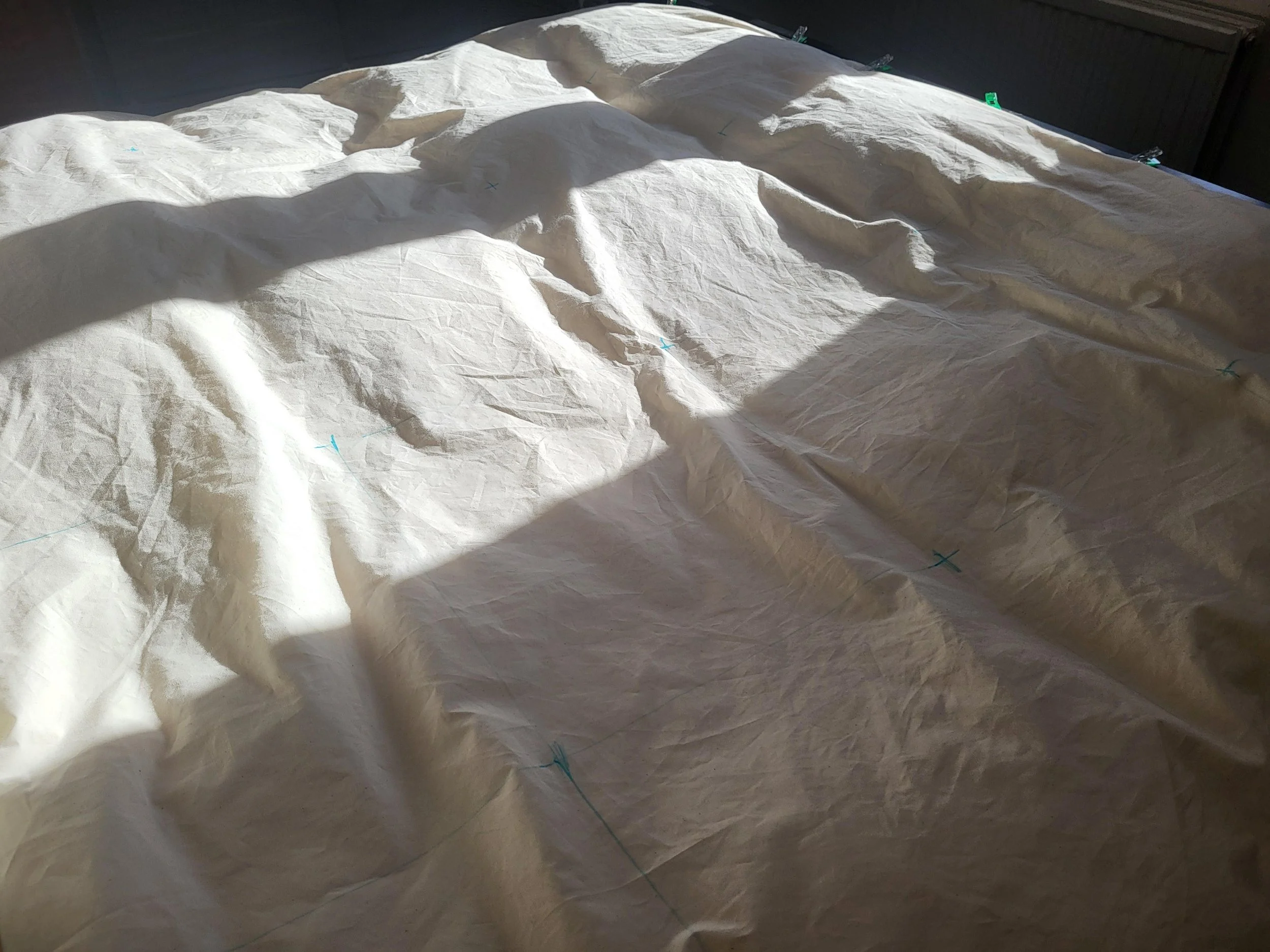
I’d noted that the original duvet had been stitched in 35cm squares to contain the filling and wondered if I ought to do the same? I laid it out on the only surface large enough - our guest bed - and used a water erasable pen to mark it out.
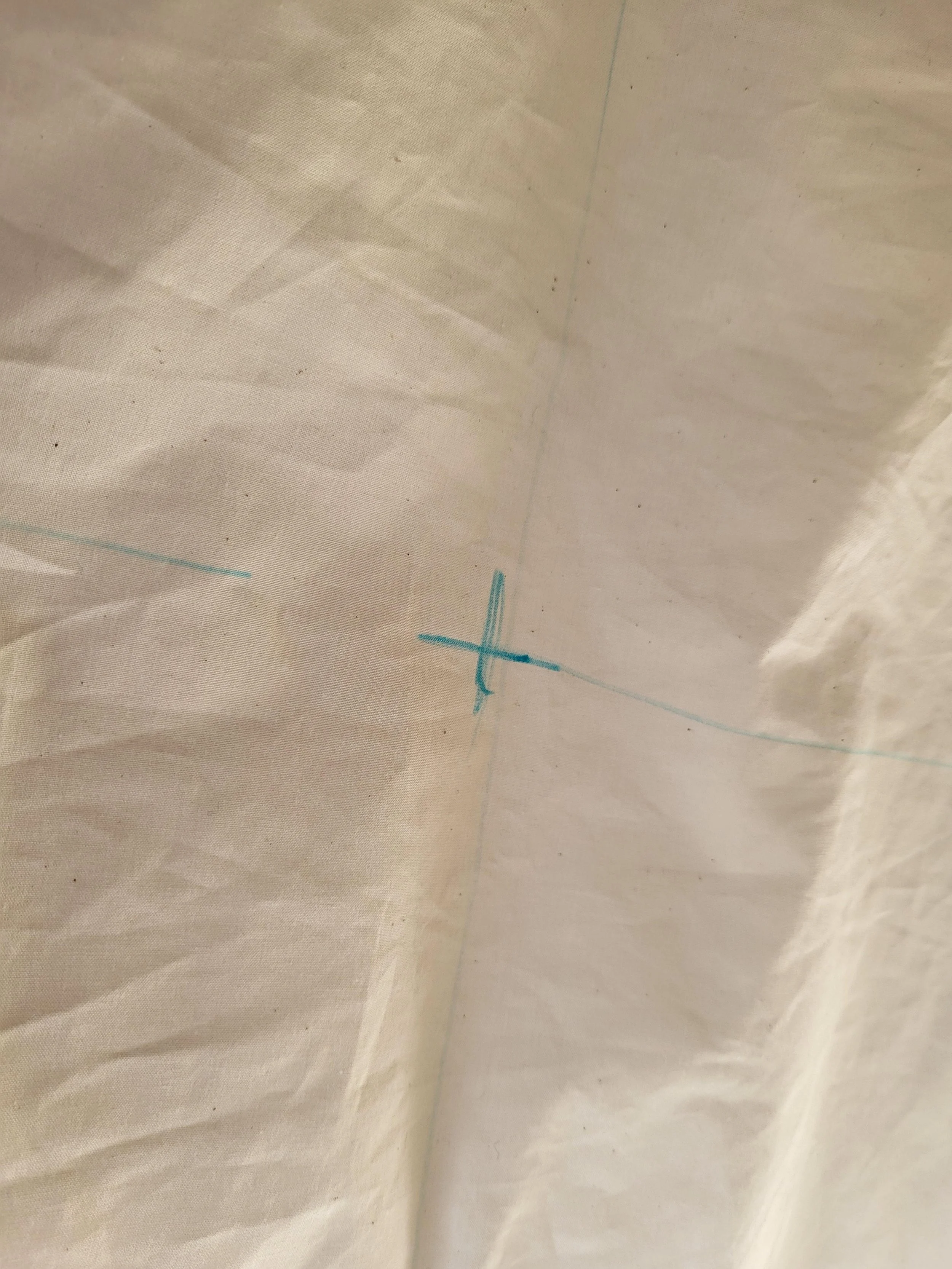
Even if I only tied the layers together in those cross places, it would stop the original duvet moving about in the bag. But maybe I should sew those lines and recreate the square “quilt”?
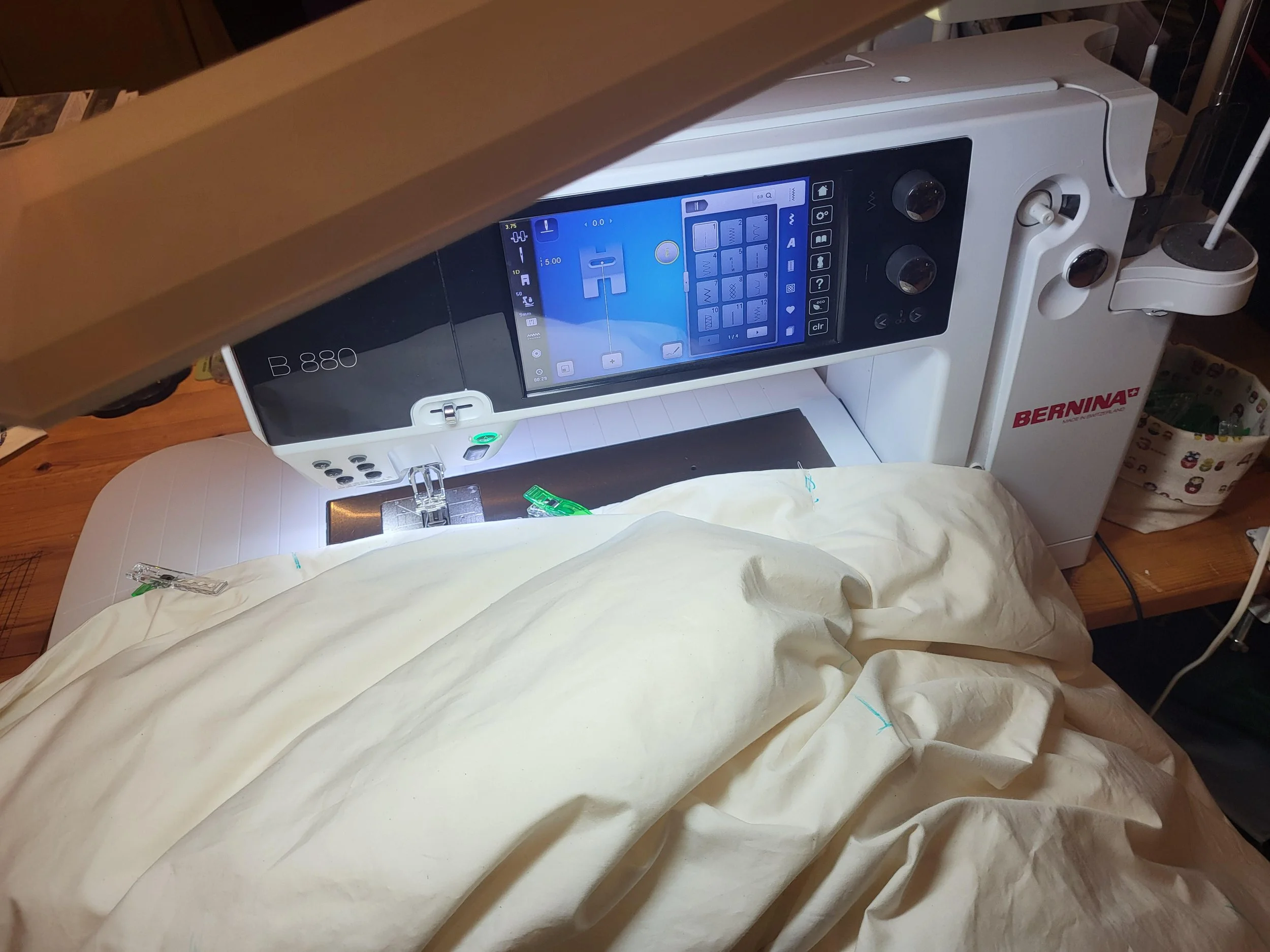
Well, that turned out to be a Bad Idea. Not only would the duvet not fit in the “throat” of my machine, getting the layers aligned proved tricky - and of course, every wrong stitch made a hole in this fabric; a hole through which a fluff could escape!!
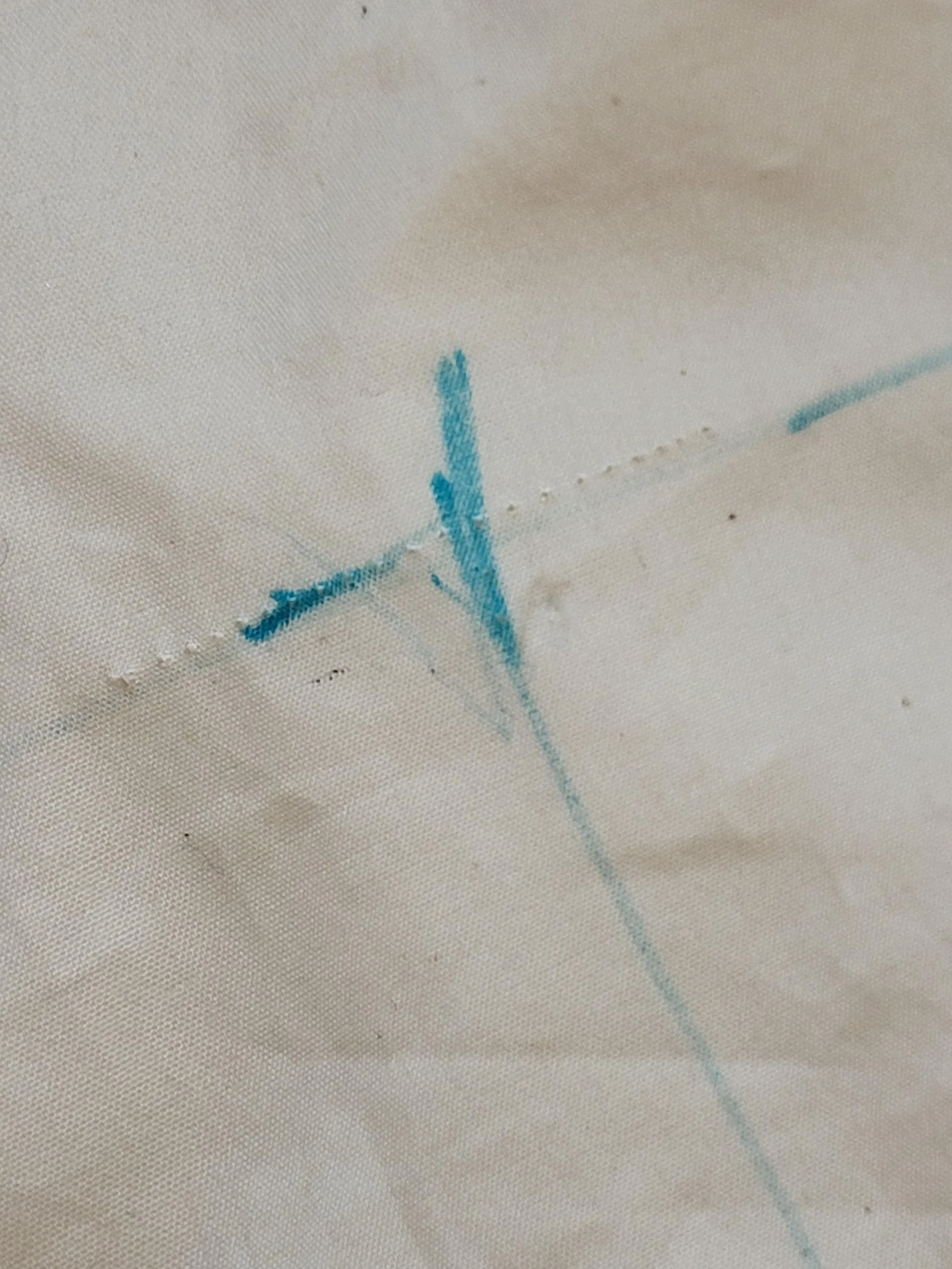
Remedial action was called for and those holes were closed up carefully before I went any further.
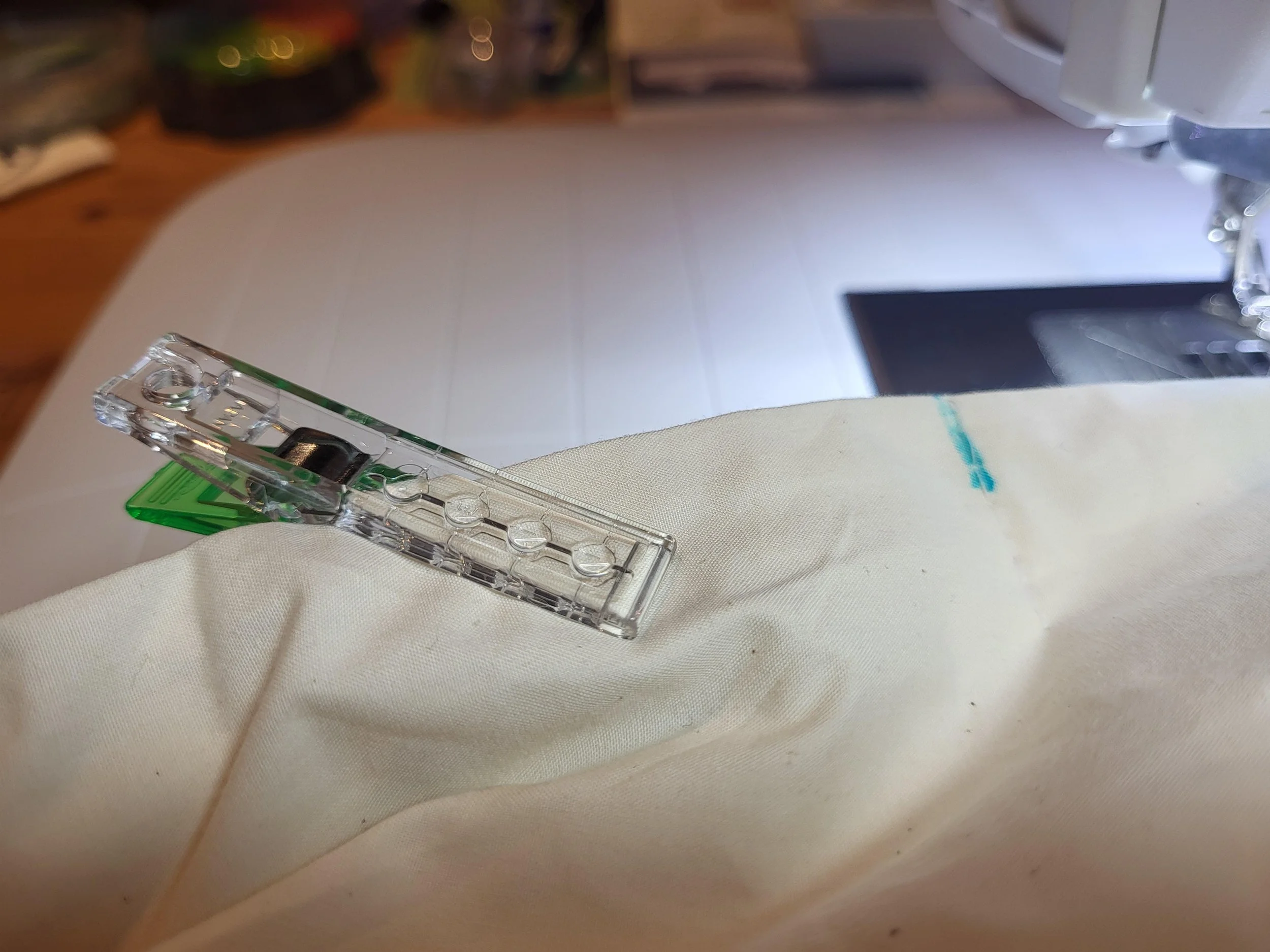
In the end, I decided to simply put a few stitches in at intervals around the edge, doing my best to align them with the original stitching. If the edges were securely placed, then the original duvet was not going to “float” around in the new cover at all.
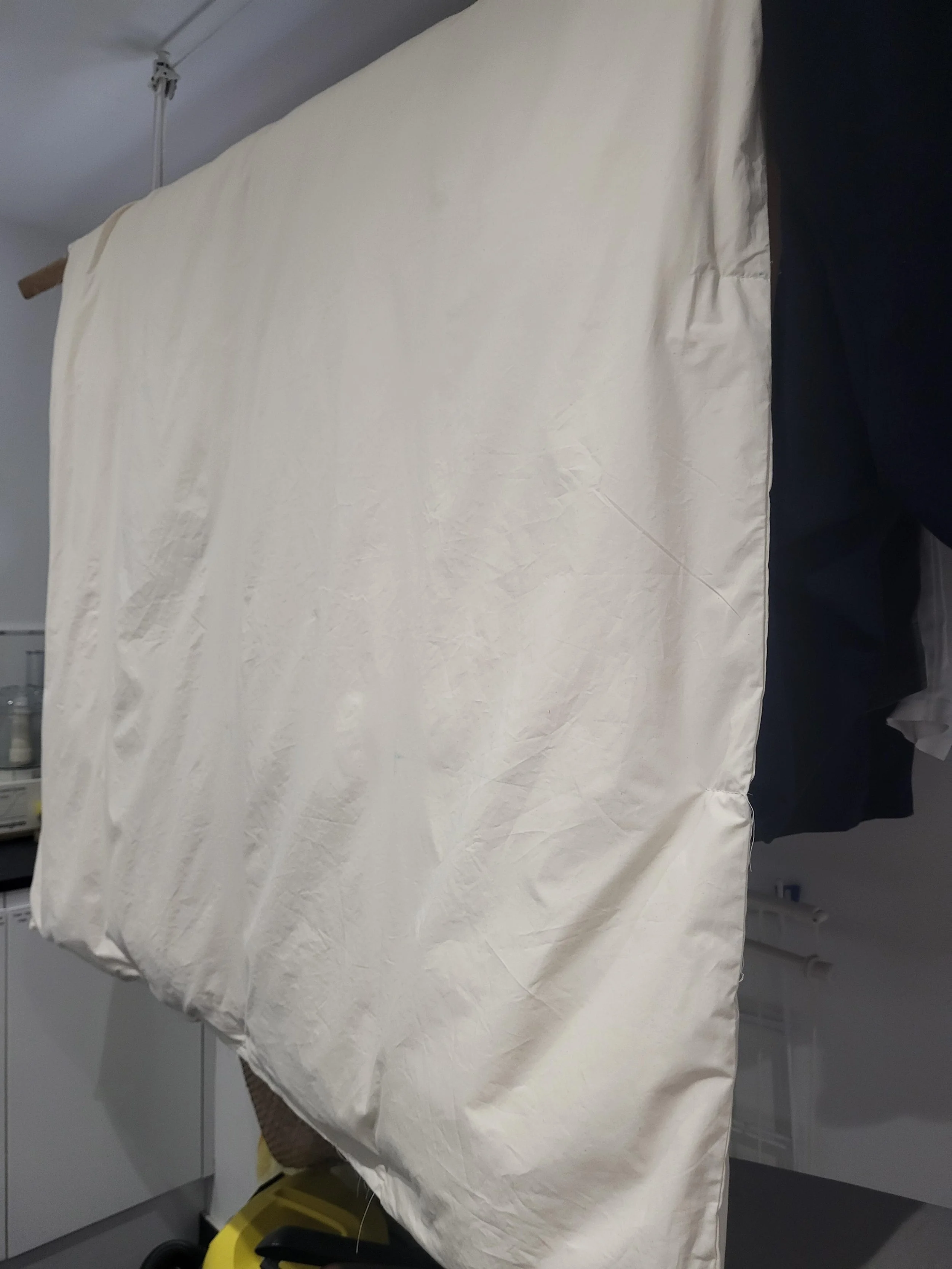
With a sigh of relief, I gave it a good shake and took it into the laundry to hang it up on the airer and spray the water-erasable markings to make them disappear.
Phew!
The question is, have I written this post because I need to remember how I did all of this ready for the next time? Or, is it to remind myself of it all to ensure there will be NO next time?! 🫢