



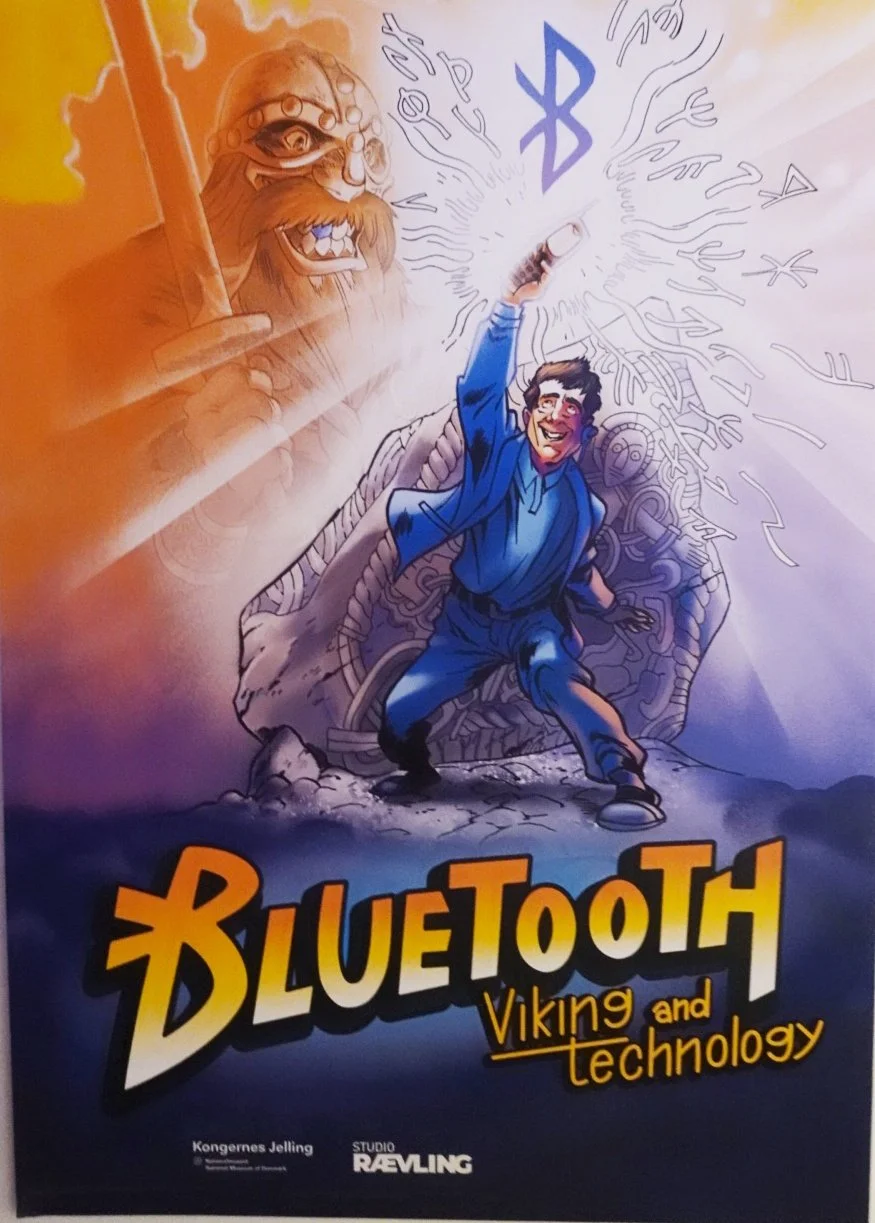
What, no runes?
During our time in Denmark, we've been delighted by the range of experiences we've enjoyed. We've seen wonderful coastal landscapes, enjoyed interesting small towns and lively cities and of course, we have played with LEGO! Our interests in art and history have been well catered for with our visit to Fyrkat ticking the Viking box so nicely. But I hadn't seen any runes.
That was about to change. As we set off towards the German border this morning, on the first step of our journey back home, we had a point of our map marked Jelling, the site of a collection of UNESCO World Heritage Viking treasures, including rune stones. Not “any old rune stones” either, but possibly the most important and fabulous rune stones imaginable.
Yes, it's been a pretty good day.
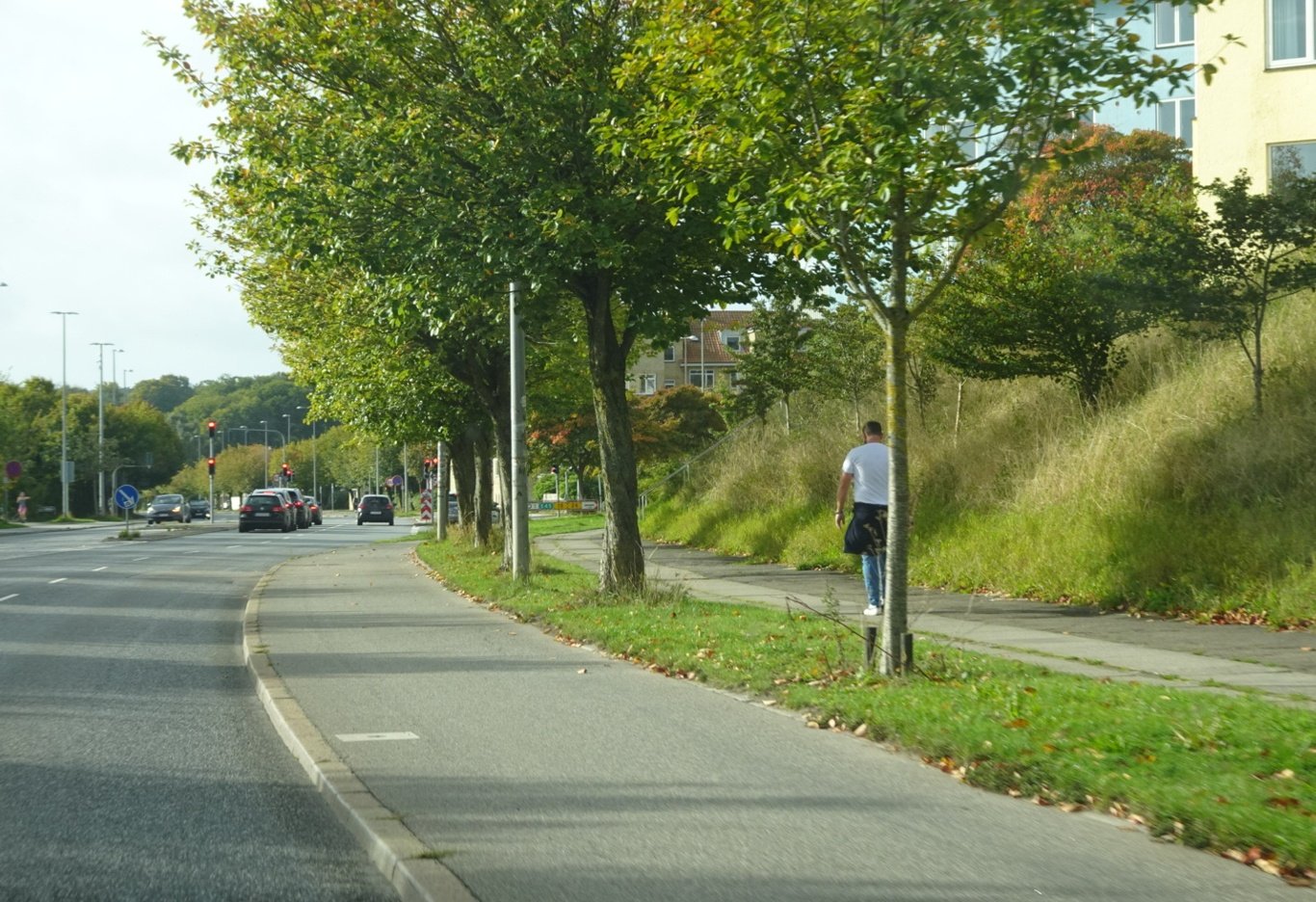
We set off first thing, driving out of a quiet city on a Sunday morning alongside joggers, walkers and cyclists.
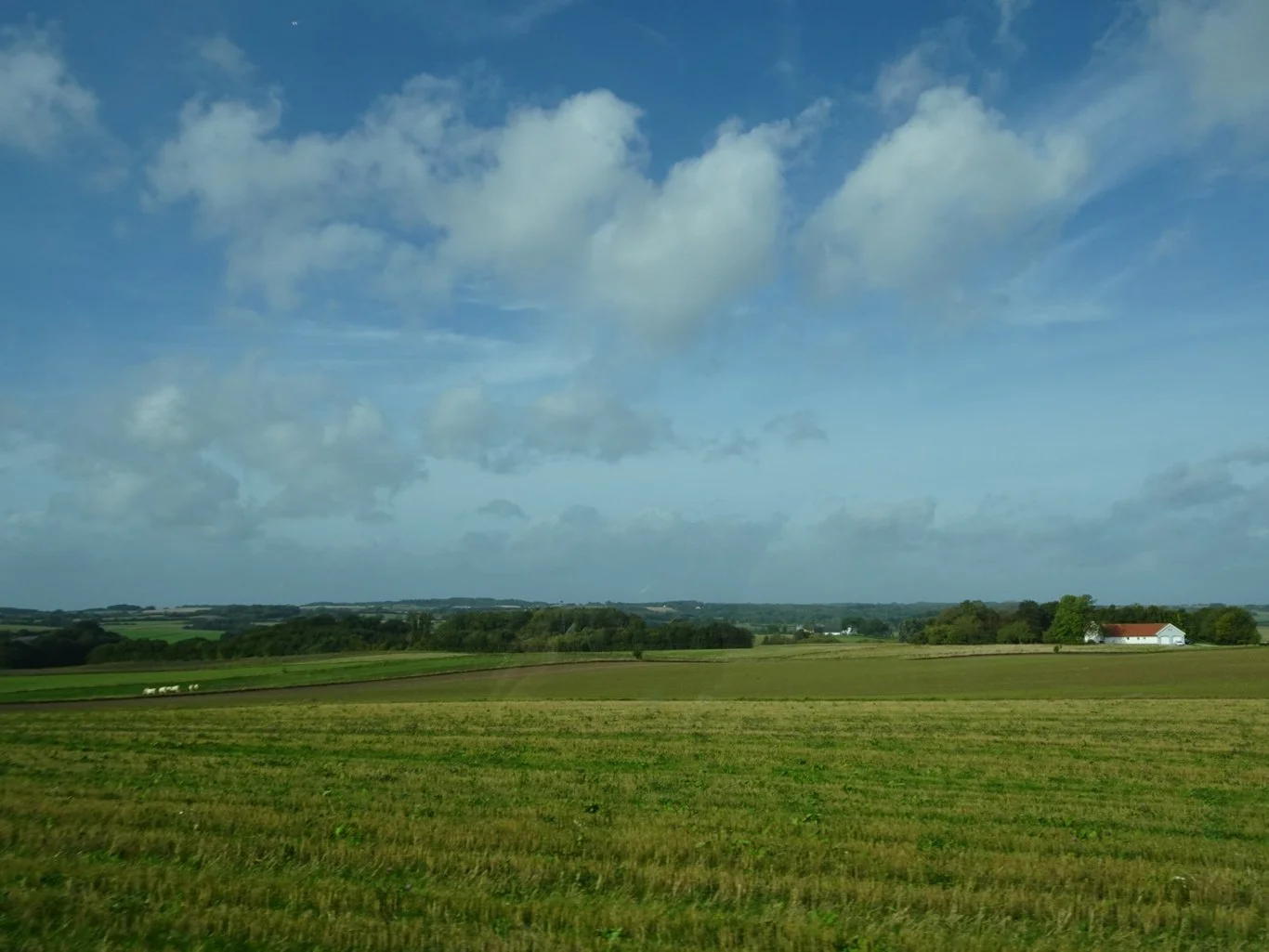
Out into the now familiar Jutland countryside with few cars for company.
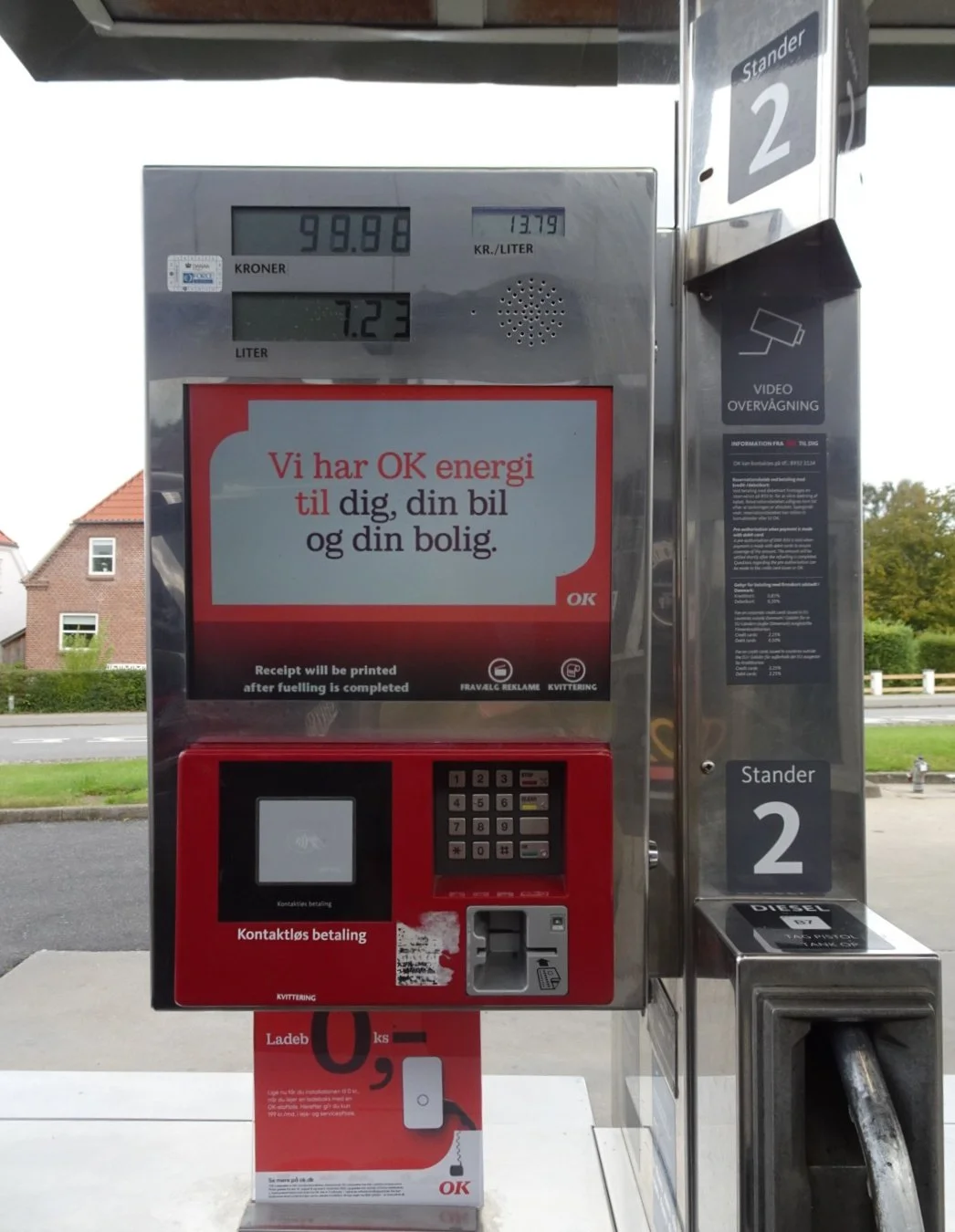
We filled the car up with petrol at another unmanned filling station, wondering why we'd found the first one so alien when this one seemed to be just the same as our “pay at pump” process. At least I spotted the English language option early in the process this time, which made things a lot easier.
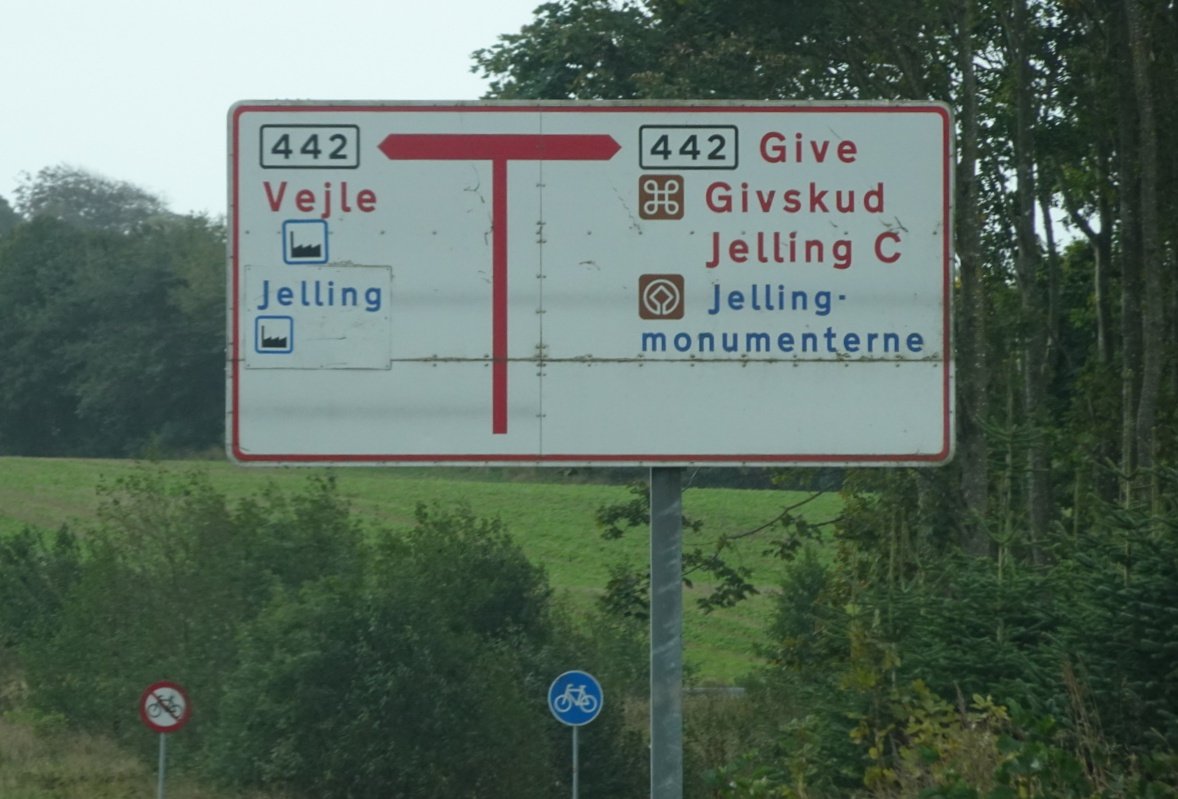
Soon, there were road signs to Jelling, our Viking destination this morning.
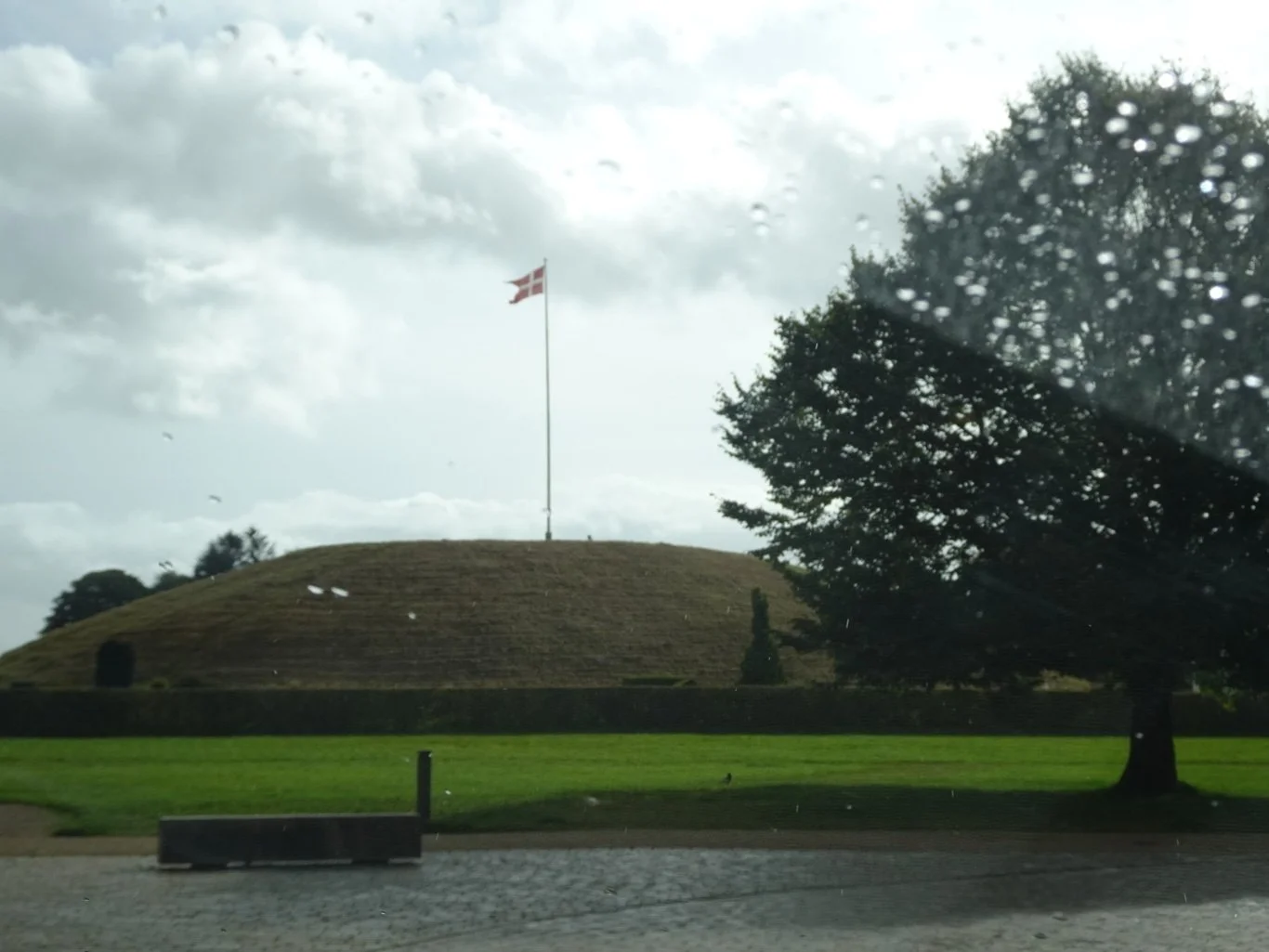
Before we'd even arrived, we were excited by what we could see.
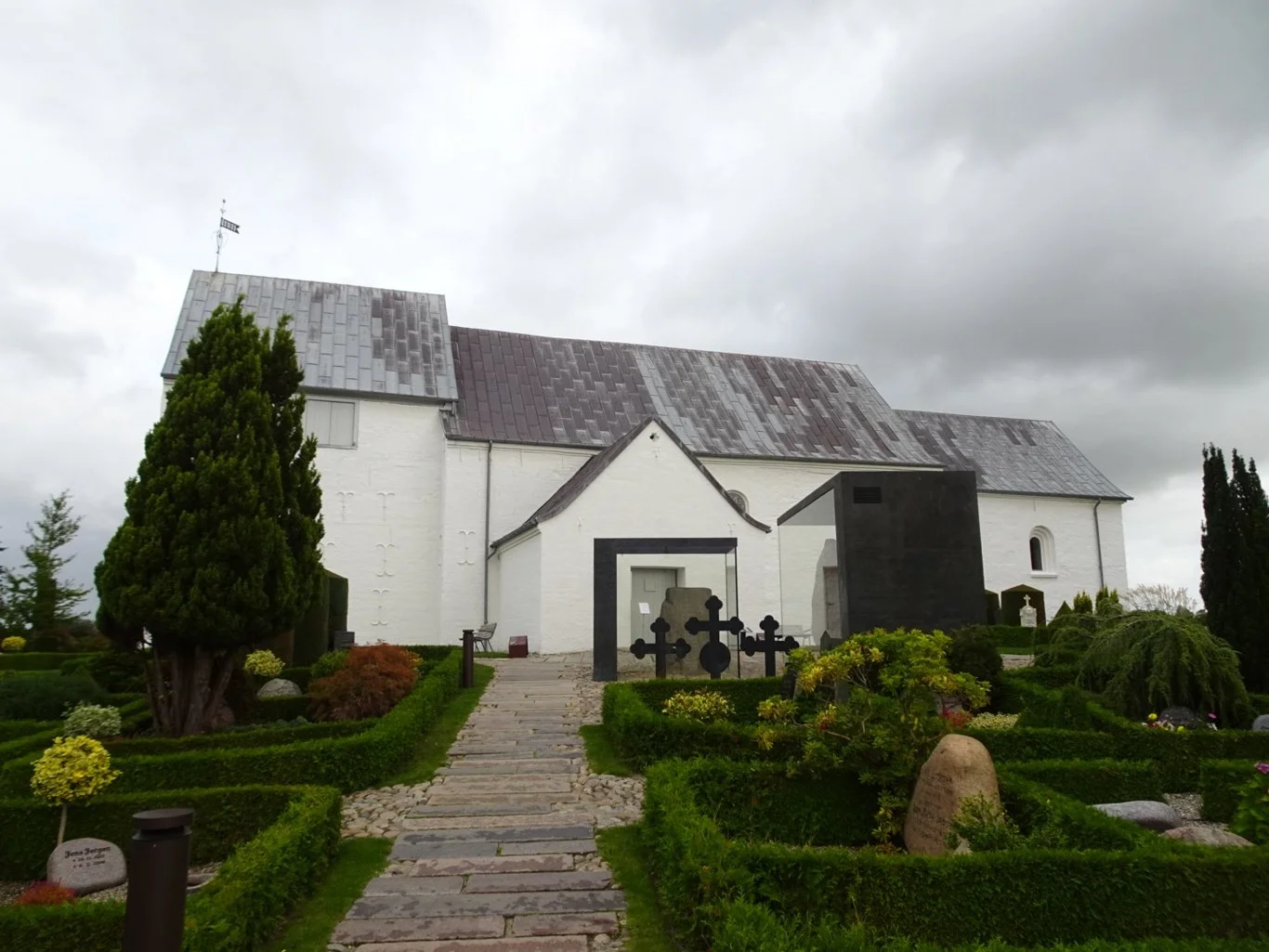
We decided to begin with the church, where we knew the main treasures were to be found. There, in two large rectangular glass cases were the stones we'd read about.
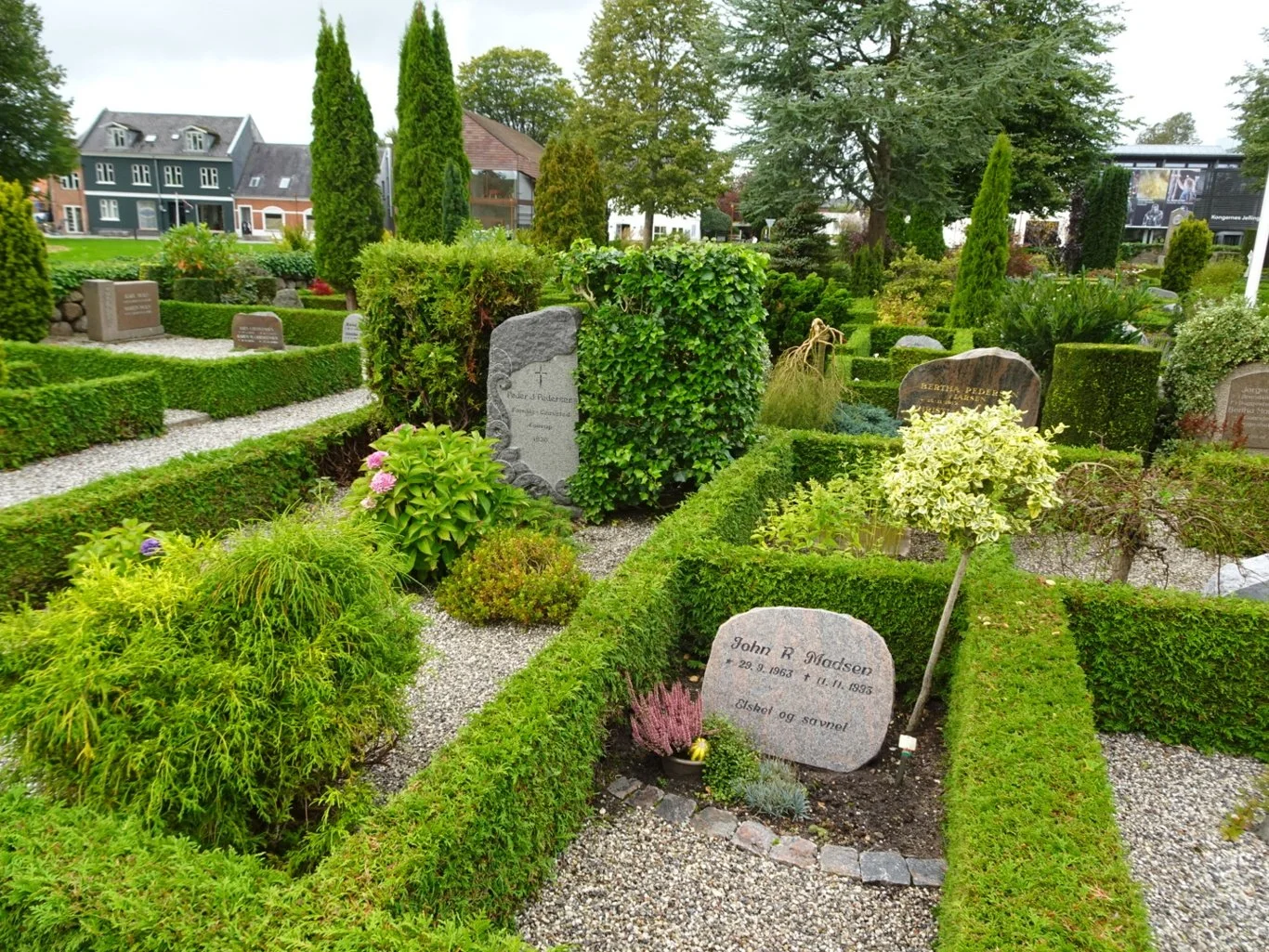
To reach them, we had to walk through the cemetery passing by the neatly tended graves of several Pedersens, Madsons and Christensens. We could hear the Sunday morning service in progress inside the church, too.
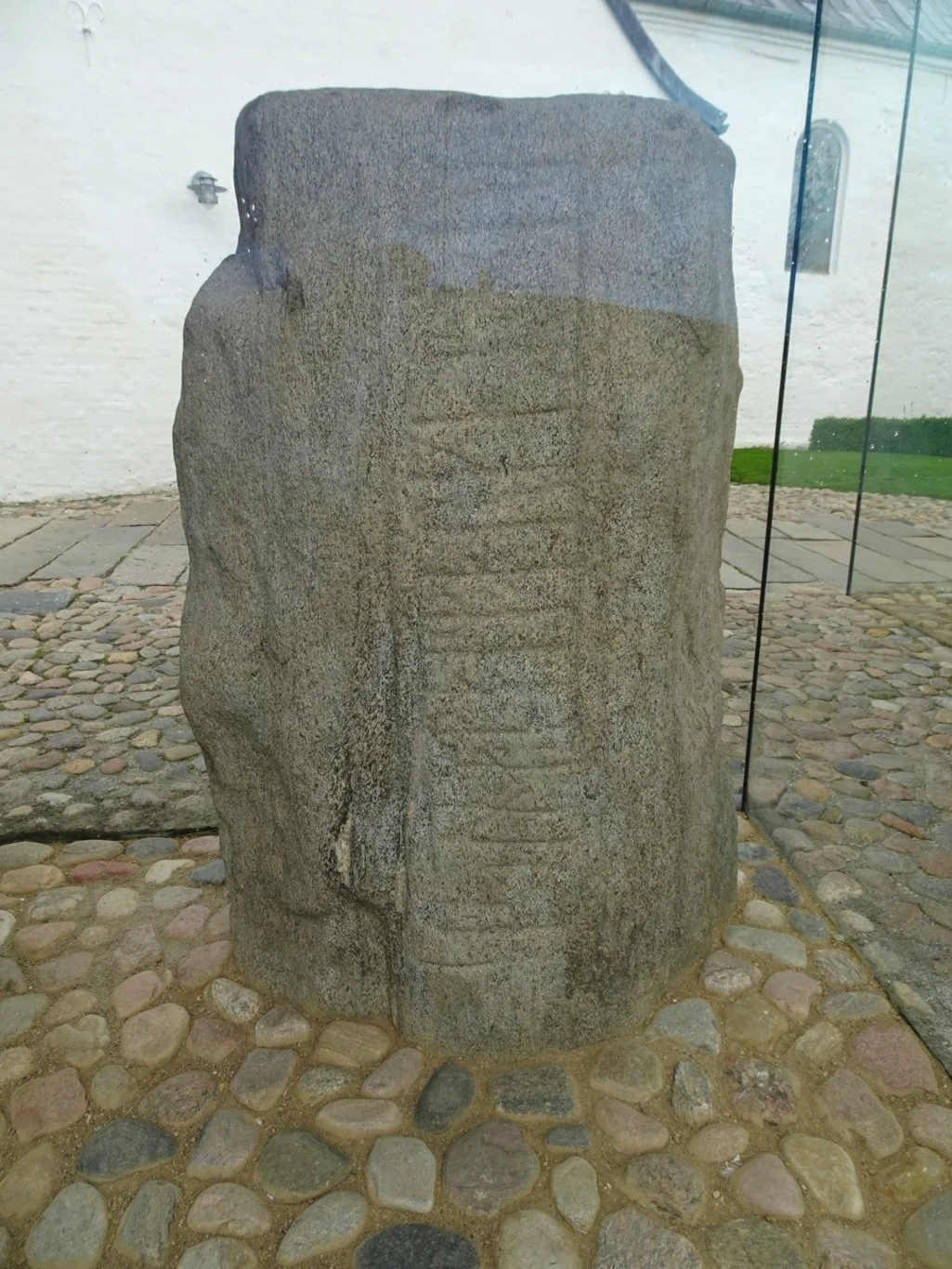
There, in the first glass case was the older of the two stones. raised by King Gorm in memory of his wife Thyra. It's on this stone that the name “Denmark” appears for the first time.
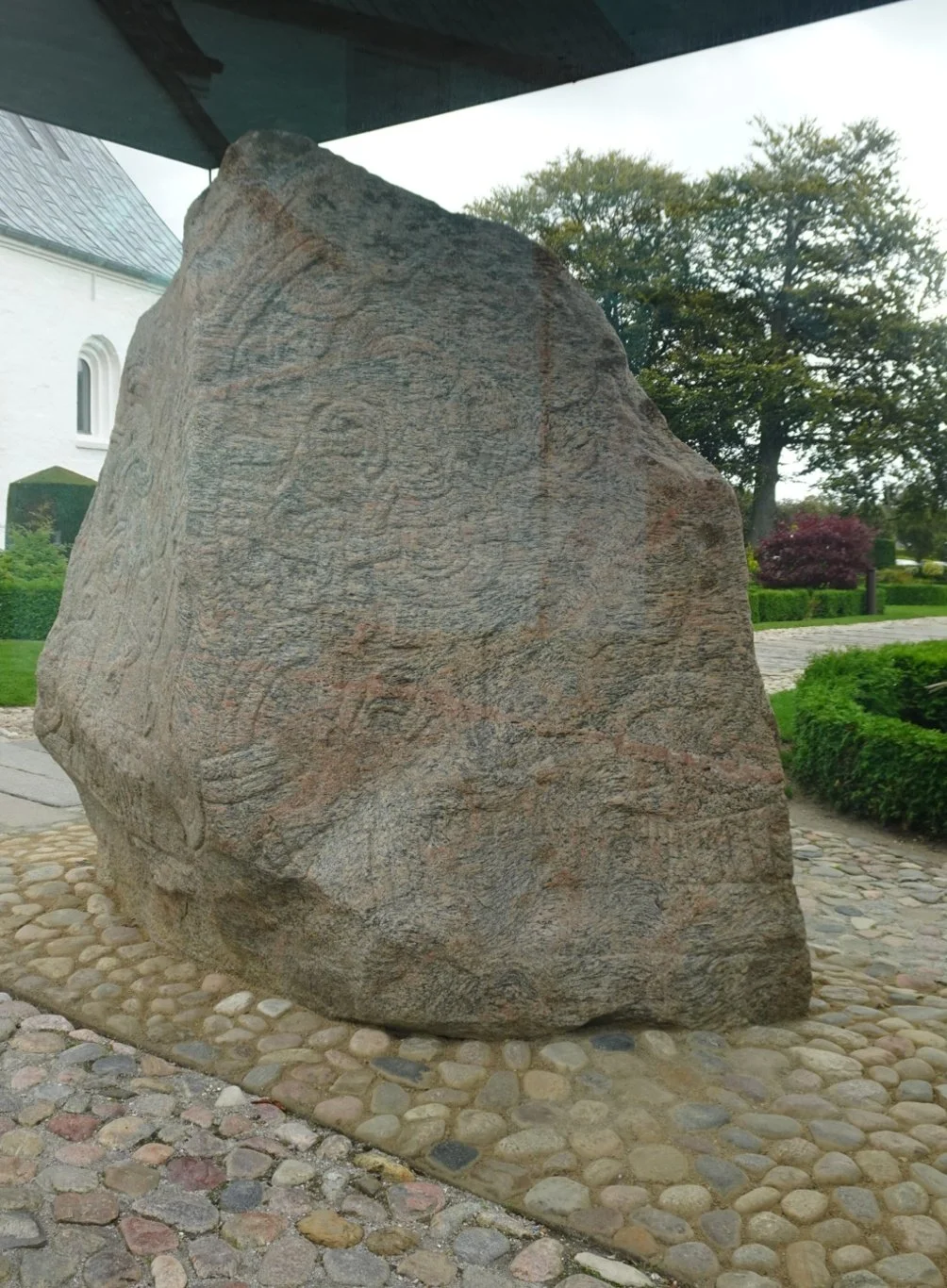
The larger stone was raised by King Gorm's son, Harald Bluetooth around 965AD.
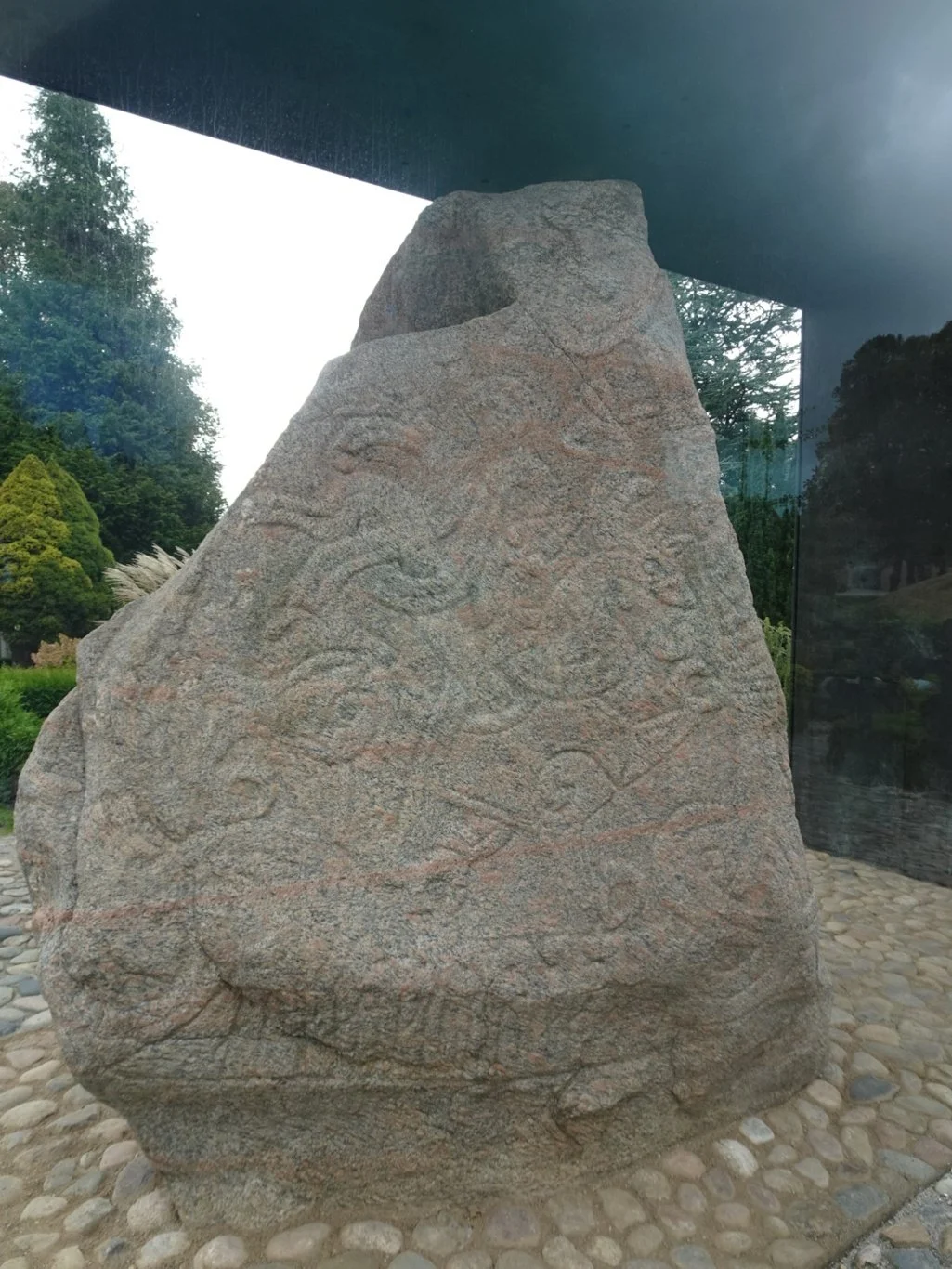
It has three sides, two of which are carved with inticate designs that were originally painted in bright colours.
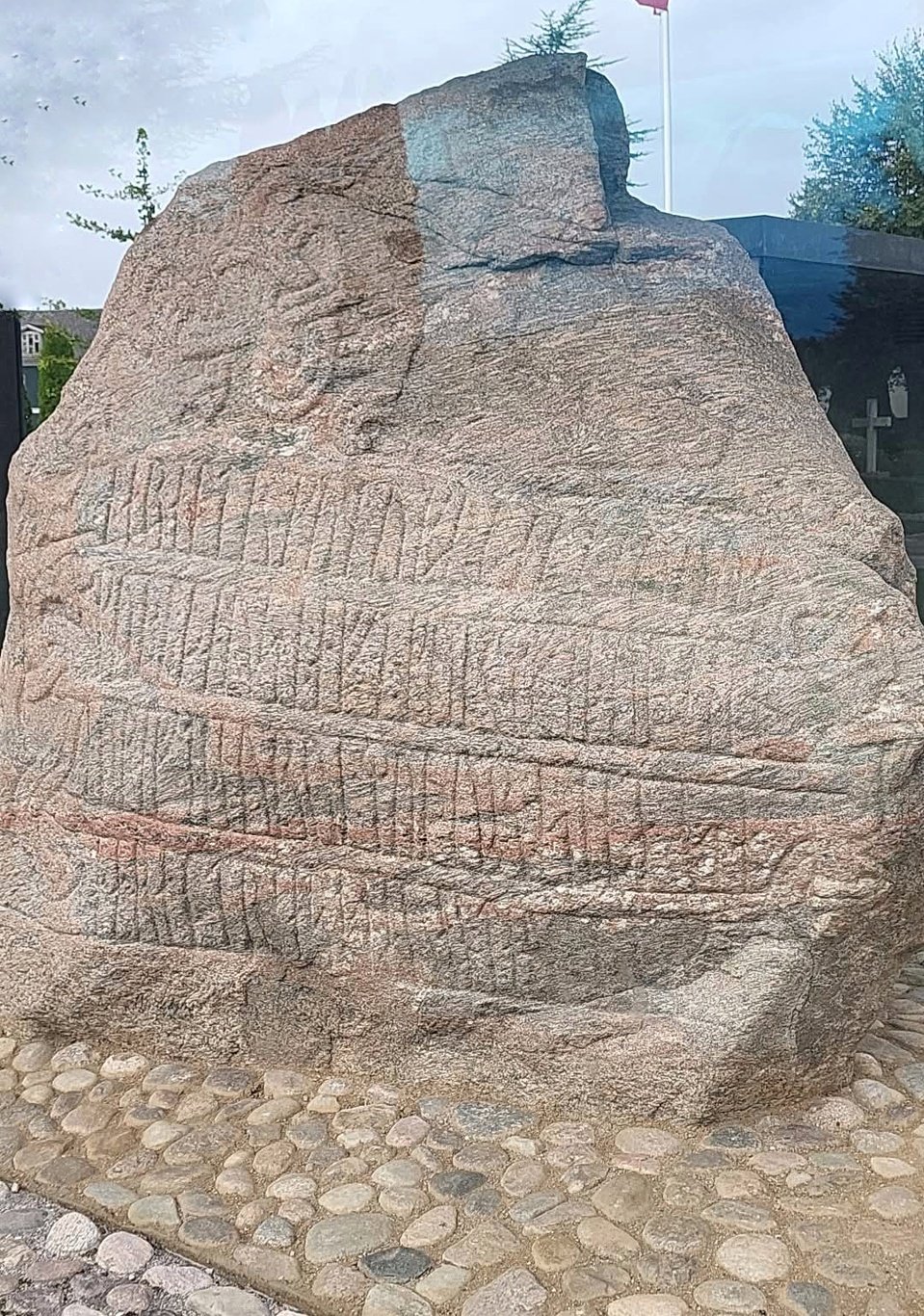
The third side is covered in runic script which states that Harald won all of Denmark and made the Danes Christian.
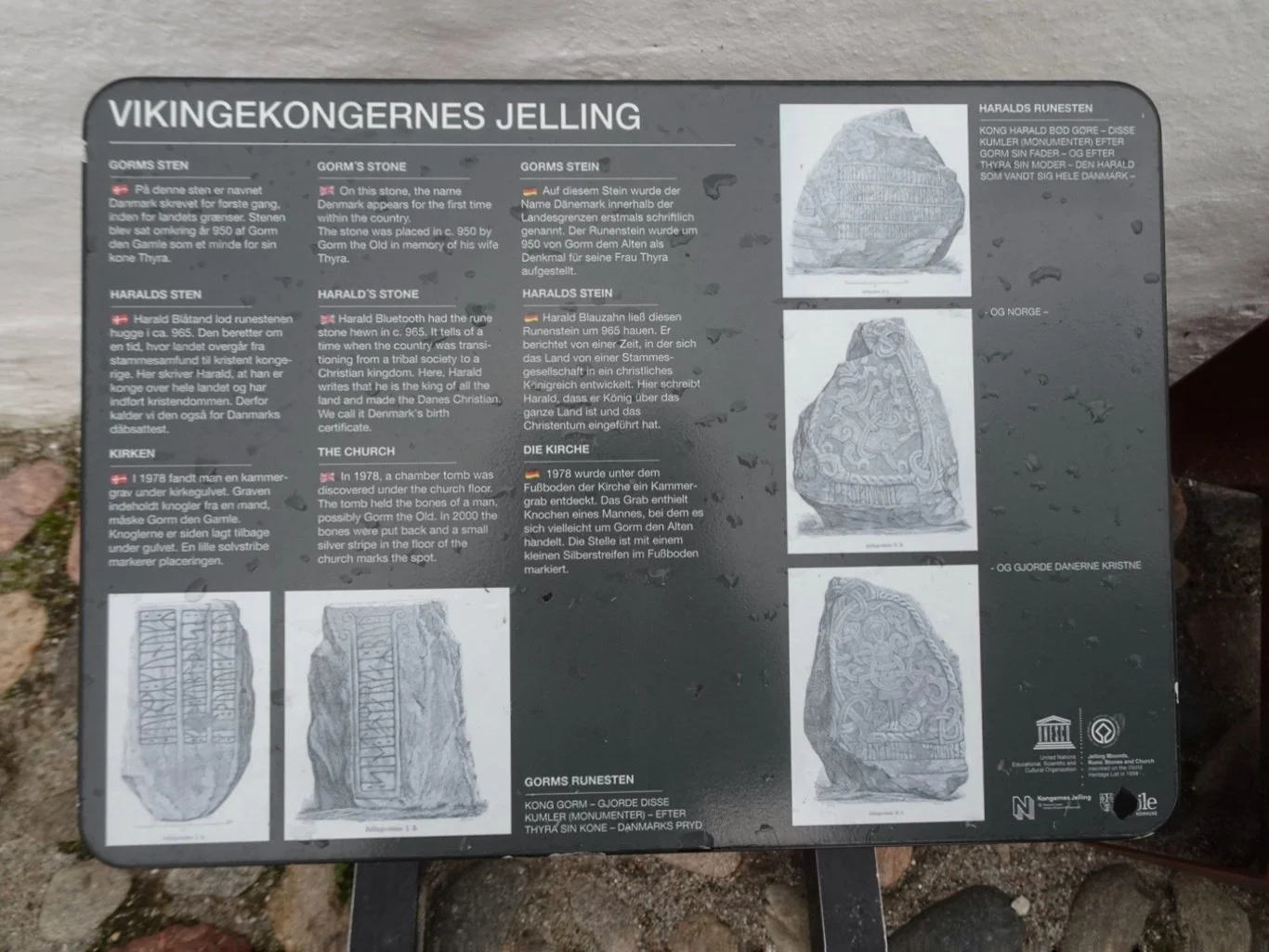
The Jelling Stones are regarded as the crucial artefacts in the foundation of Denmark; the smaller one often referred to as the “birth certificate of the nation”.
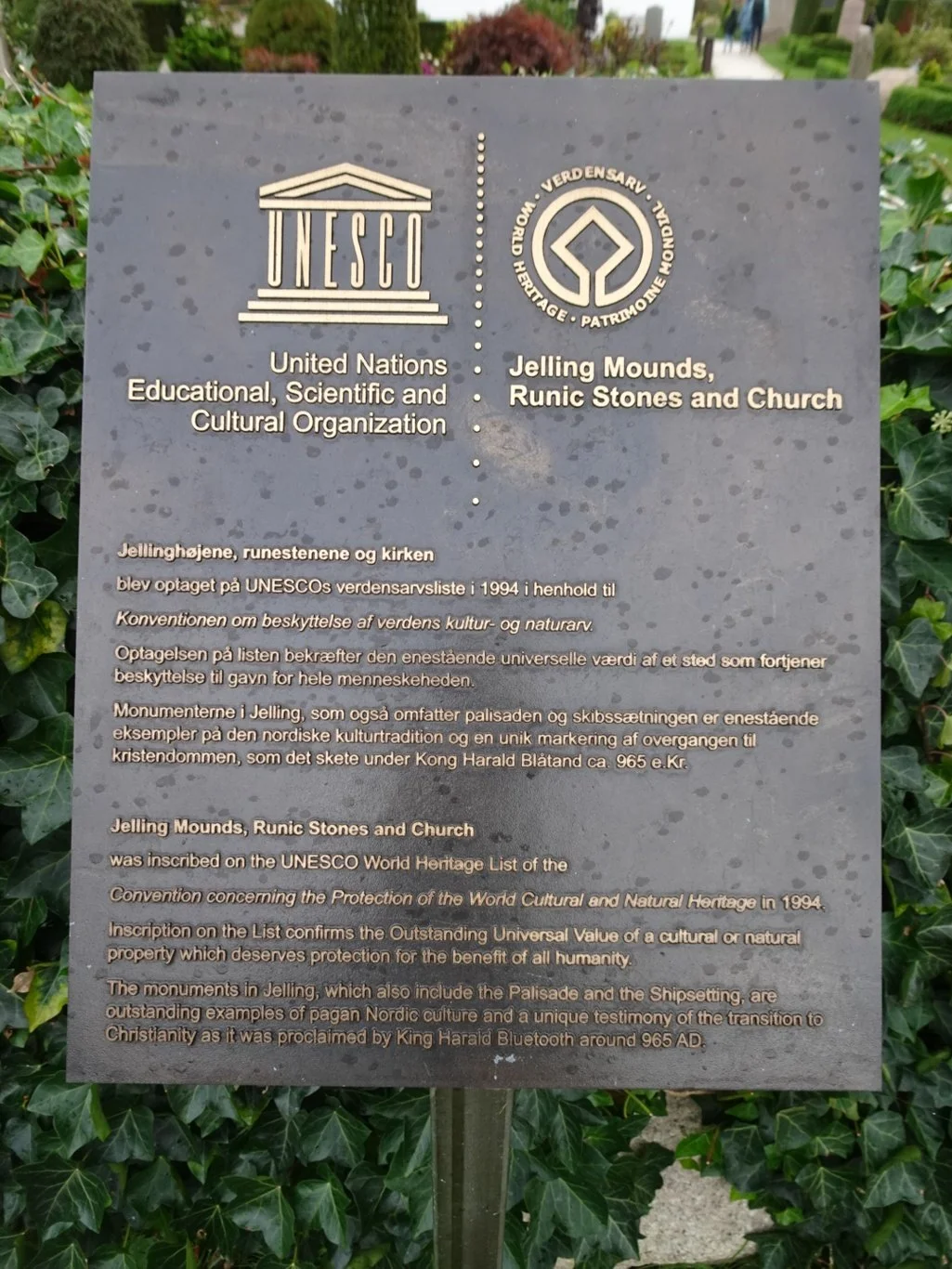
The UNESCO sign sits alongside, an important factor in the conservation of these remarkable stones.
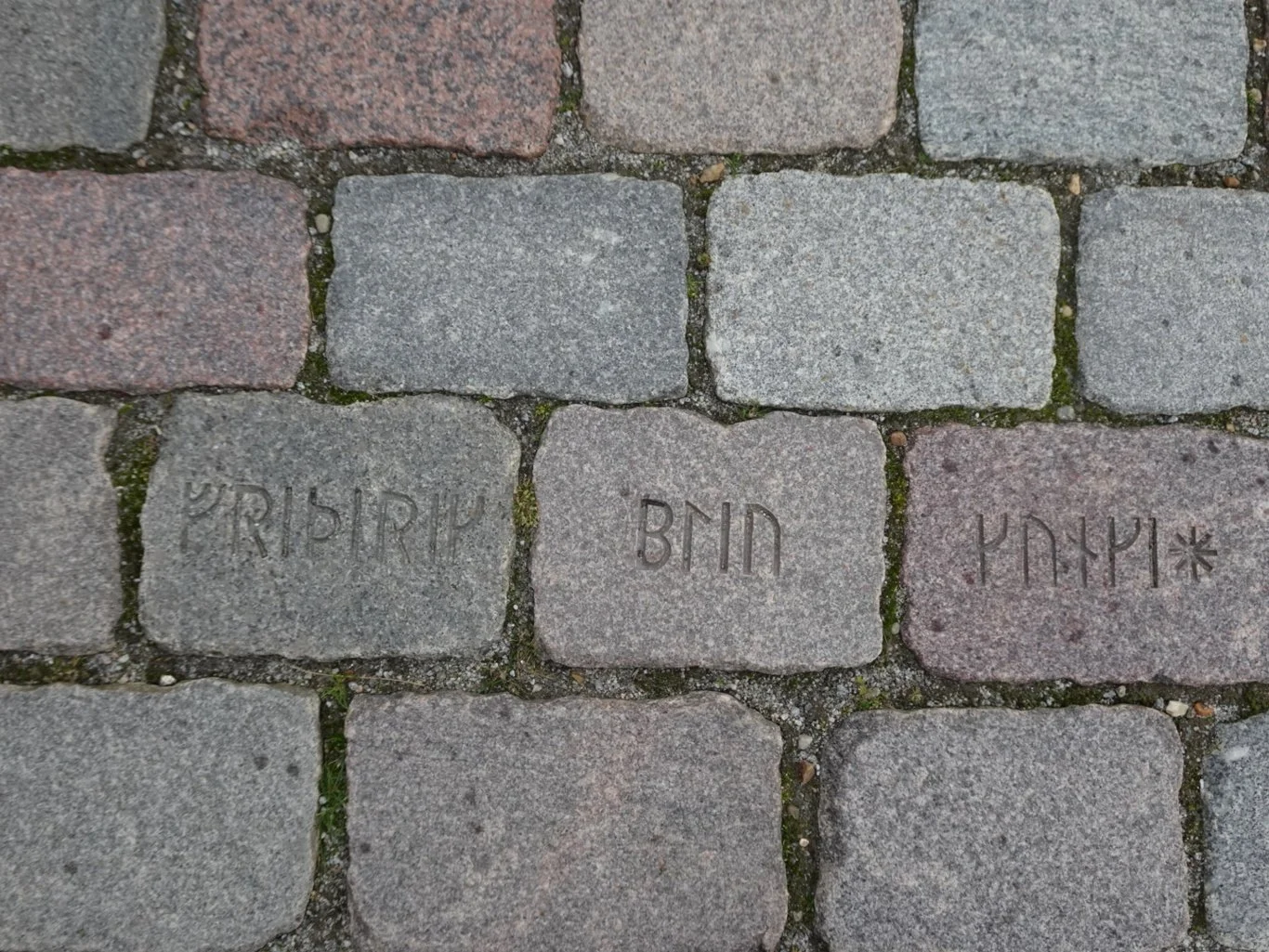
As we walked across to the experience centre, we spotted some runes in the cobbles. My first puzzle; what are those words?
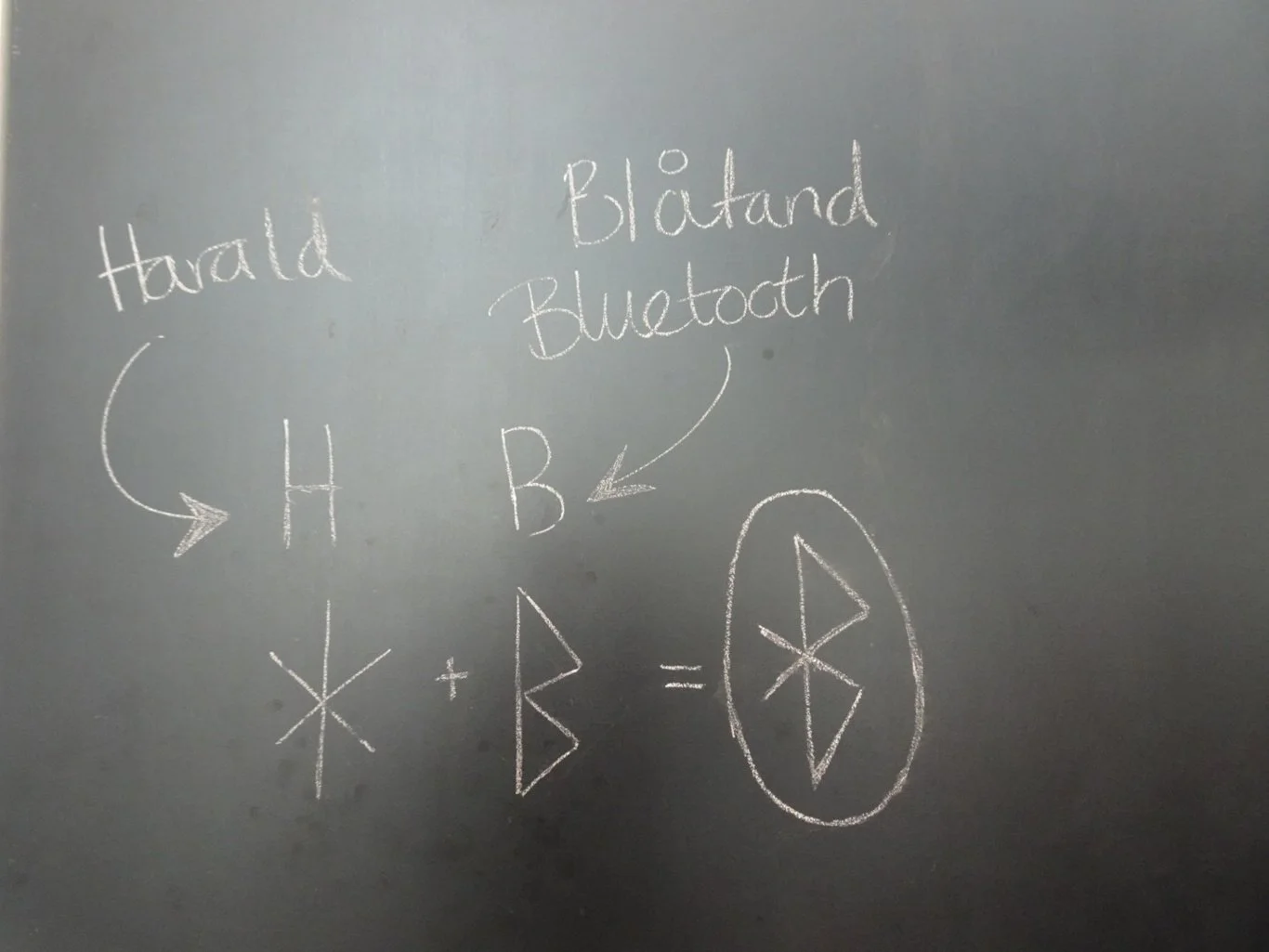
The two young women on the welcome desk were quite chatty and I asked them about the runes. How does one read them? Is it possible to do that? Their enthusiasm was kindled! “Look there, on the board, you know Bluetooth, don't you? Well, there, next to that, our names are written. Let's see if you can work them out” Sure enough, there were three or four words written in runic script. One said LISA, one KATINKA and the other one MARY. As the queue was building up, Lisa reached into the drawer and pulled out a sheet designed for children, with a runic alphabet on it - “Here you are,” she said, “no more translation troubles!”
So later, I returned to the photo above, of the cobblestones in the road and used the alphabet to translate the words: FRITHIRIG BLIW GONGIH Well, of course that makes sense, doesn't it?! (not!)
Anyway…
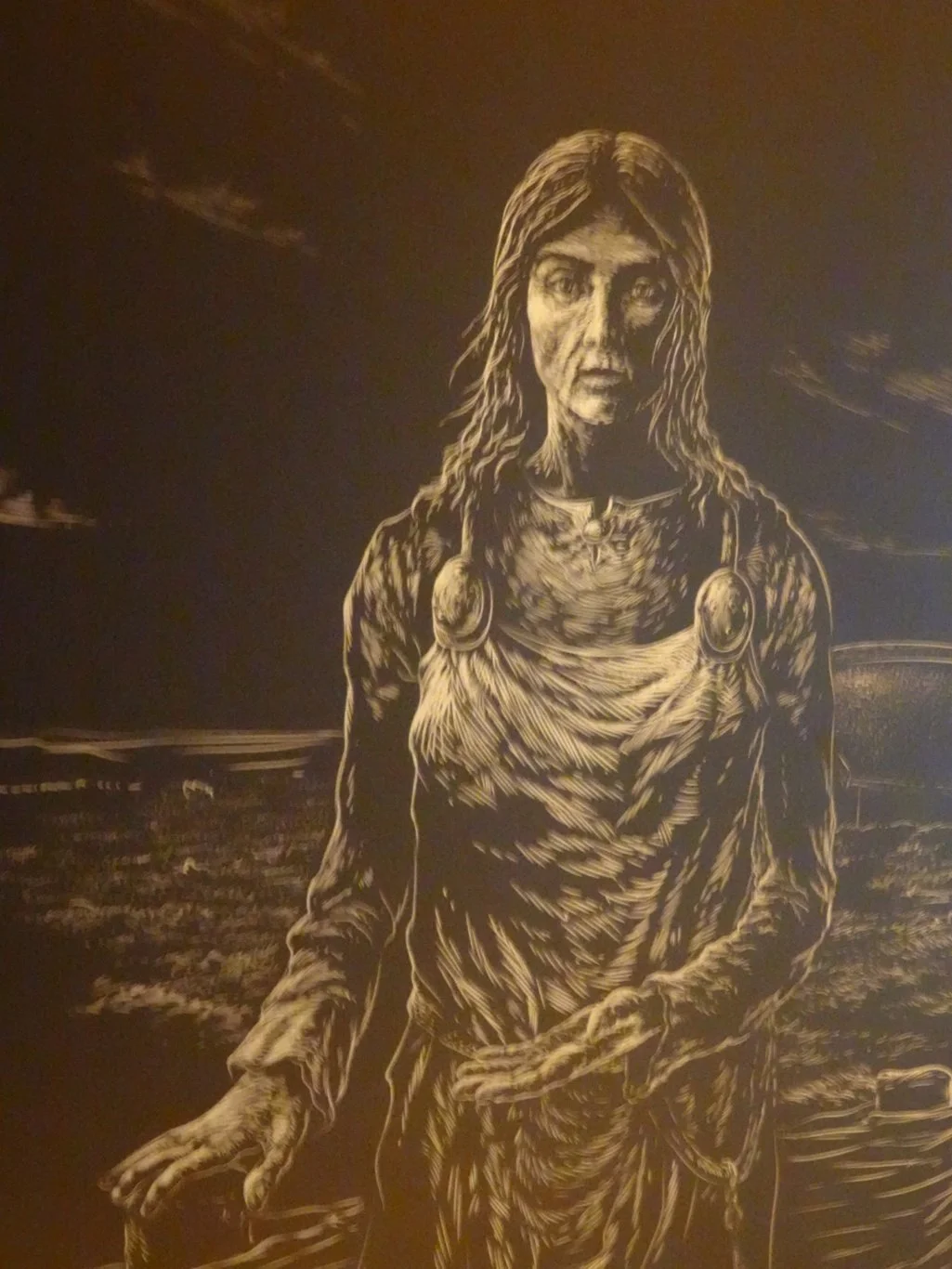
A female figure was inviting us into the exhibition space to sit by the fire and listen to stories.
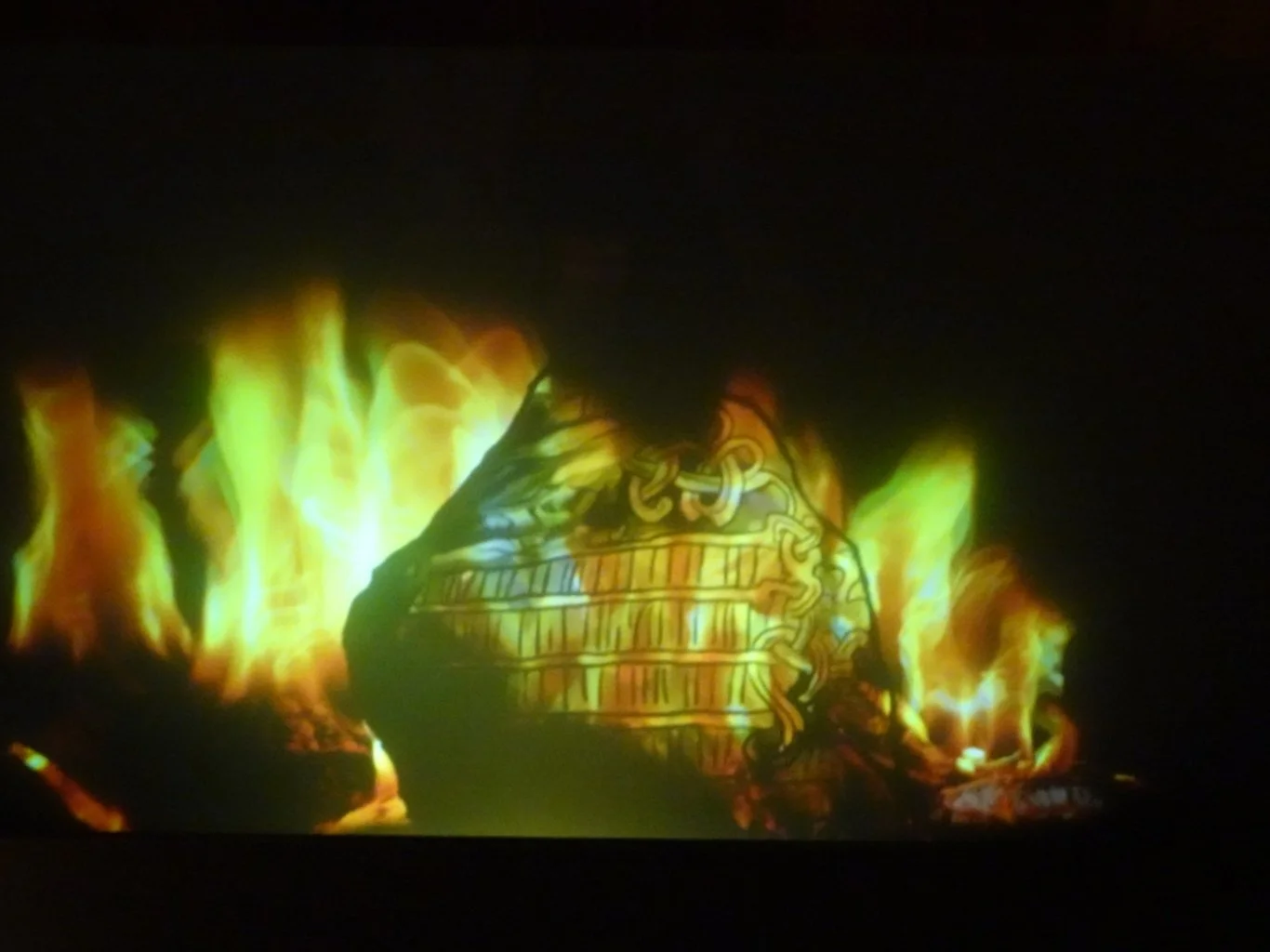
In this dark room, there were glass screens with fires projected onto them, alongside which we could sit and watch images appear in the flames and hear the story of the rune stones we'd just seen outside.
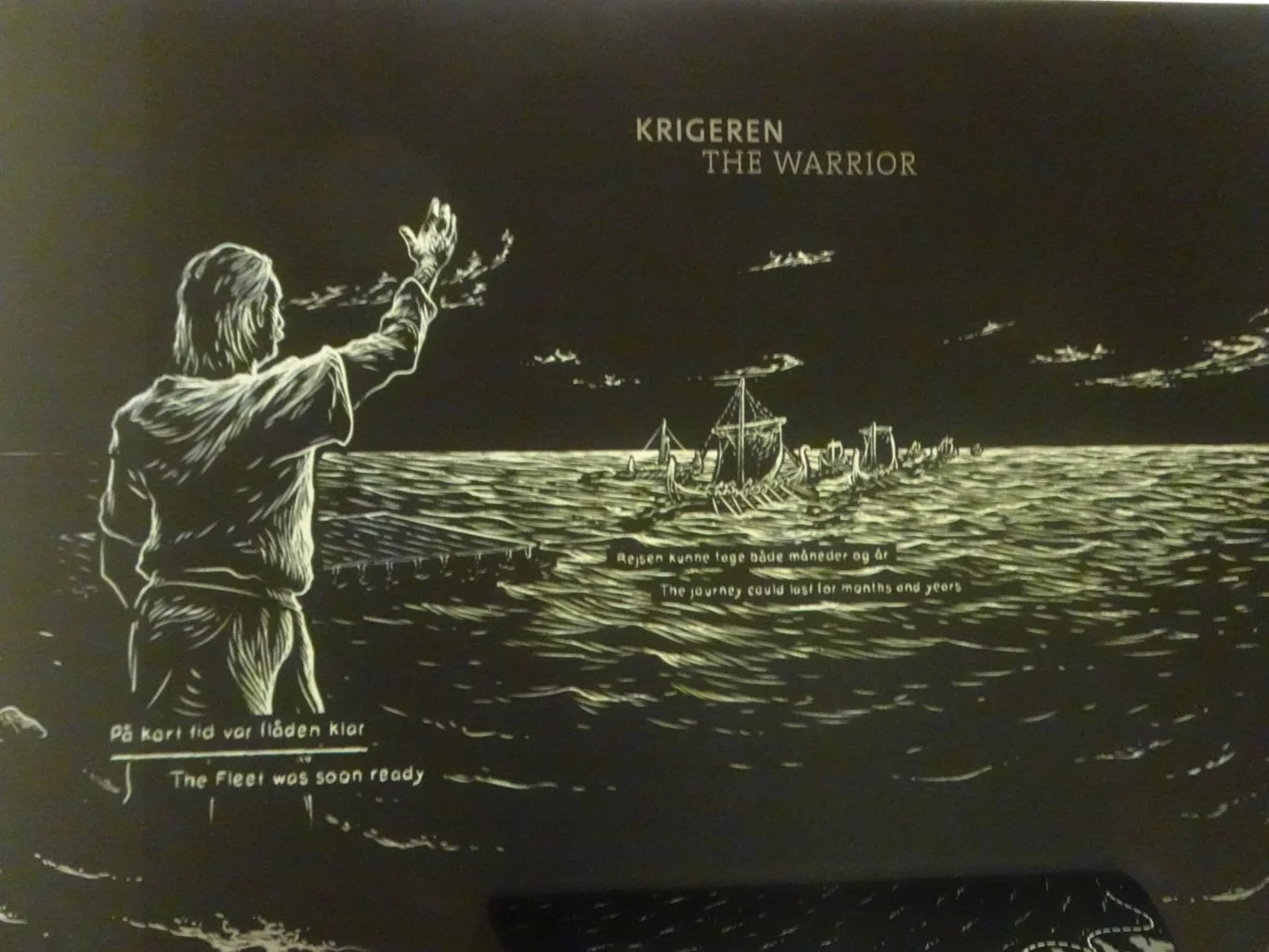
The design of the exhibition space was dark, but quite in keeping somehow. A mix of drawings and projected images it was a very twenty first century way of learning about Viking history and so very different from my history lessons at school!
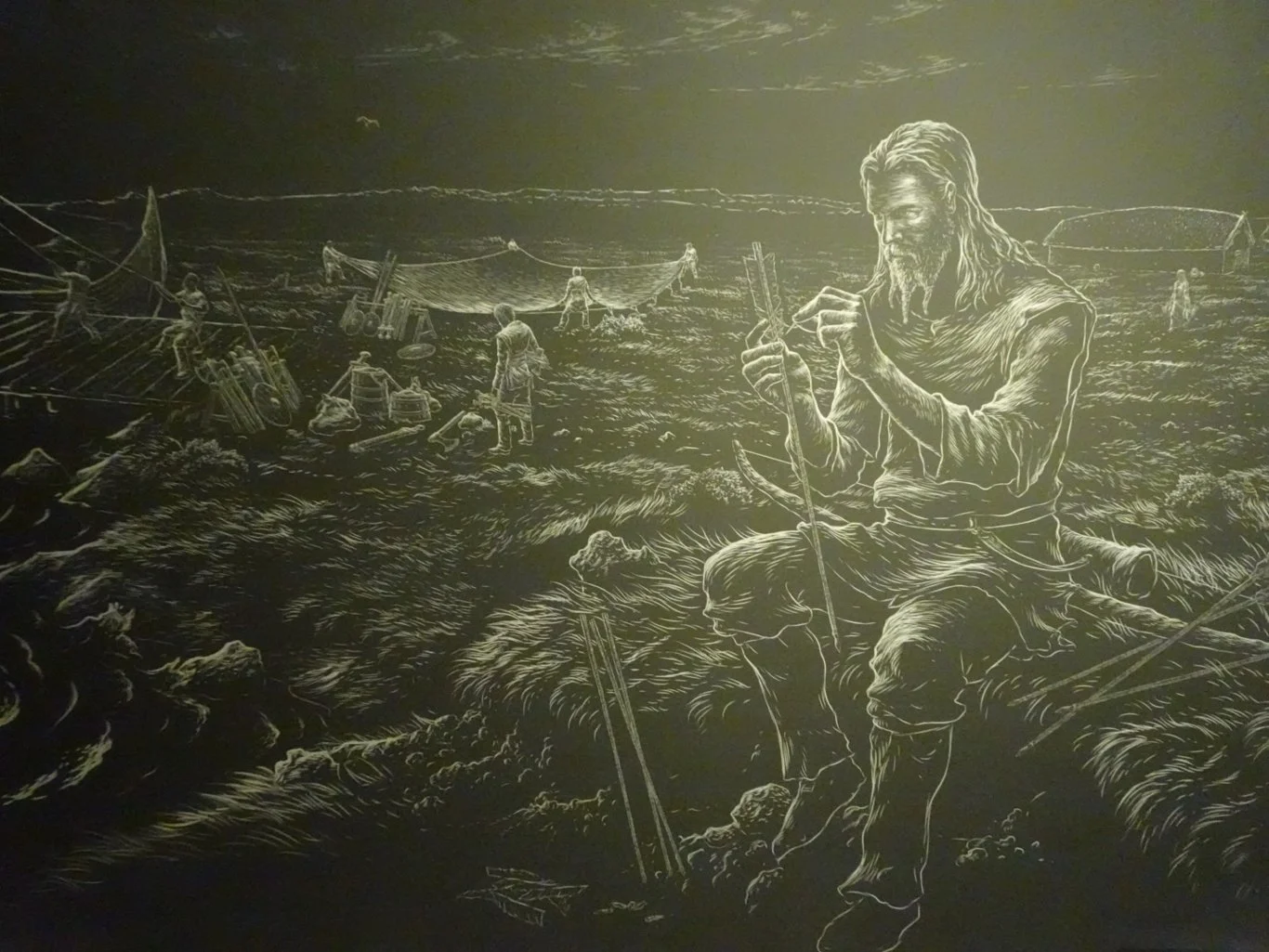
This room told the story of the world of the Vikings, who would prepare for their voyages and then go off into the unknown for months or years at a time. One display asked “Can you stand the sight of blood?” If so, grab a weapon beside the dead warrior and find out which one killed him!

There were a few - not many - genuine artefacts here, including this “harness for dogs” making it possible to have several dogs on a single lead. I couldn't quite work this one out…
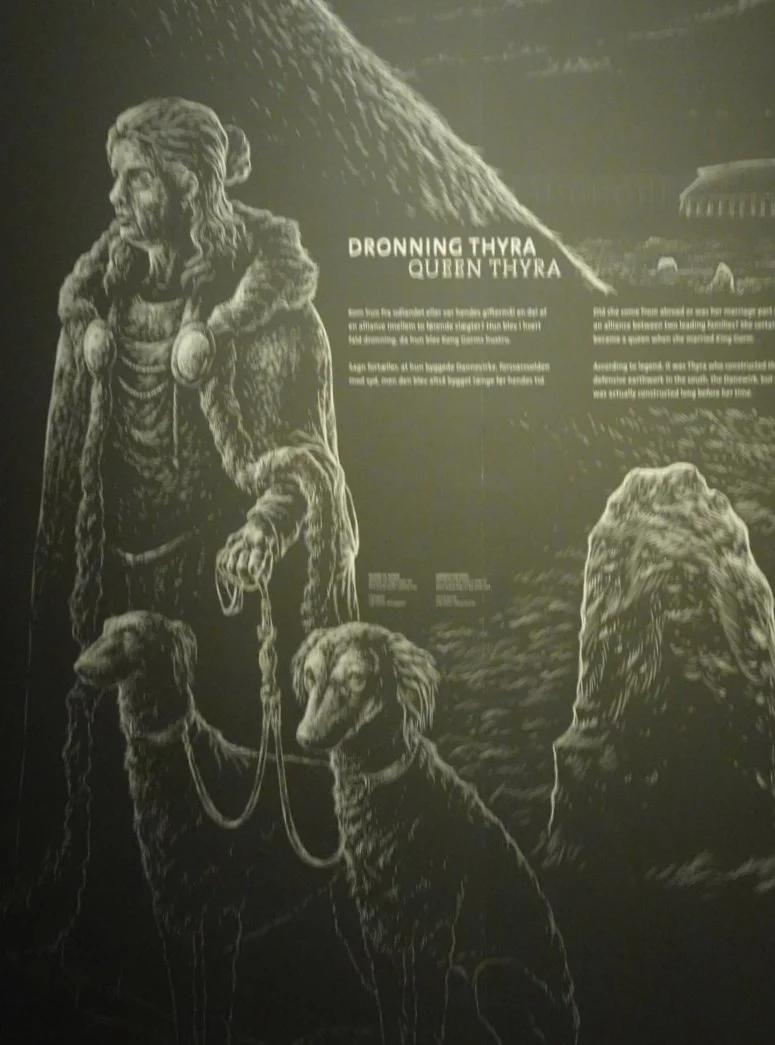
But there on the wall was an illustration of Queen Thyra and her two dogs, with that same harness in her hand.
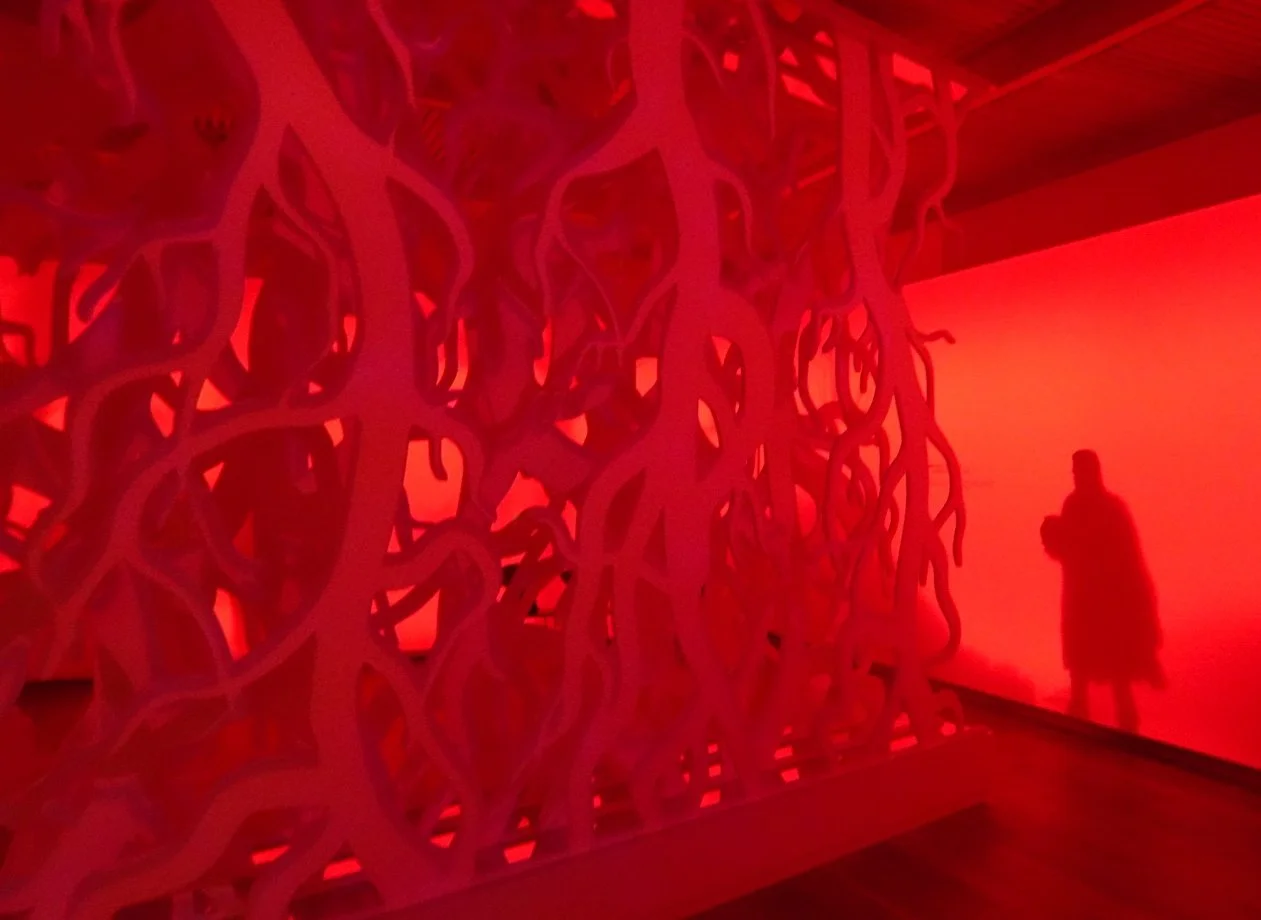
Upstairs were tales of Norse mythology. set around the roots of the tree of life.
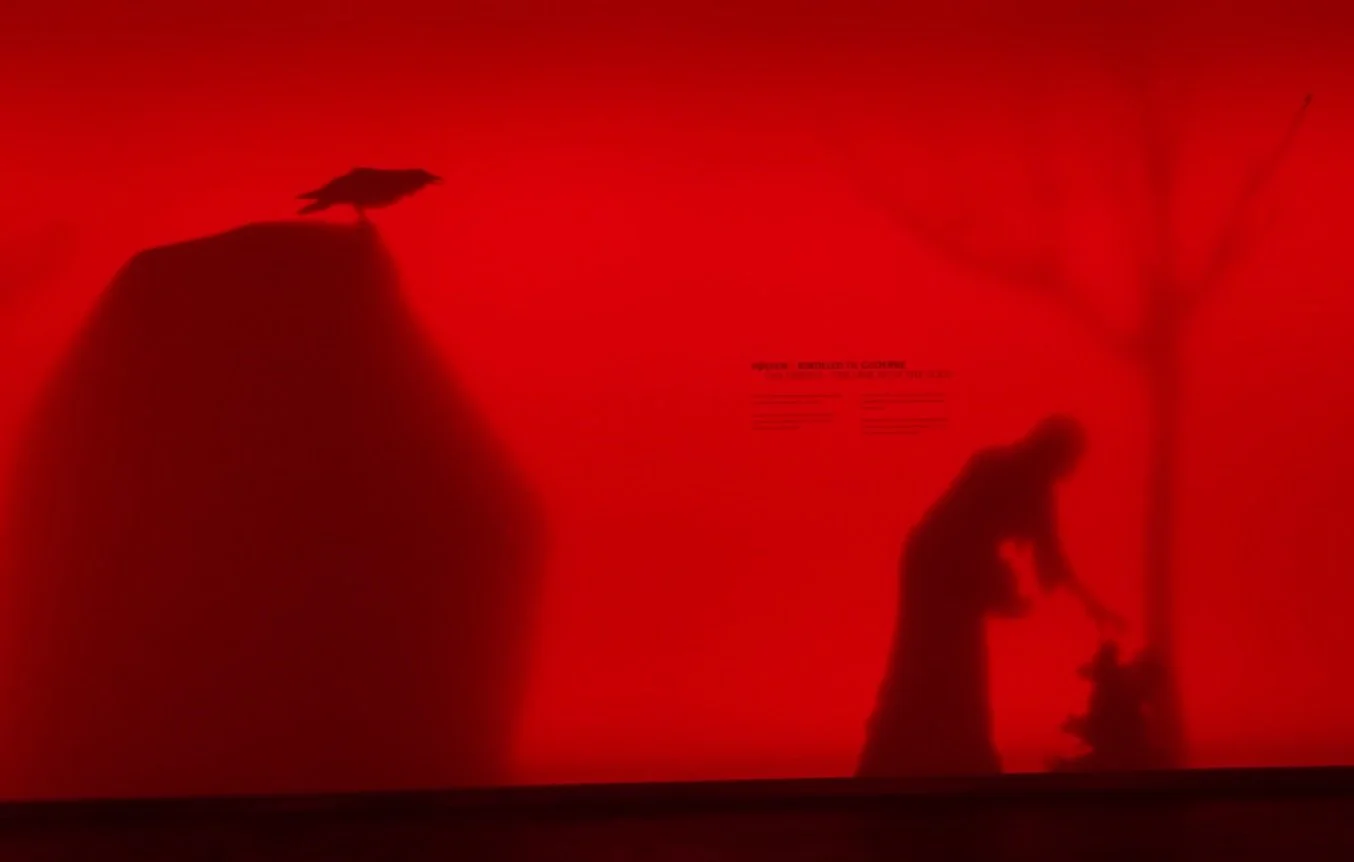
The Seer was here with her raven.
Here too were illustrations of how Harald Bluetooth made Christianity slowly take over.
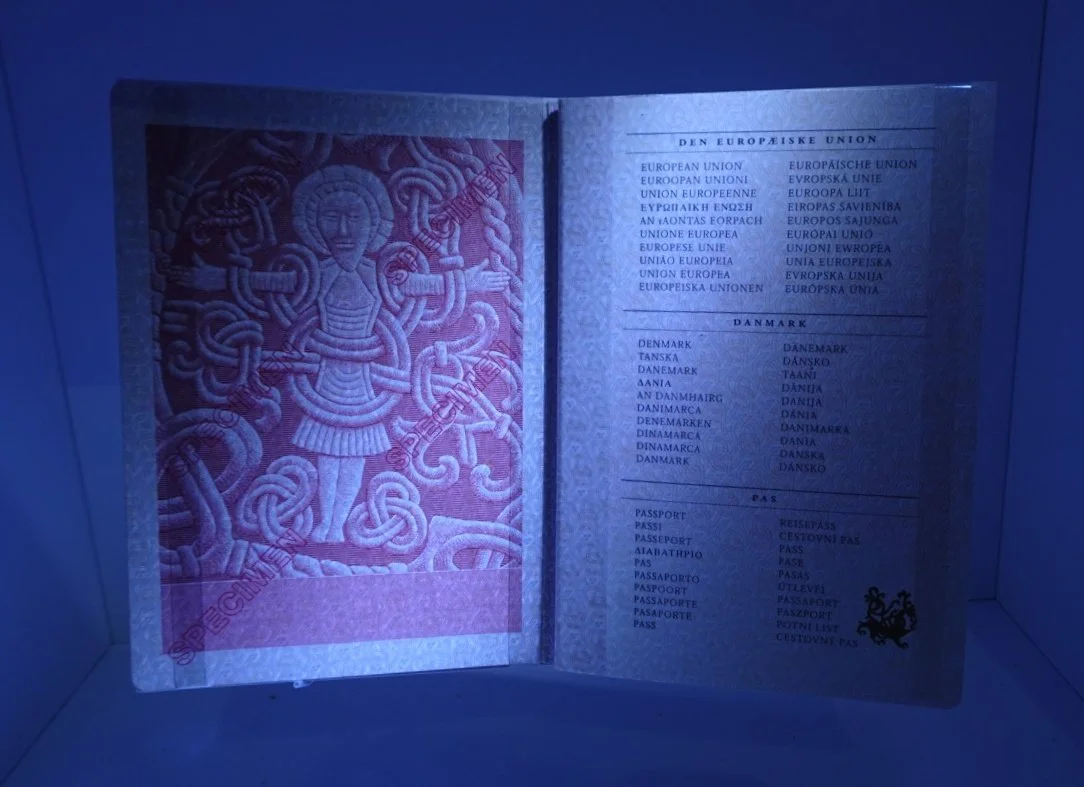
And there in a glass case, (bathed in blue light to prevent forgery?) was a Danish passport, which contains an image from Harald Bluetooths stone.
We were coming to the end of the exhibition but as we turned the corner, there was just a little more history to peruse:
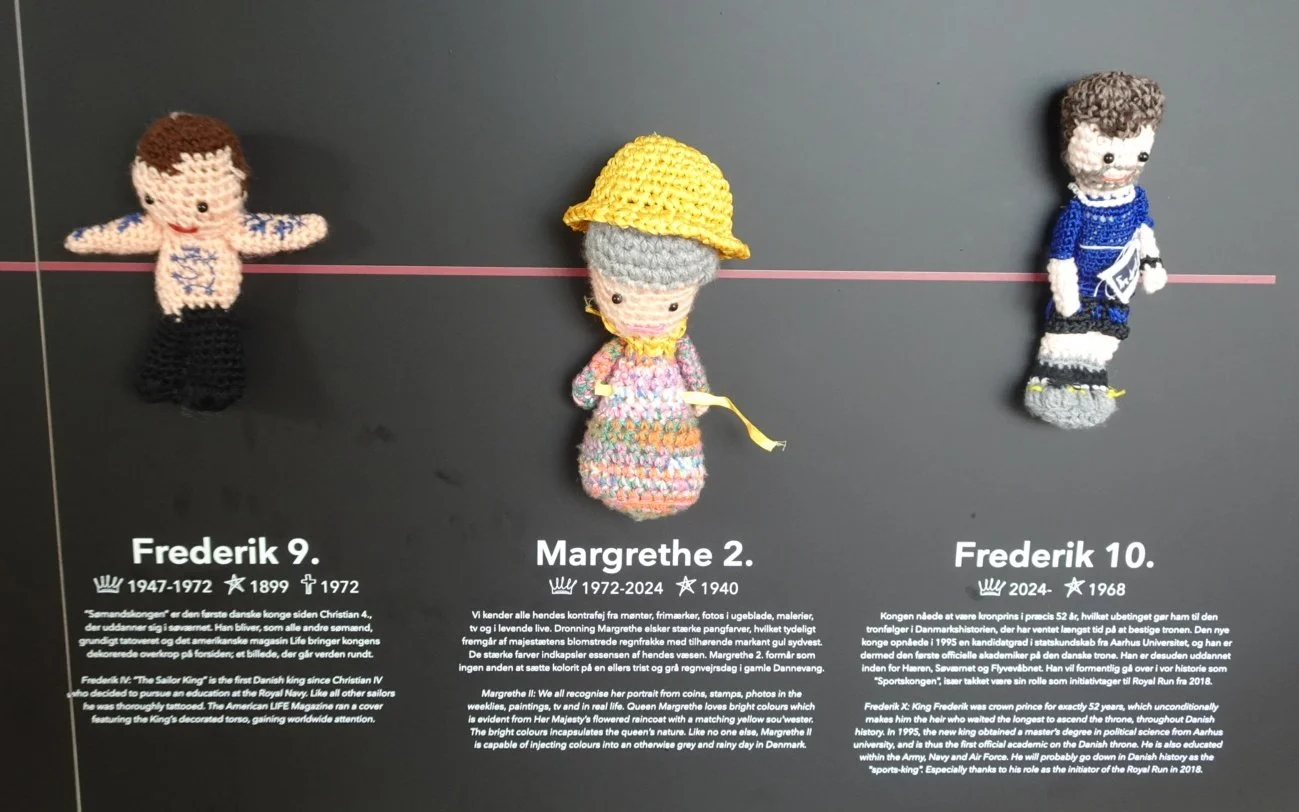
There was one of these small crocheted figures for every Danish Monarch since King Gorm. Beneath each one was their story and what made them distinctive. So, Frederick 9. was The Sailor King and the text tells of his tattoos, which were celebrated on the front cover of LIFE magazine!
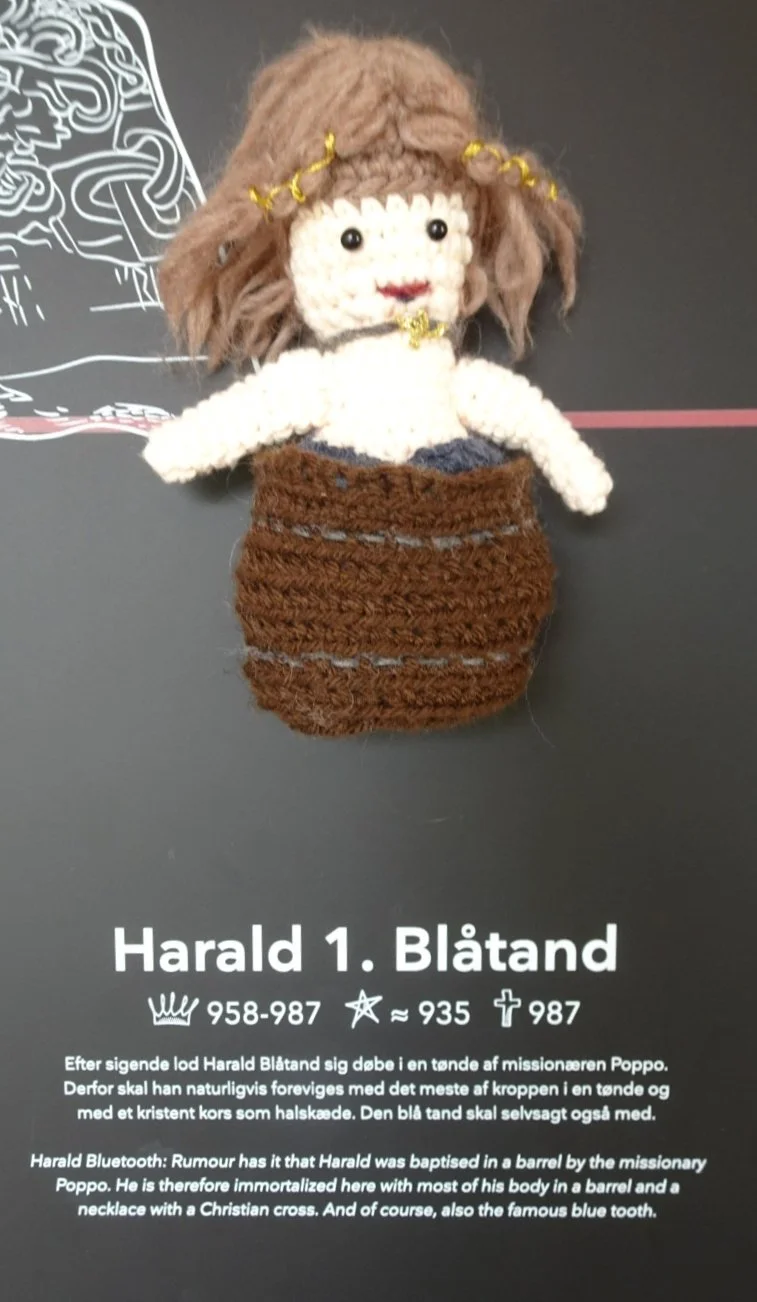
I wasn't able to capture the whole collection in one shot, so took several and hope to “stitch” them together at some point. For now though, here's the man of the moment!
From Jelling, it was another couple of hours drive to the border and tonight we are in Flensburg, Germany, musing on the fabulous day we've had.