



Fyrkat, the Viking Museum
Sadly, we were leaving Skagen this morning. not only sorry to leave the lovely town but also to leave the fabulous hotel we've been enjoying these last couple of days. The Strandly Hotel is the best with every small detail taken care of and rooms filled with the atmosphere and the works of the Skagen Artists. If ever there was a sense of place, it's here.
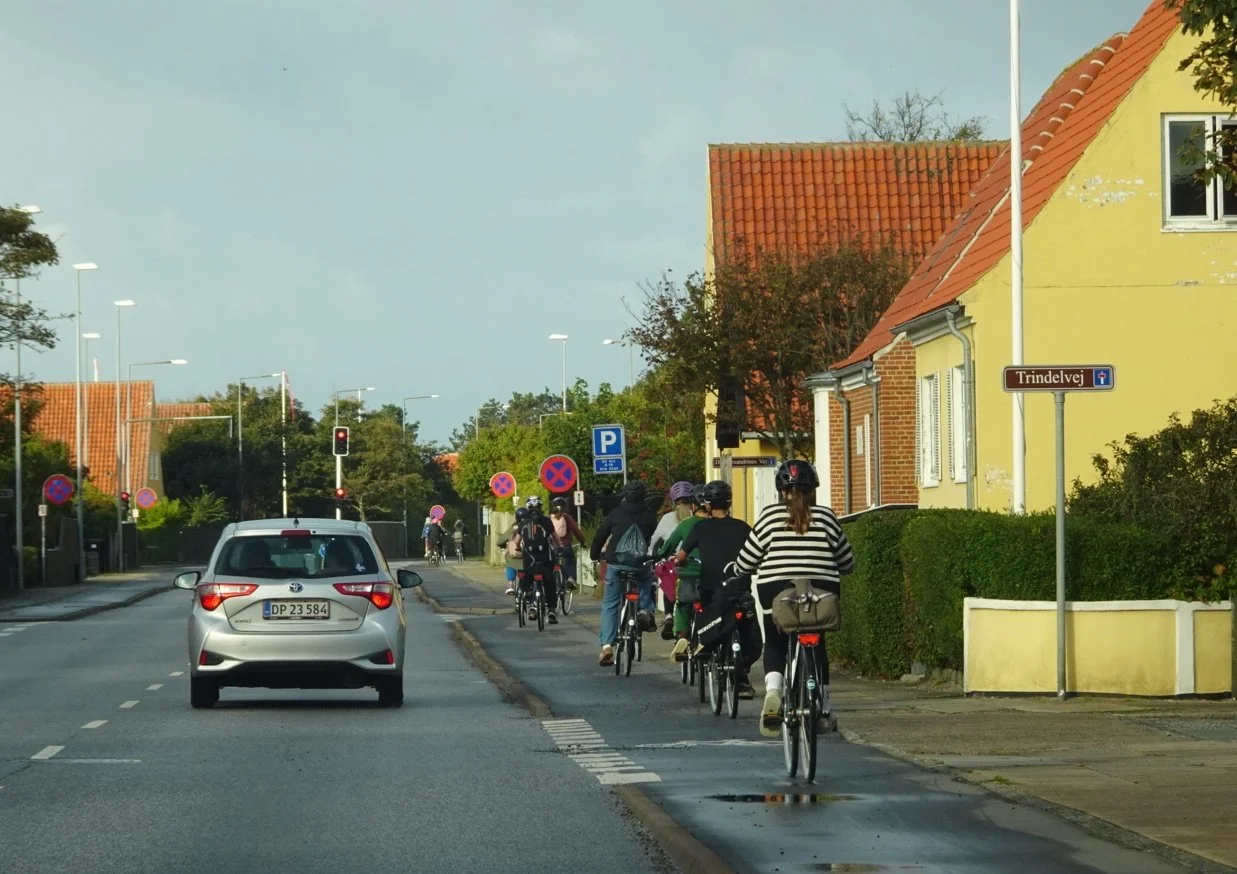
The children were off on their way to school and we were on our way to Aarhus.
The landscape came as no surprise since we'd driven up here a couple of days ago, but we were surprised that our route took us through central Aalborg once again.
Our map was filled with recommendations from our friends Marianne and Mogens and though we'd managed one or two, others had proved tricky because of opening times/days. Today was different, however. I was keen to visit a Viking site and today, Thursday, Fyrkat would be open. We decided to break our journey with some fresh air and fun there today.
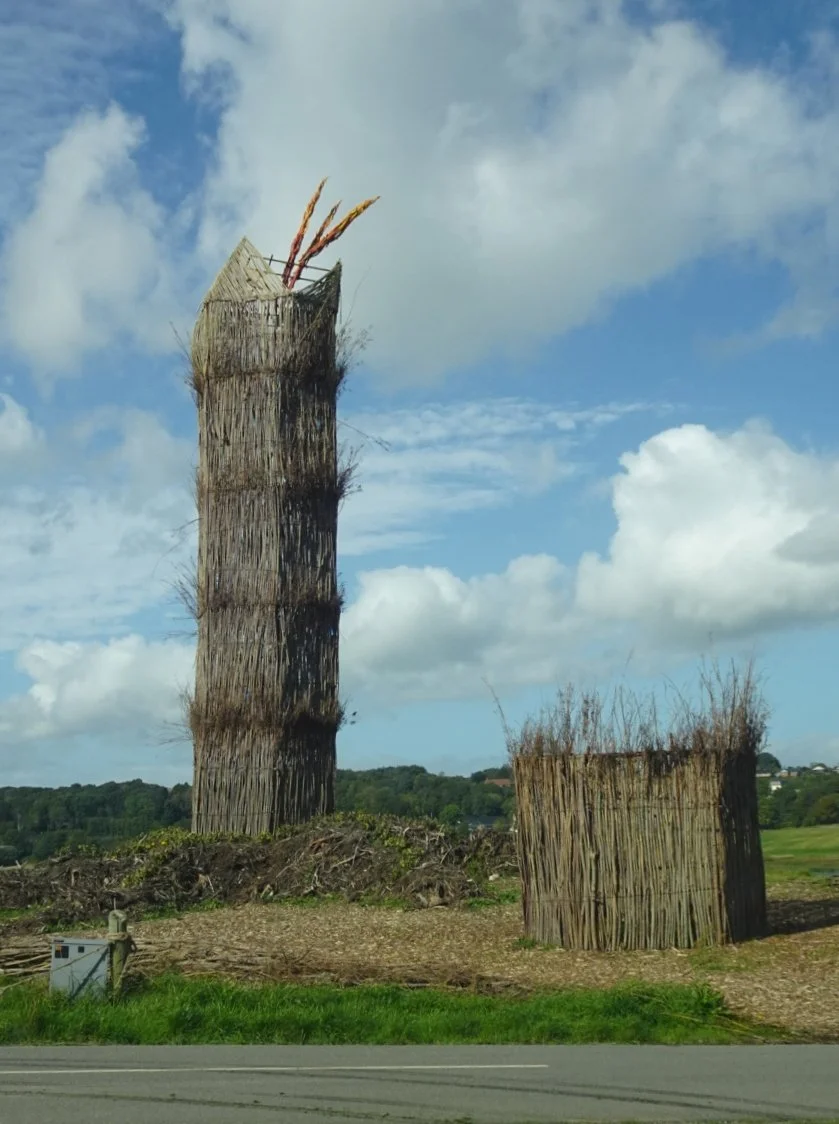
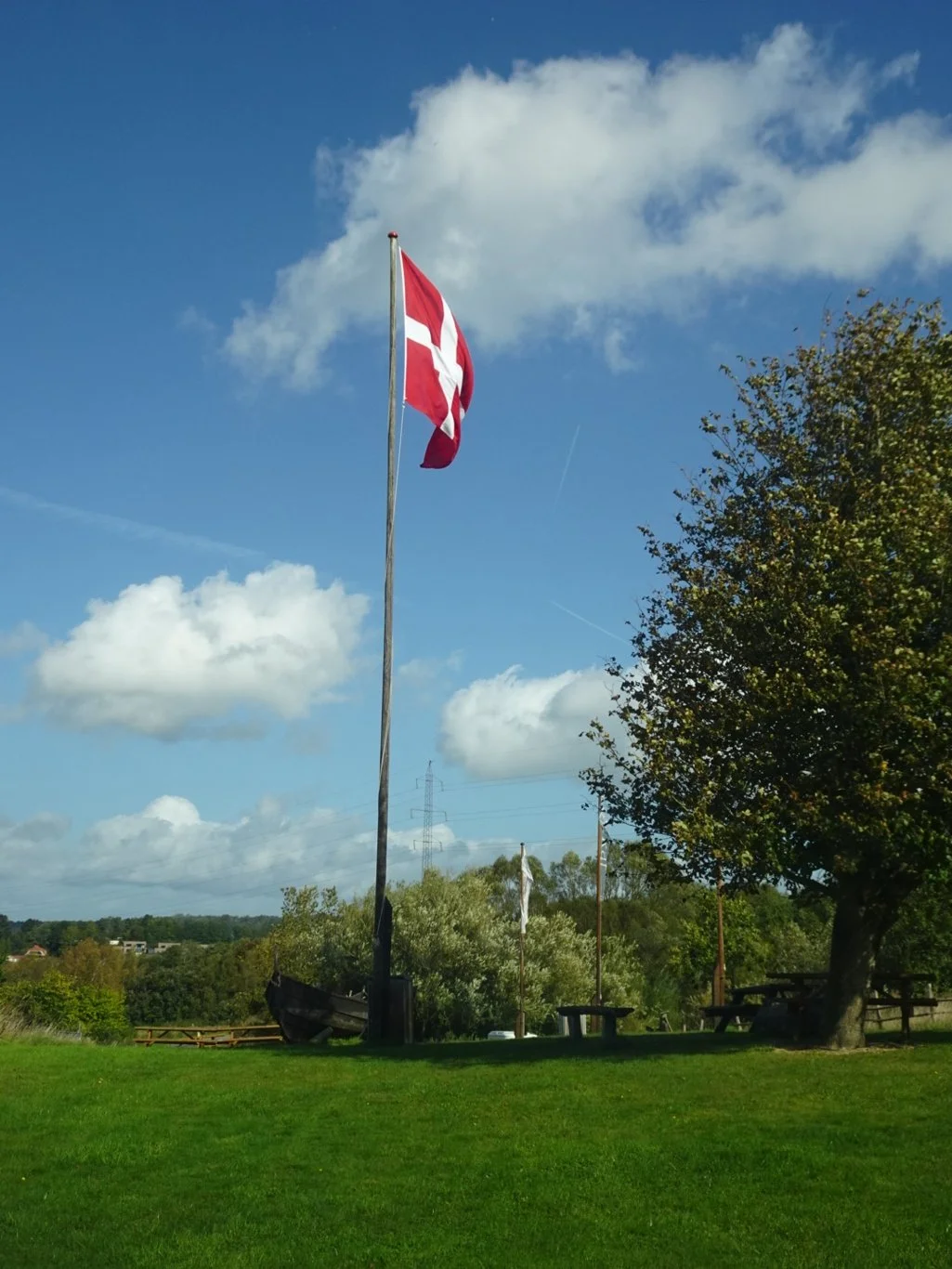
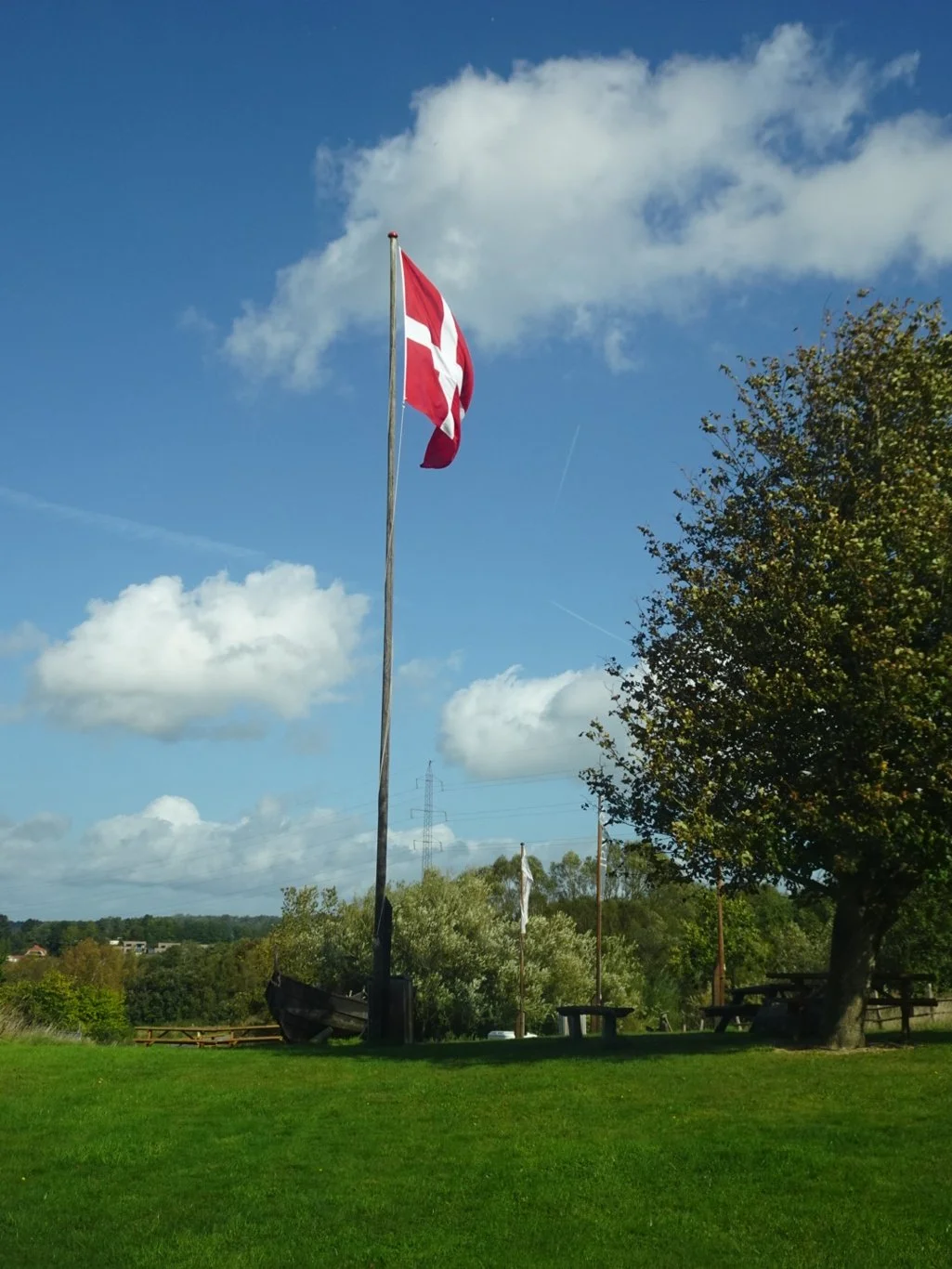
There by the car park, alongside the Danish flag were a couple of reed structures of whose significance we had no idea. So, we arrived with questions!
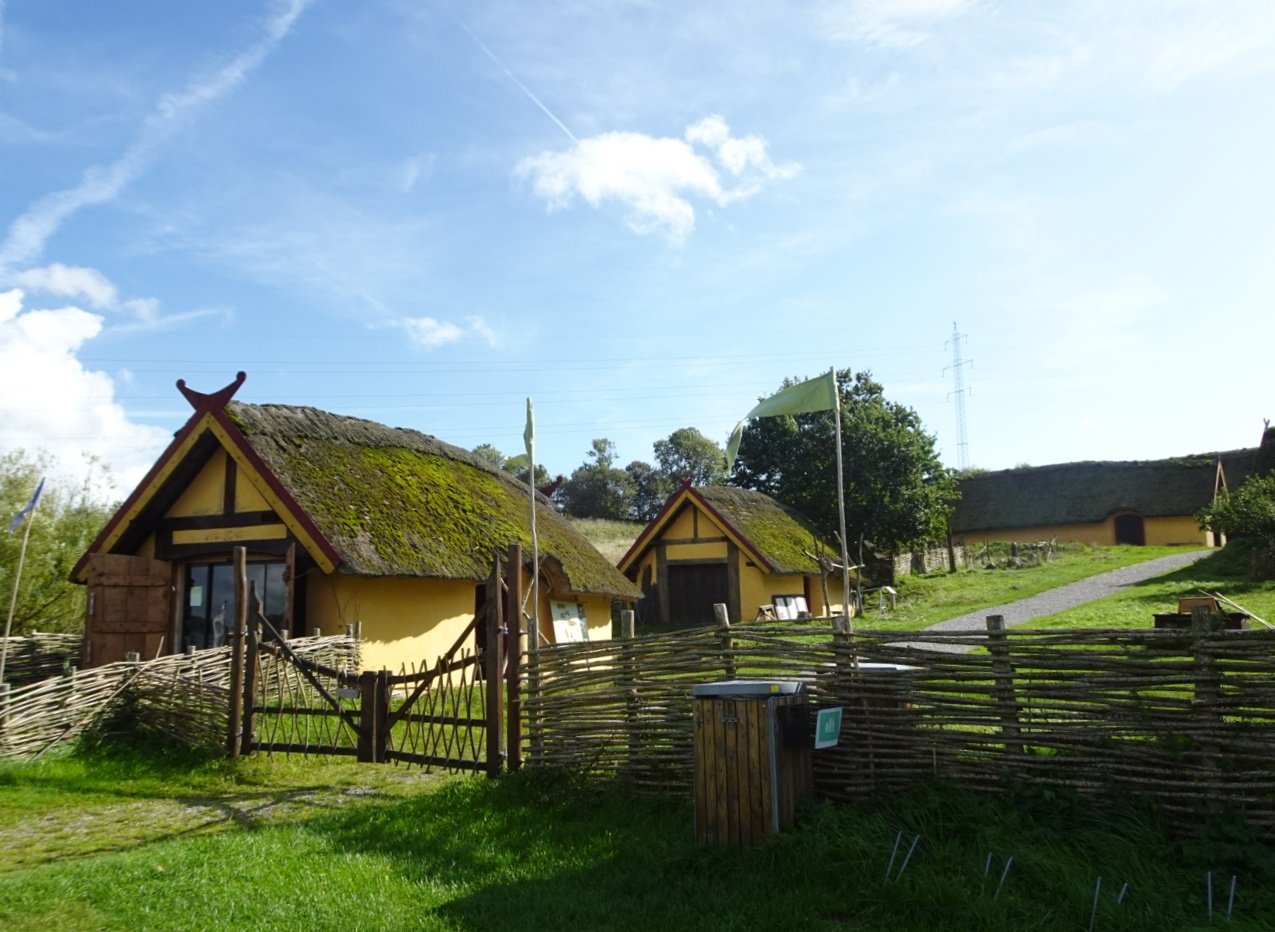
There were just another couple of people there, which was wonderful. Here we were with a UNESCO heritage site almost to ourselves. The welcome couldn't have been warmer - we were immediately delighted that we'd come here.
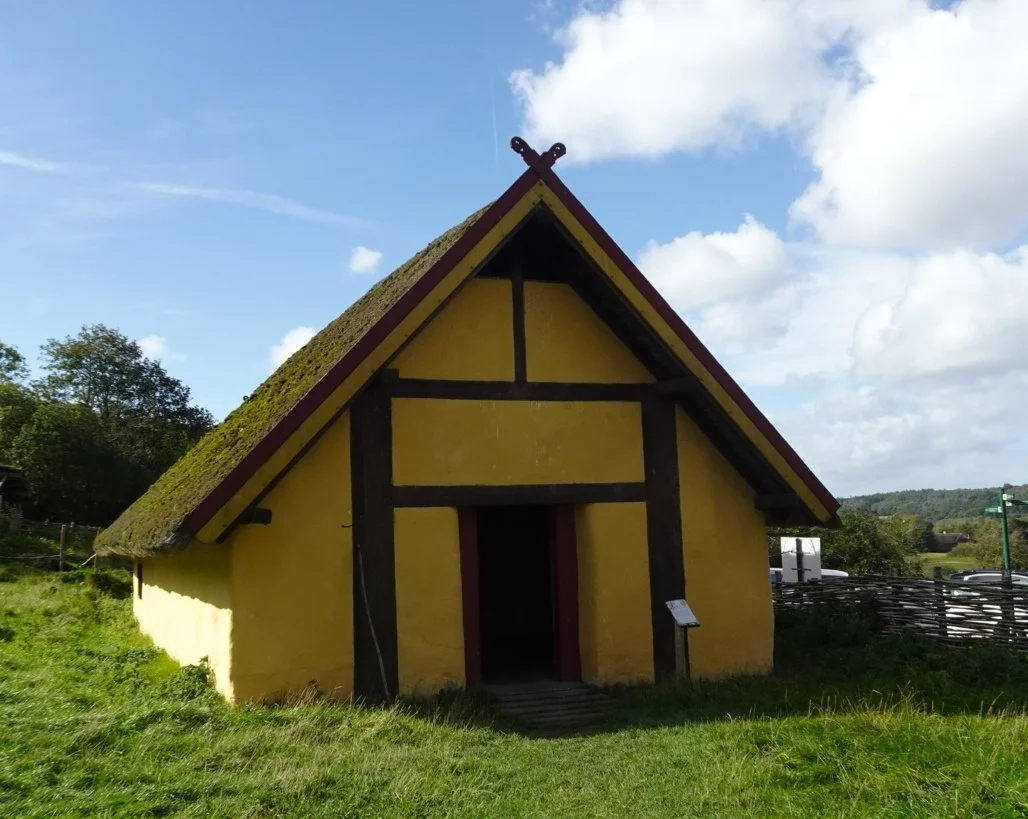
Our first stop was the Chieftain's house, where visitors were welcomed and ceremonies would have taken place. Guests were accomodated in the other half of this important building, where the oven provided warmth and food. The guest must be offered the best one had, for as the explanation stated “A man is no better than his reputation. Poor hospitality or leadership will affect the whole clan”
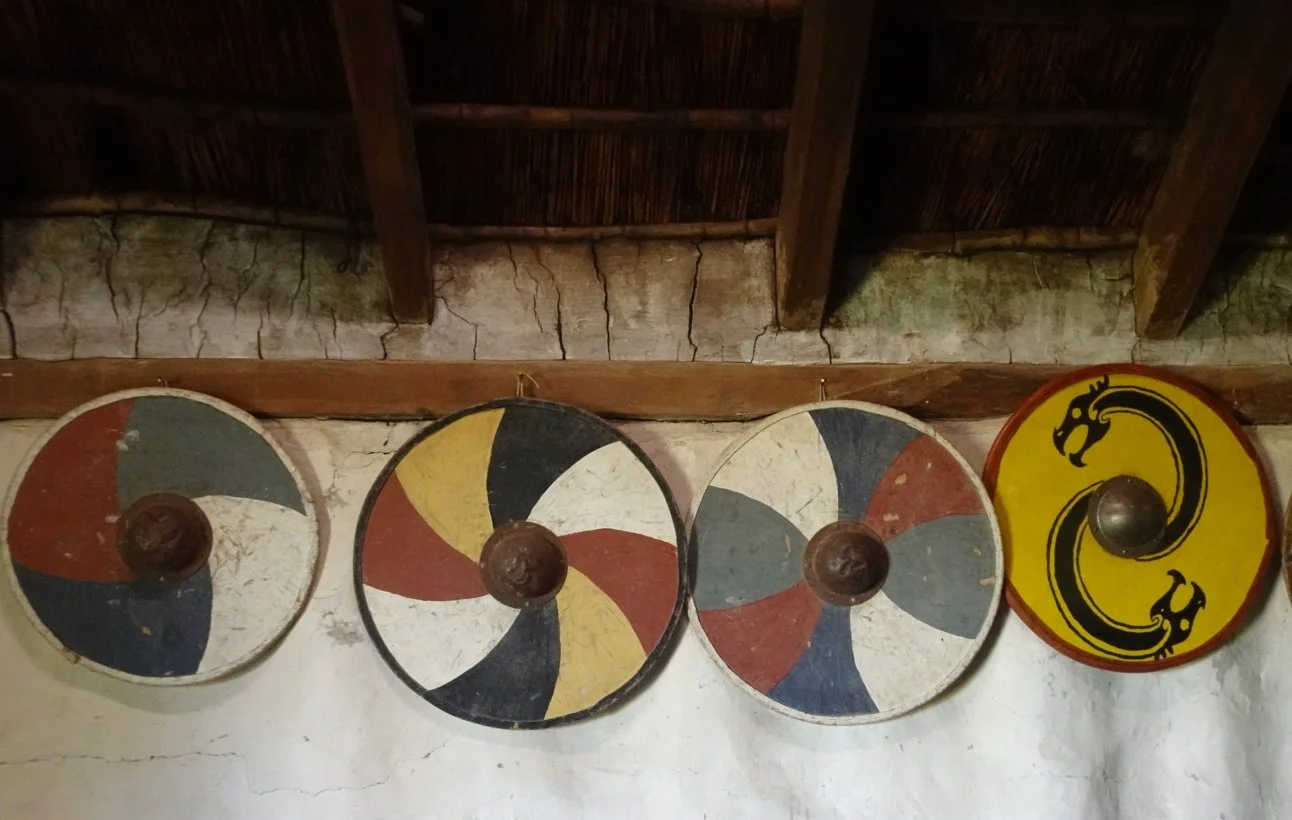
As we wandered around, we realised that this was a special place for families and school visits.

But it was so very attractive and the light made the most mundane things appear special.
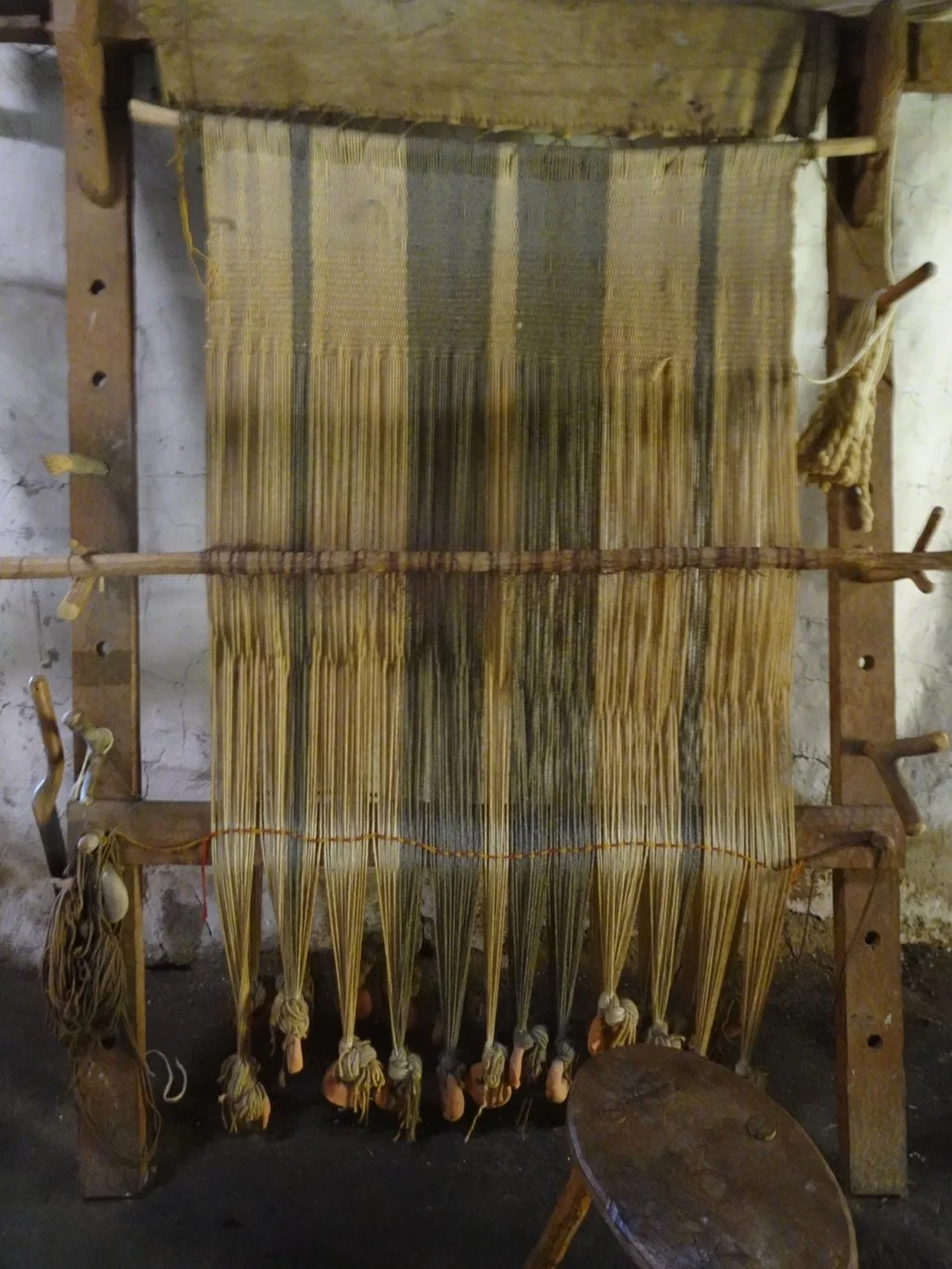
Here was a loom which appeared to be in use, but on closer inspection, I wasn't so sure!
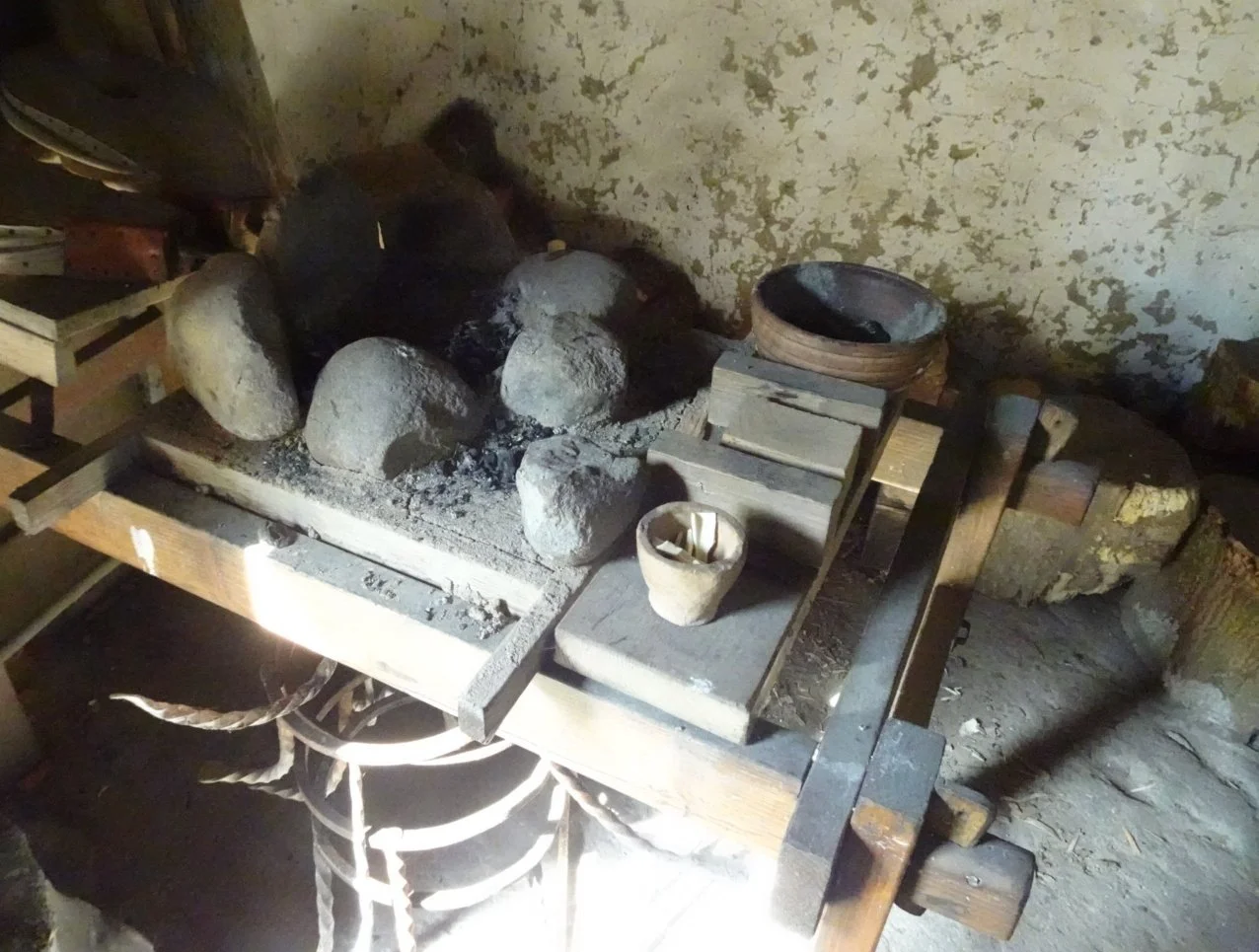
But there upon the table was a very pleasing arrangement for some unknown purpose, too.
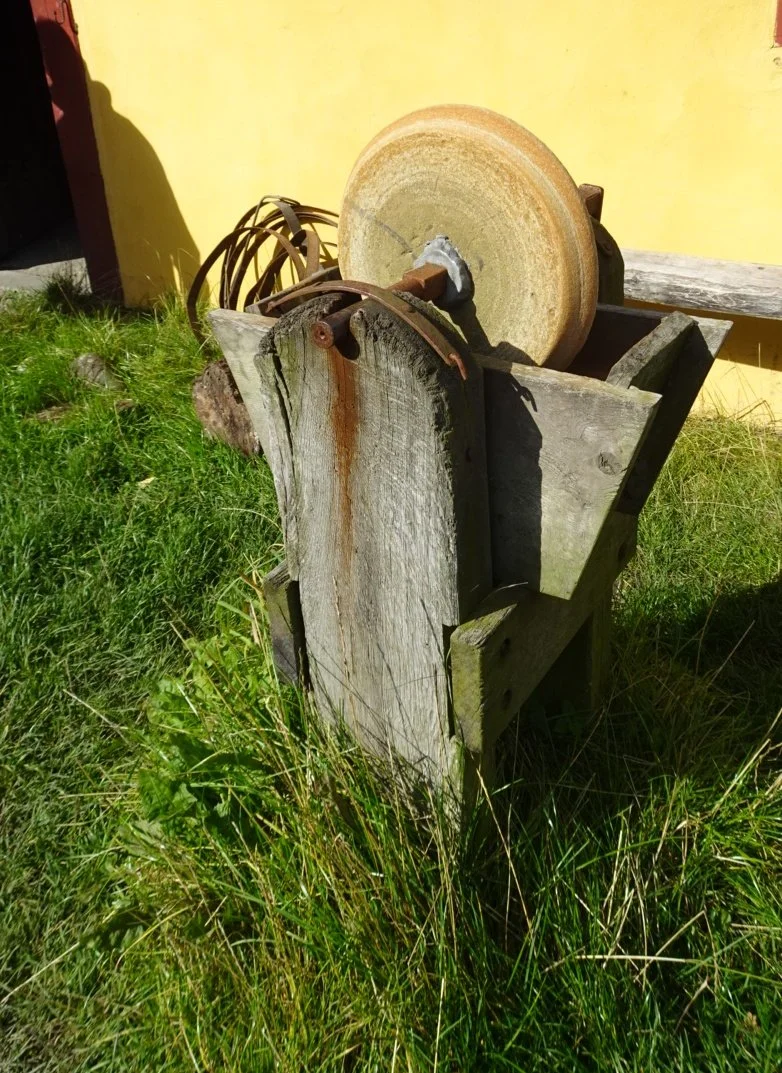
There outside the next hut was what appeared to be a grindstone, I guessed for sharpening axes.
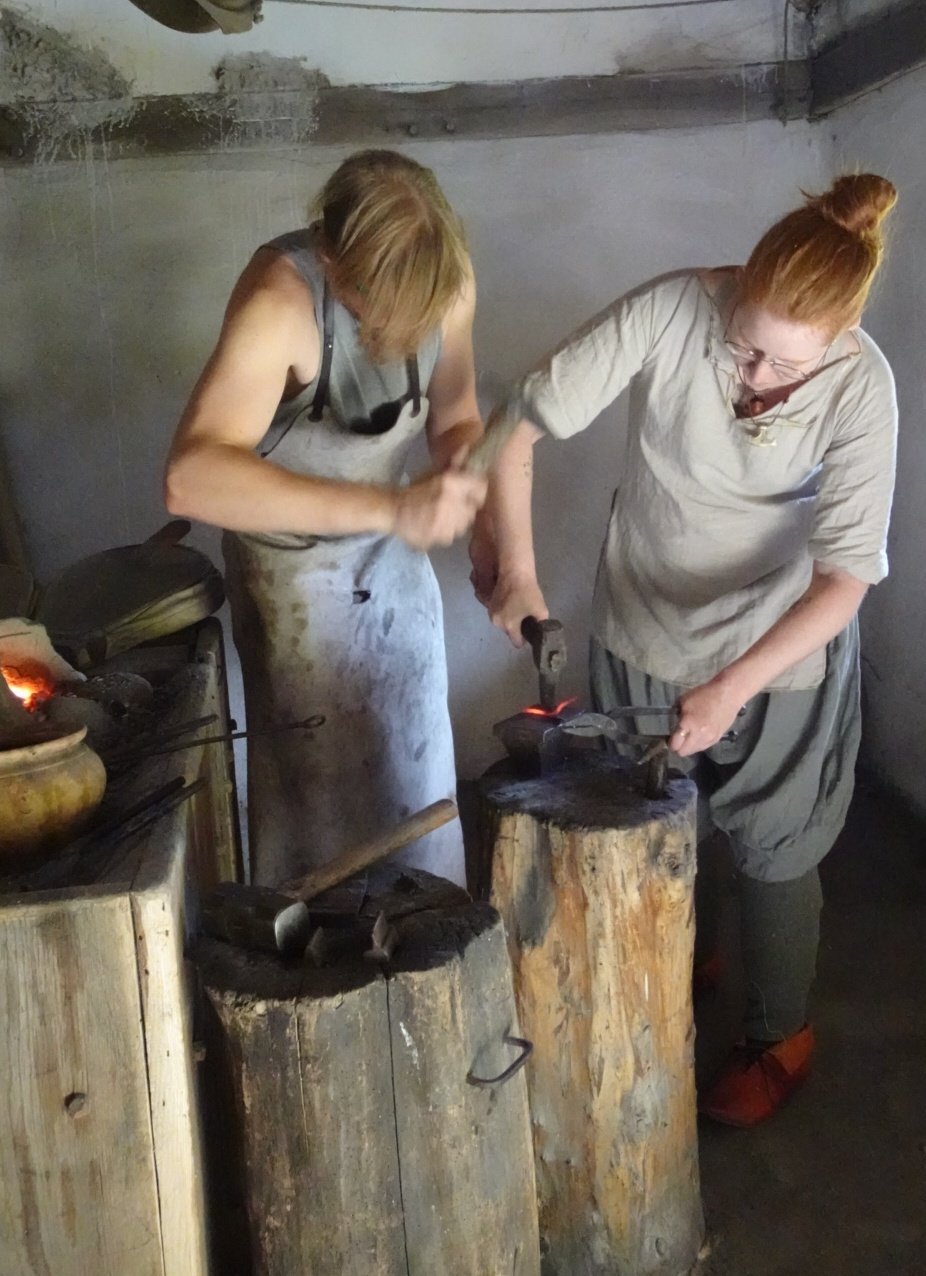
Inside, the blacksmith was working with his apprentice. Together they were making reproductions of a three pronged “thing”, many of which have been found at Viking sites around the country and the purpose of which is uncertain. By making them and trying to use them for different tasks, they hoped to research potential answers to their questions. Fascinating!
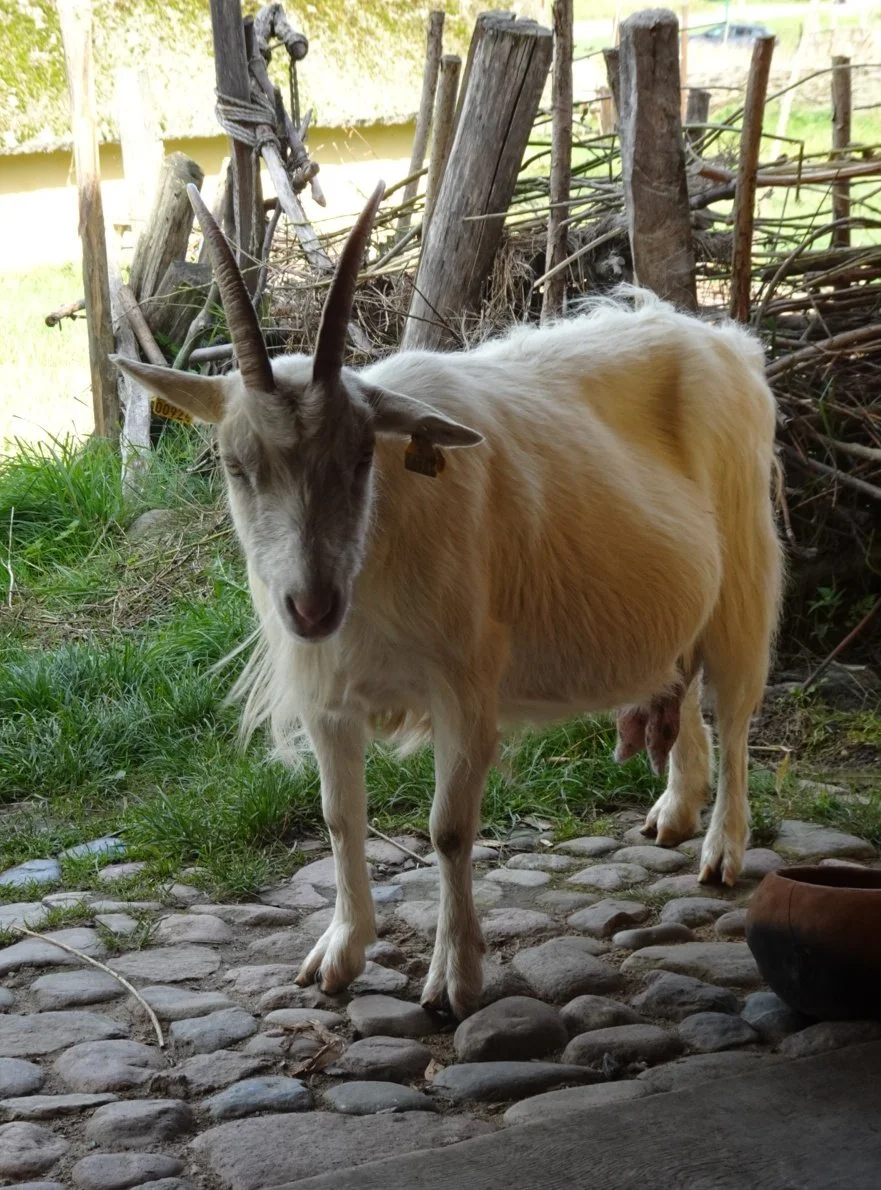
After an interesting conversation with the pair, we stepped outside to discover we'd gained a new four legged friend who follwed us to the next hut.
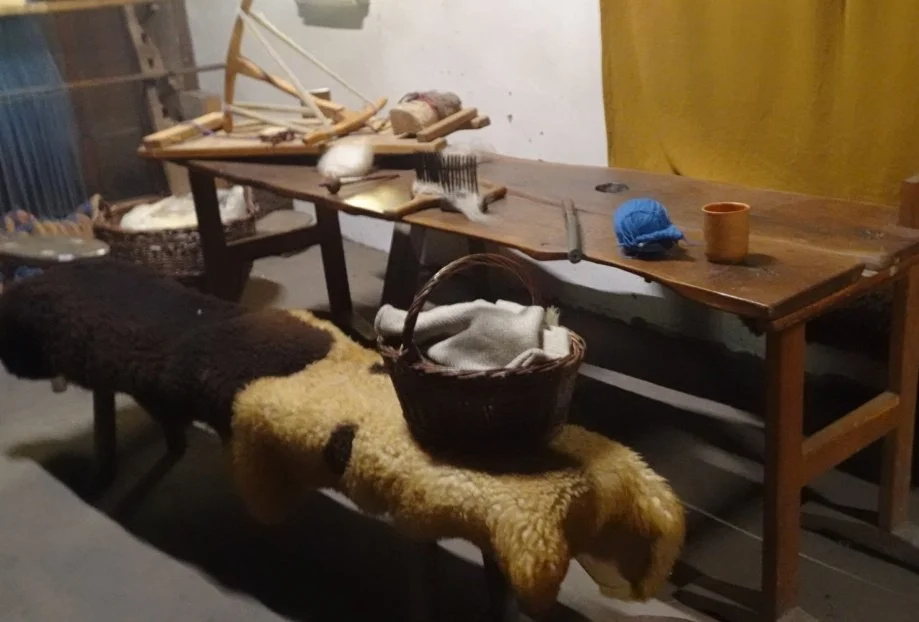
This hut was “home”. During the day, the men would be working outdoors most of the time, leaving the women and children here. The women would work in this hut, preparing food and clothes and tending to the children. The two women in here today were standing over bubbling cauldrons, one dyeing wool with red madder, the other boiling bark to prepare liquid to tan the leather she was preparing. We chatted about both processes and the lengthy tasks involved and they showed us examples of their work. My eye had already been caught by the table filled with interesting and familiar things: a spindle, a small loom with some tablet weaving on it, a niddynoddy and some soft woven fabric.
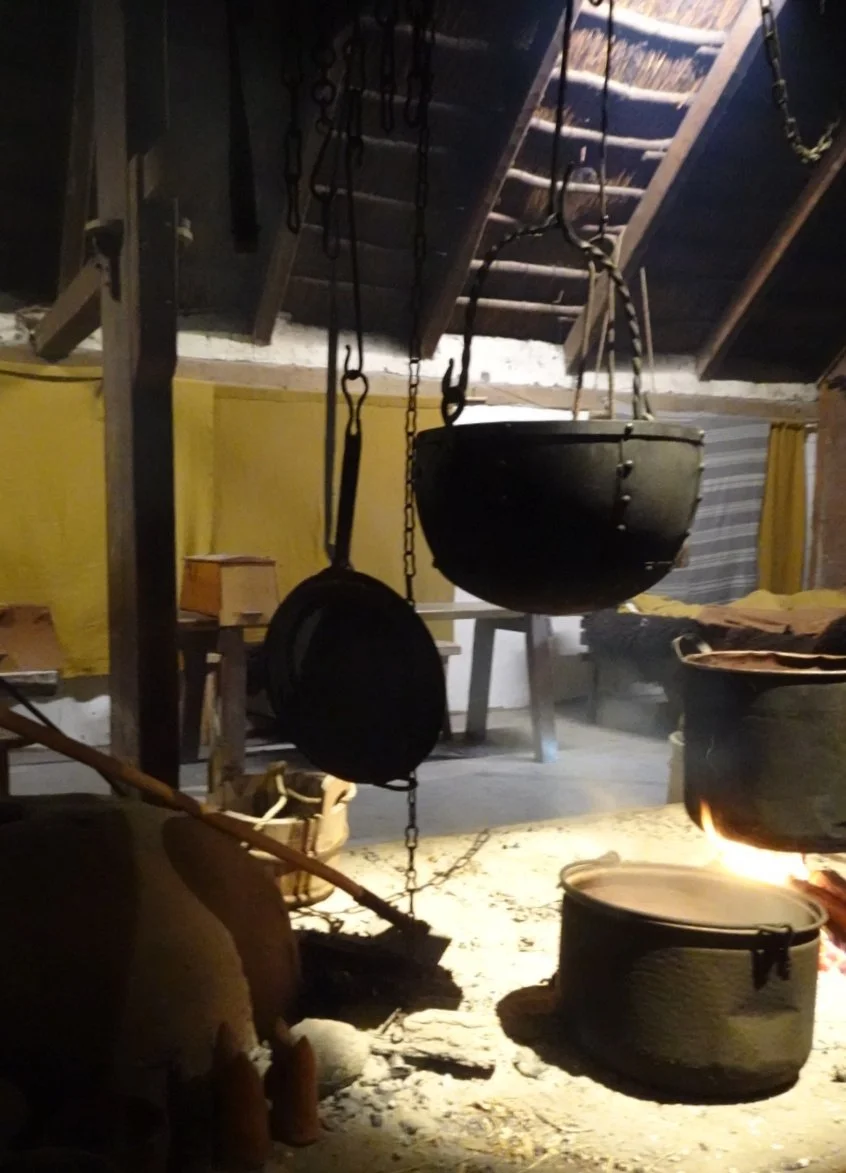
All the time, we were conscious of the thick woodsmoke from the fire that they were working alongside.
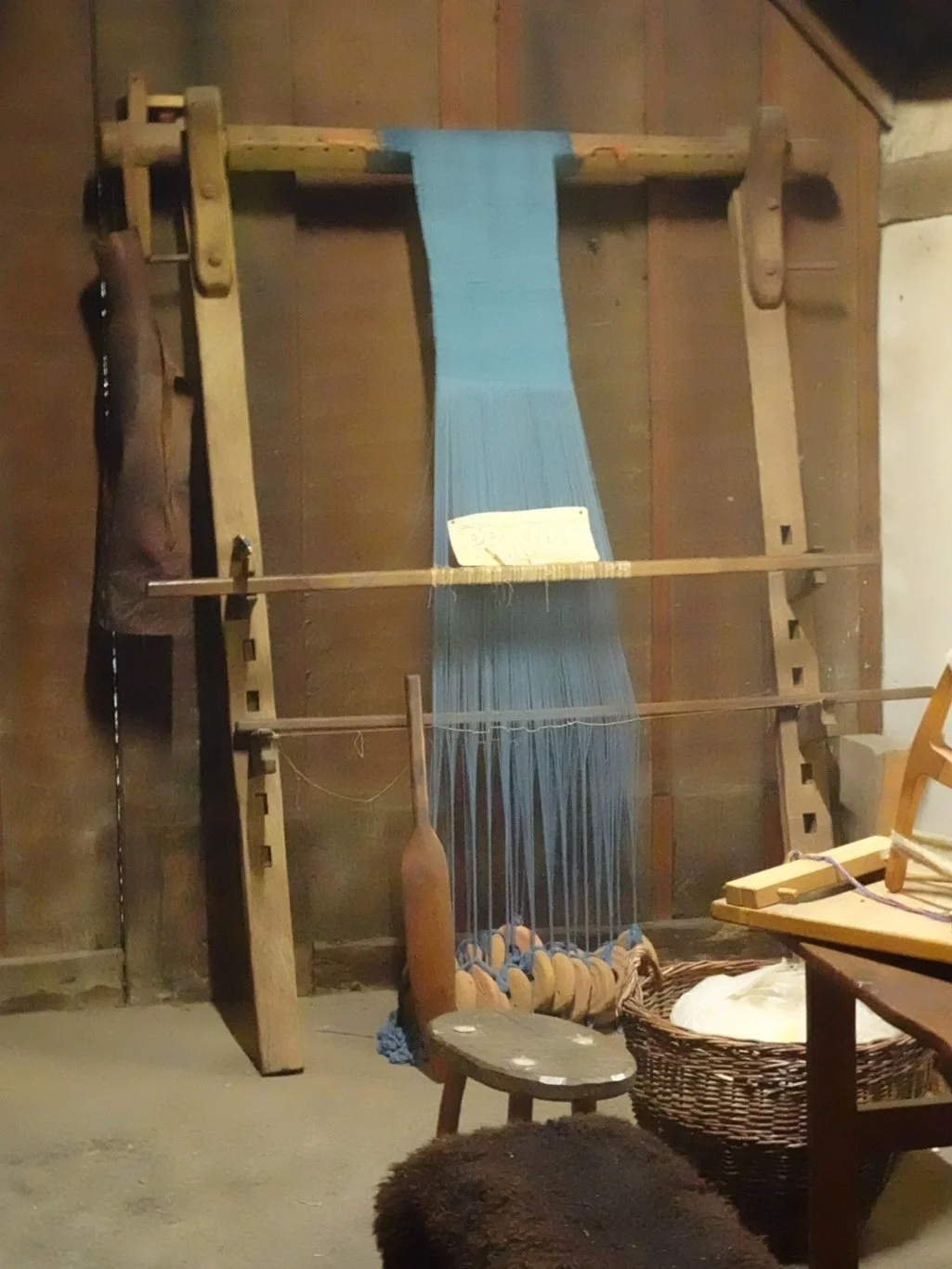
Across the way was another loom, with some weaving on it of a most interesting colour - I wonder how that had been achieved?
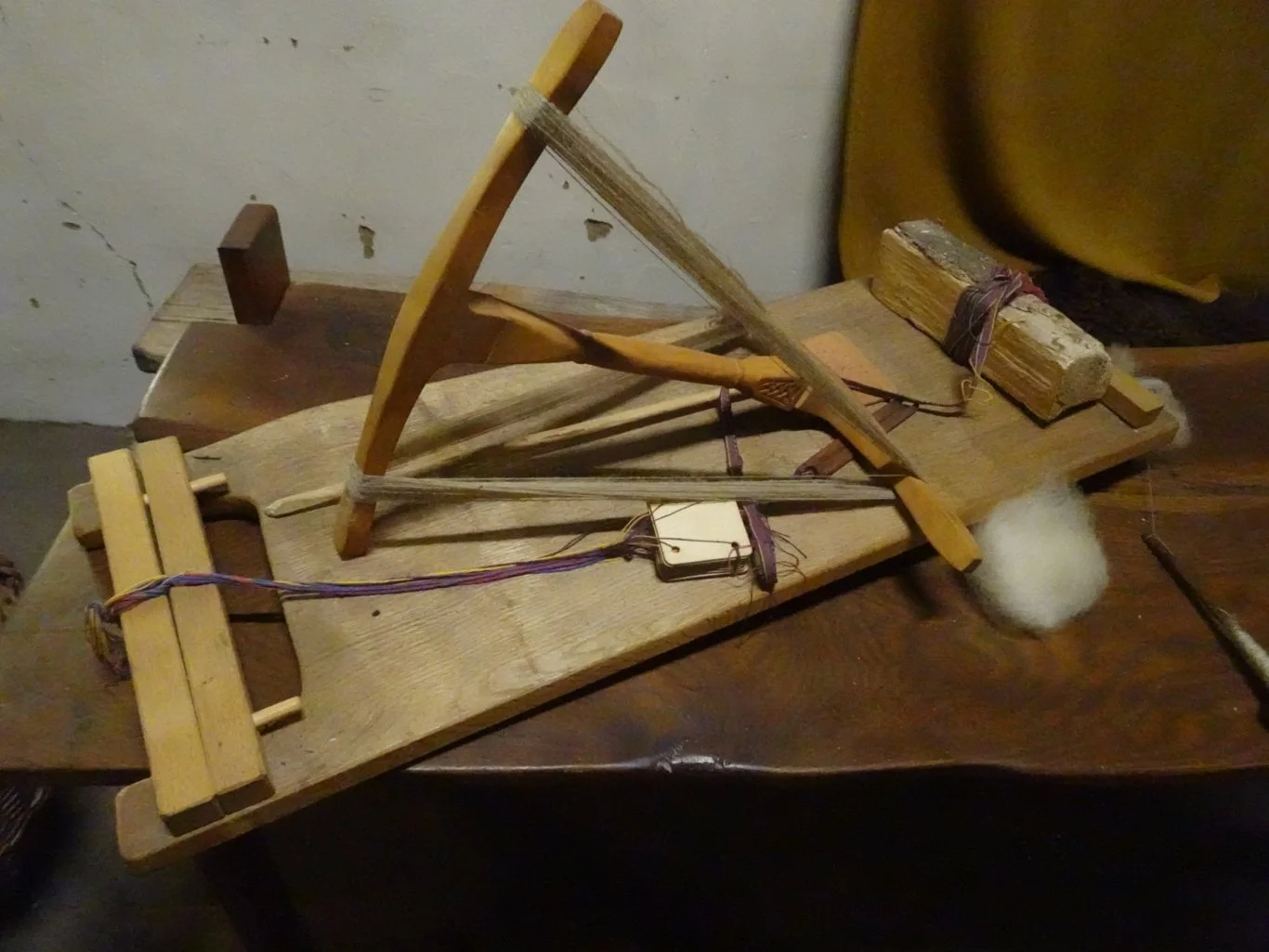
I really admired these tools, in particular the niddy noddy which had a beautiful design carved into the wood, which was silky smooth from both a fine finish and from repeated use.
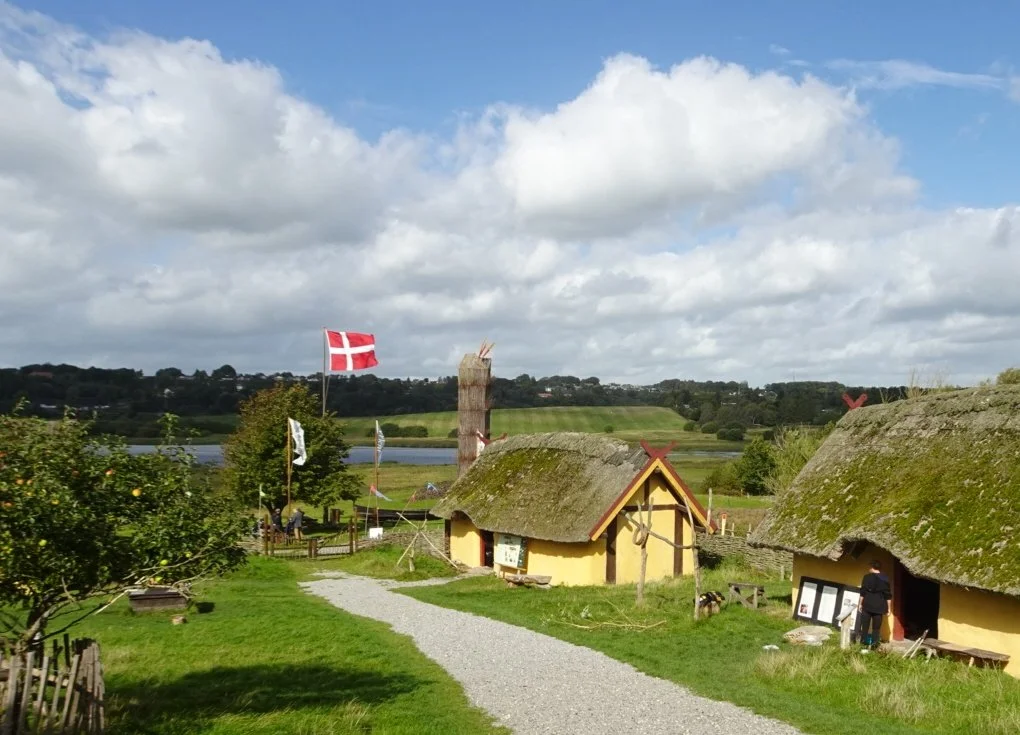
Taking an overview of the village, we both remarked what a special place this was, not only in the way everything had been organised, but the spirit and enthusiasm of those who worked here.
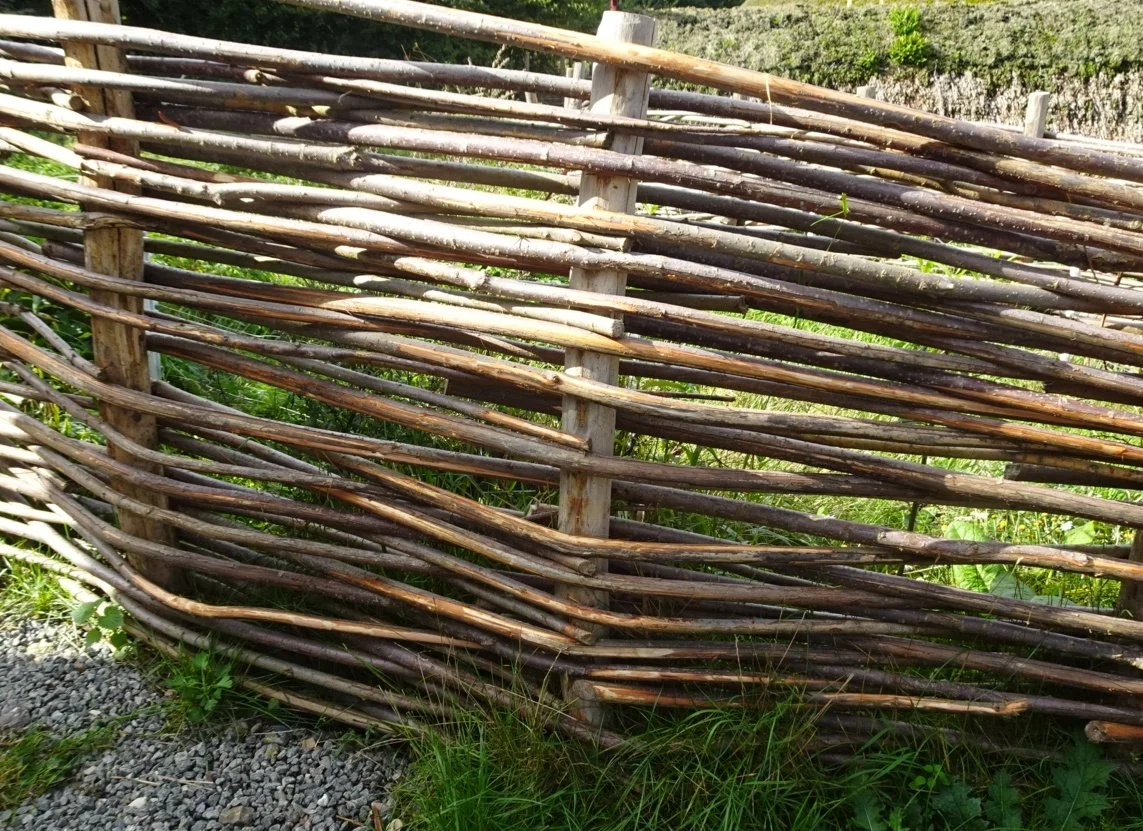
It was all so beautifully maintained as well, this fence not just sturdy and hardwearing but good looking too!
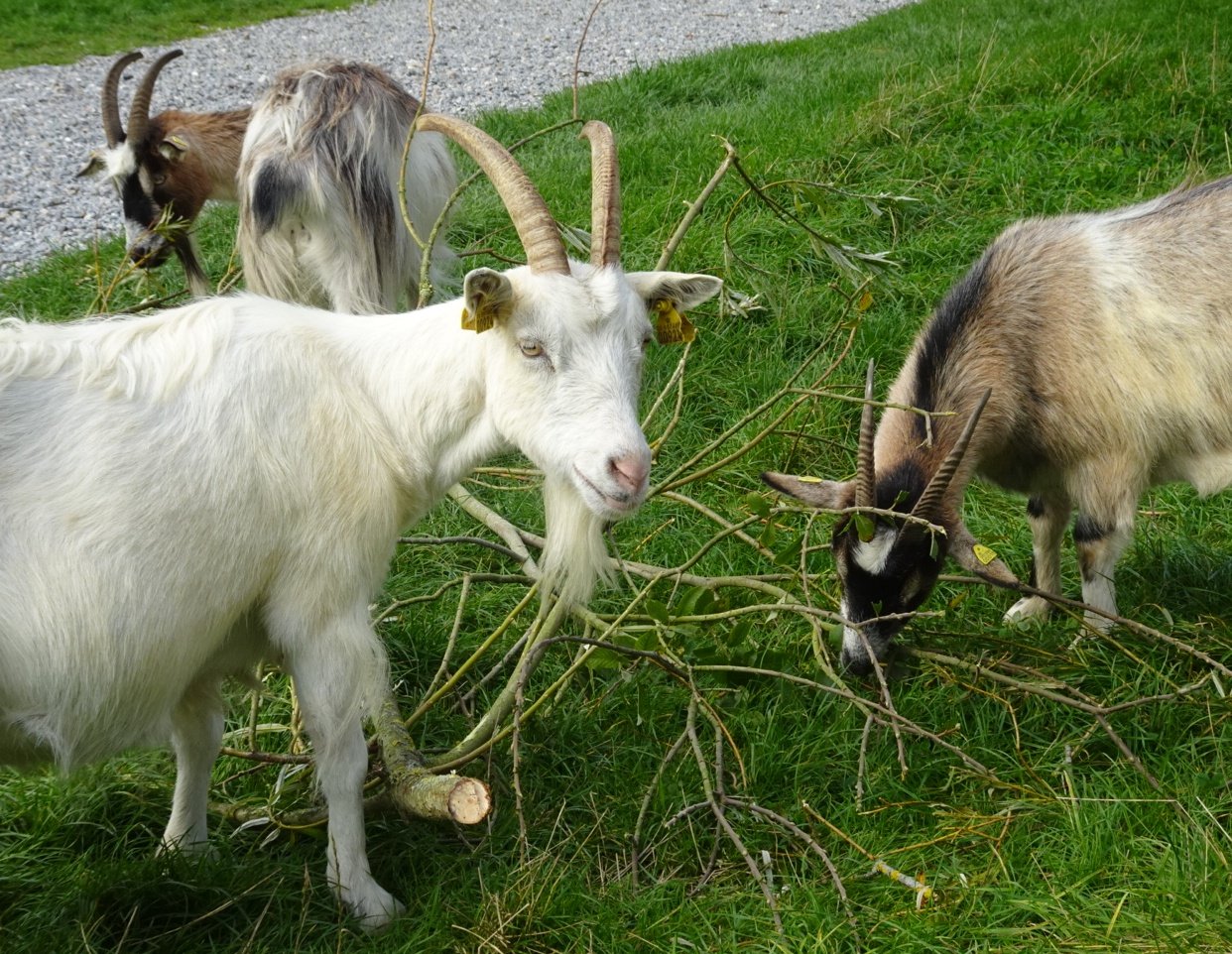
Our friends stayed with us whilst we were there, seeking attention after a summer of visitors’ indulgences!
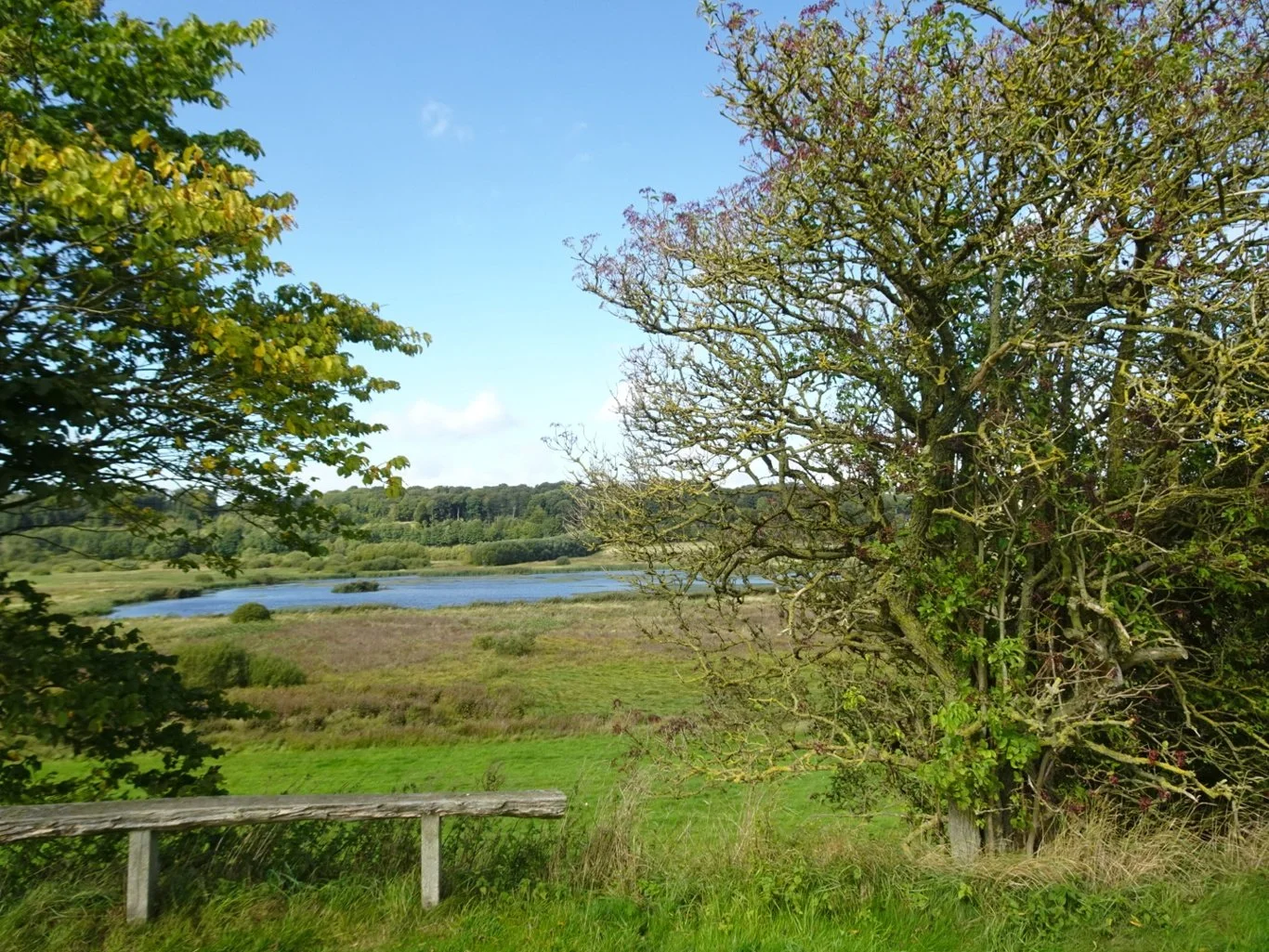
From here, we could see across the lake to the other part of the Fyrkat site.
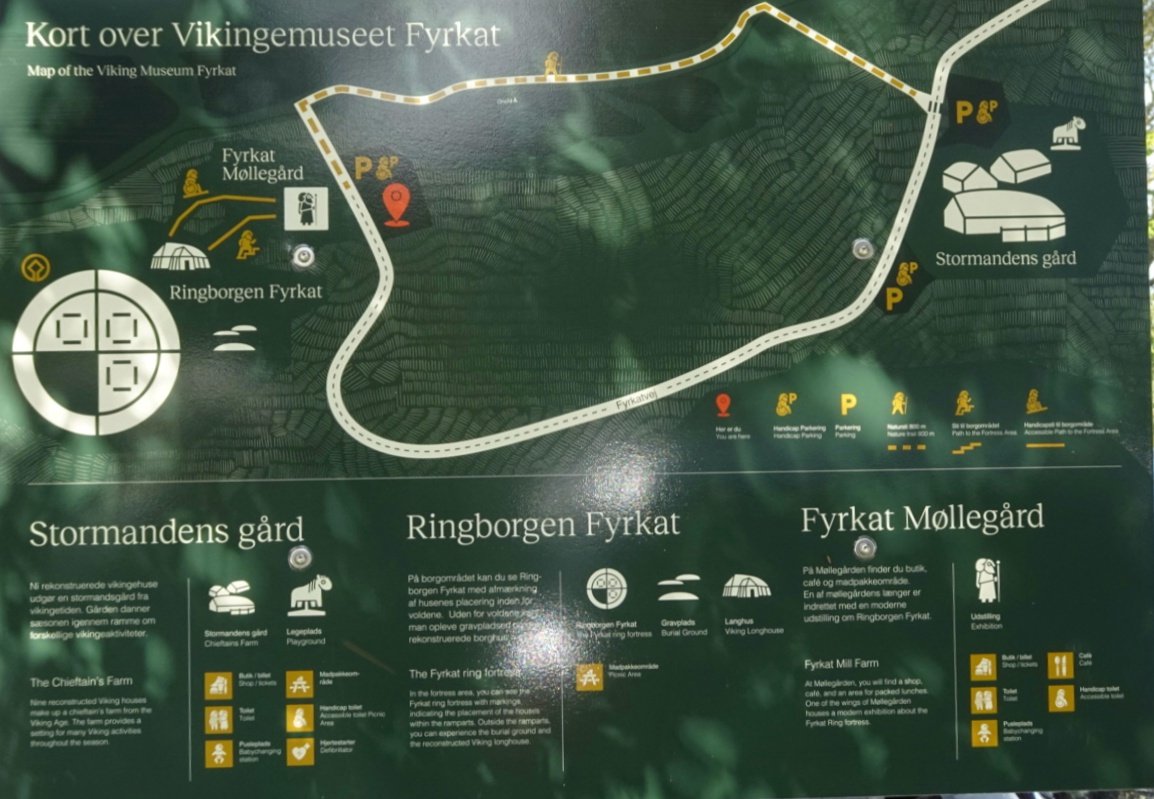
We had begun at the right hand side of the map, at the cluster of huts. Now, it was suggested we drive or walk over to the site shown on the left hand side of the map, where there was a ring fortress and a reconstructed Viking longhouse to visit.
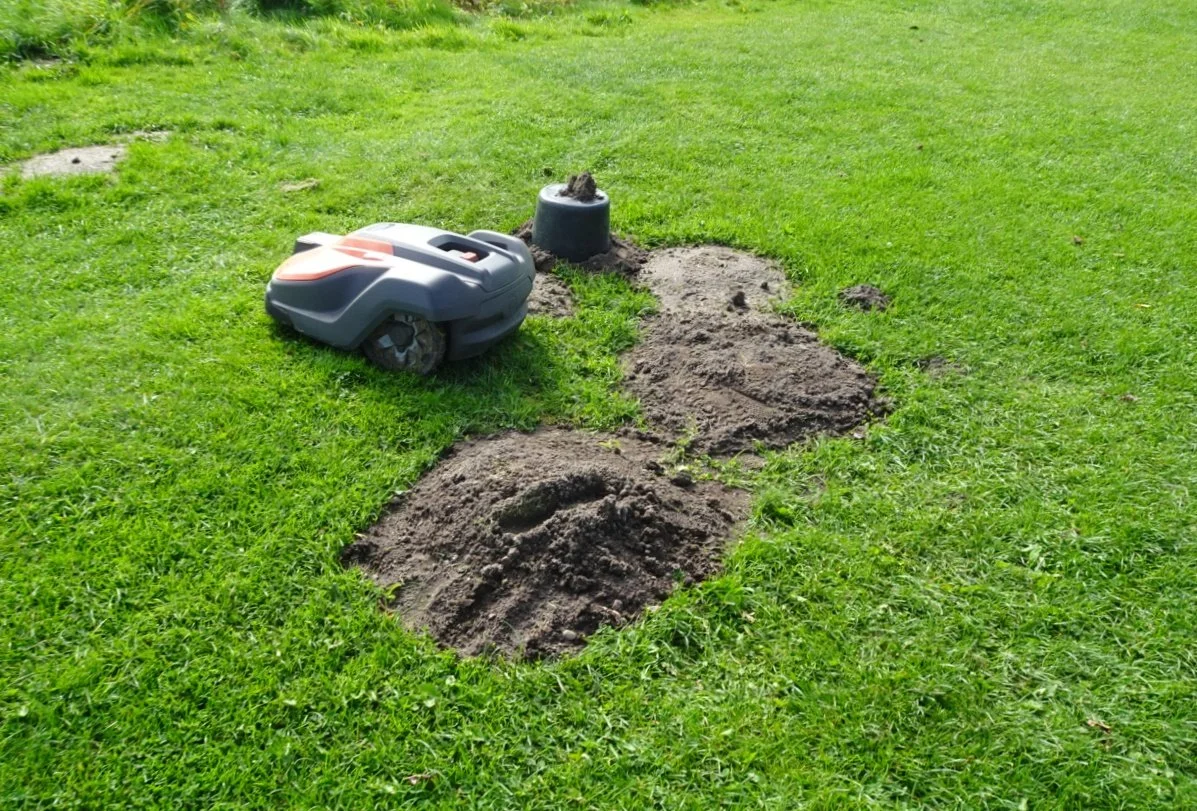
The first thing we saw there was as far from a Viking relic as could be imagined: it was the robot lawn mower, stuck on a couple of stones in a corner. As we made our way over to the ring fortress, a staff member was doing her best to reprogram it with her phone, finally achieving success as it went in its way again.
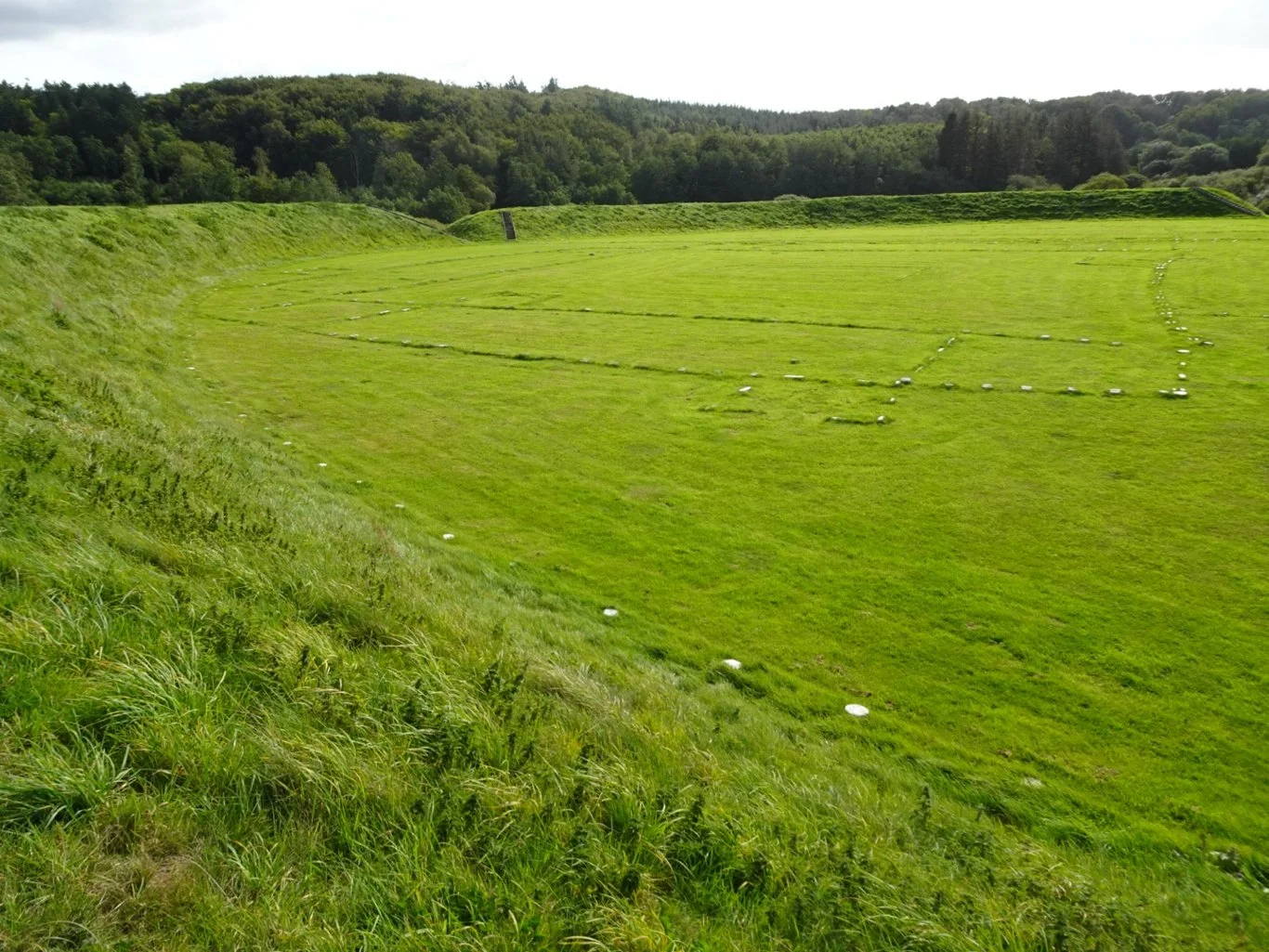
We climbed to the top of the ramparts to look down at the markings showing the location of the houses within. This ring fortress had been built during the reign of Harald Bluetooth around 980.
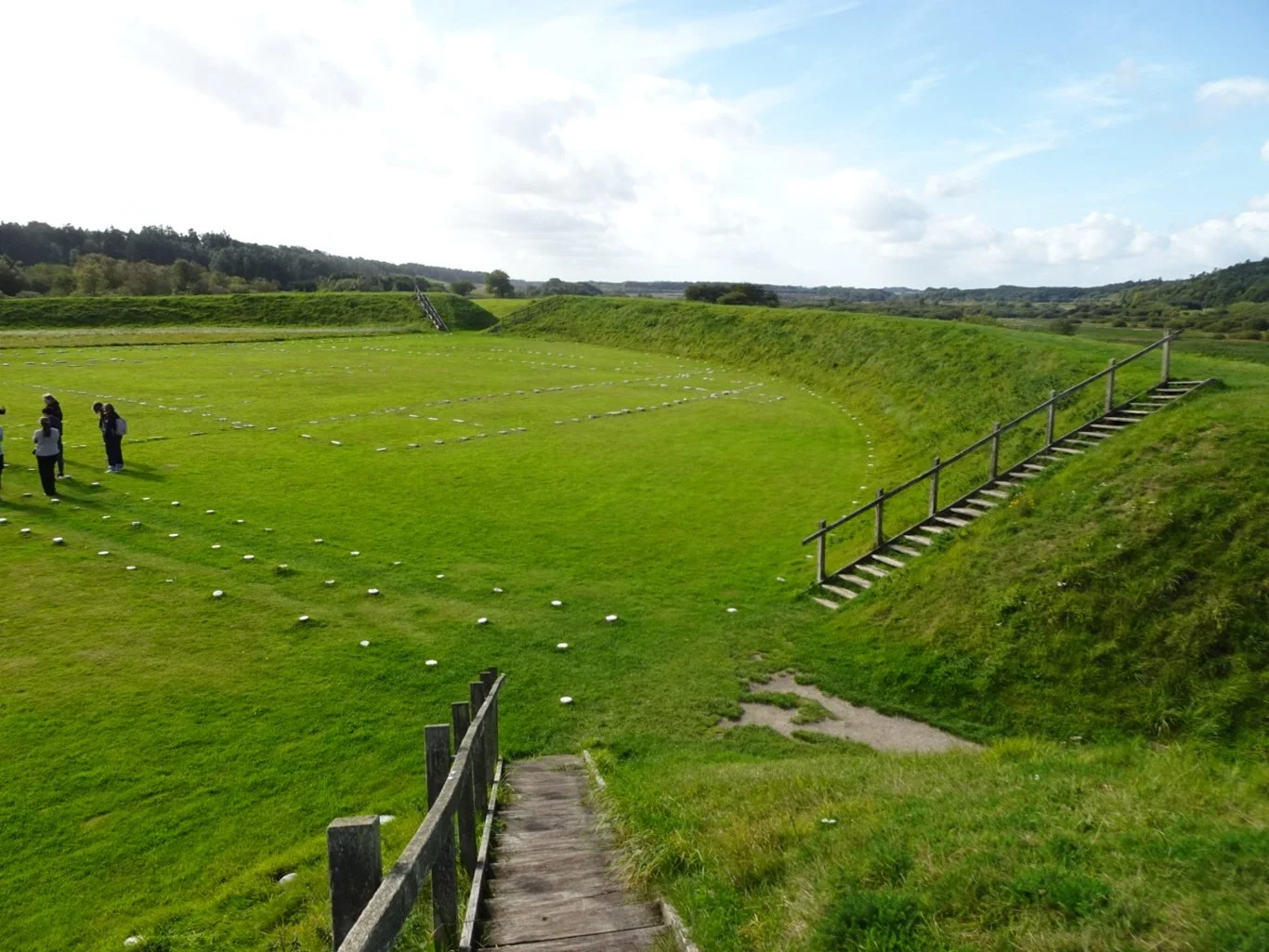
As always when I visit such a place, I find myself wondering how they'd created such an enormous project with the simplest of tools.
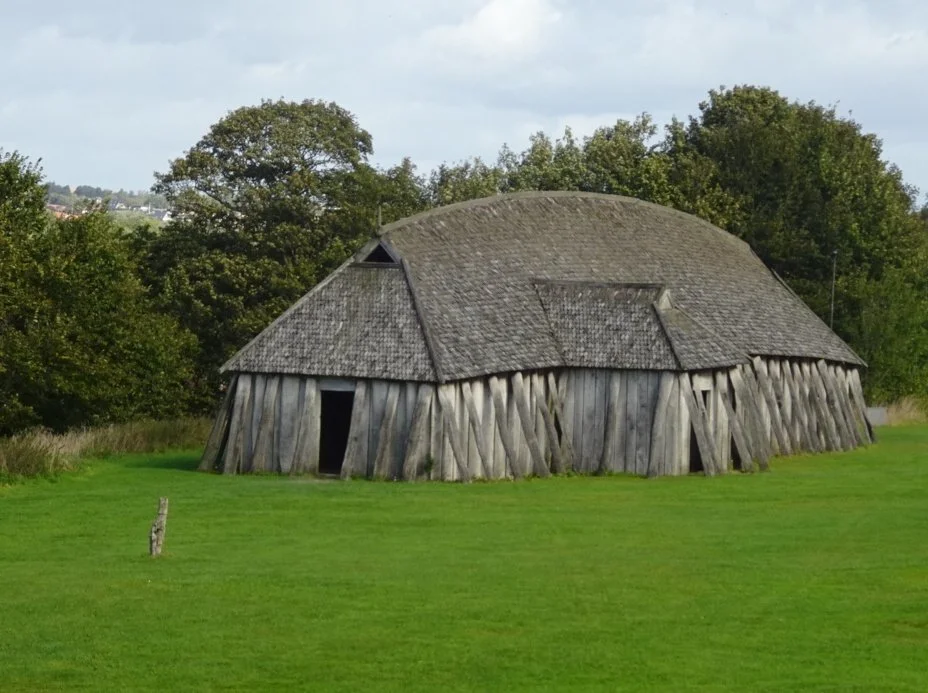
We returned to the car park through the relatively empty longhouse, all the time wondering how far the robot had gone on its grass cutting mission? As we stood at the top of the steps, we spotted it by the edge of the field, stuck once again, this time in the long grass. Oh dear. A couple of sheep would likely have been less trouble!
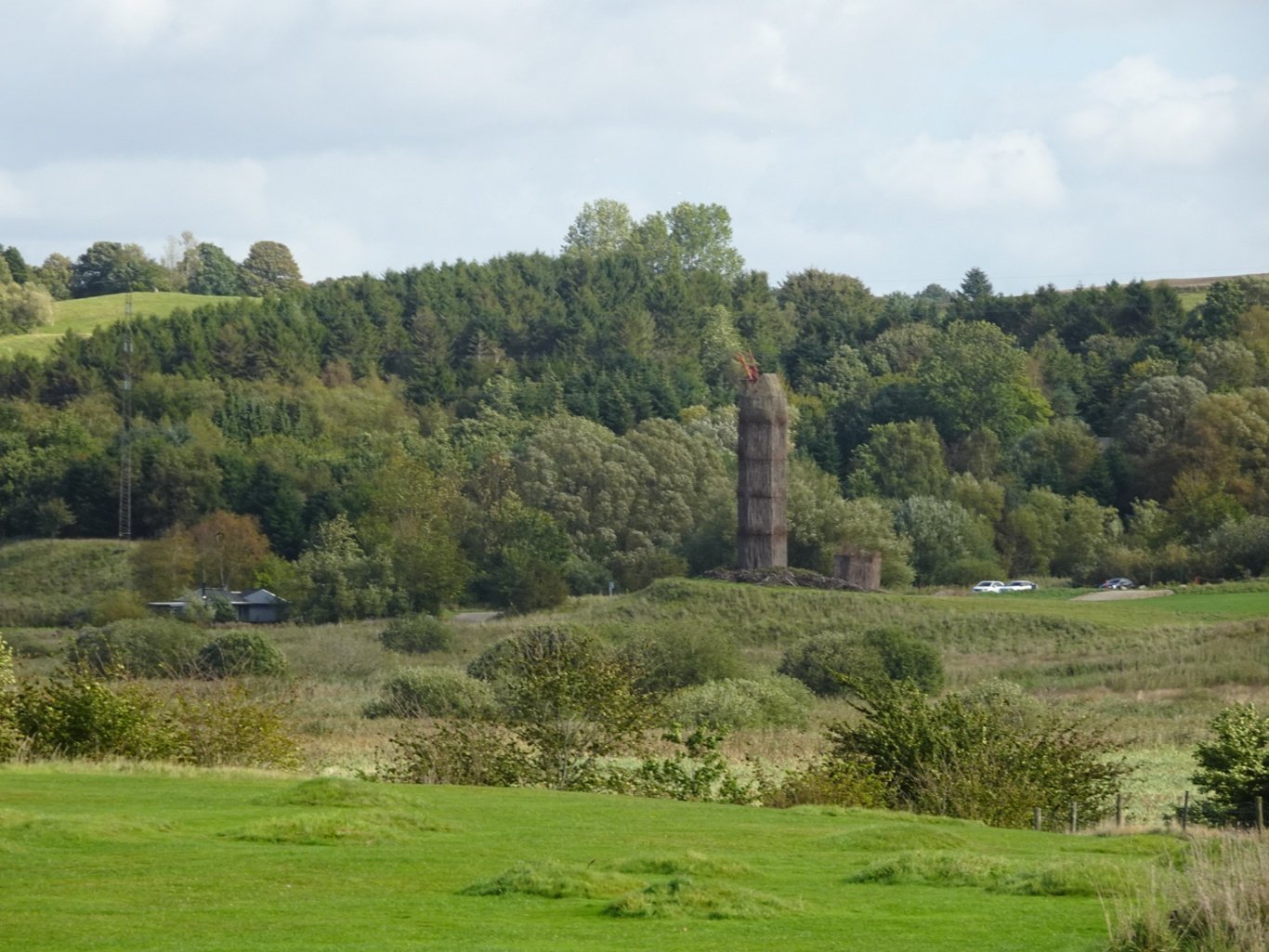
From the car park we could see the woven artwork over where we'd started. In a couple of weeks time there's a festival for which they will provide the centrepiece. I must keep an eye on the website to find out more.
For now, we needed to crack on towards Aarhus! What a great diversion this had been.