



A short hop
Our first port of call was a mere hop over the Channel to Honfleur.
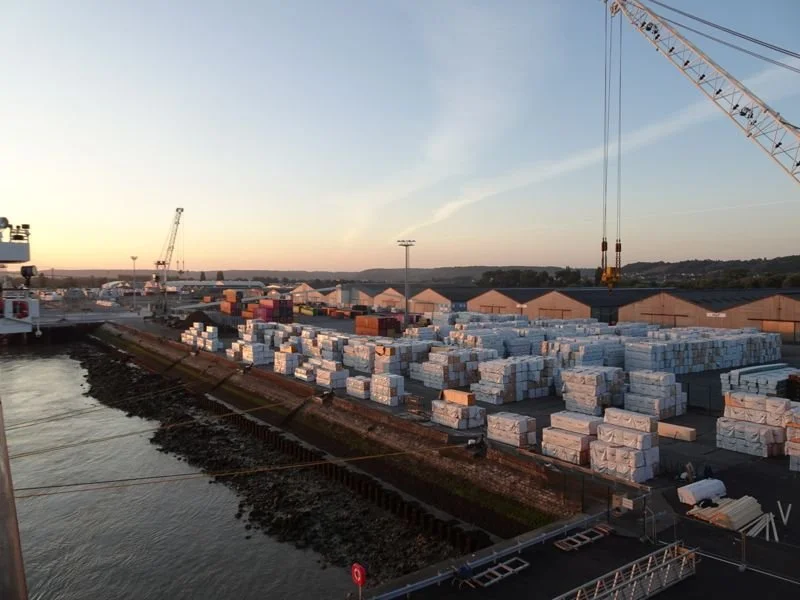
We were already there when we opened the curtains, though we were not in a charming French harbour but a large container port. No worries…we had plans for the day.
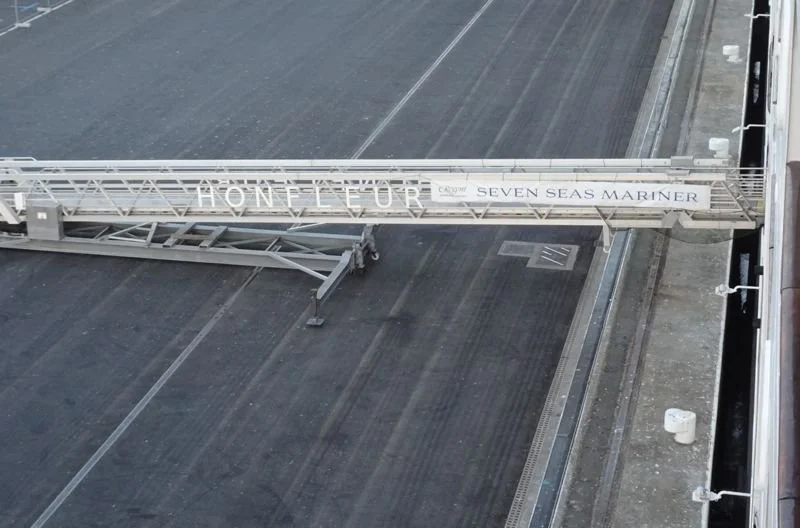
Whoever drew up our itinerary had a cruel streak, because here we were, on the first day of our holiday and the meeting time was 7.45am! Thankfully, all was running according to plan and there were no delays, so it really was 7.45am when we were making our way onto the dockside to find our bus.
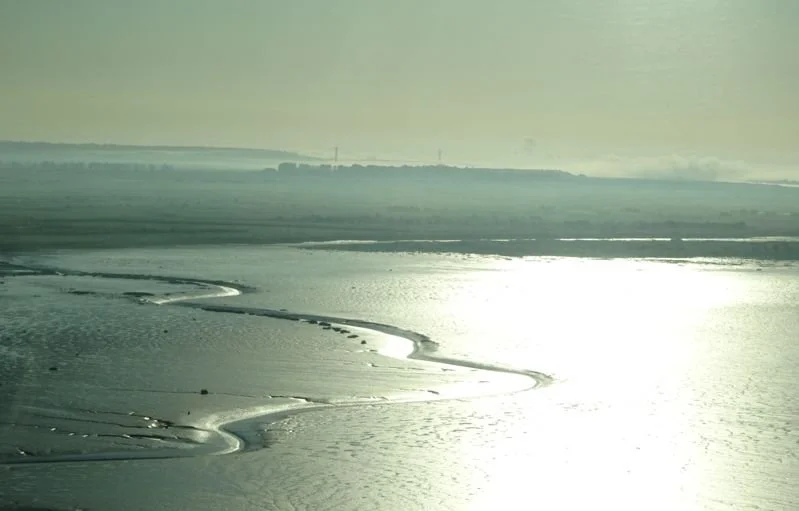
We’d not gone very far when it became clear why we had docked so early in the morning and why there was some adjustment to the time we were to leave in the afternoon. This is a tidal port and there wasn’t much room for manoeuvre.
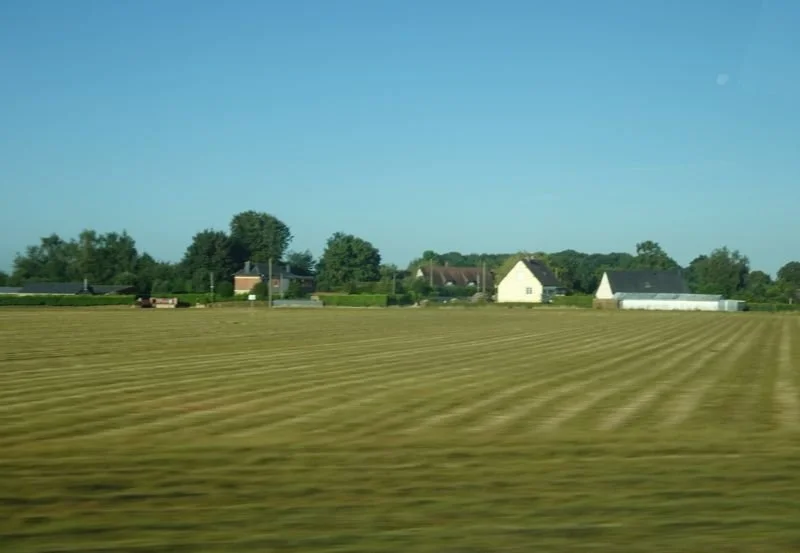
Our guide Sandrine gave a great commentary as we drove through the Normandy countryside. Here, the main crop was flax, which had already been cut, leaving the stubble behind; the stems which would weather in the field during the summer and then be collected for processing later. She explained that linen production was a traditional industry in this region, but with just one single factory remaining, most was now sent to China.
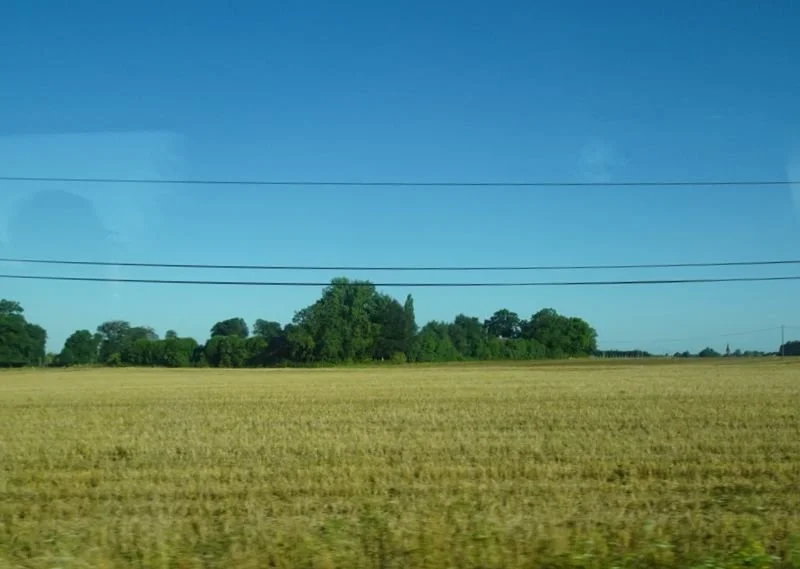
She also explained about the large fields with small “forests” in the centre of them. These were clos masures, distinctive and now a protected part of this landscape, consisting of farm buildings inside a ring of tall trees. During severe weather, the animals could be brought inside the enclosure and both buildings and livestock protected.
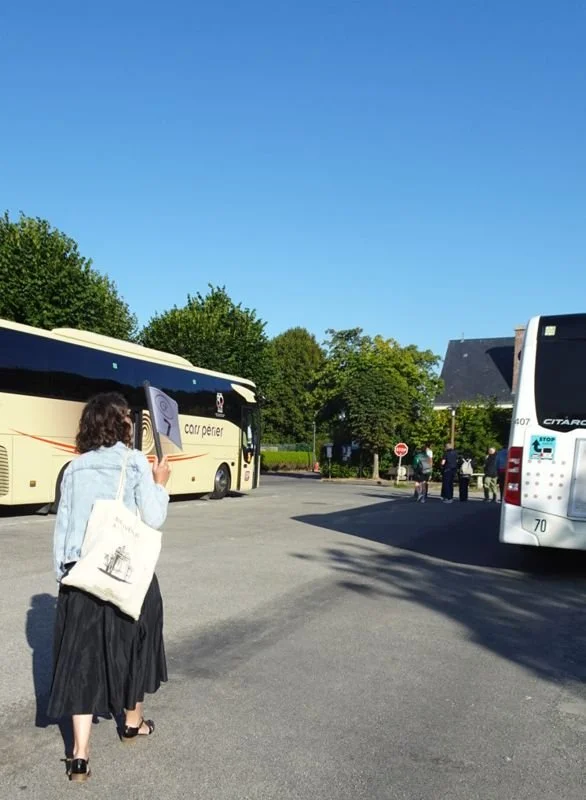
Before long, we’d arrived in Etretat, a small seaside town which Sandrine explained had become popular with the introduction of the railway.
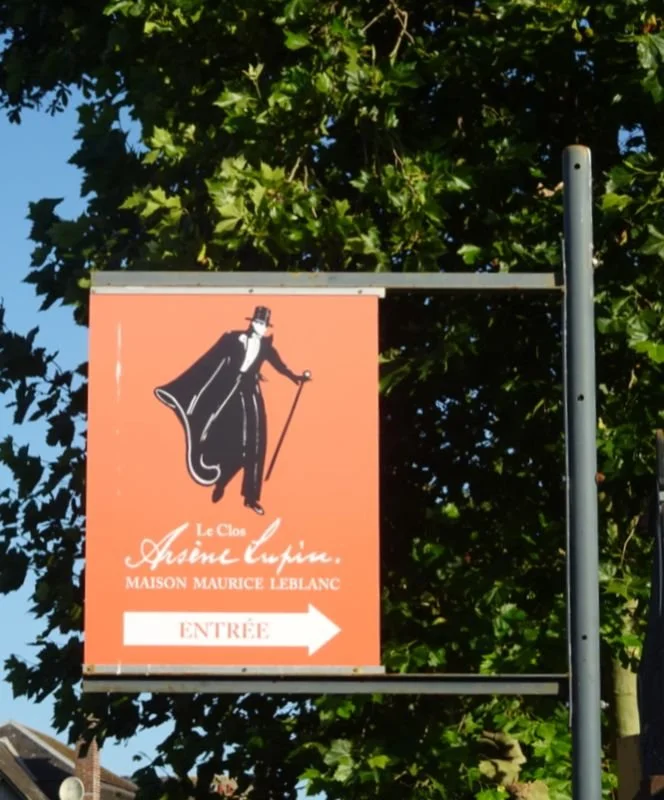
The arrangement was that we’d walk down to the sea with her and then have free time before meeting up again to return to the car park. As we walked, she pointed out the homes of two writers. Firstly, Maurice LeBlanc, author of the Lupin stories, familiar to many from the TV series.
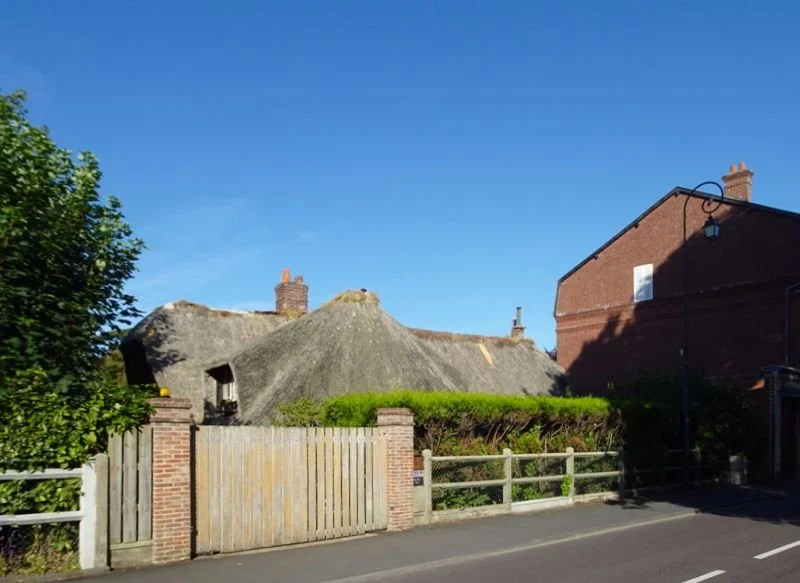
Across the road, there was the former home of Guy de Maupassant, more familiar to those who’d studied his work at school!
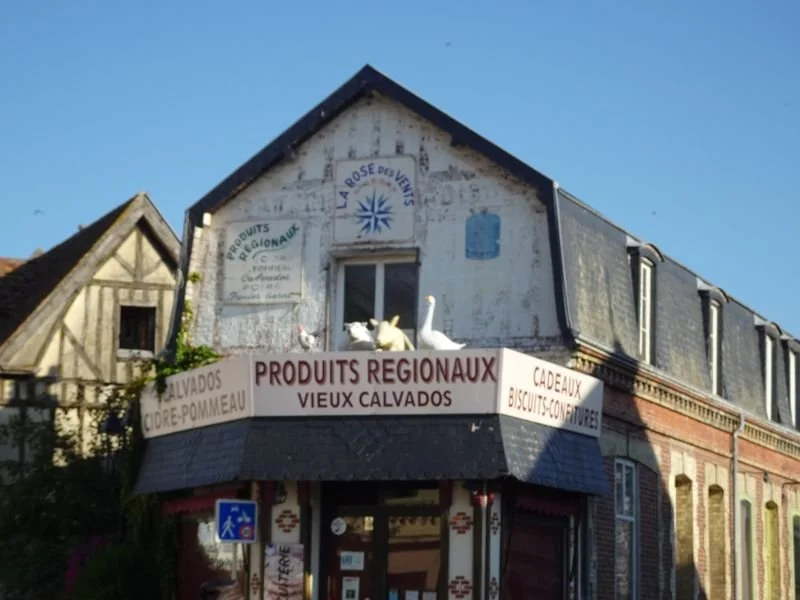
As we walked through the town, it was probably as well that most shops were still closed!
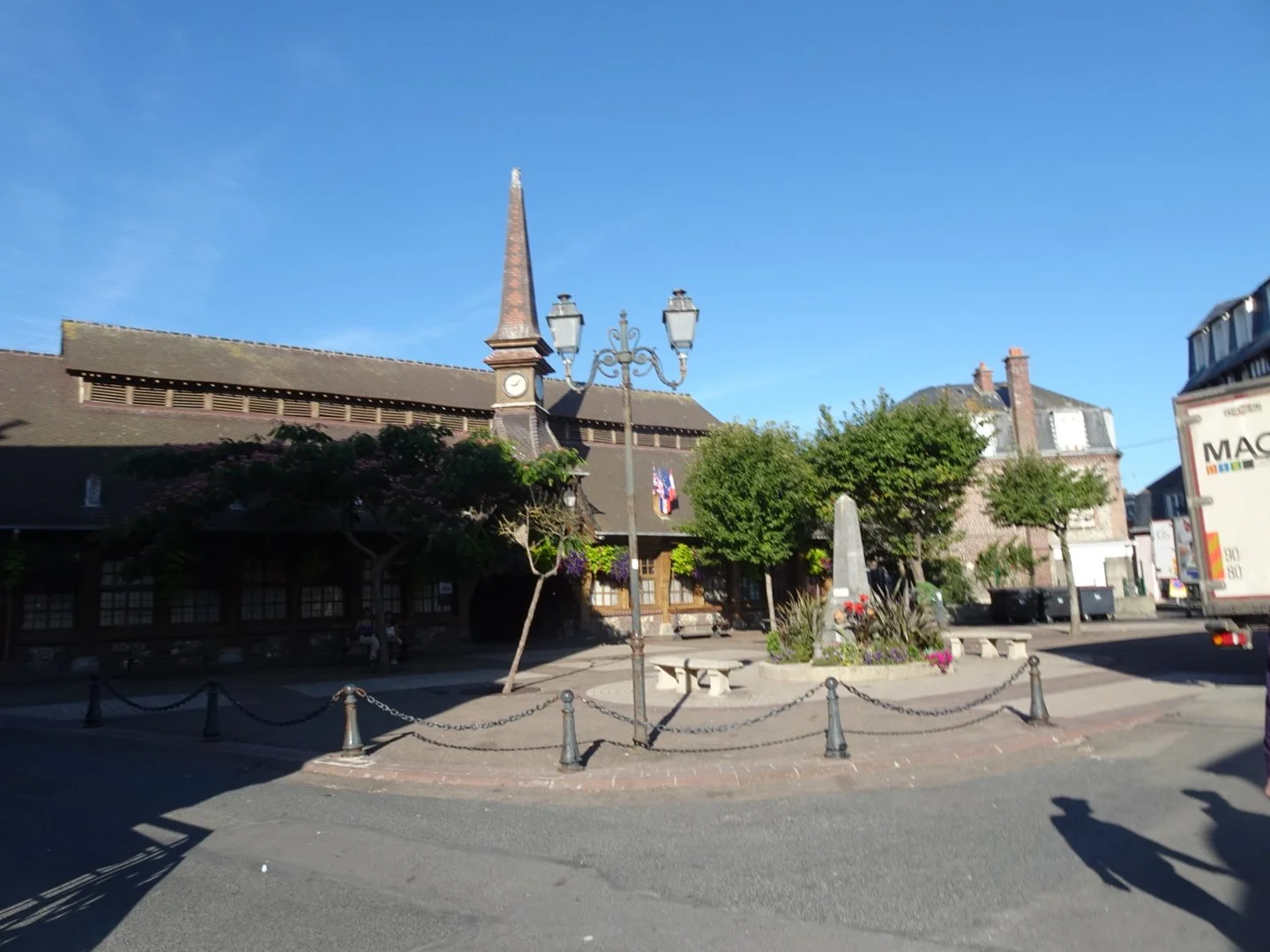
The bright sunshine and deep shade made it tricky to photograph some of the pretty aspects of the town, including the former railway station here, with the war memorial outside.
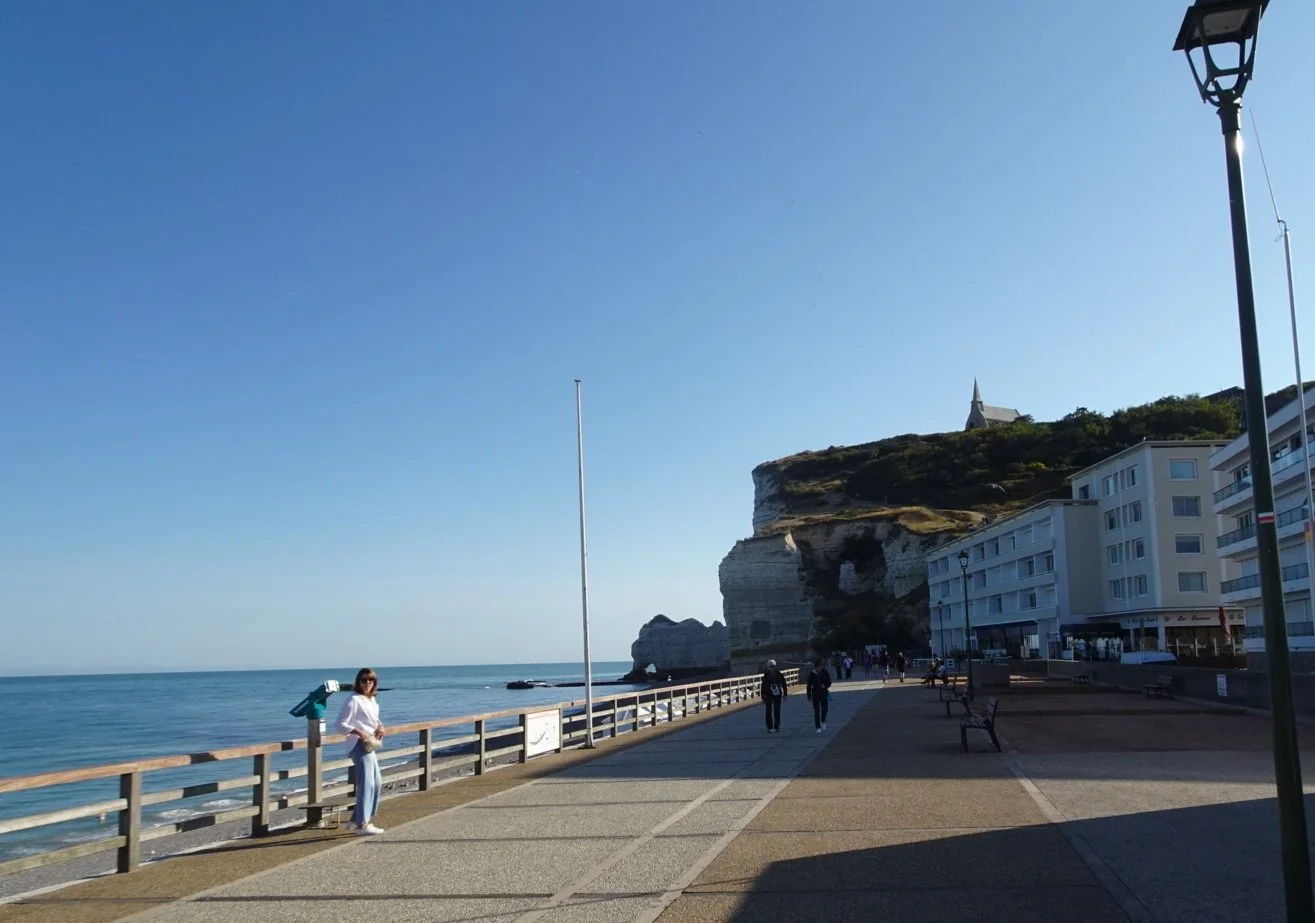
Having reached the seafront, we went our own ways. Sandrine had explained that the pebbles were brought in each year as a sea defence and we were not to take one as a souvenir!
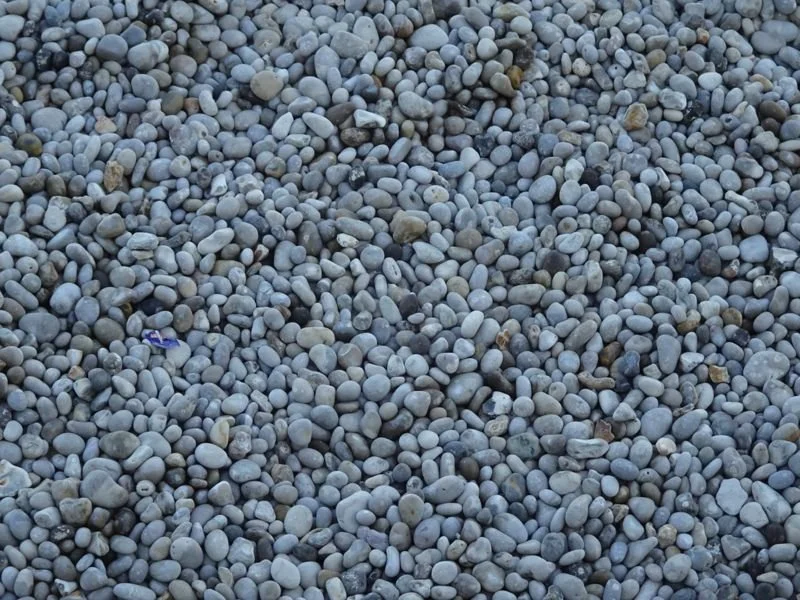
They were tricky to walk on and any idea of dipping my toe in the water was soon dismissed for fear of a steep shelf created by the strong waves here.
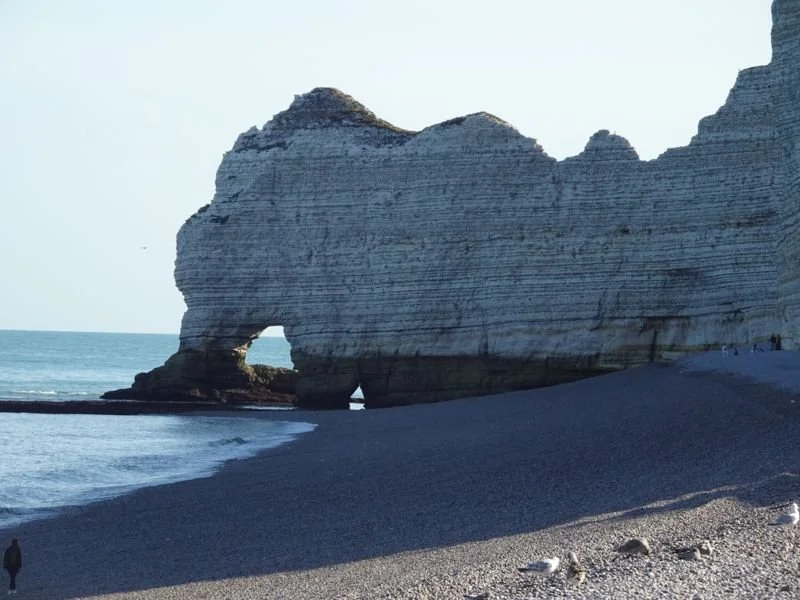
So I used the time to take a snap of “the elephant” in the cliff on my right…
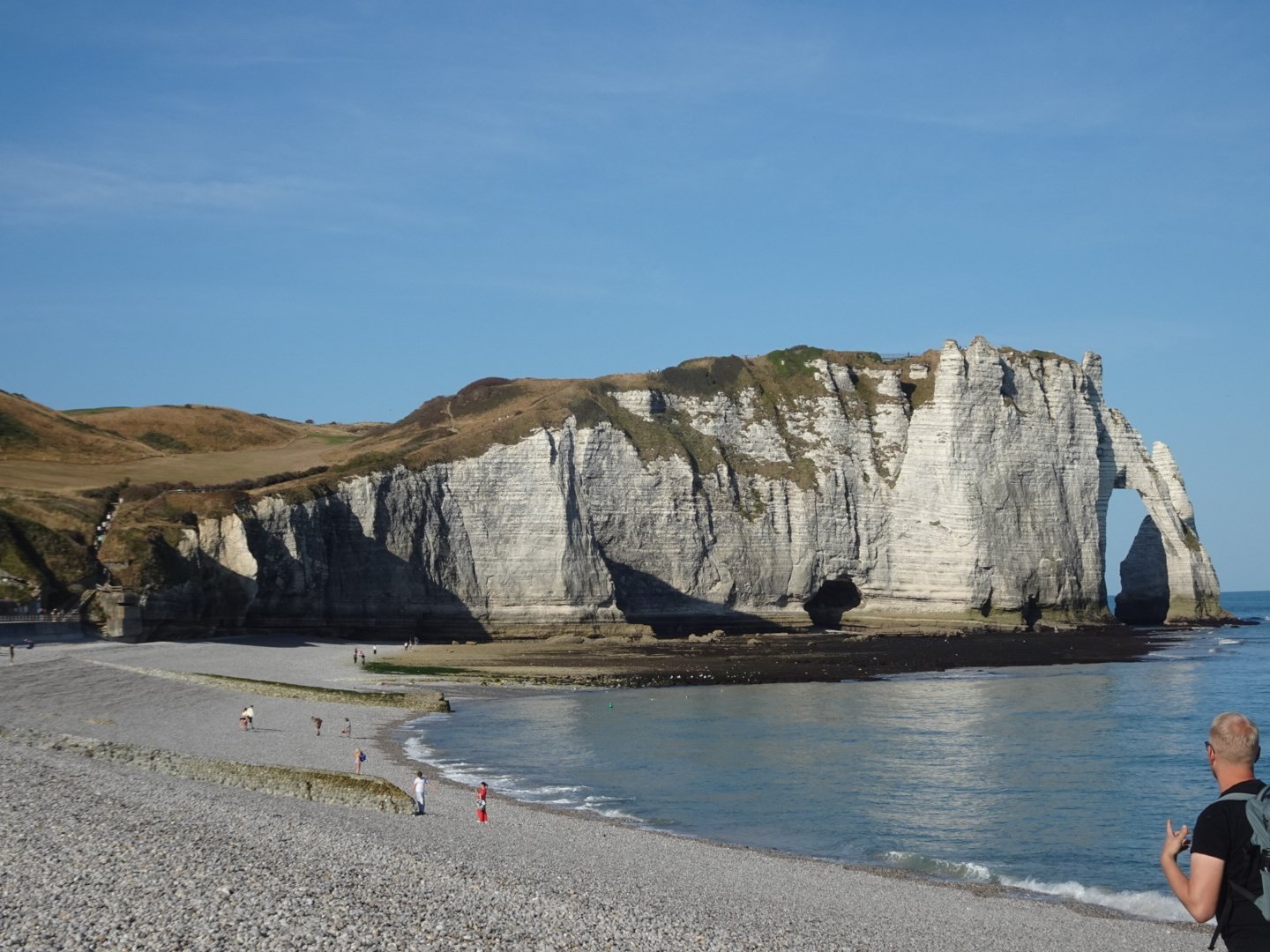
and one of the caves and steep cliffs on my left, about which Sandrine told us earlier. Fishermen had created oyster beds on the floor of these caves, but there was a legend that Marie Antoinette (who had a cottage in the town) hid her jewels in the caves during the Revolution. To this day, people continue to search for them in there!
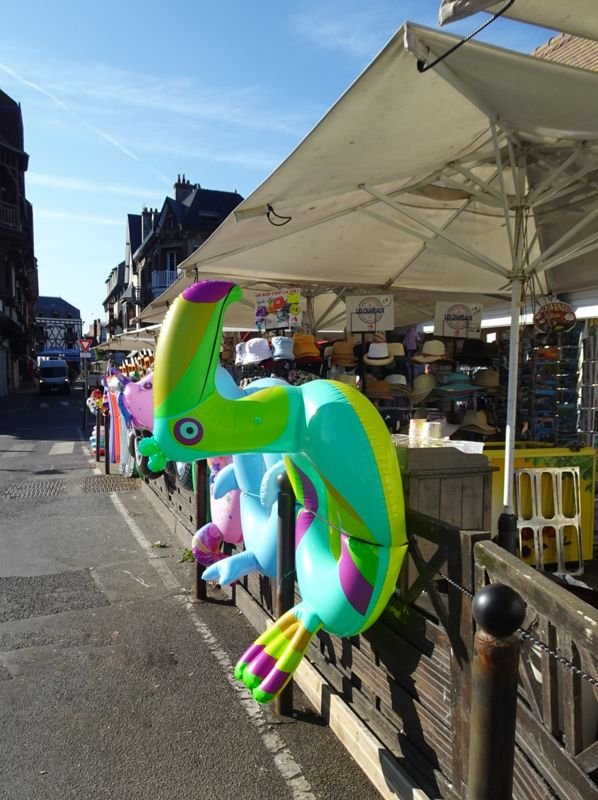
Wandering back to the car park, I was amused by the seaside shop selling exactly the same things as seaside shops the world over!
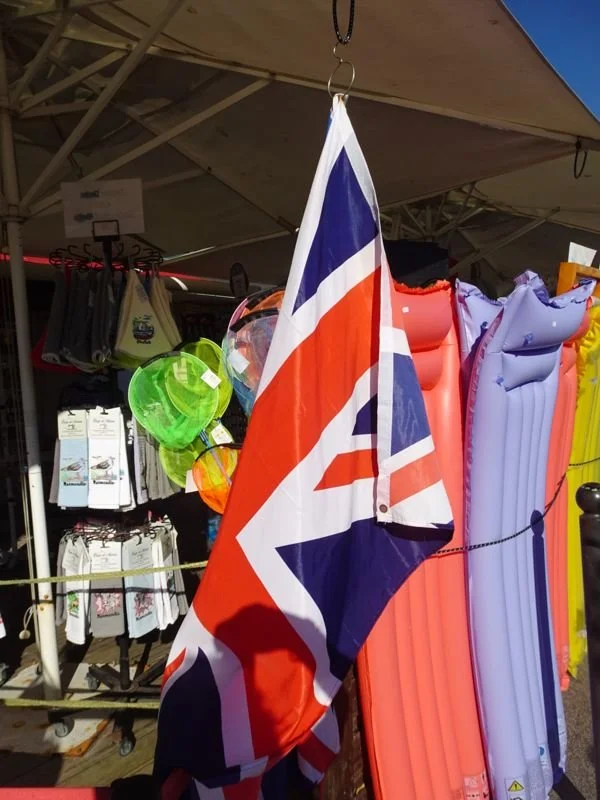
It was rather good to see the “entente cordiale” alive and well here too!
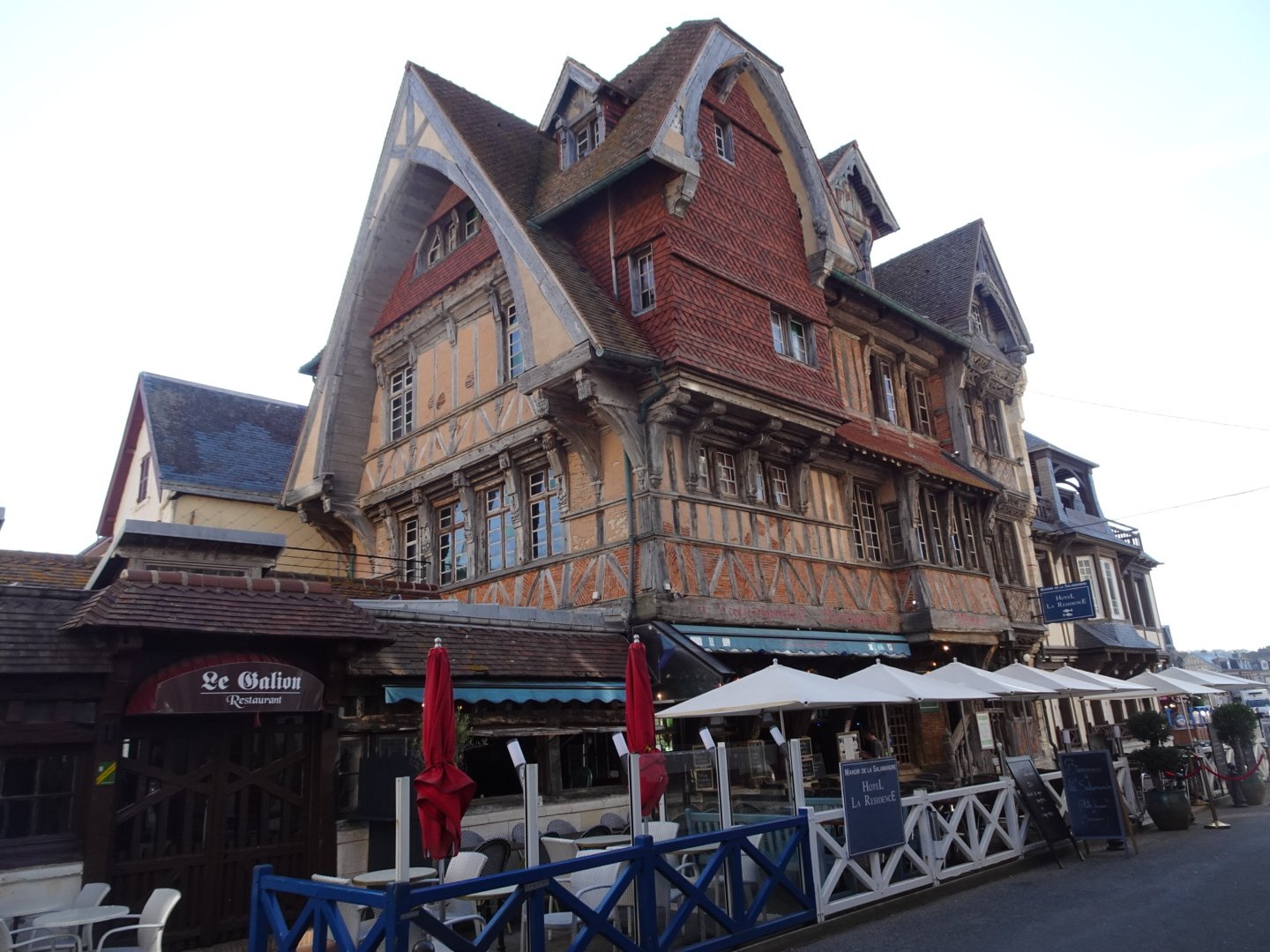
Being able to potter a little more slowly on our return meant we could notice the beautiful old hotel with its carved wooden balconies and intricate patterns on the exterior walls.
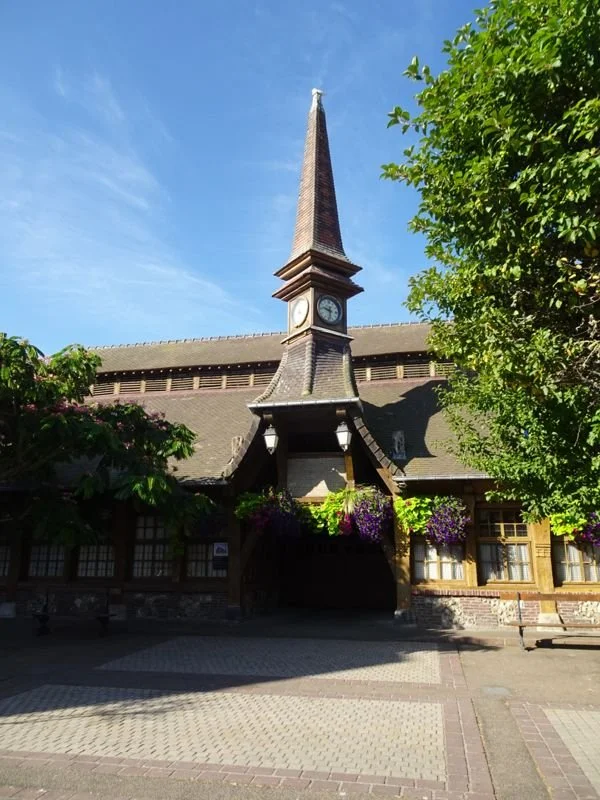
Returning past the former station, I had hoped for a better picture.
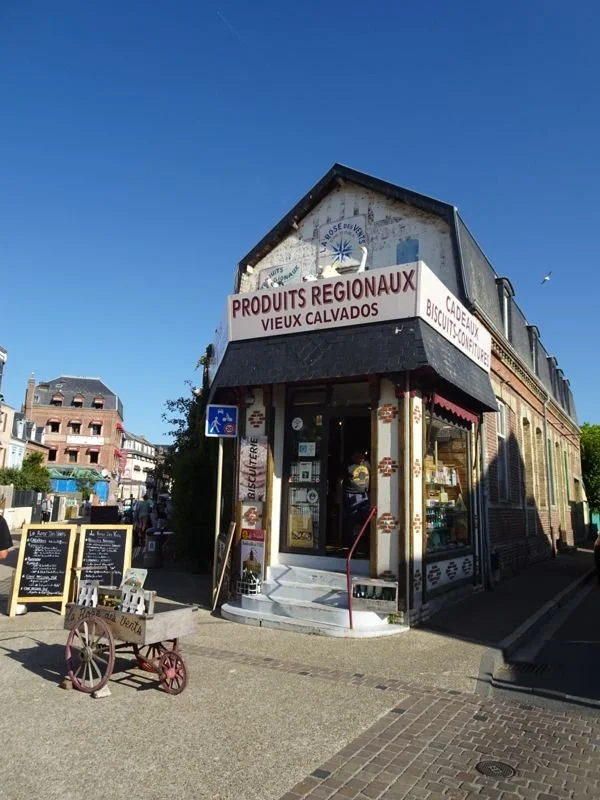
But I was grateful that a particular shop was now open for business and whilst my Hero sat outside in the sunshine, I practised my Bonjour and Comment allez vous? a little by making a couple of small purchases. Ça va bien, merci!
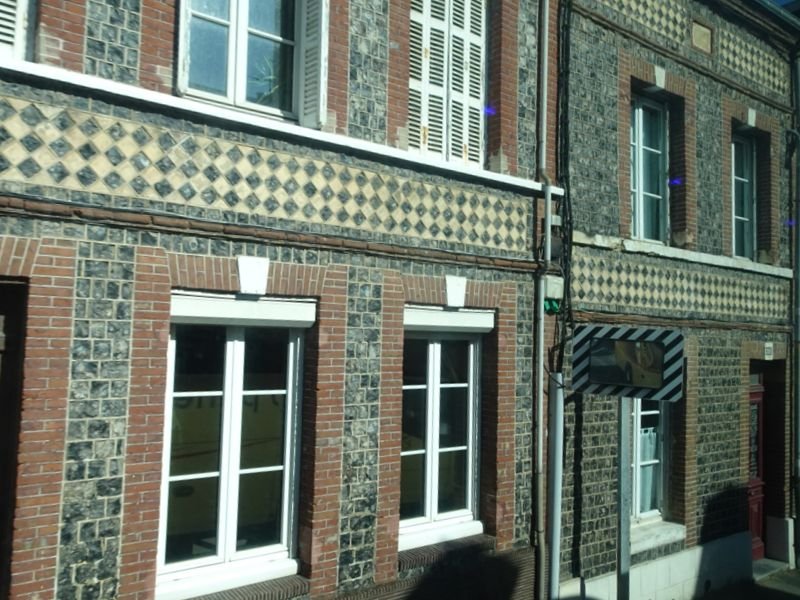
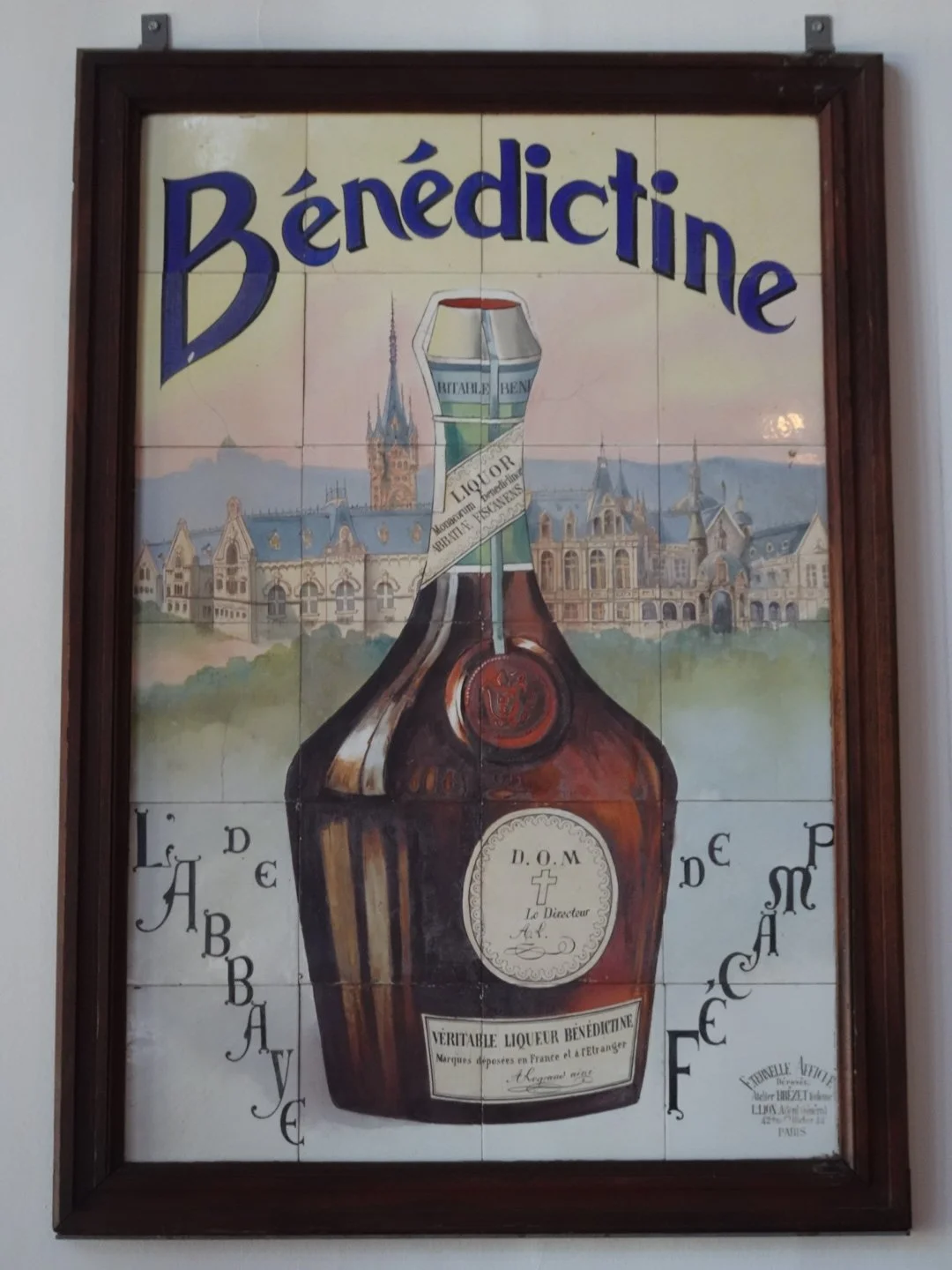
During the drive to Fécamp, as we passed by buildings in the typical local vernacular, we listened to the story of Bénédictine. Sandrine’s opening shot was “Bénédictine was not ever made by Monks” This was a story devised by the marketing genius Alexandre LeGrand At most, perhaps the monks discovered a herbal mixture that LeGrand developed to make the liqueur. But the monks were never involved with alcohol production.
OK. She went on to tell the story Alexandre had devised about an angel…but by now I had lost the plot a little, because it was all so absurd!
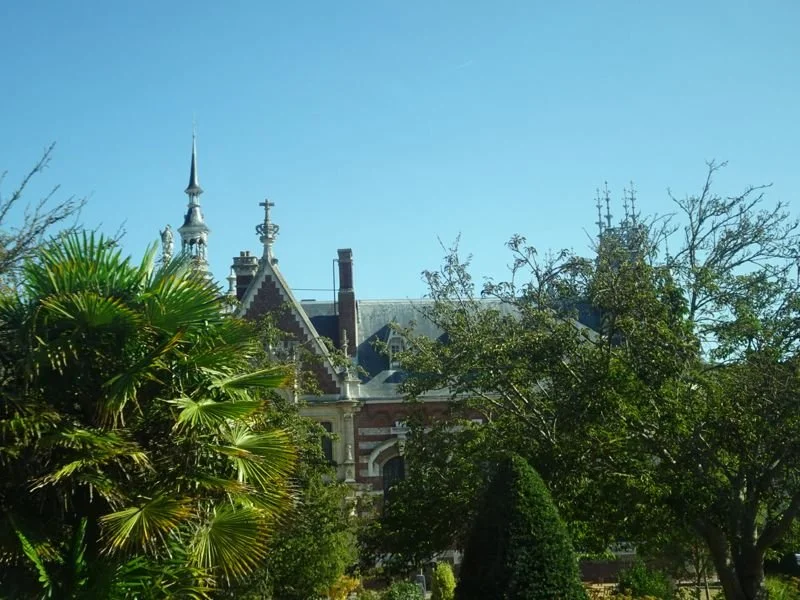
As we drove into Fécamp we caught a glimpse of the eyecatching masterpiece that he built. Wow.
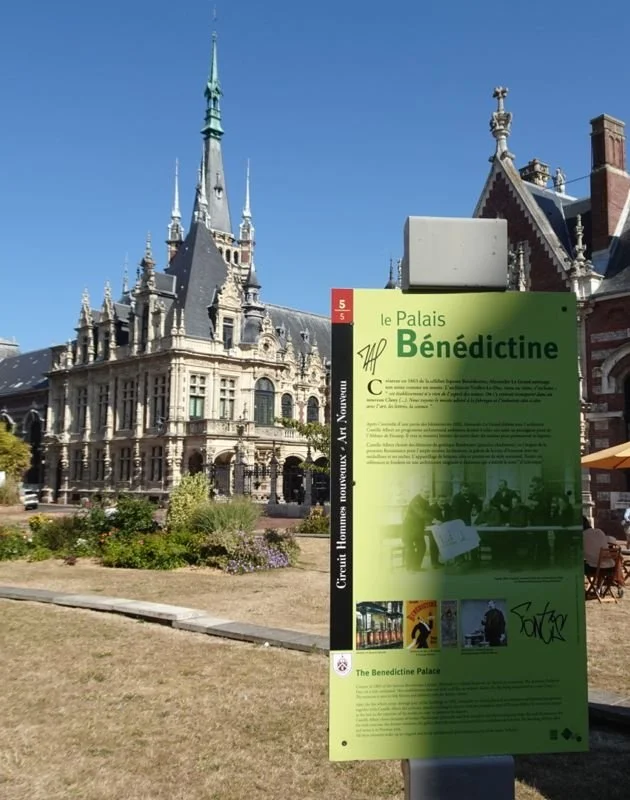
We lost no time in heading straight over to the “Palais”.
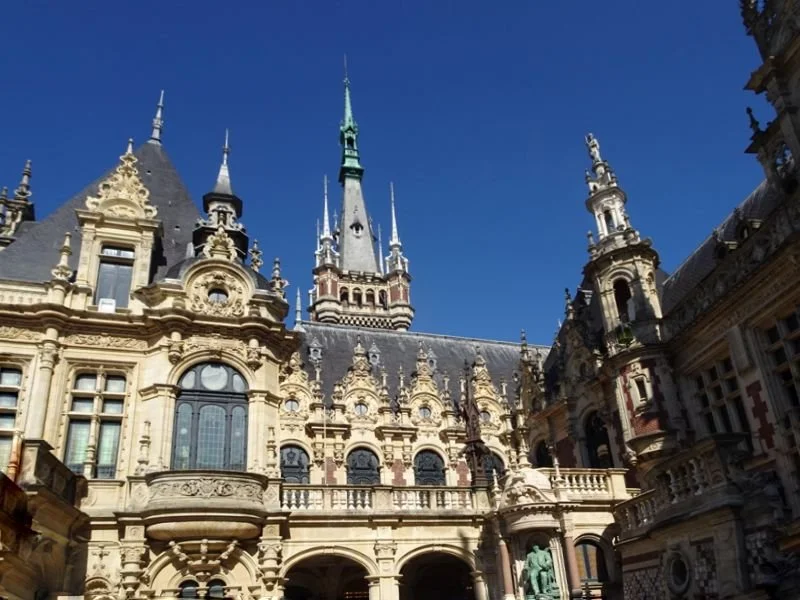
But of course, once there, we were way too close to get anything like a decent picture of the whole building.
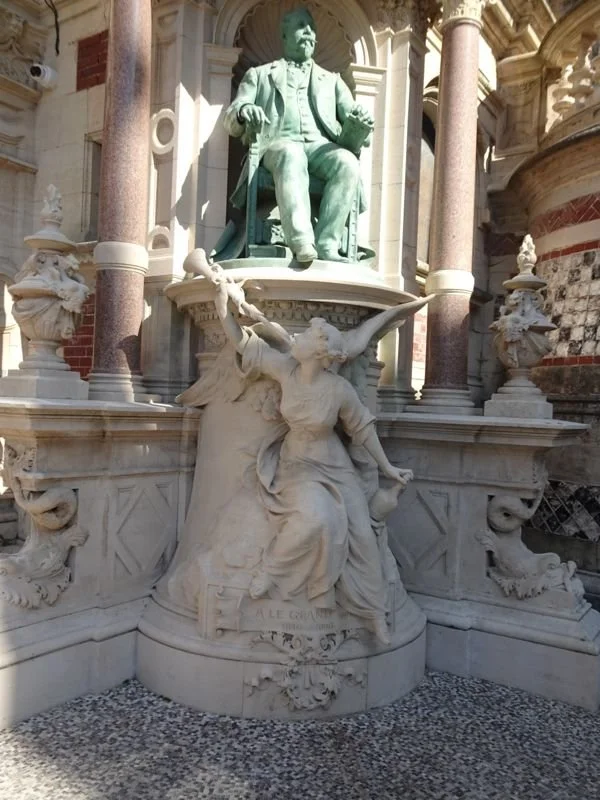
What we could see, however, was evidence in support of Sandrine’s stories, most of which she’d told with a raised eyebrow 😉 Here was a sculpture of Alexandre Le Grand, outside his Palais, where beneath him was the figure of the angel with a bottle of Bénédictine in her hand!
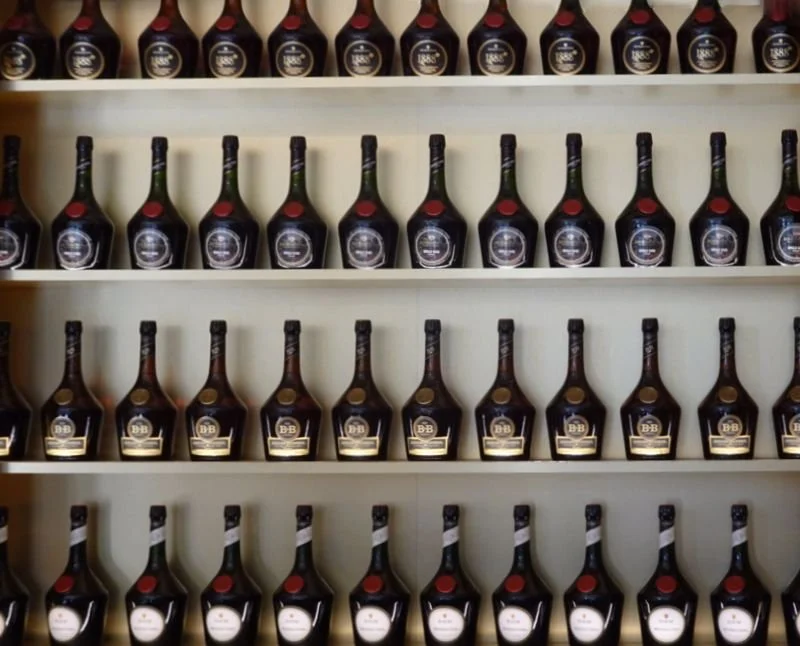
Upon entering the Palais, we were offered another reminder of that distinctively shaped bottle.
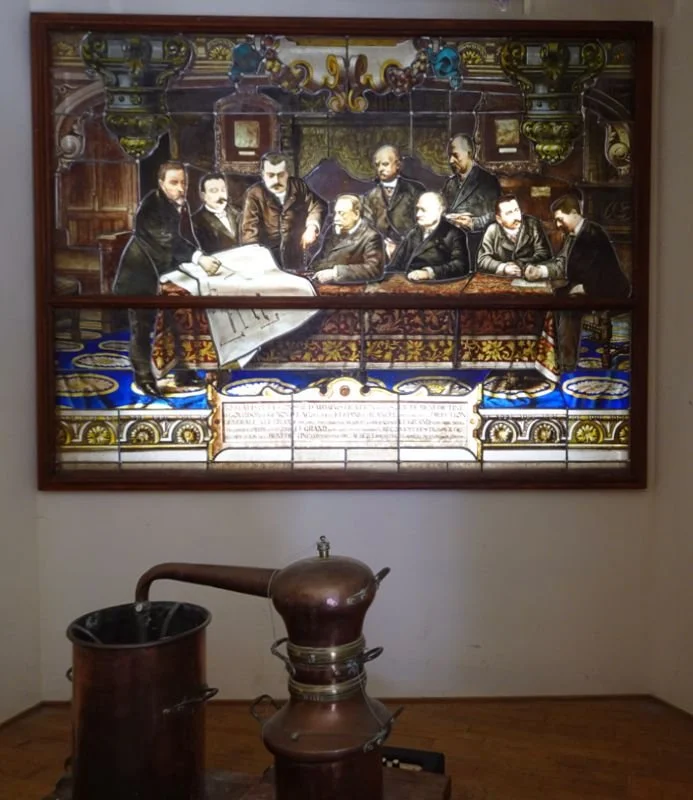
At the foot of the stairs was the first of several scenes painted on glass, taken from the history of the manufacture.
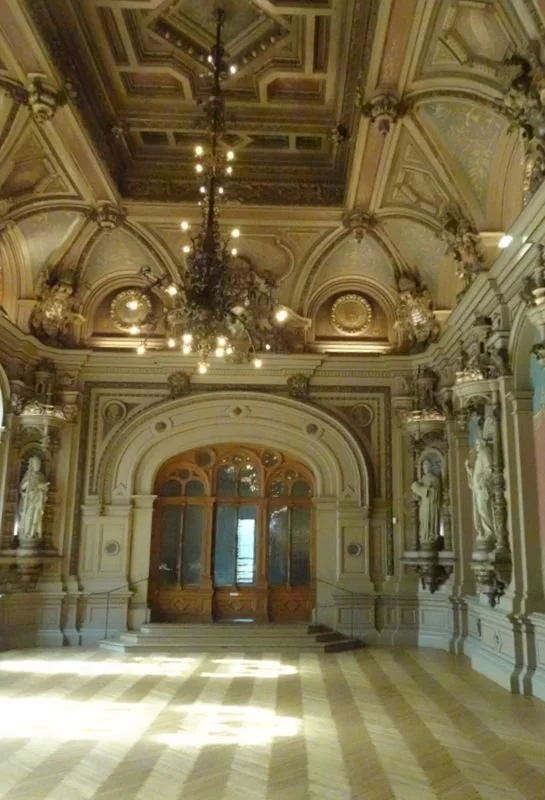
There followed a tour through quite a few remarkable rooms, each one more lavishly decorated than the last. Each was in a different style, too and no surface was left unadorned.
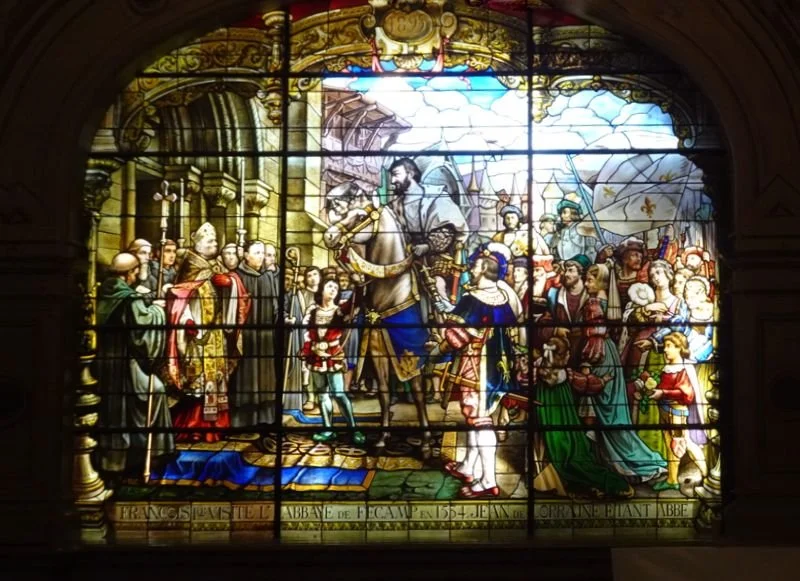
Another piece of storytelling on glass - nothing historically authentic here, but all devised as part of the product image.
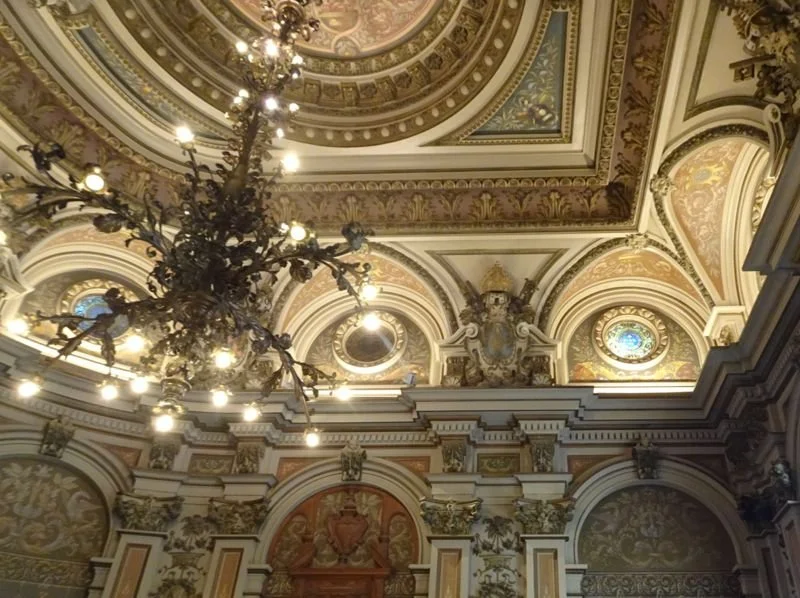
The faux-ness of all of this didn’t detract from the experience at all, for everything was lavish and beautifully created.
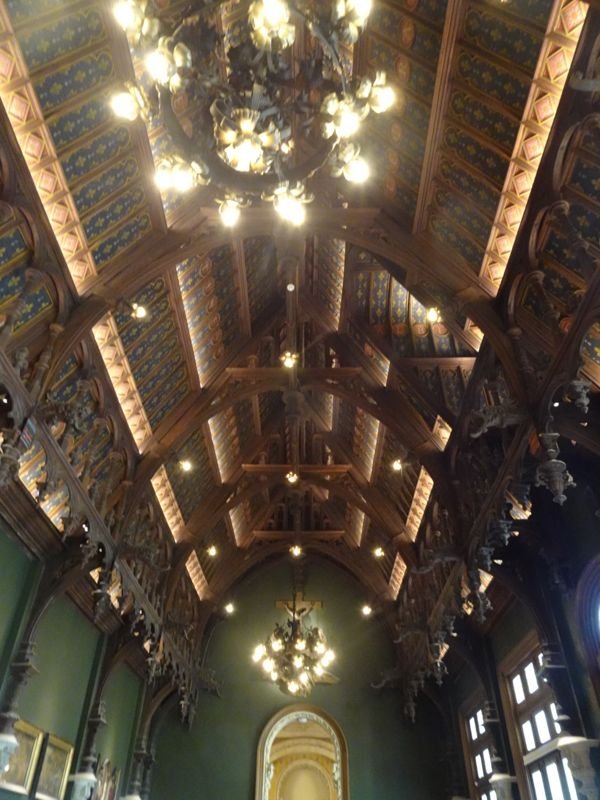
Another amazing ceiling in this barn of a room where a collection of treasures were displayed.
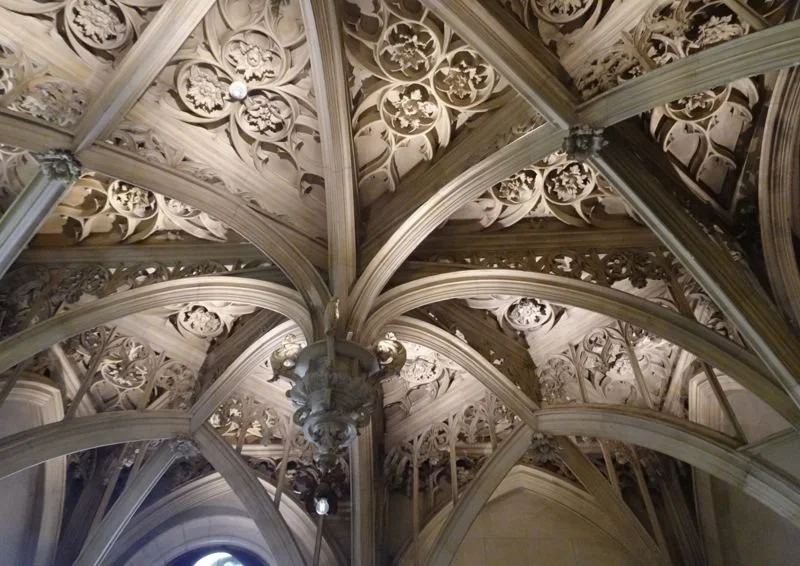
Though the next room had a carved stone ceiling
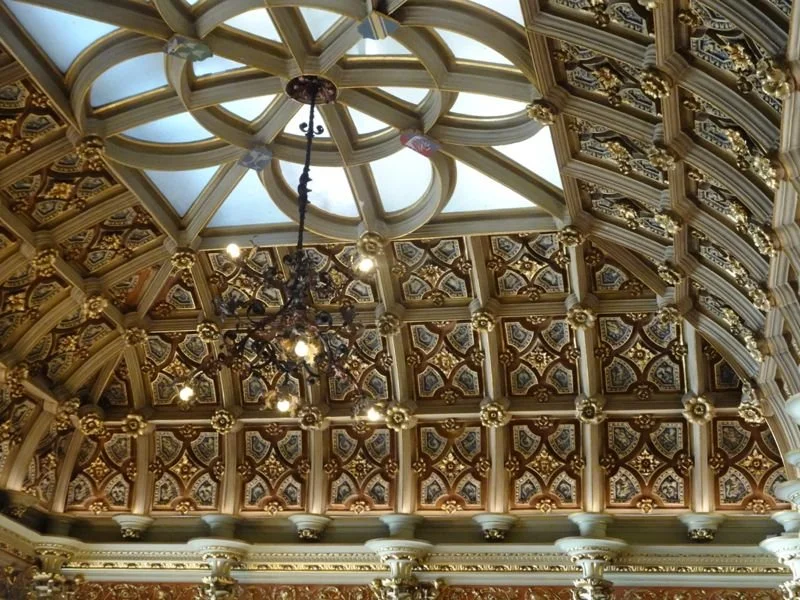
and the next one, something completely different! We never quite knew what would be through the next door!
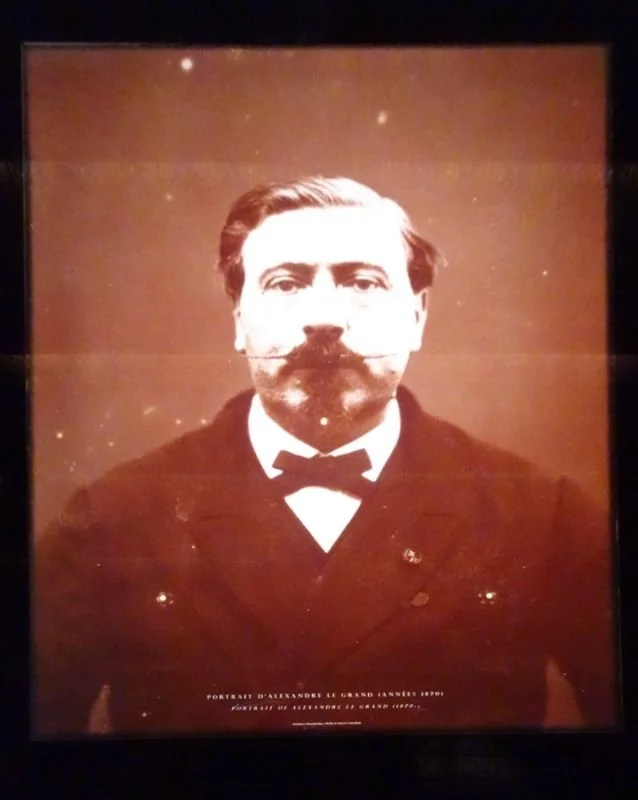
A portrait of the man himself was here amongst one of his collections.
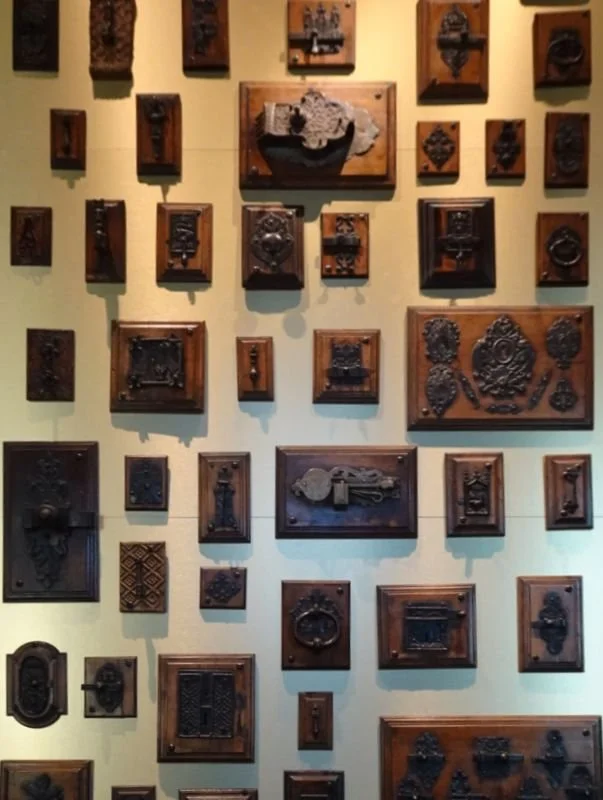
A rather strange assortment of locks
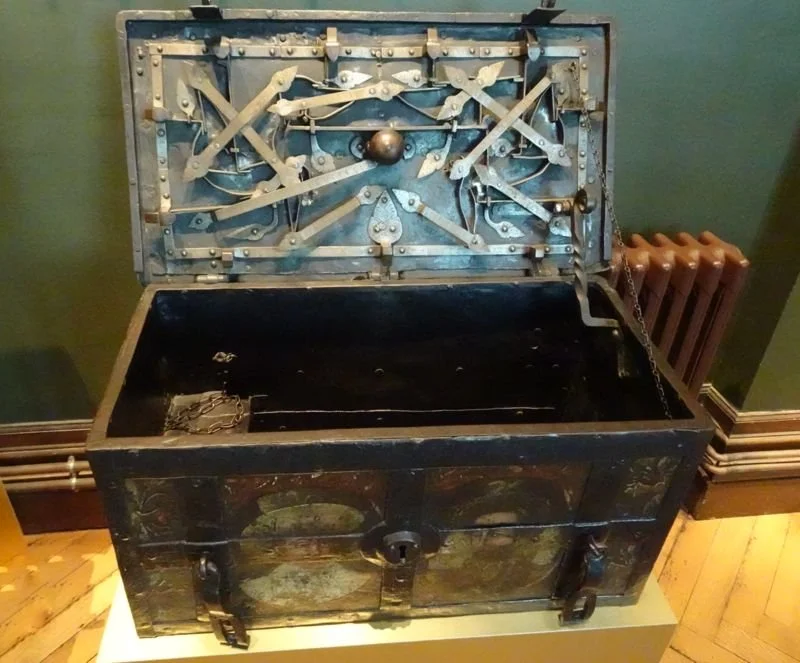
beneath which a rather odd metal chest was placed which seemed to have an assortment of curious locking devices too.
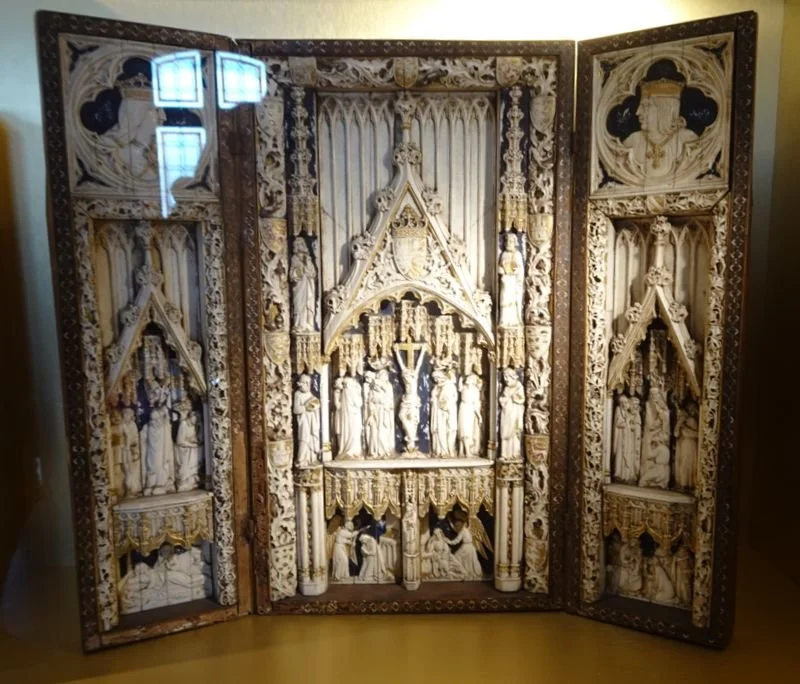
Some items were rather beautiful, such as this triptych, one of several small and very finely carved works of art.
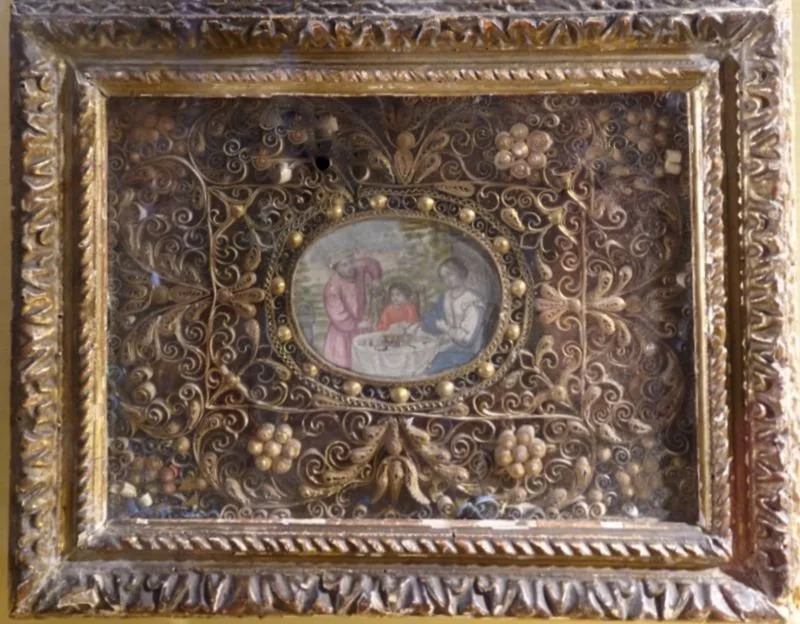
And this, just one of several examples of medieval reliquaries. Had Sandrine not pointed it out to me, I would not have noticed that this was made using paper quilling!
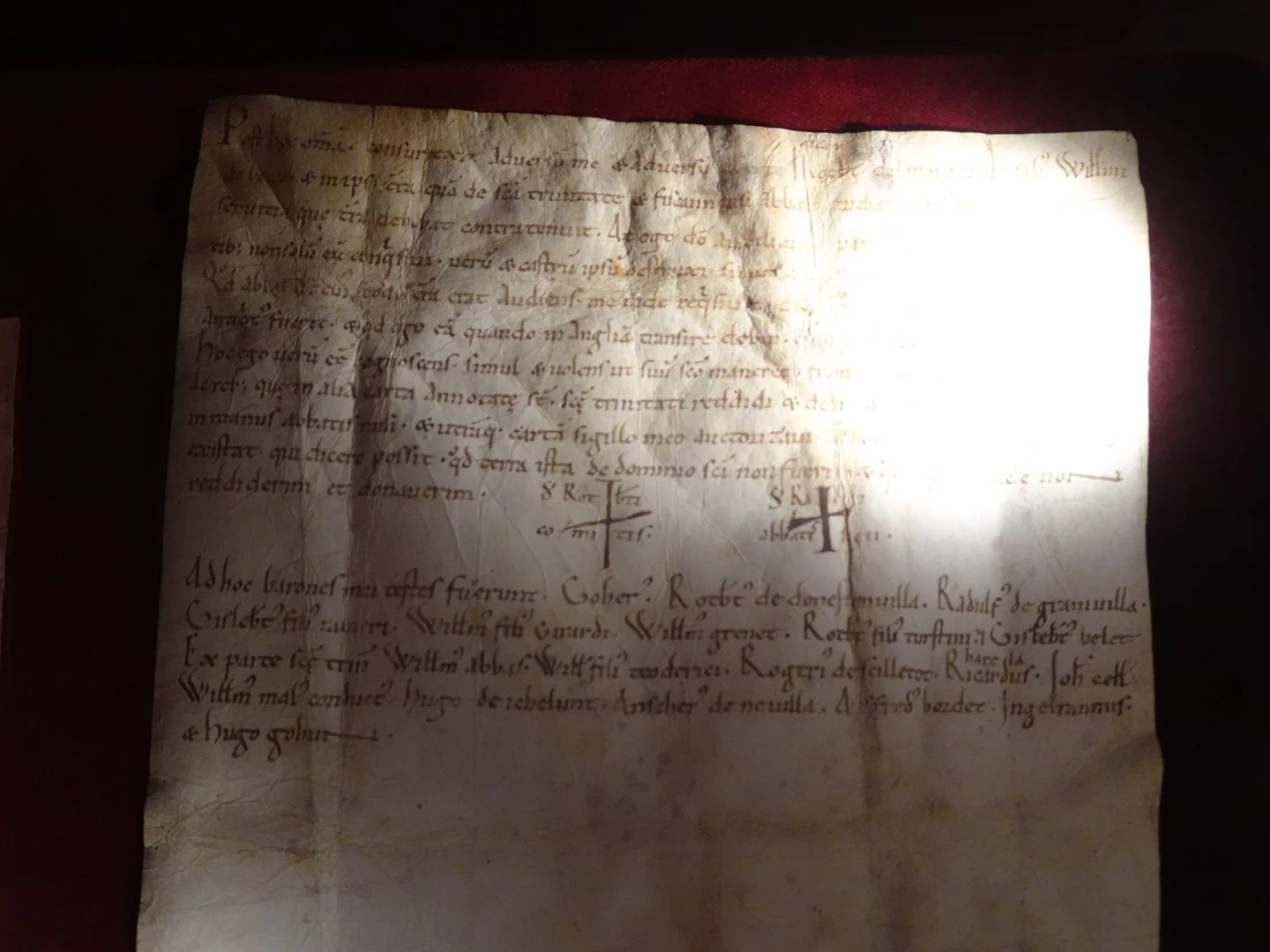
There were countless treasures and I took way too many photographs! However, this last one was of particular interest to us. It’s a letter from Robert Curthose, who is buried in Gloucester Cathedral. He’s significant to us also, because he’s the son of William the Conqueror and his wife Matilda, who founded the church in our local village, Avening, where Edward was baptised. Small, but fascinating connections.
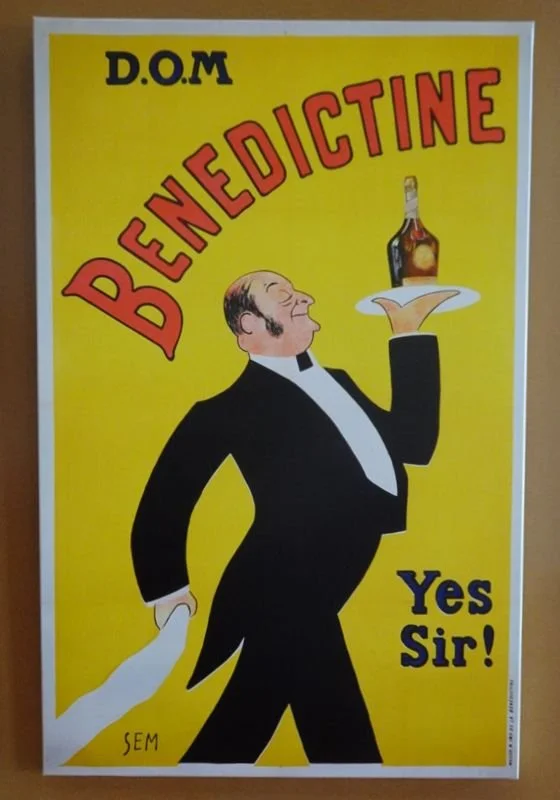
From here we moved on to the more current story, with a room filled with marketing images together with a collection of fake Bénédictine products from around the world.
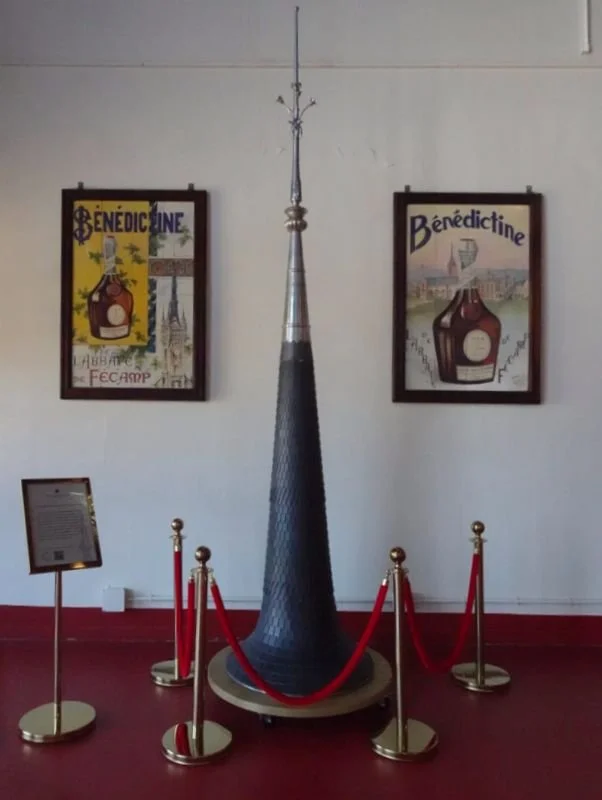
Not to mention one of the spires from the Palais!
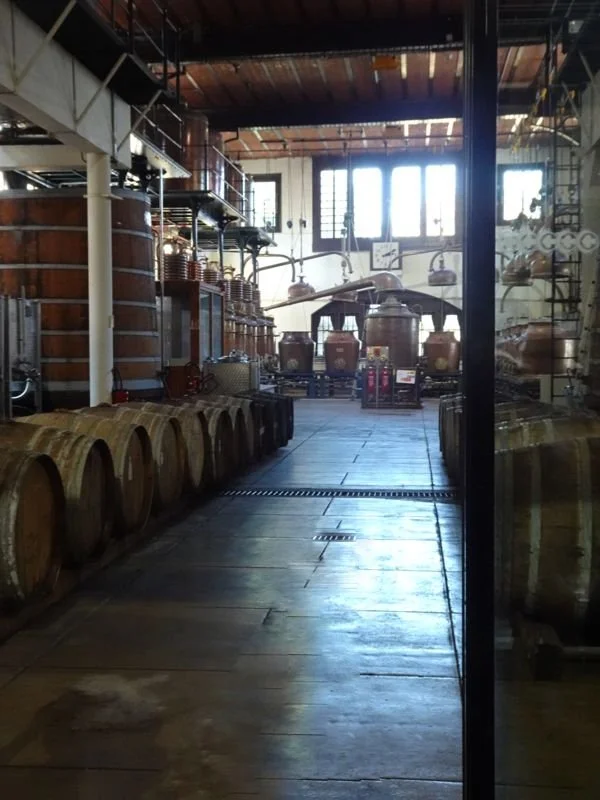
We learned about the current manufacturing process, which involves 27 herbs. Many of these herbs - but not all - were displayed around the walls. Unspurprisingly, the recipe is secret and only one person knows the full list, because until 1990, the company was family owned. However, in 1990, Bacardi bought them out and I guess, the recipe too…
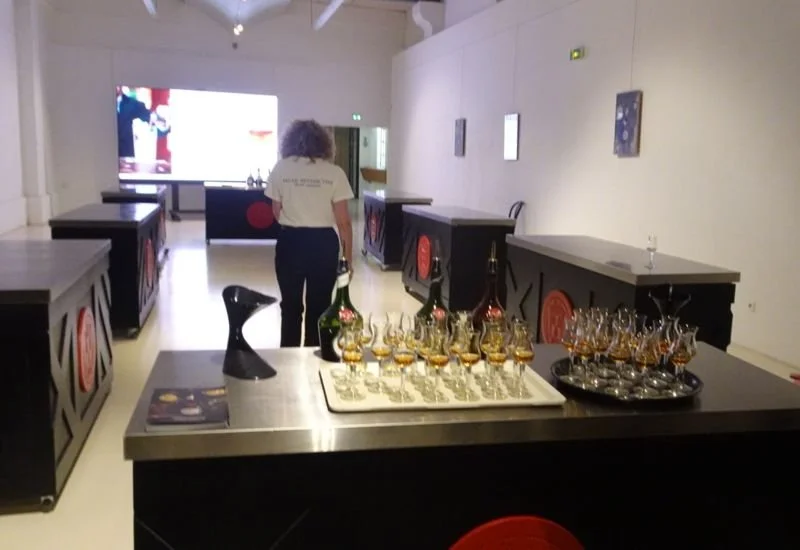
Time for tasting then. First, the original, then the blend with brandy (B&B) and finally, the blend with Cognac (1888). Most of us enjoyed the original, many thought the brandy blend was a little too much and just a few were still in for the last one!
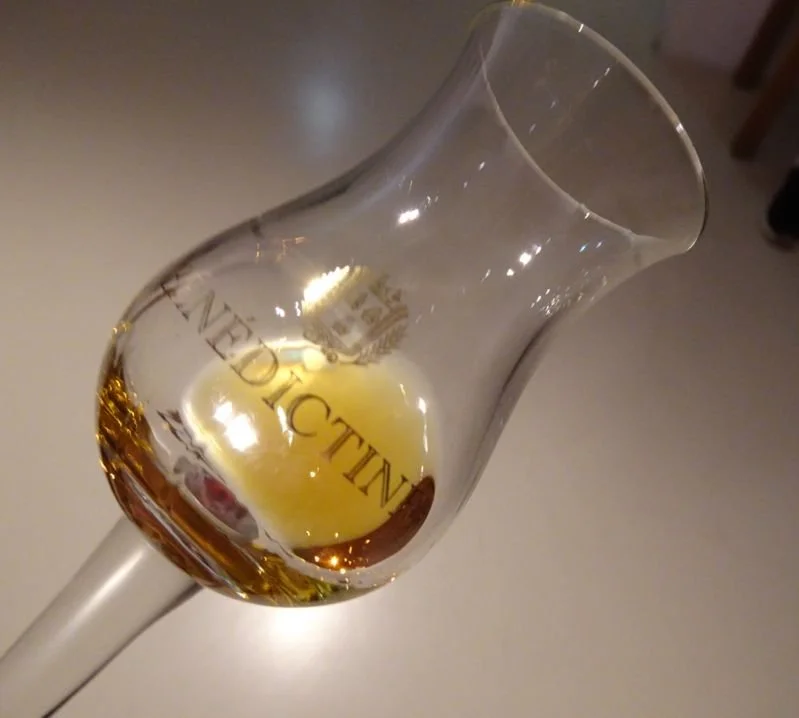
We would have liked a cube of ice in there too!
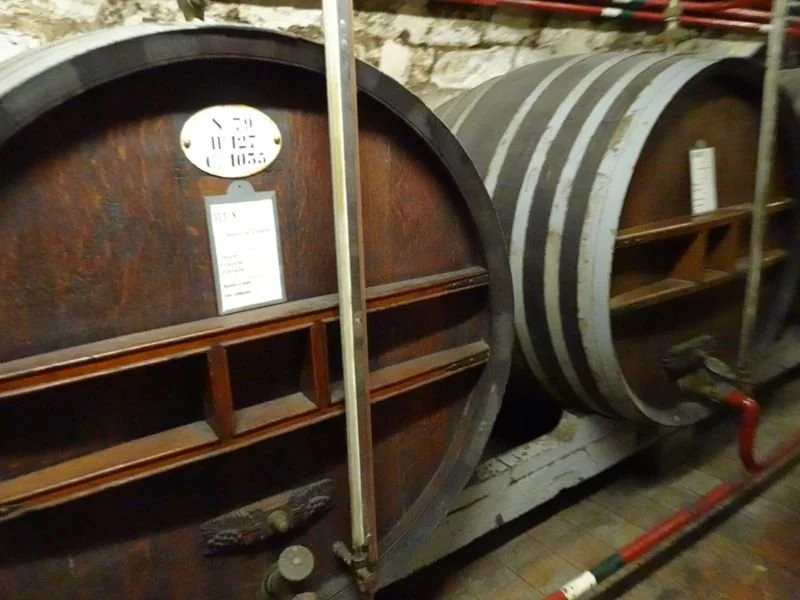
Wandering back through the cellars, various questions were asked of our guide. The answer I remember most clearly was that all of these casks were full of water, because they couldn’t be left empty!
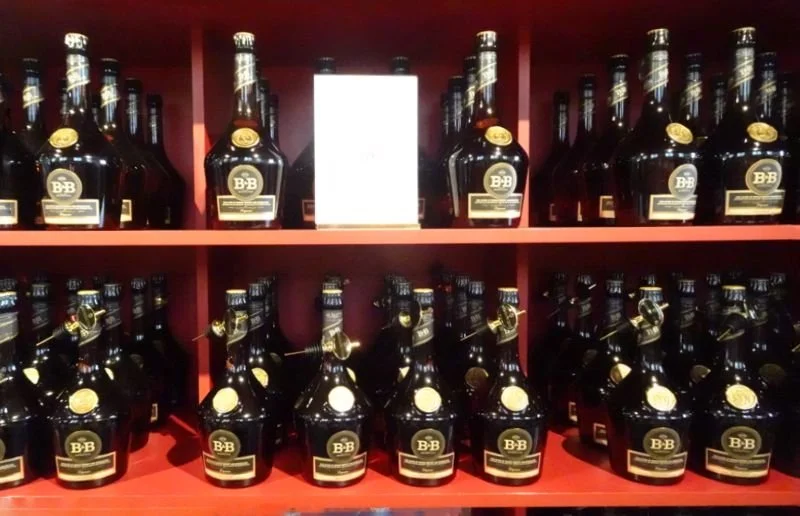
And of course, exit was through the gift shop.
Actually, we’d really enjoyed our tour, had enjoyed Sandrine’s sense of humour and her wry smiles throughout the Bénédictine experience had been most apt, given the story. We also appreciated our driver Cyril’s skill in choosing an alternative route back to the port, for as we reached the toll booth by the river, we joined the head of an immense queue of stationary traffic and didn’t stop moving for a minute. Excellent work all round.
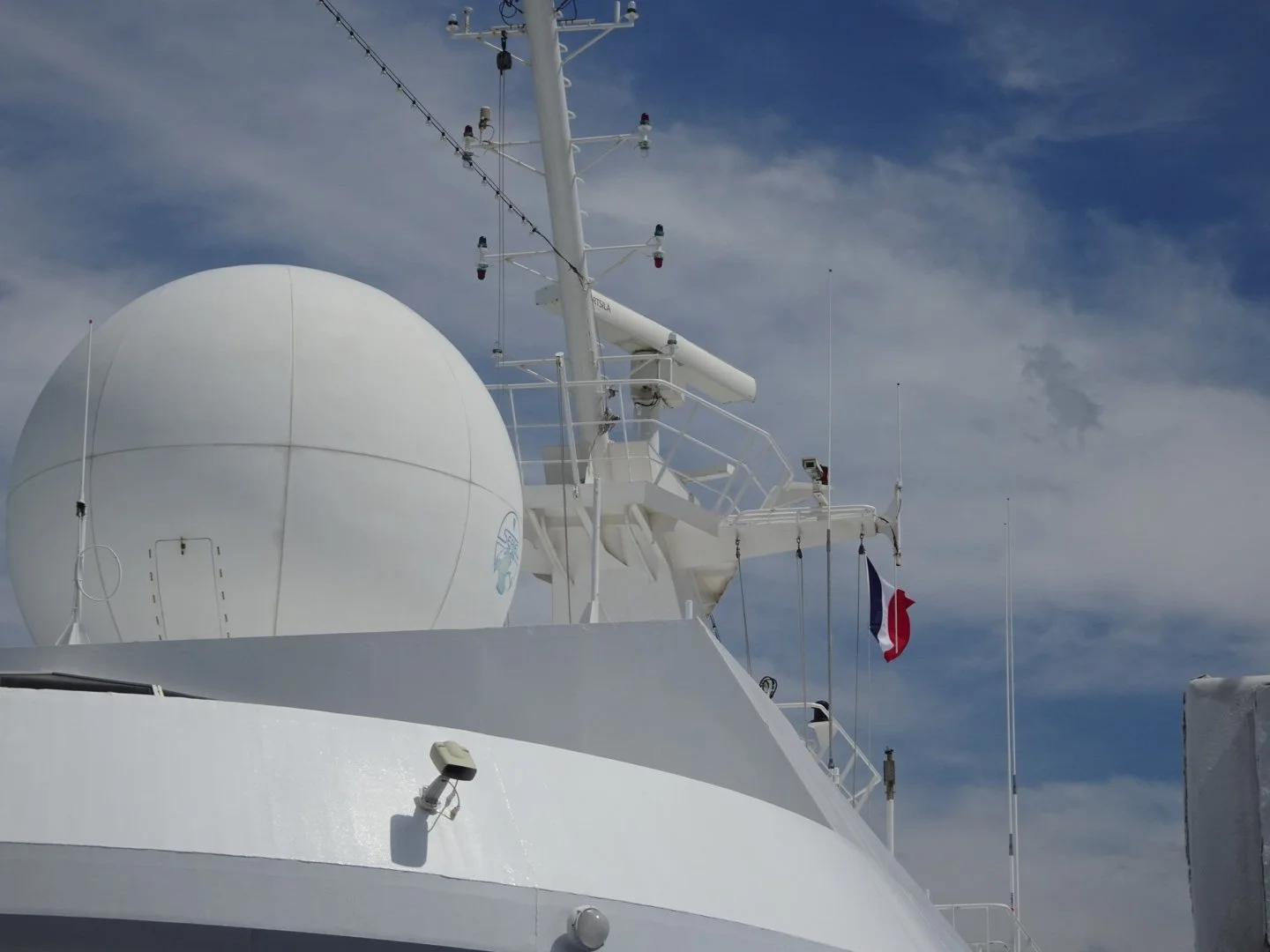
How lovely it was to return to the sleek white ship awaiting us in the port though, for we were more than ready for a spot of lunch! Nice too to reciprocate with the entente cordiale as well - we had a lovely time here.