



Puerto Madryn
It’s New Year’s Eve and this morning we woke to see our first port of call there on the horizon. Puerto Madryn is in Argentinian Patagonia and though we’ve sailed past here previously, this was our first time here. With a tour meeting time of 7am, it was an early start. No time for breakfast!
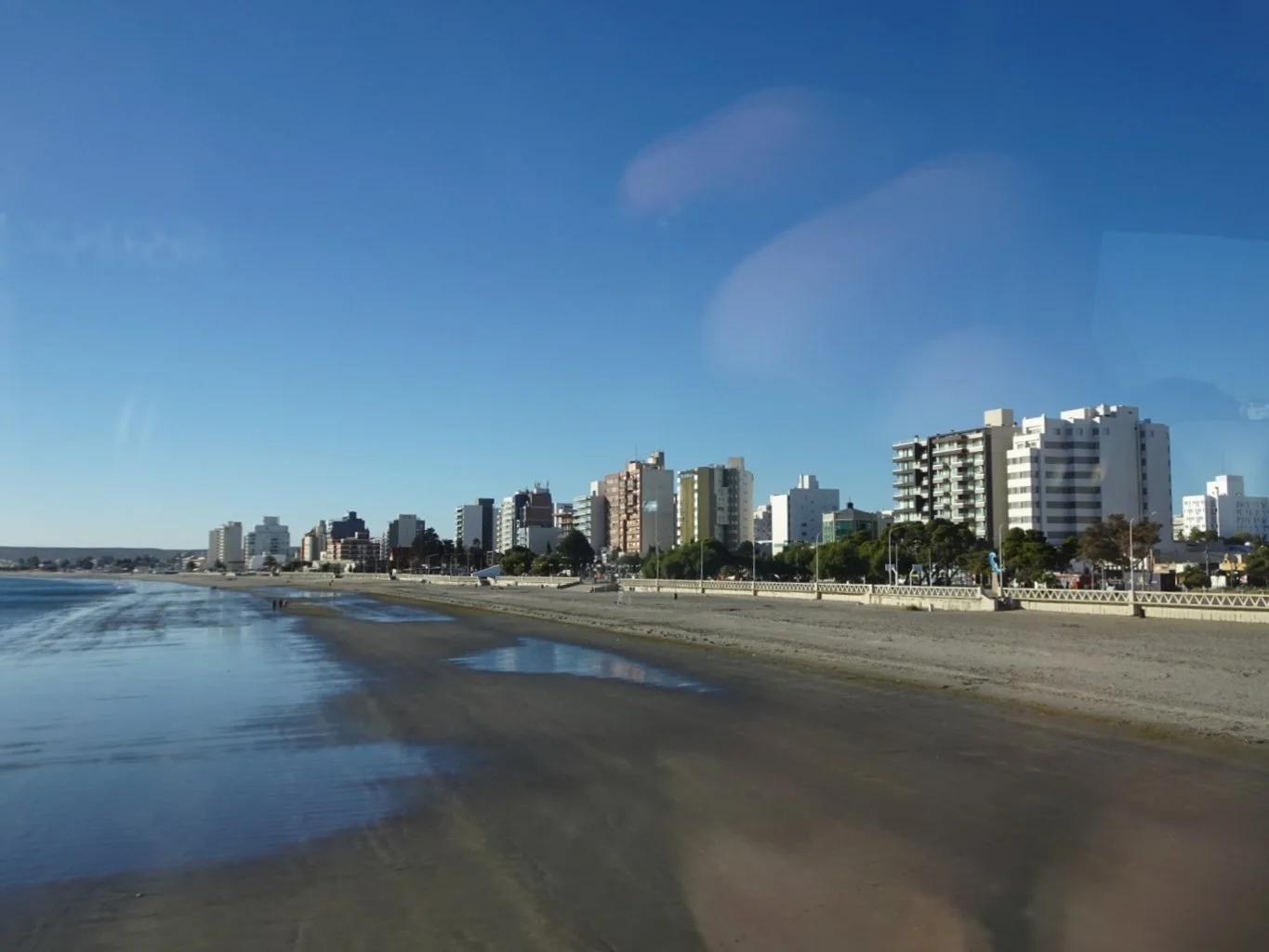
Larger than I had expected it to be, our guide Claudia explained that this is a popular holiday destination for Argentinian families and seeing the wide expanse of beach - empty at this time of day - I could easily see why.
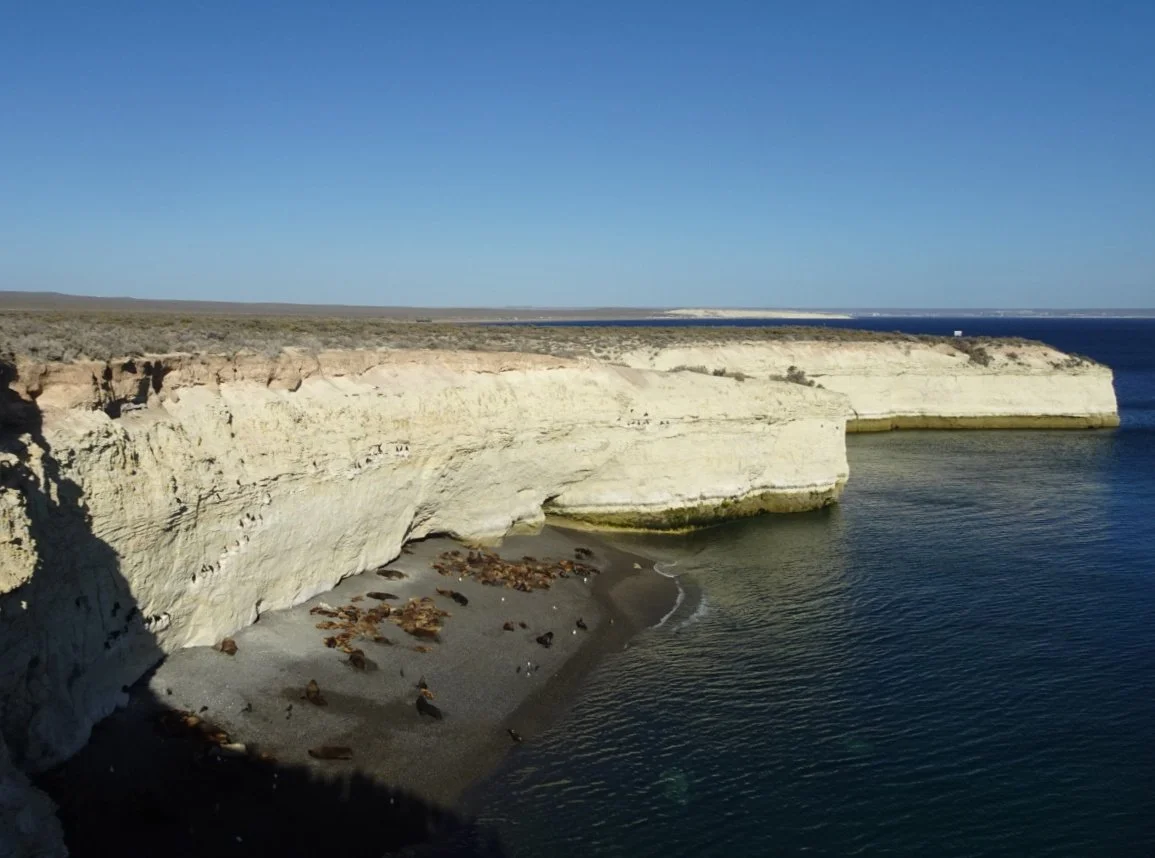
Our first destination was Punta Lomo - a headland and wildlife reserve. A short stop allowed us time to walk to the viewpoint overlooking the cliffs.
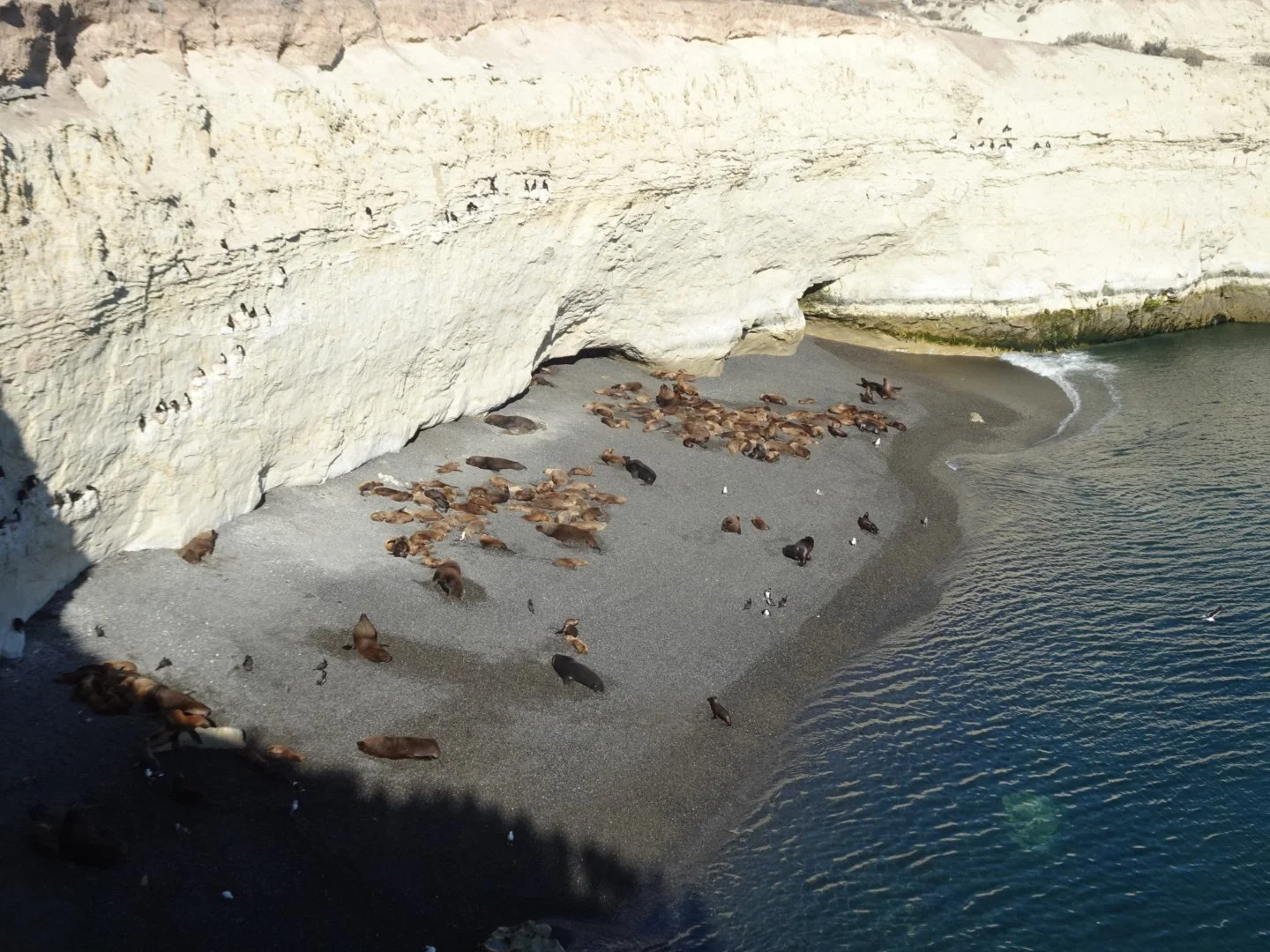
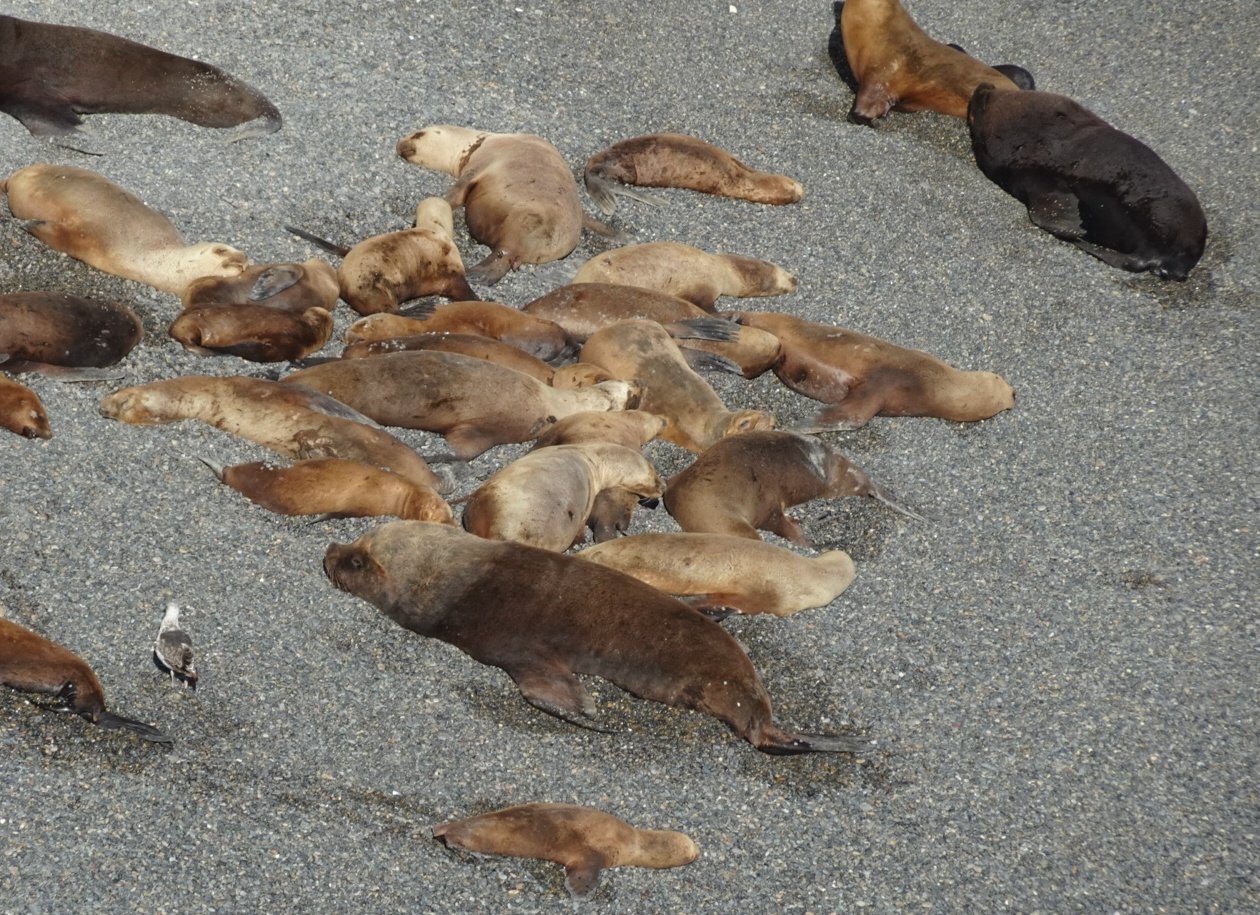
Down there on the beach were a large number of sea lions. We were not all native English speakers in the group and it would have been easy to misunderstand Claudia’s accented English as “where to see lions” rather than the intended “where there’s sea lions”. Never mind, it soon became clear! She explained that the female sea lions down there - the smaller, slimmer creatures - were pregnant 11 months of the year and just a few weeks after giving birth, they’ll be pregnant again, meaning they spend most of their adult life pregnant.
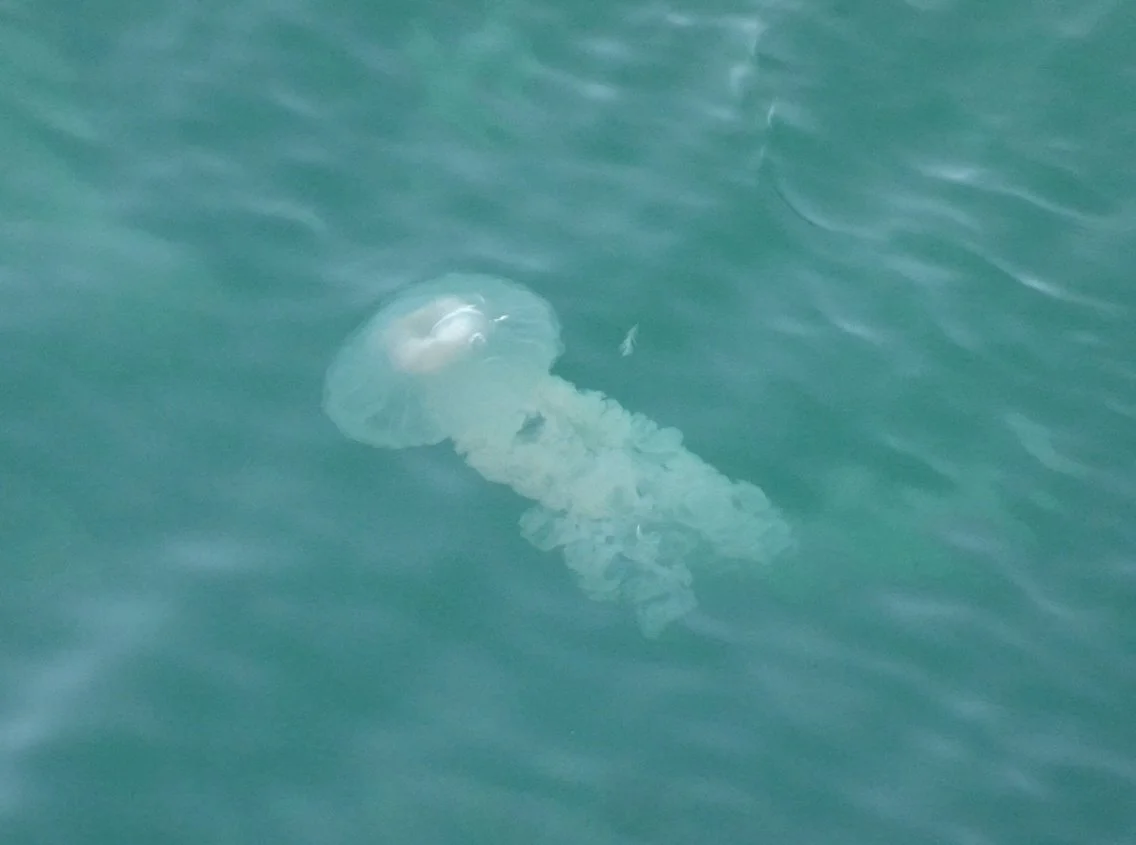
As we stood on the cliffs looking over to the beach, we couldn’t help but look down into the water, where there were some really huge jellyfish too.
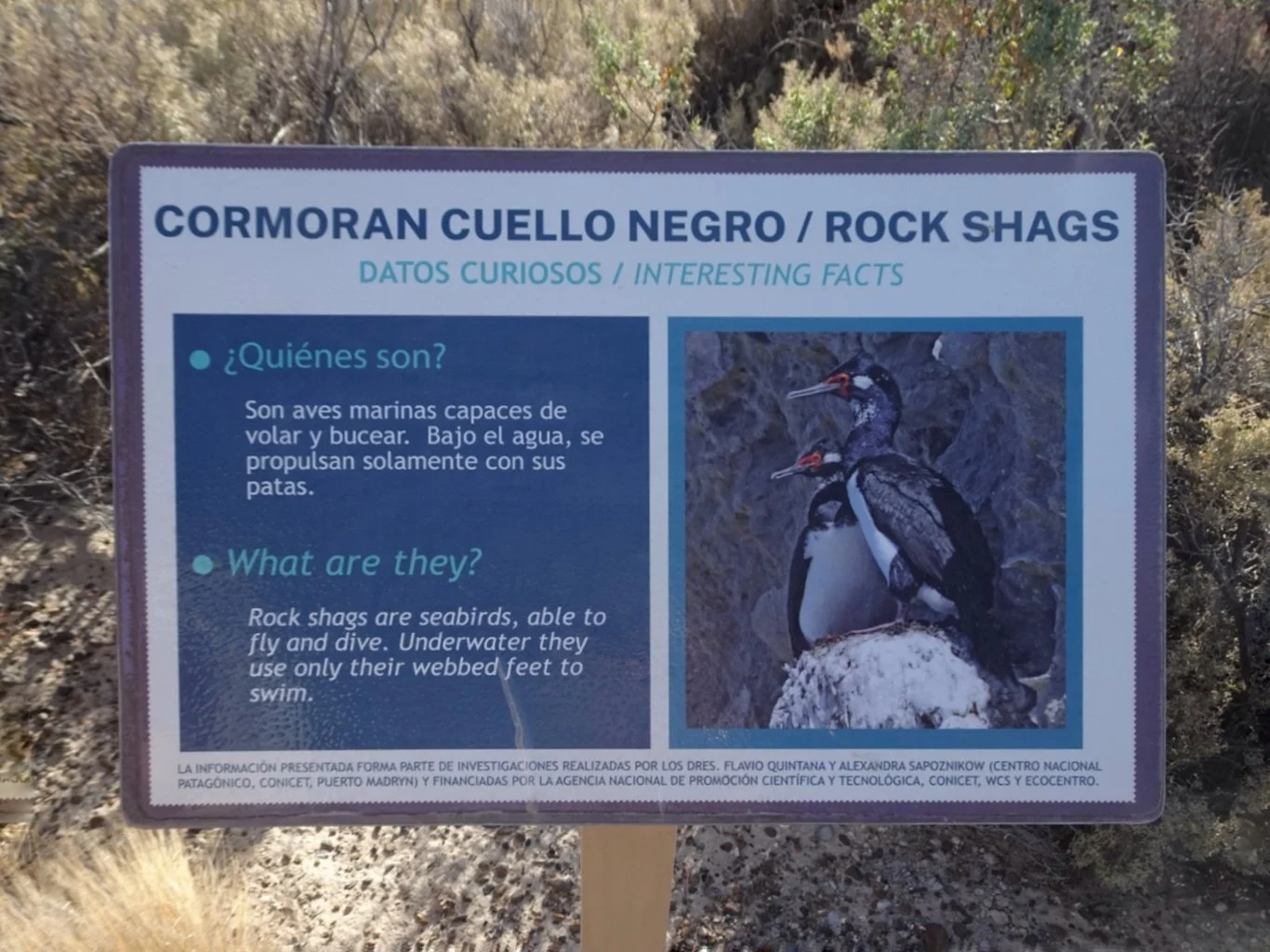
On the cliffs there were groups of sea birds, which I recognised with the aid of the people around me and the helpful information boards. We recalled Ornithologist Tim’s explanation that they stand and spread their wings, not to dry them but to stretch their chests to aid digestion!
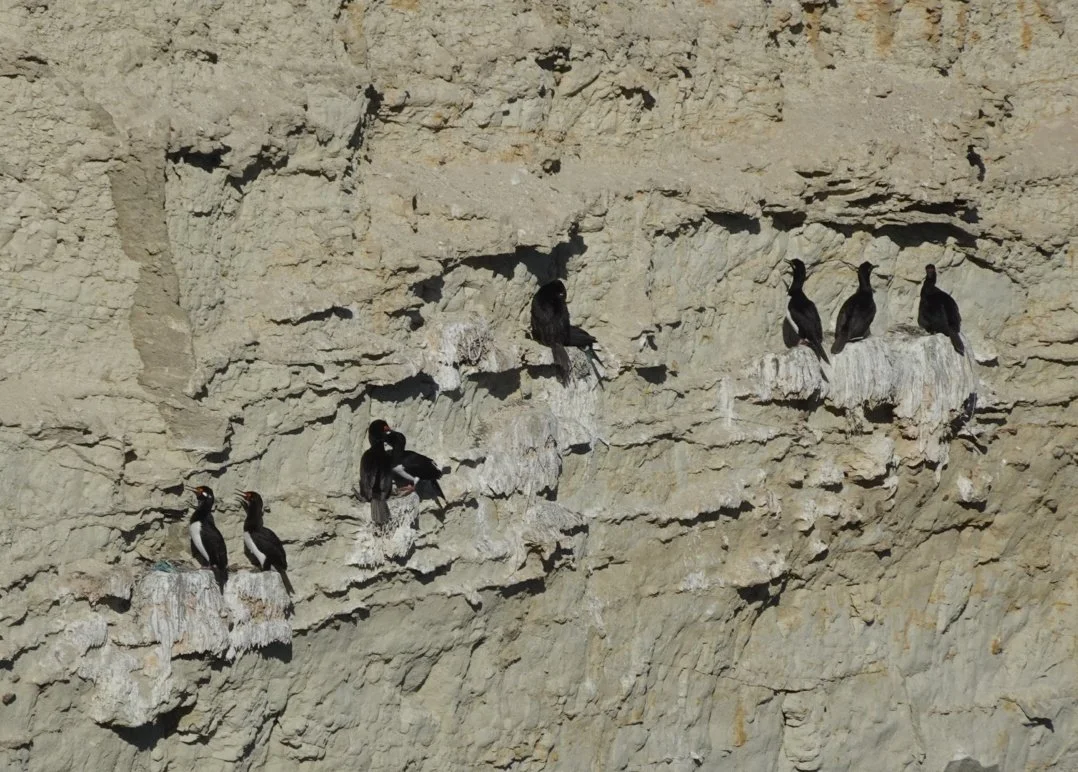
We wouldn’t have learned that from an information board!
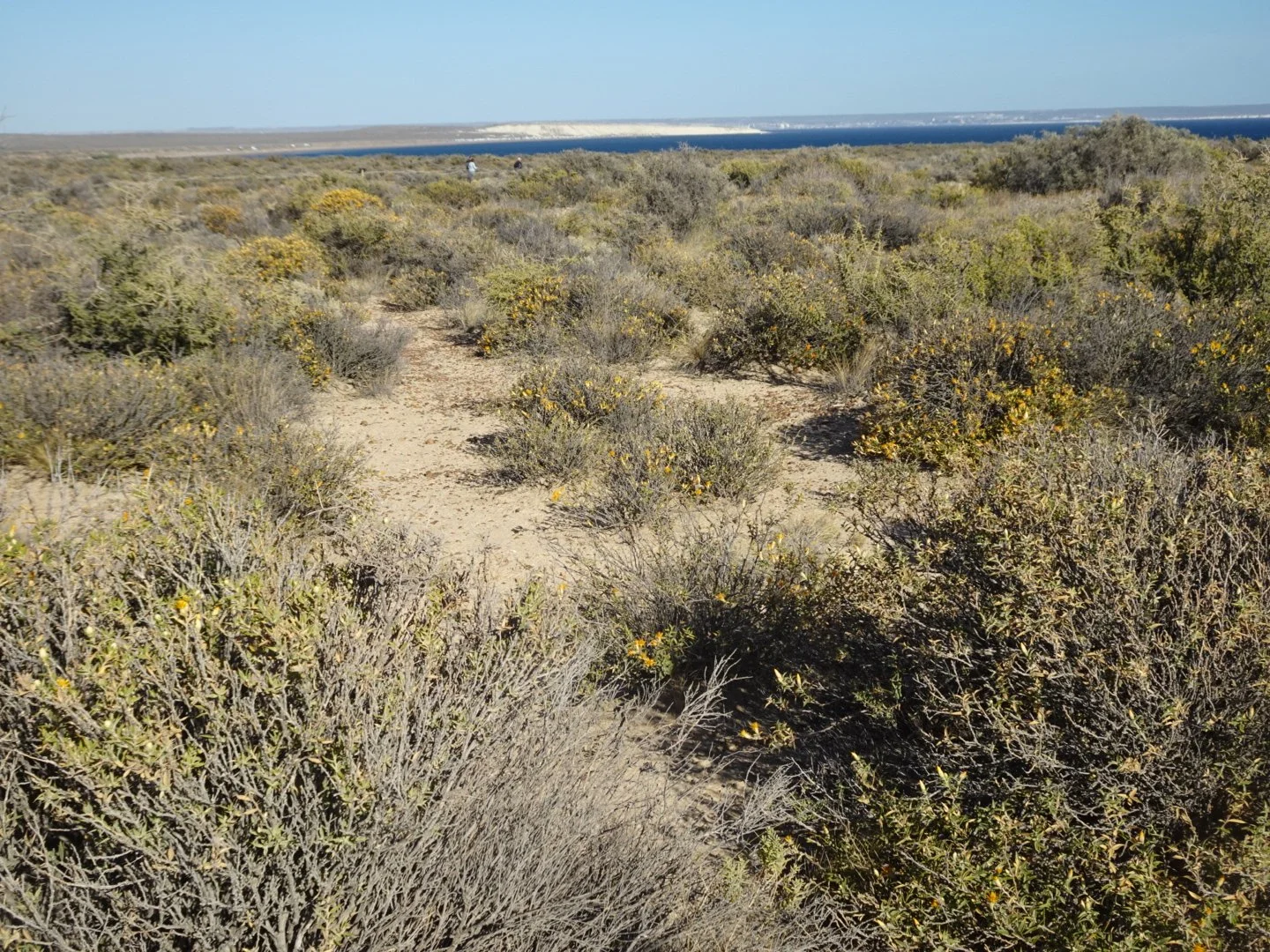
Having seen the beach, we had the opportunity to walk through some of the native pampas along a circular path, but I didn’t want to risk that taking too long.
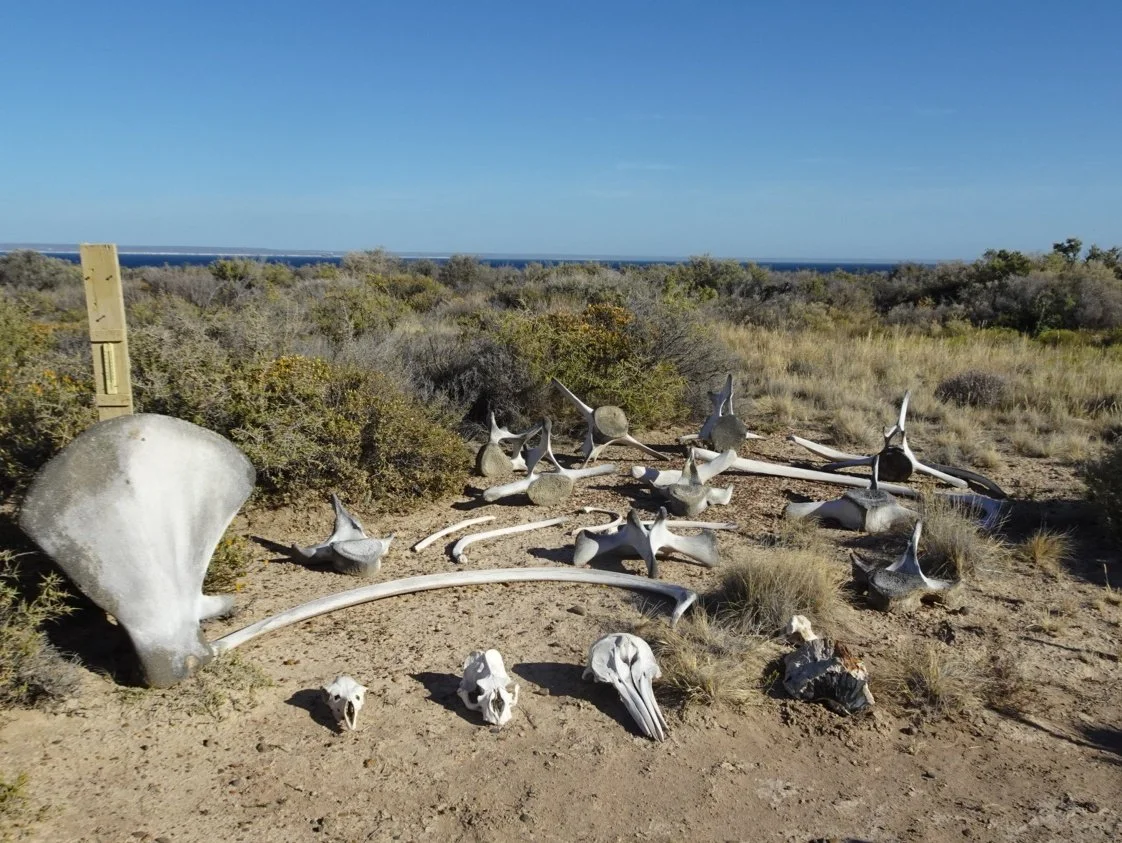
So I joined Claudia and a couple of friends looking at a few bones which had washed up here - from whales, sea lions and a bottle nose dolphin.
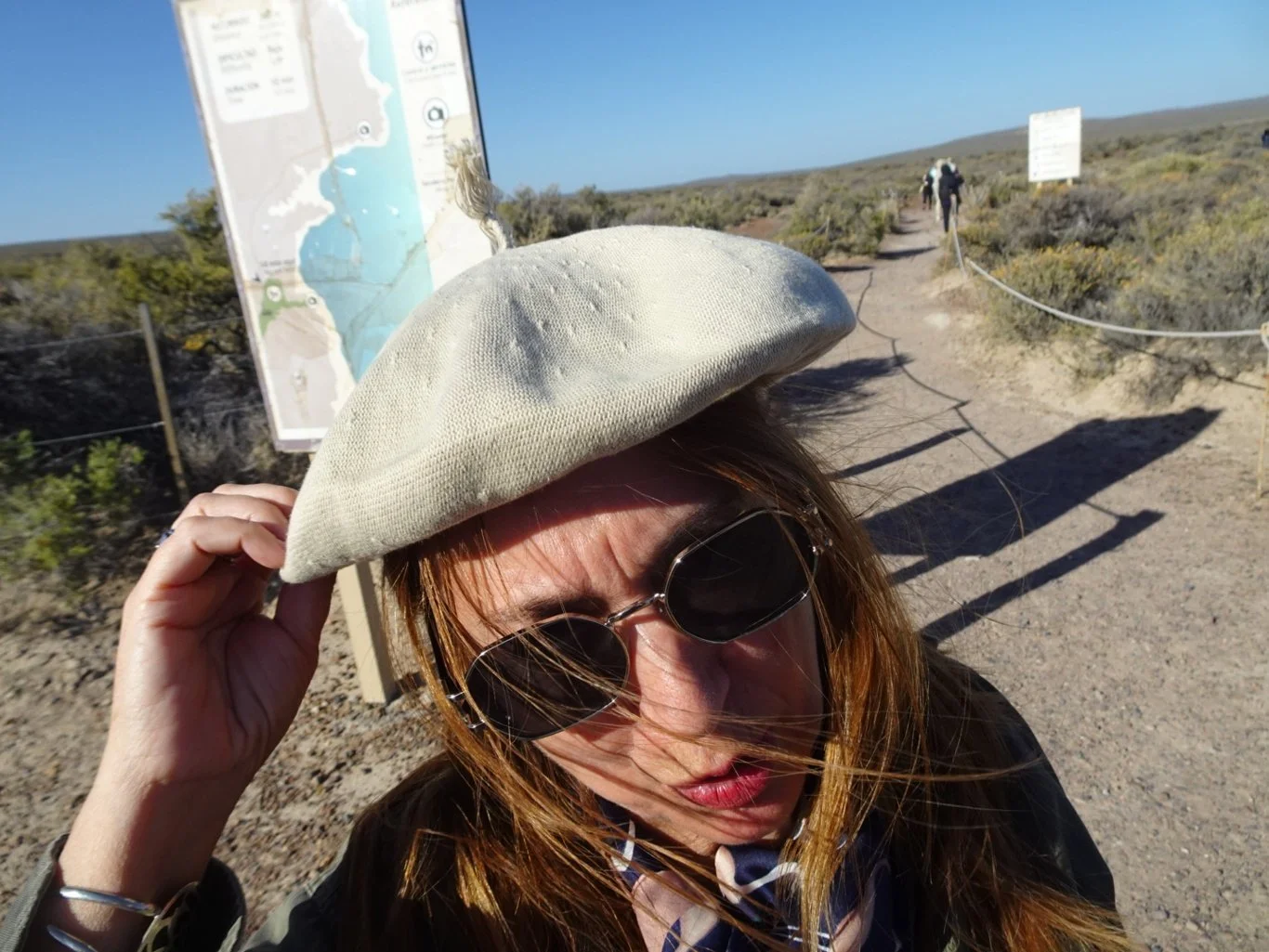
It was also a great opportunity to take a photo of Claudia’s gaucho beret!
From here, we were heading to an Estancia; a sheep farm, where we were to learn more about this way of life and watch some sheep shearing.
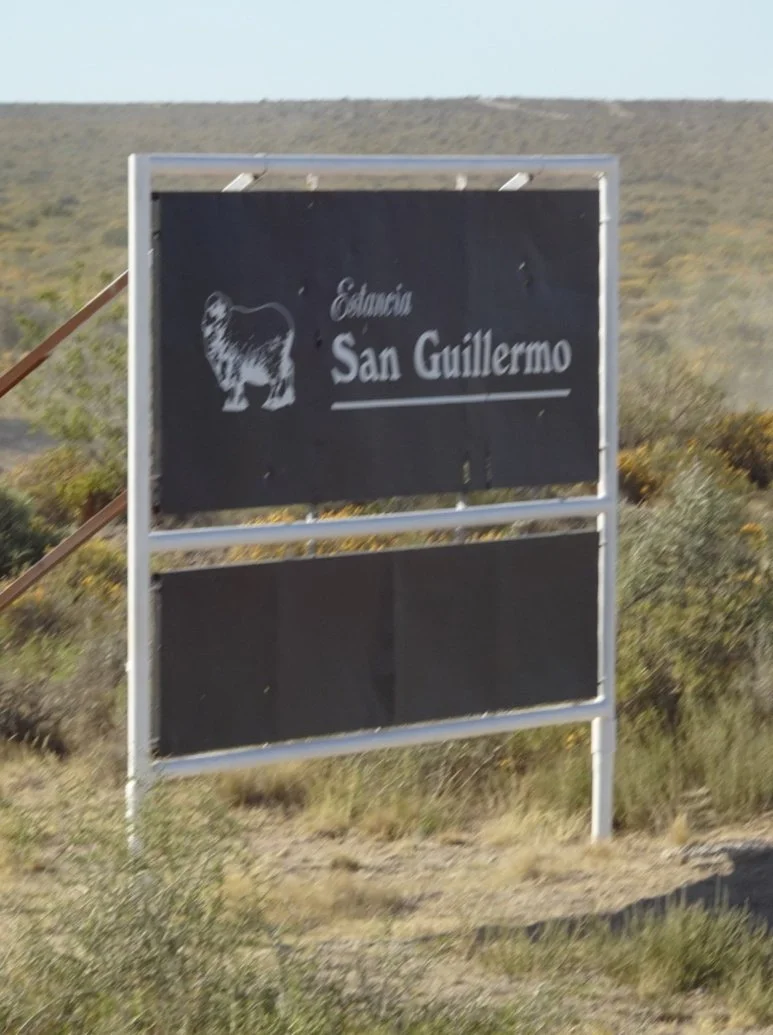
The Estancia San Guillermo was, we learned, not financially viable without the tourism it generates, which was interesting. Too close to the city, apparently, the biggest predator of the sheep being human beings; ie sheep rustlers.
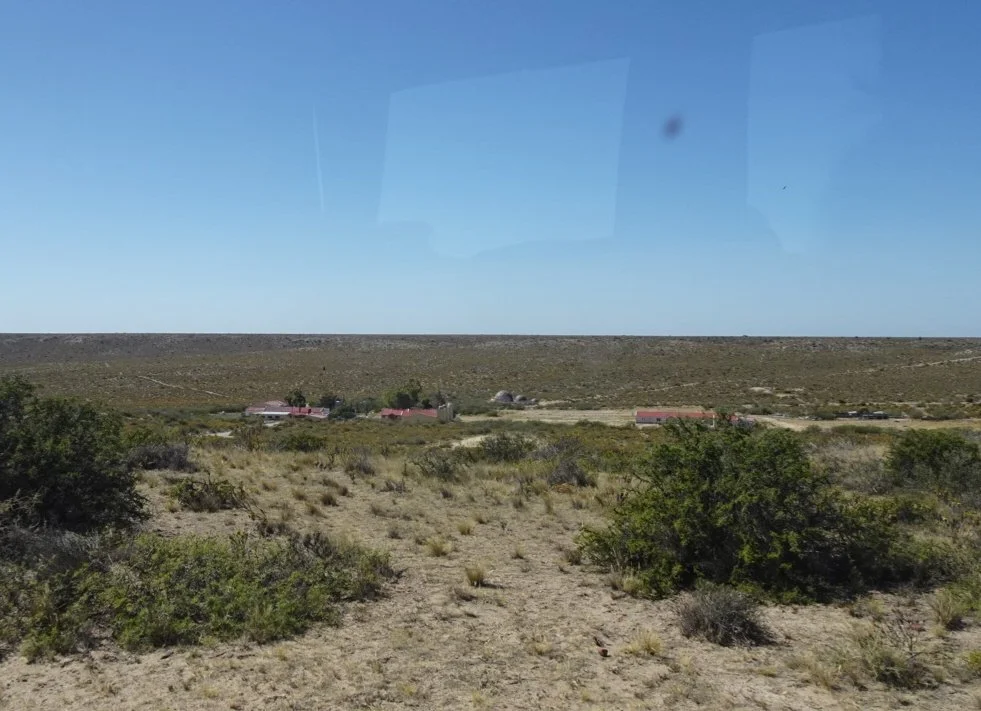
It was set in a quiet position away from the main road.
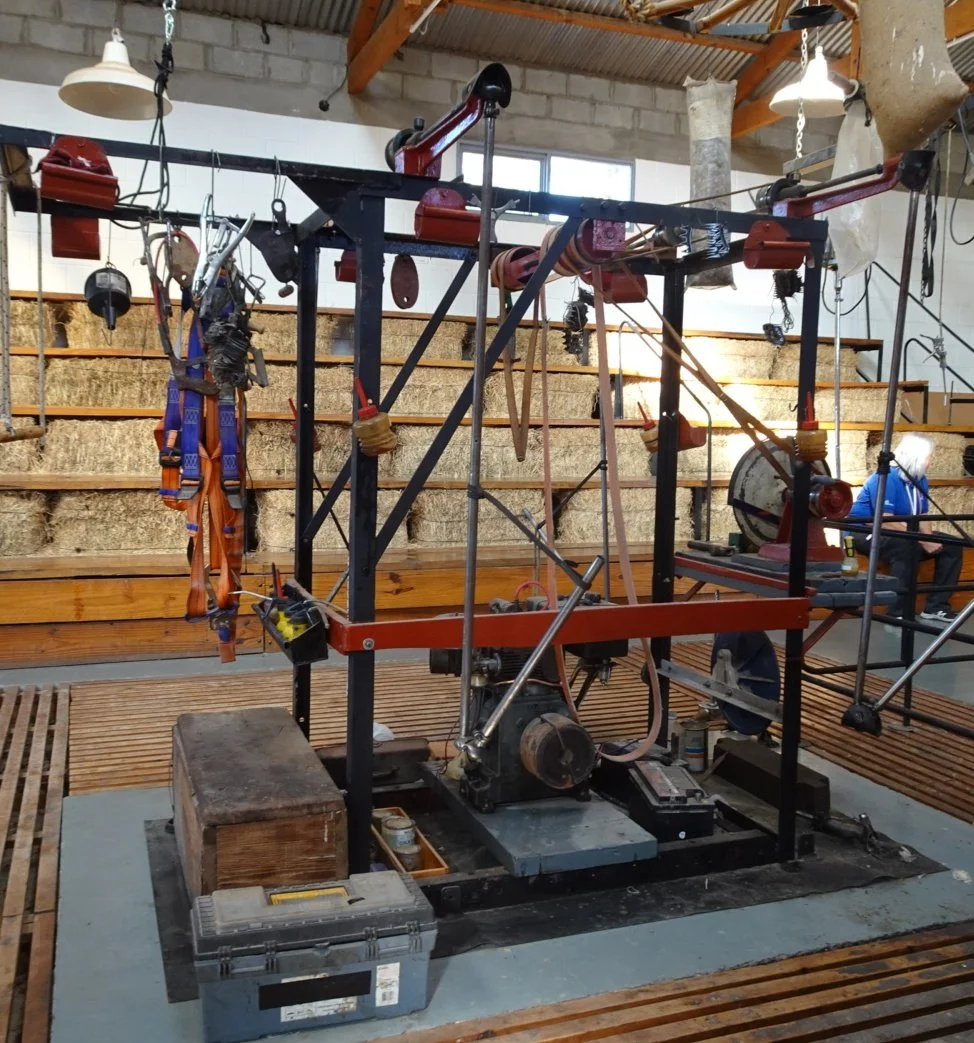
On arrival, we were shown into the shearing parlour, seated on steeply raked benches to watch the show.
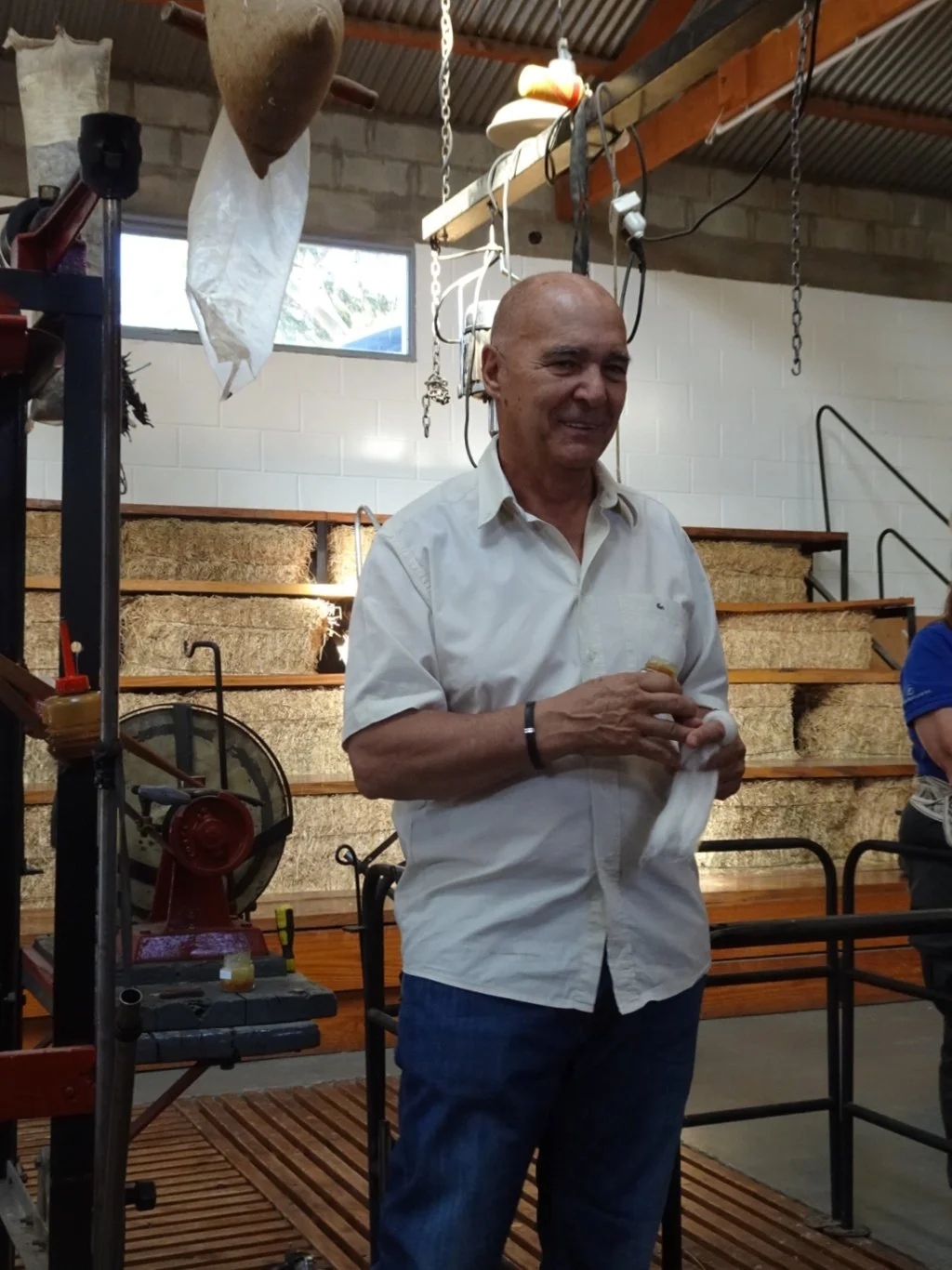
We were introduced to Alfredo, owner of San Guillermo (but not, he said, the boss “because I’m married”) He spoke Spanish throughout, ably translated by the two guides beside him. He managed a flock of 1200 Merino sheep and grew high quality wool for the garment industry.
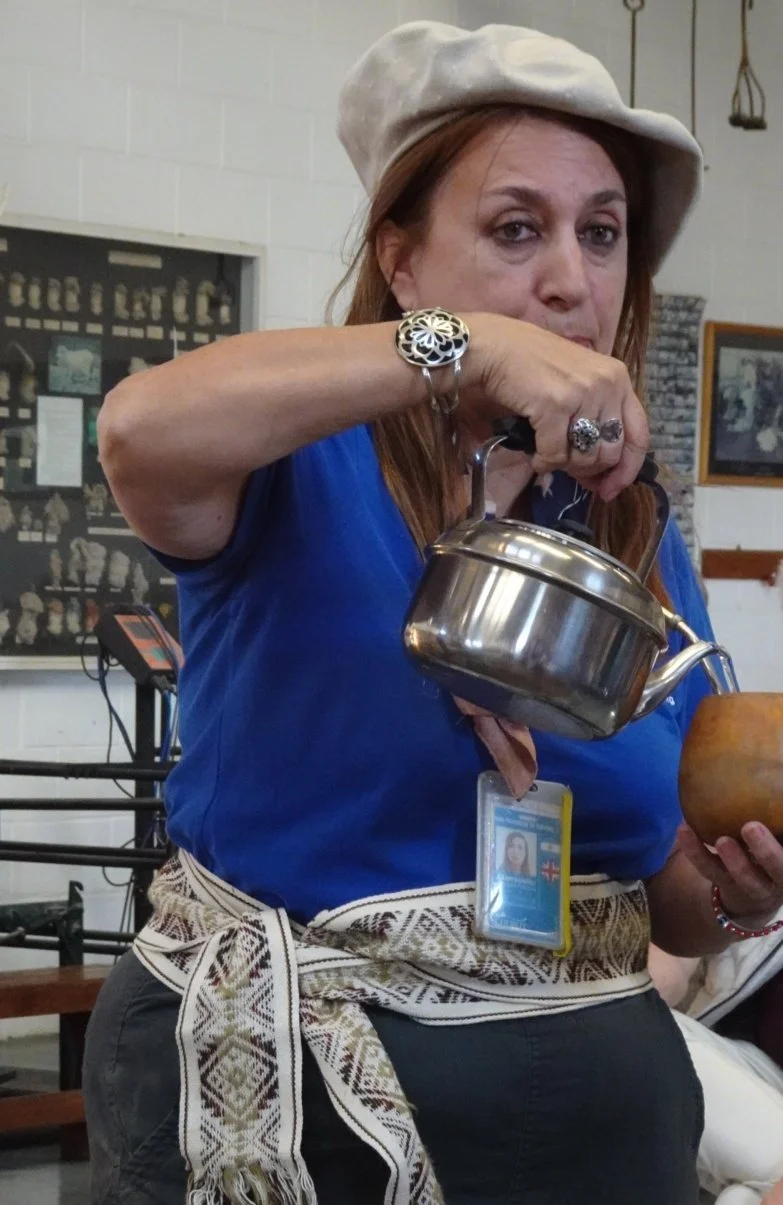
Claudia made a pot of mate, because, she said, “a Gaucho doesn’t work without it”.
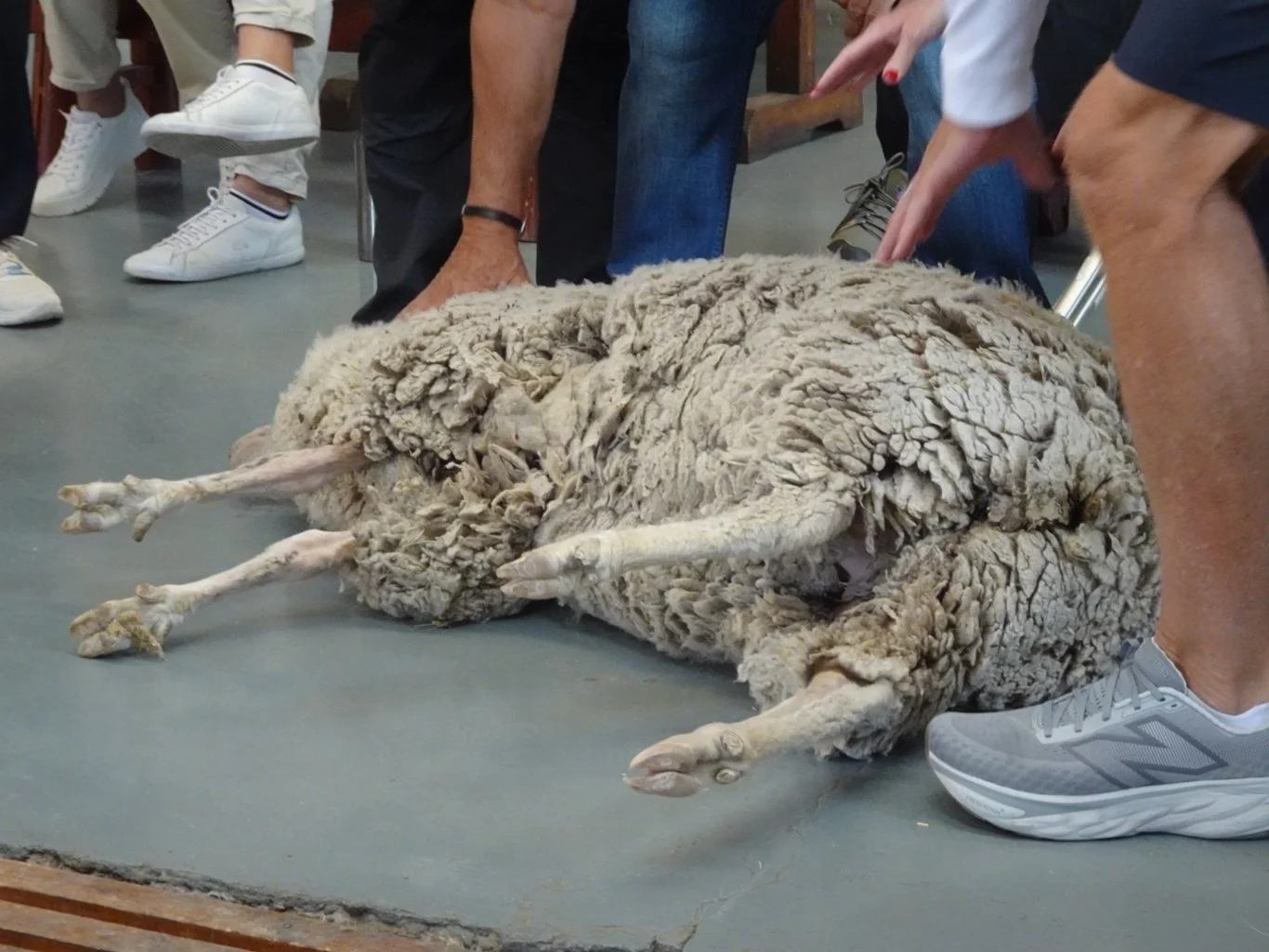
Five volunteers from our group were assigned assistant gaucho roles and as they brought in the sheep
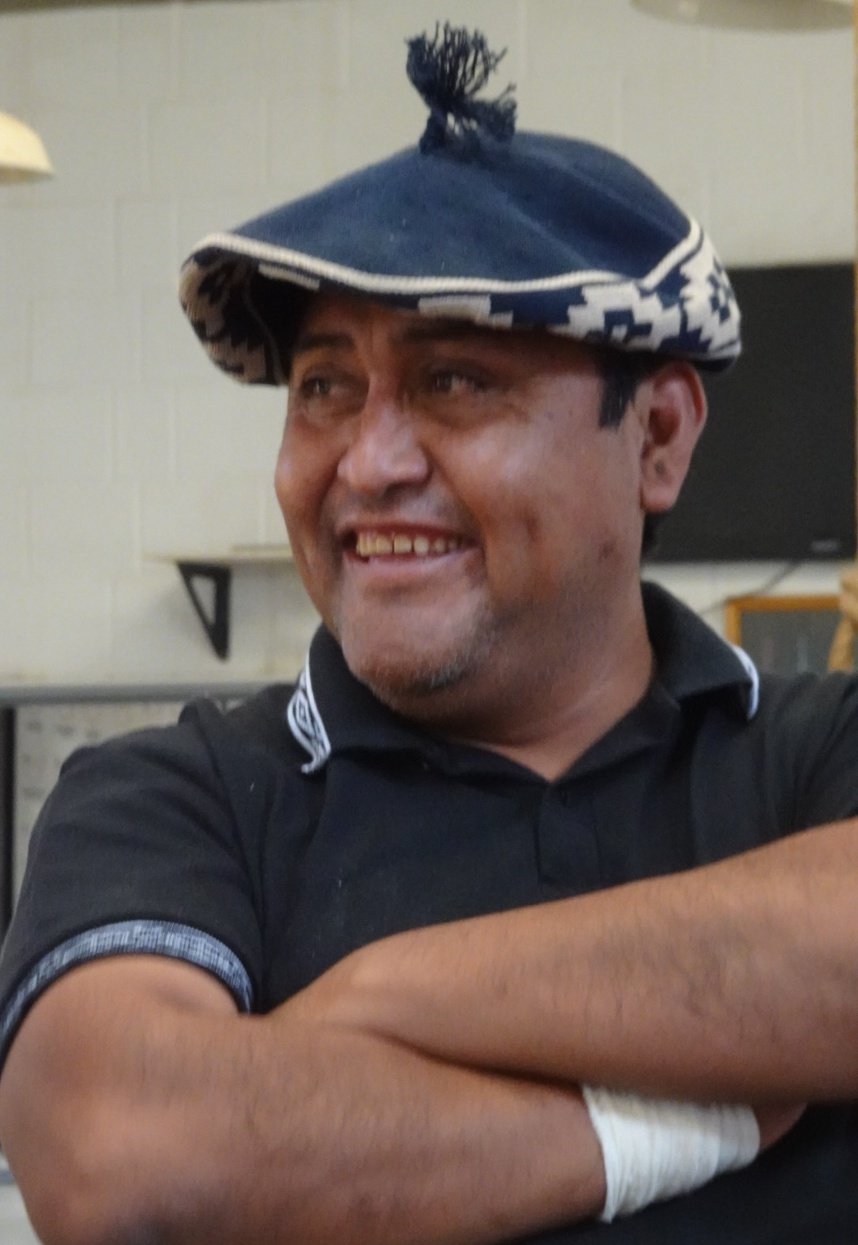
the (real) gaucho looked on. I admired his beret, finding it interesting to see it worn in a different style to Claudia’s.
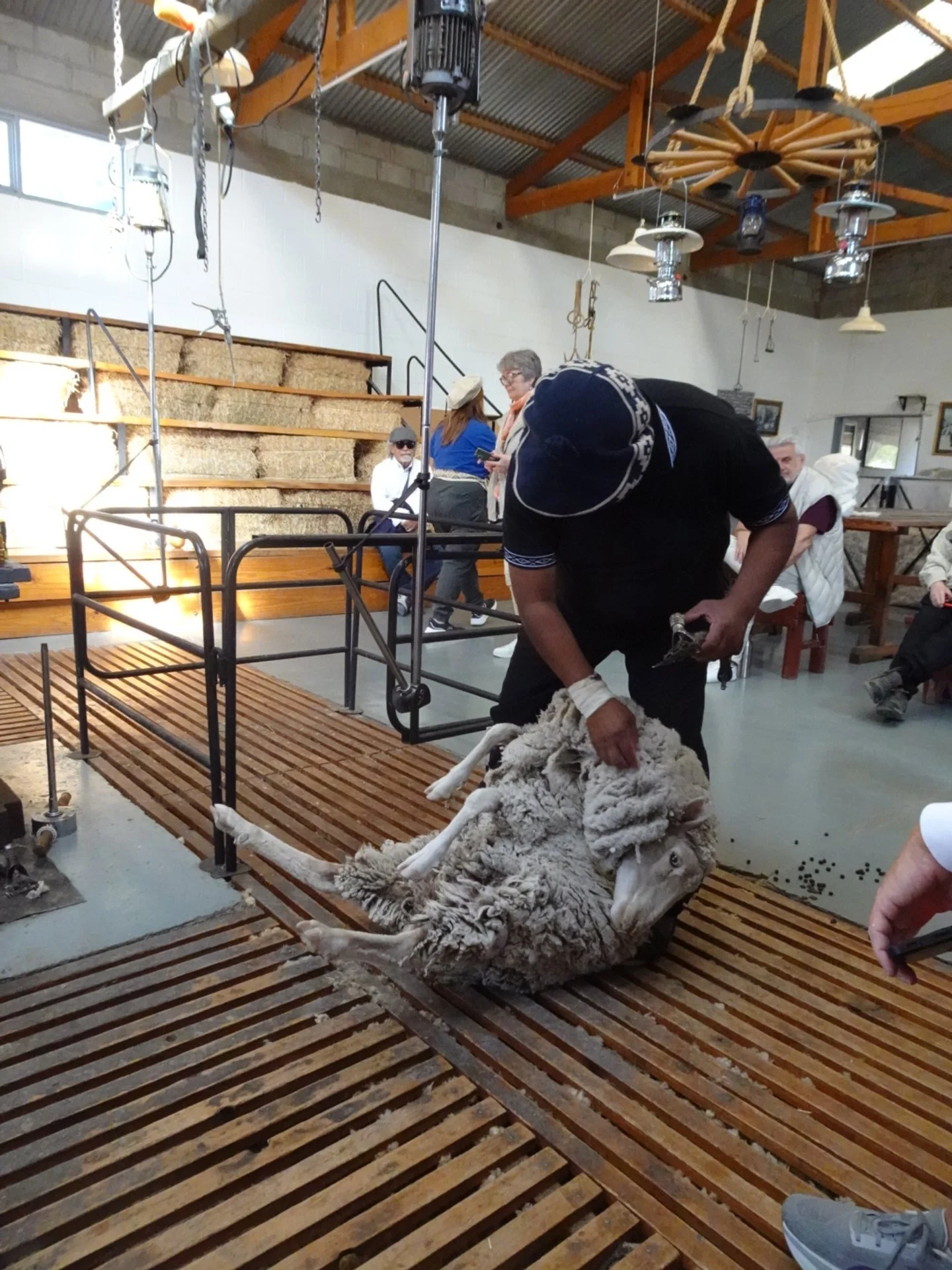
He soon set to work on the very placid sheep, who barely moved throughout the process. In fact, one might have questioned whether or not she was still breathing had she not demonstrated her functioning digestive system at regular intervals throughout the show! (Thankfully someone had a brush and shovel to hand)
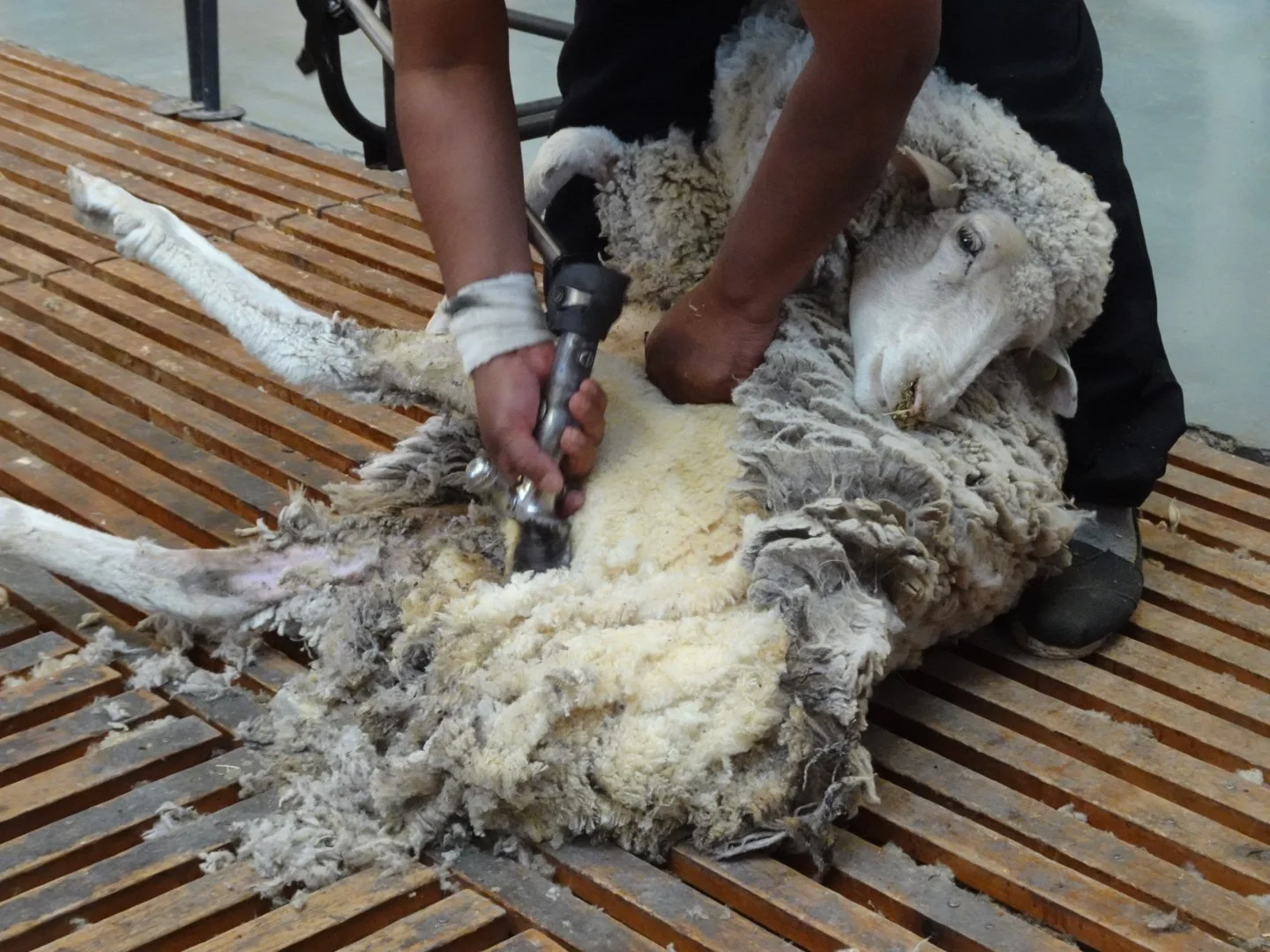
Generally speaking, the gaucho used an electric shearing system
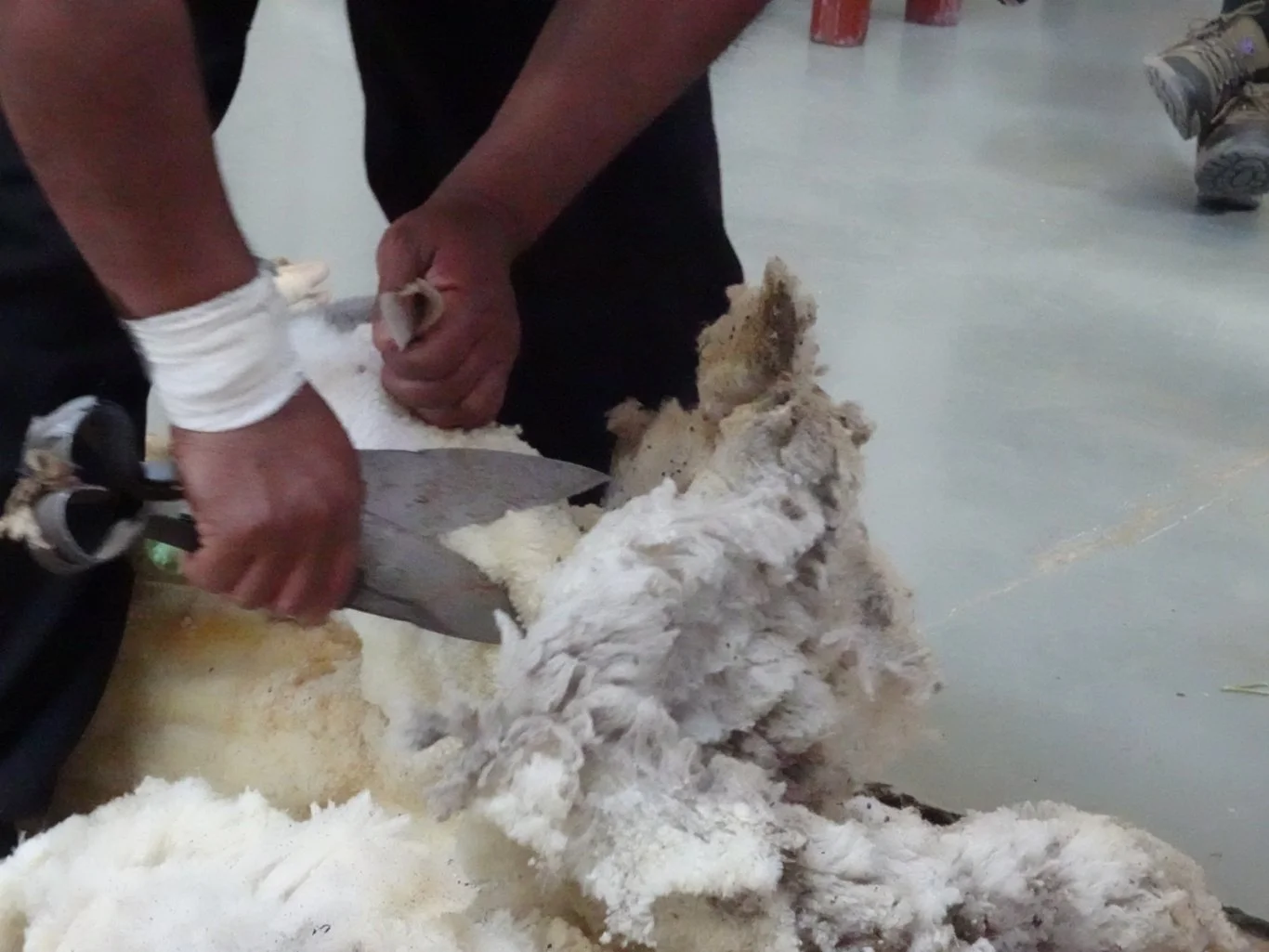
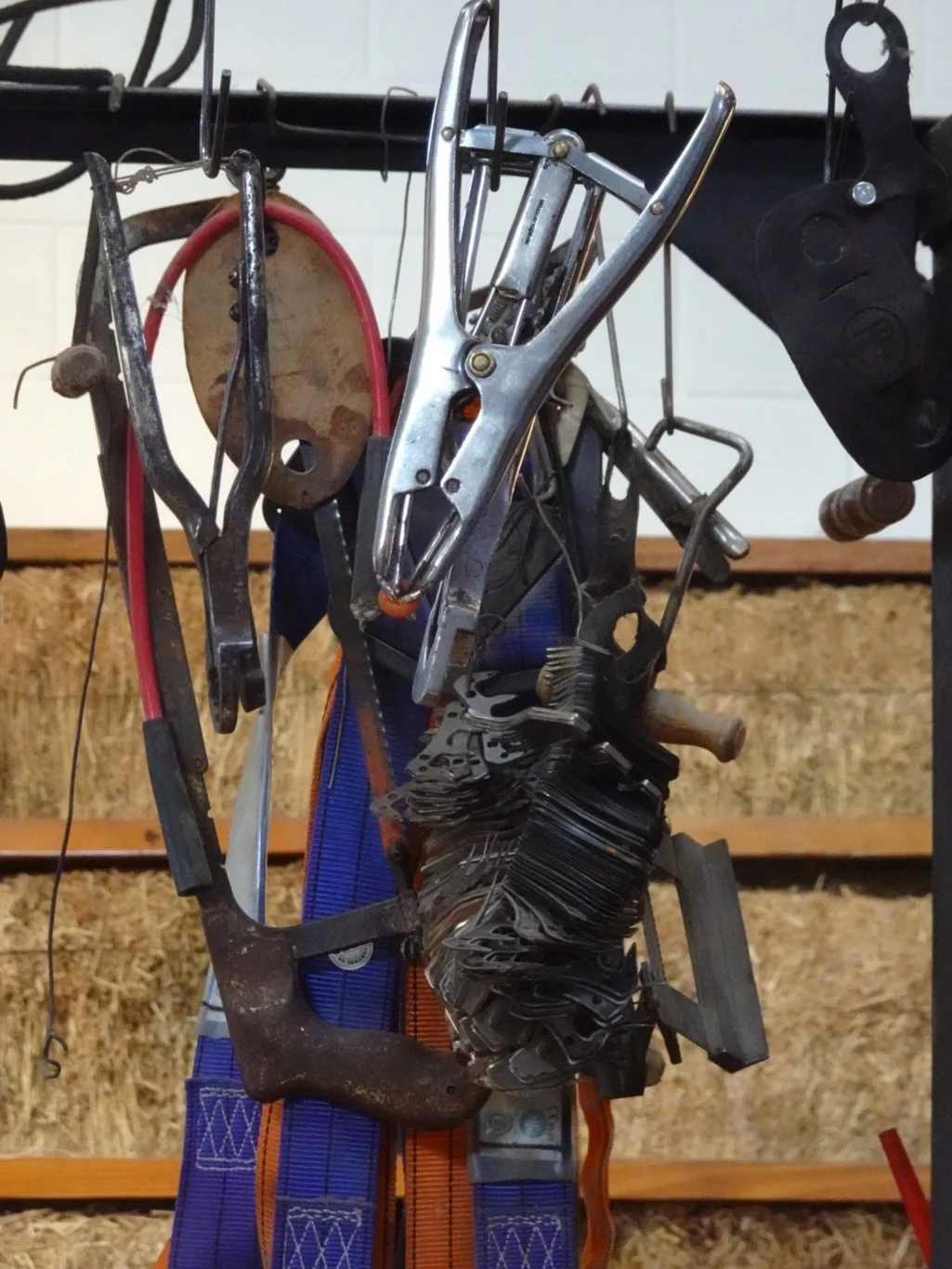
though when the power cut out towards the end of his task, he resorted to older, simpler tools.
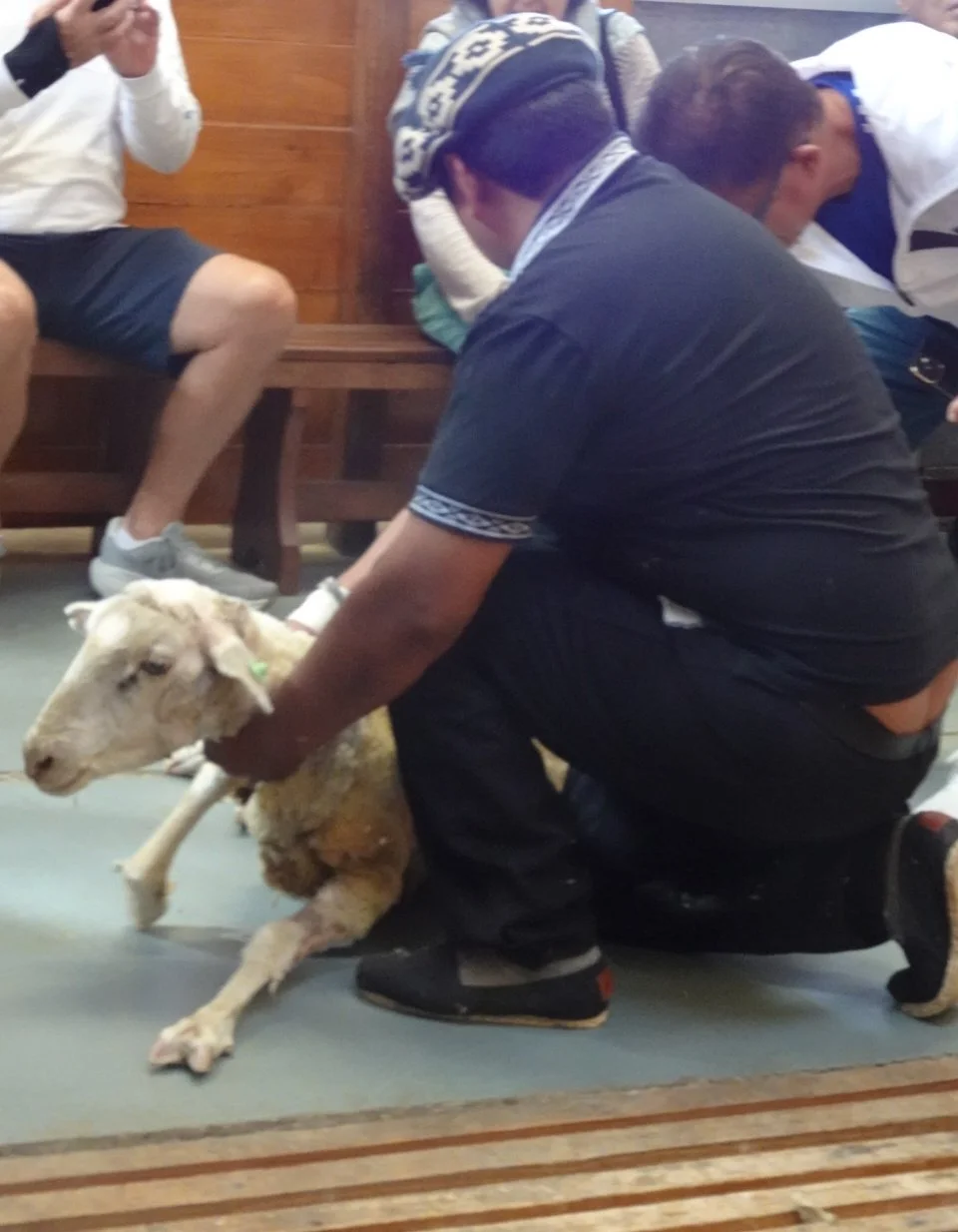
With the sheep more comfortable having lost all that shaggy wool from her back, she was given a vitamin injection and one of antibiotics, plus an anti-infestation rub into her skin before she eagerly escaped through an open door.
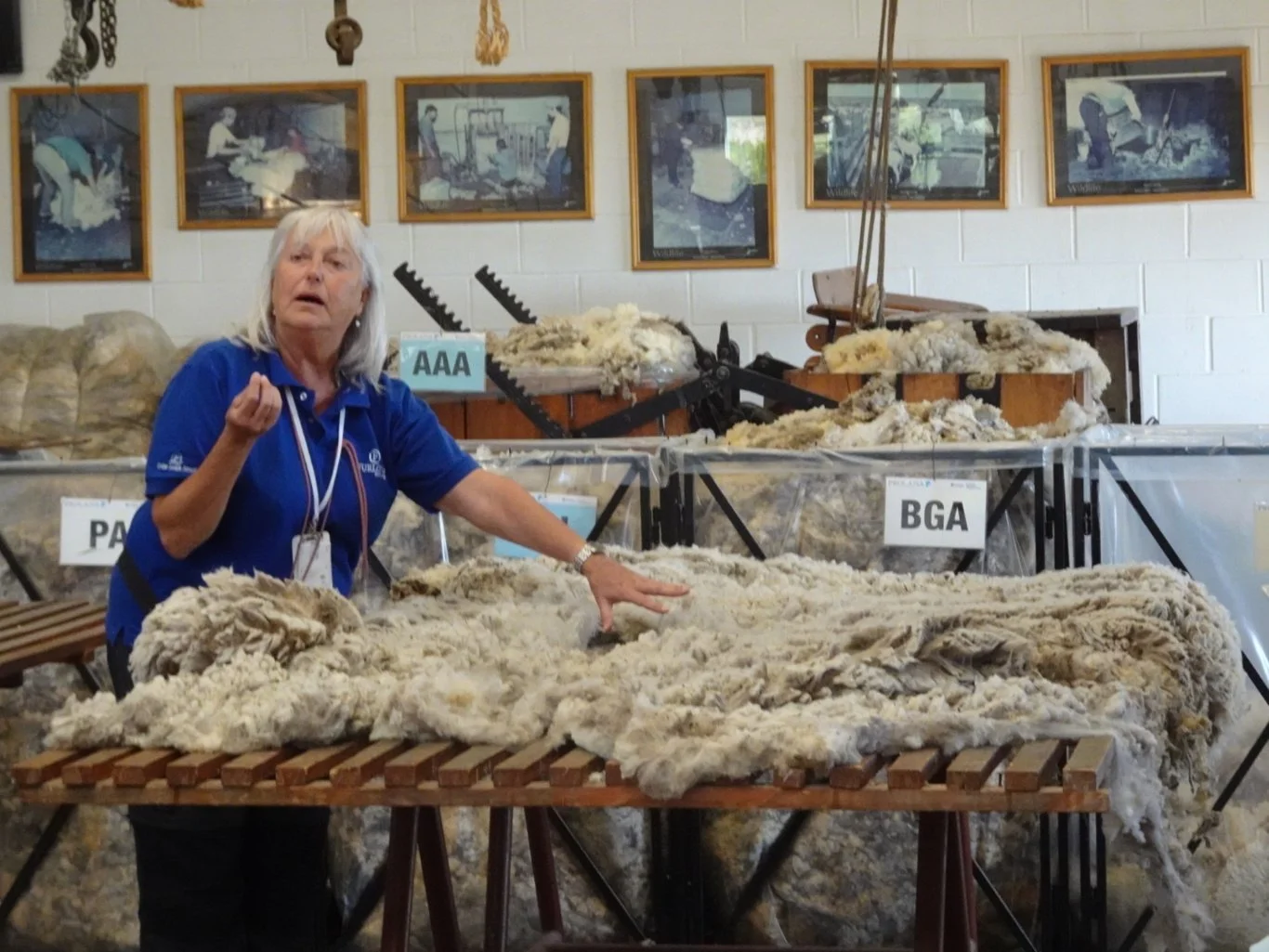
Meanwhile, her fleece was thrown onto the handling table - reminiscent of our days at the Royal Welsh Show and the woolhandling competition eh?
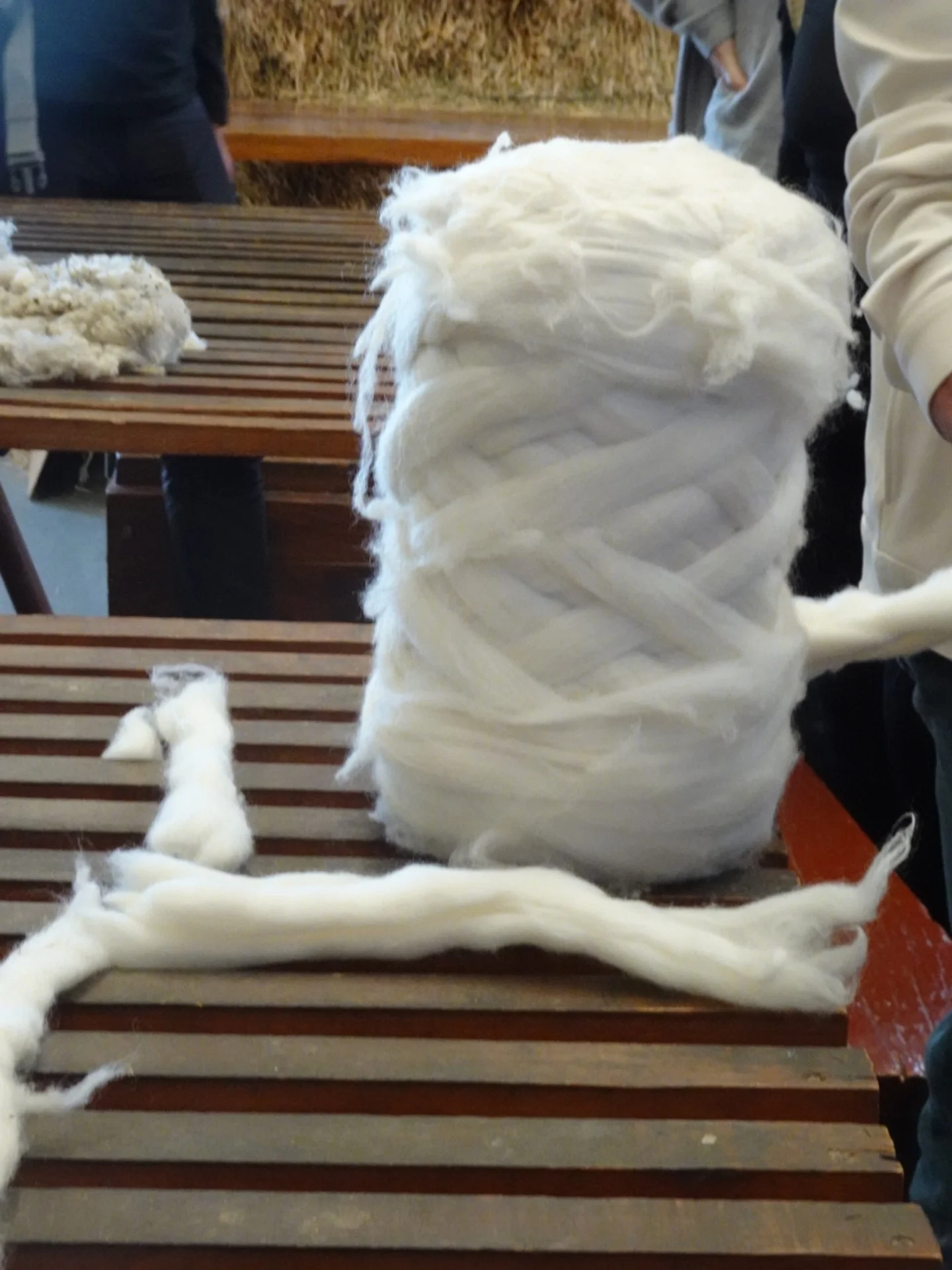
The final product was considerably different from what we saw in front of us. That “raw” wool would be sent to Brazil for washing and processing and maybe sold on further for garment manufacture.
The demonstration over, we were invited into the cafe for a bite to eat and a hot drink. The tables were set with delicious looking pastries.
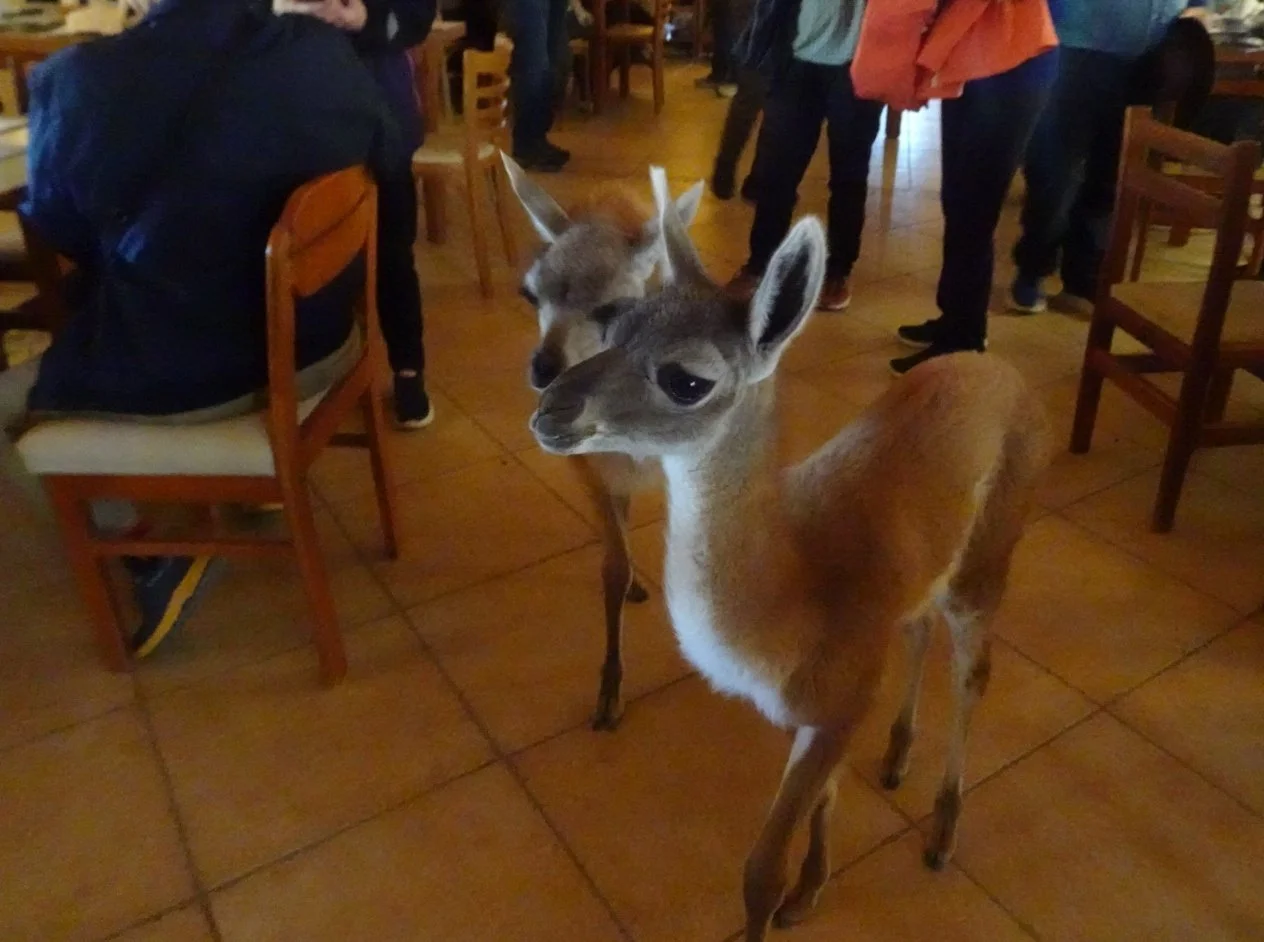
No sooner had we begun to tuck into our snack, there was the patter of tiny feet as a couple of young guanacos joined us. So very cute and with the most incredibly soft fur, they were delightful and charmed the crowd effortlessly.
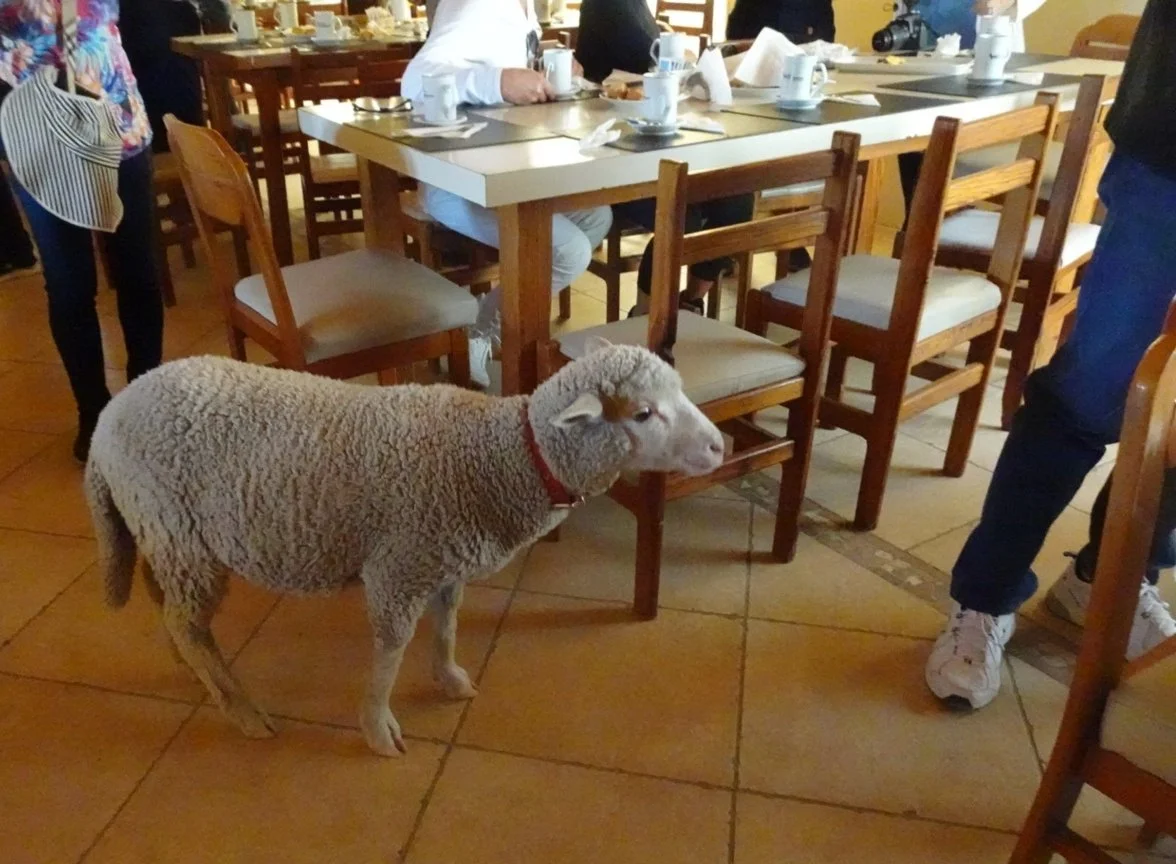
Meanwhile, a pet lamb was exercising similar cuteness elsewhere in the room.
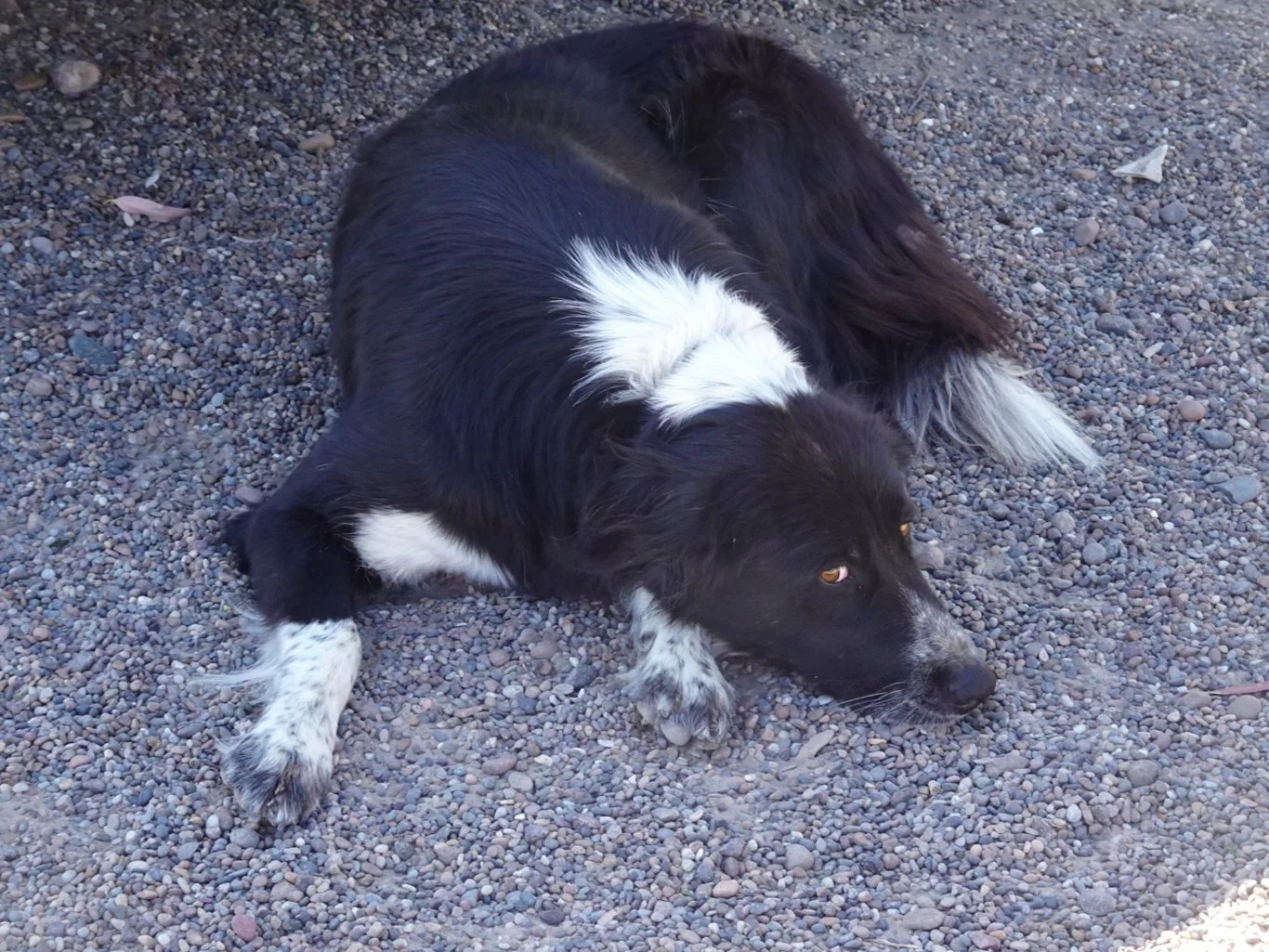
Outside, one of the working Border Collies was resting in the shade
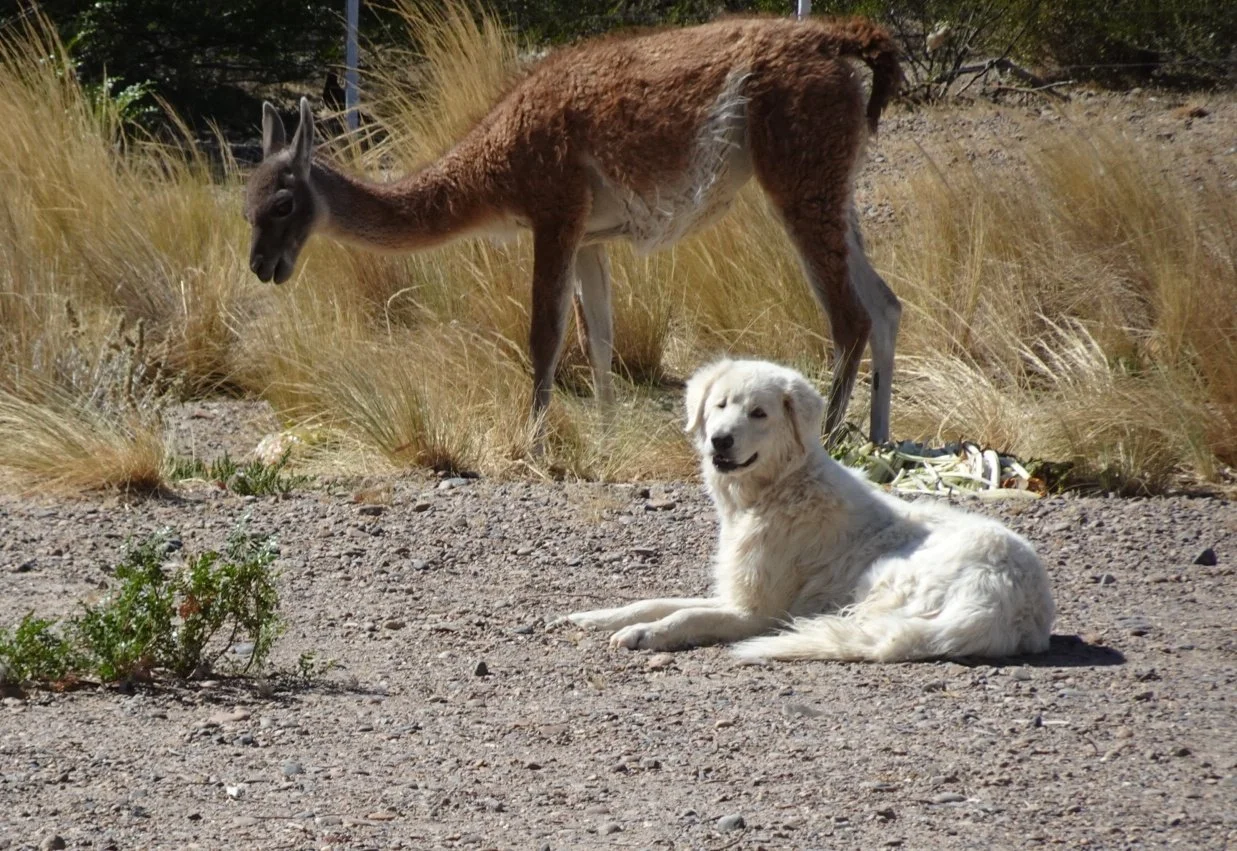
and the “white dog” Alfredo had told us about was also there, in the company of an adult guanaco. We learned that the border collies are great herders, but every flock of sheep has a white dog living with them “as security”.
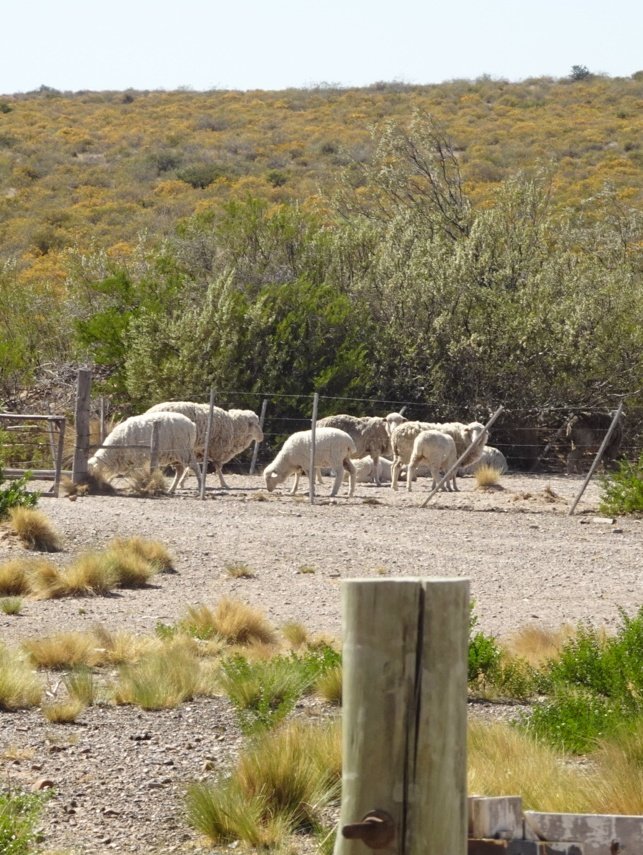
I was surprised not to see more sheep around here, but did spot a small bunch of them behind a fence.
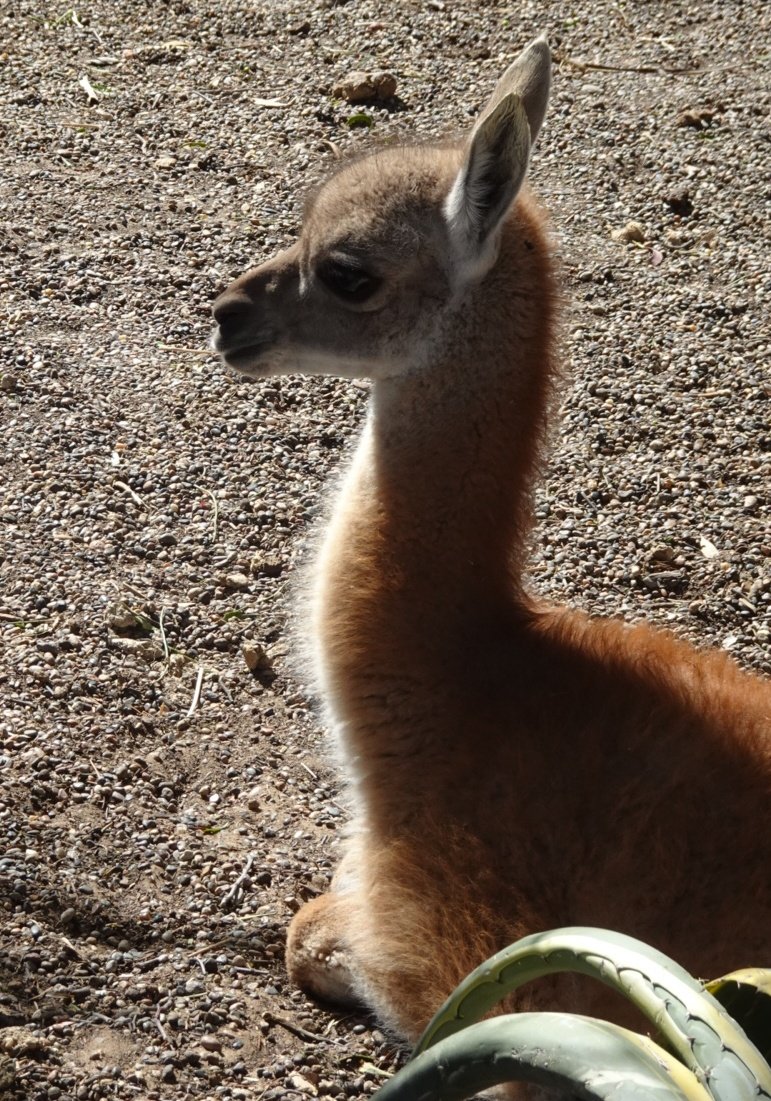
Plus another small guanaco. By now, we’d heard Claudia describe them as “savage”, which was hard to believe. They really did appear to be so very cute, but yes, I suppose if they jump fences and drink more than their fair share of a limited water supply, then perhaps it was fair? (We were to find the real answer to this later.)
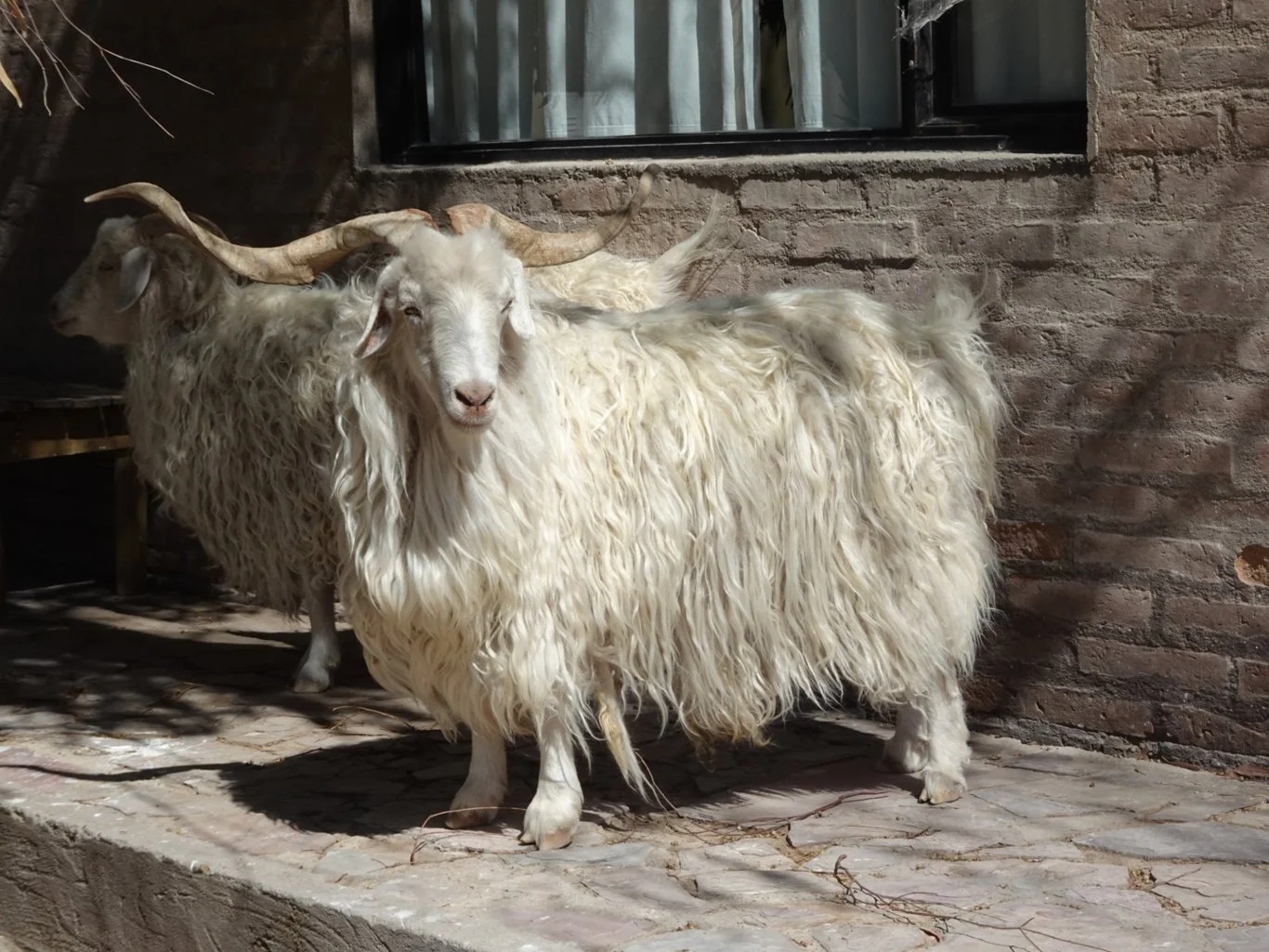
Actually, there were a couple of sheep walking grandly around, rather aloof from the other farmyard creatures.
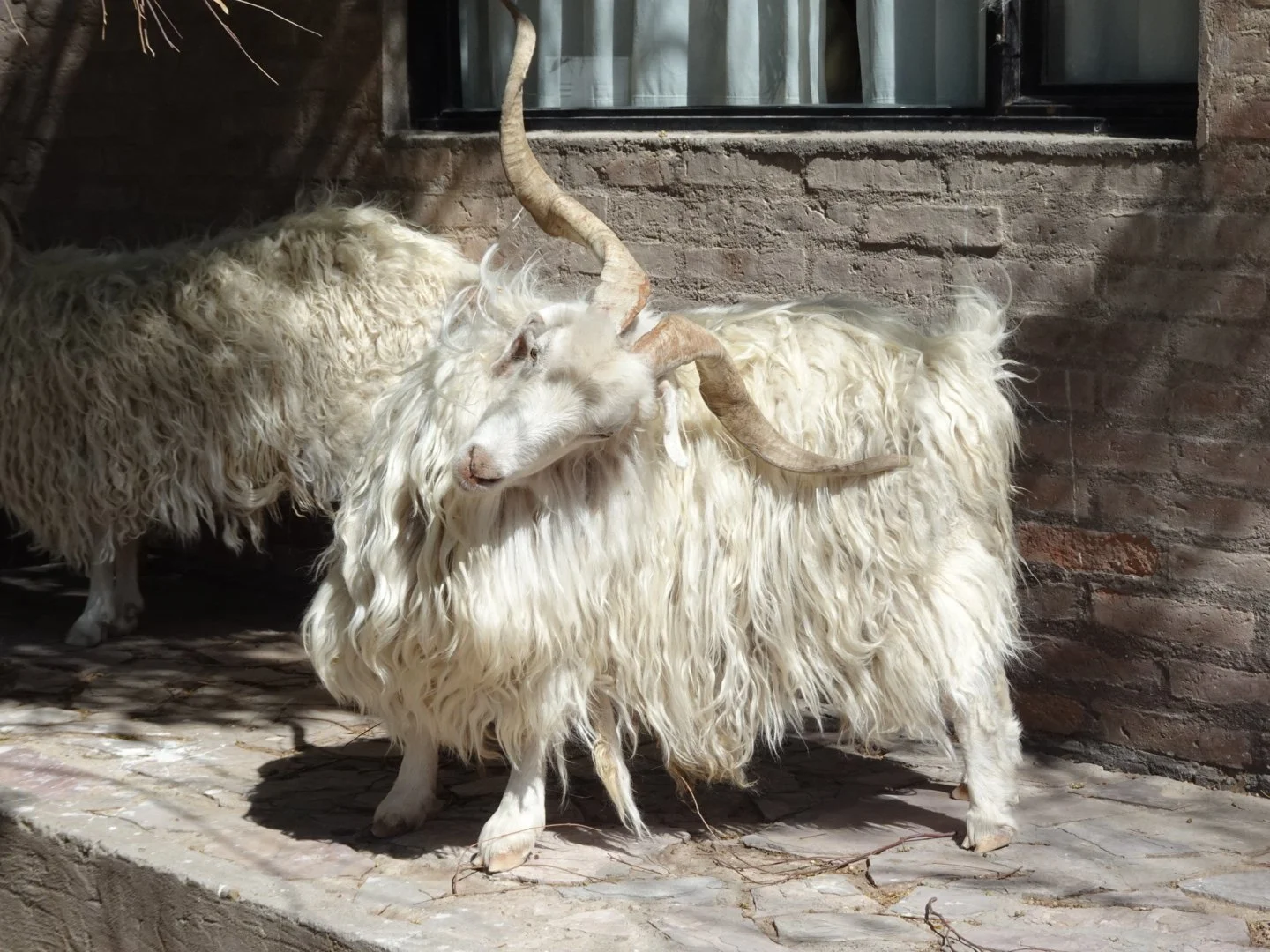
I was amused to watch how useful those curly horns could be when he had an itch though!
Time to leave this interesting place though and head back through the pampas back to the ship.
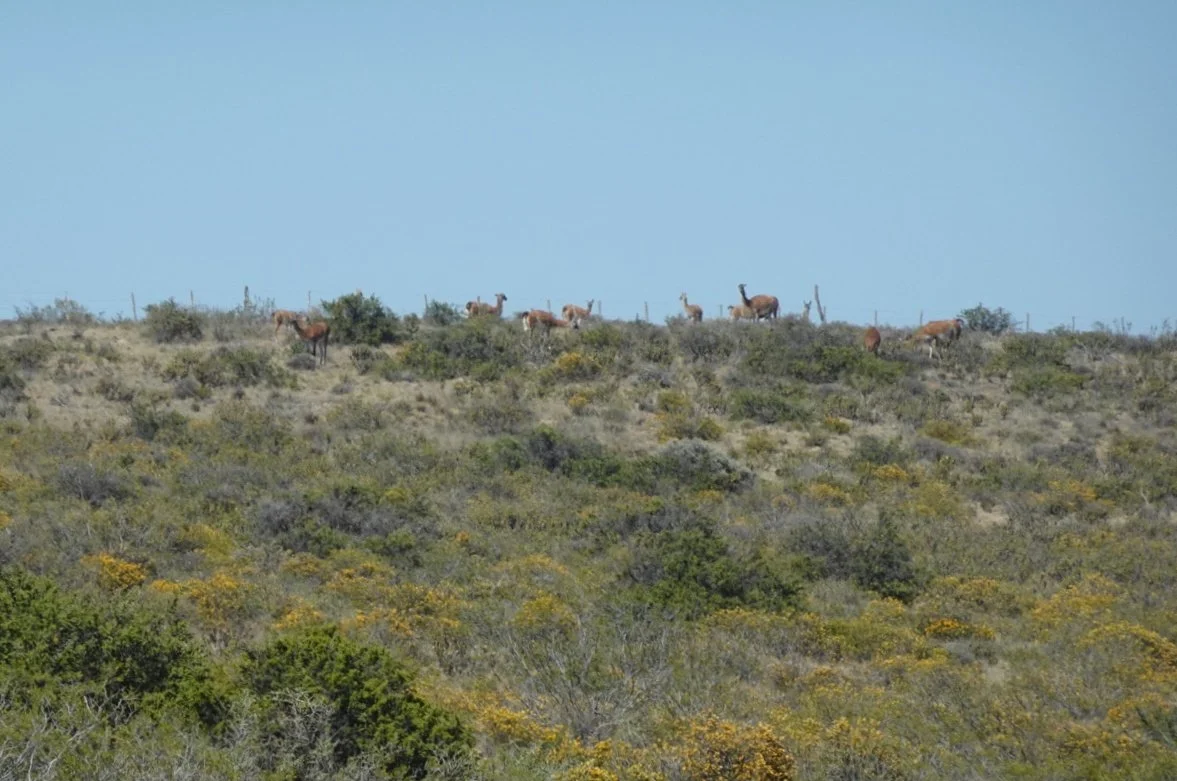
On the way, we spotted a group of guanaca on the top of the hill and as Claudia pointed them out, once again, she described them as “savage”…but then questioned if that was the correct word. “Perhaps “wild” would be better?” Aaah! yes! We smiled, for her English really was excellent, save for just one or two words slightly out of context, like this. Another example had been at the sheep shearing, where she described the wool from the sheep’s legs as being full of “vegetables”, when of course, she meant “vegetation”. Having no Spanish between us, we were not in any place to criticise however!!
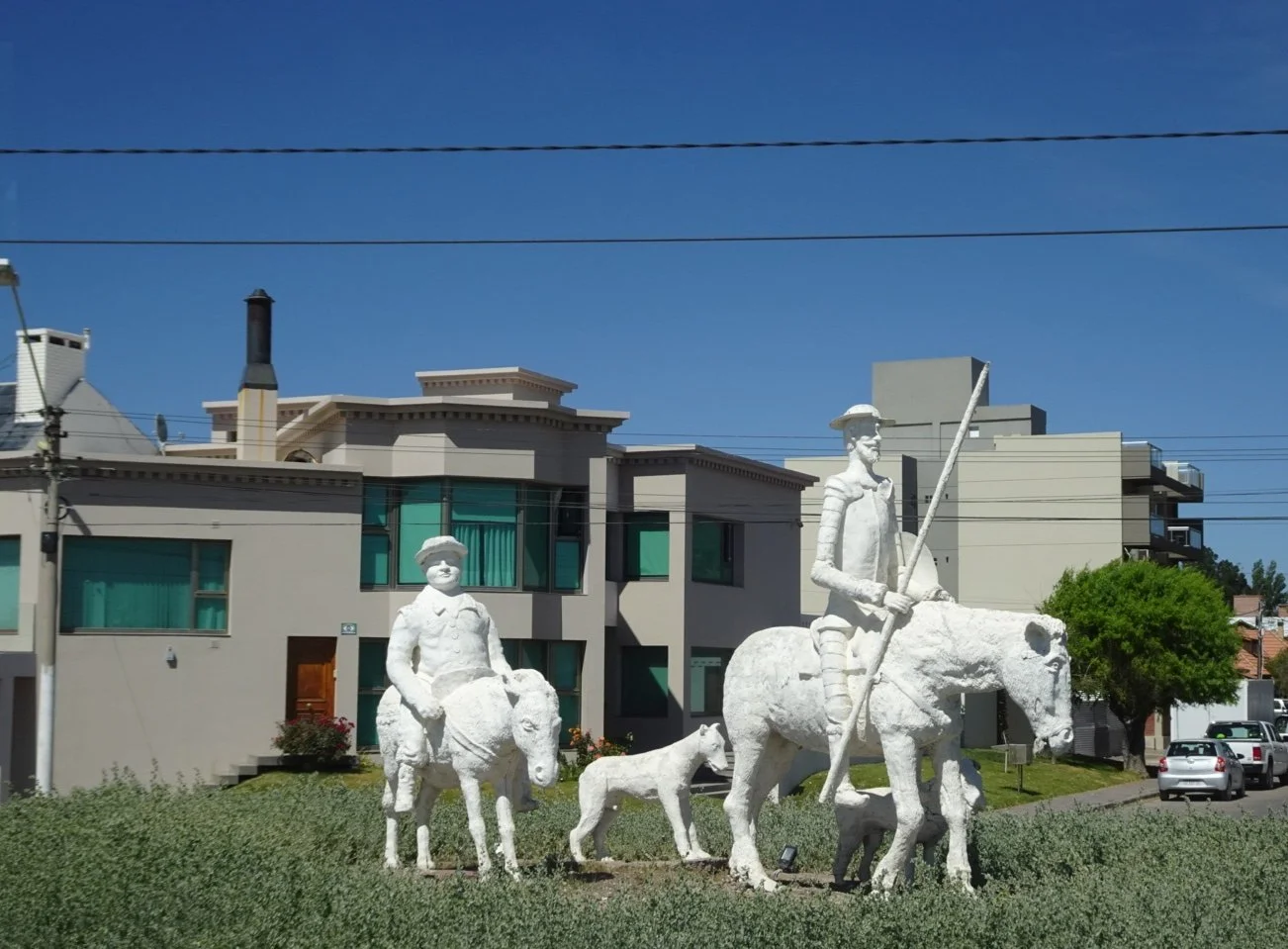
We knew we were nearly “home” when we passed the statue of Don Quixote on the roadside and by shortly after 11am we were back on board. We seemed to have seen so much and packed those few hours very well indeed, but we were happy to be back, for sure.
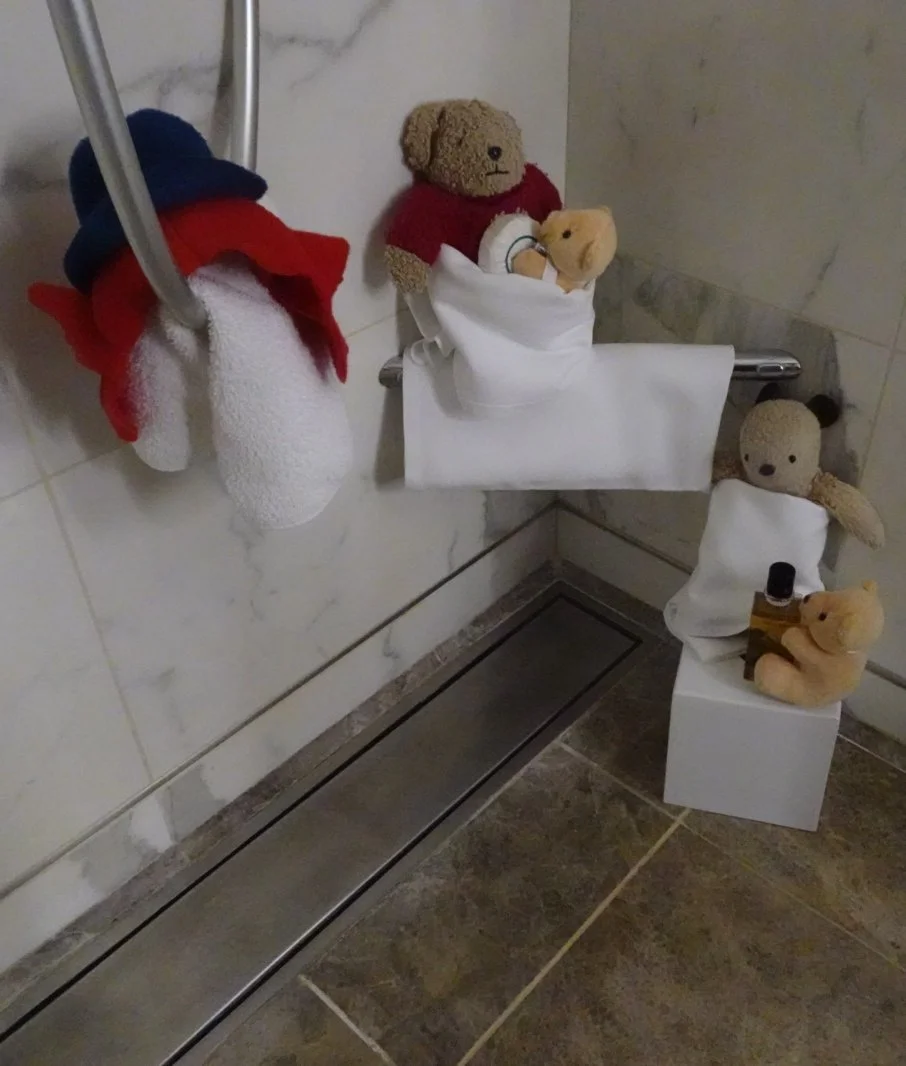
It took us quite some time to find the bears however. We thought that perhaps Agustin and Gil would have had fun with them whilst we were out this morning but however hard we looked, we couldn’t find them.
Until I opened the shower door! 🤣