



A sweet walk in the city
We’d booked ourselves on the sweet walking tour today, another warm and sunny one.
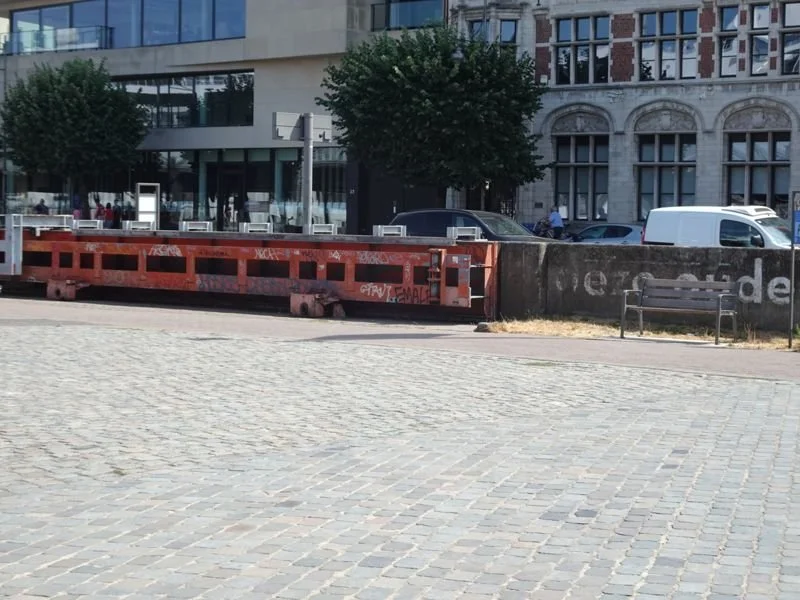
We met in the same place as yesterday, though Inge our guide explained that the wall and orange gate is actually a flood defence, put to good use at times, too.
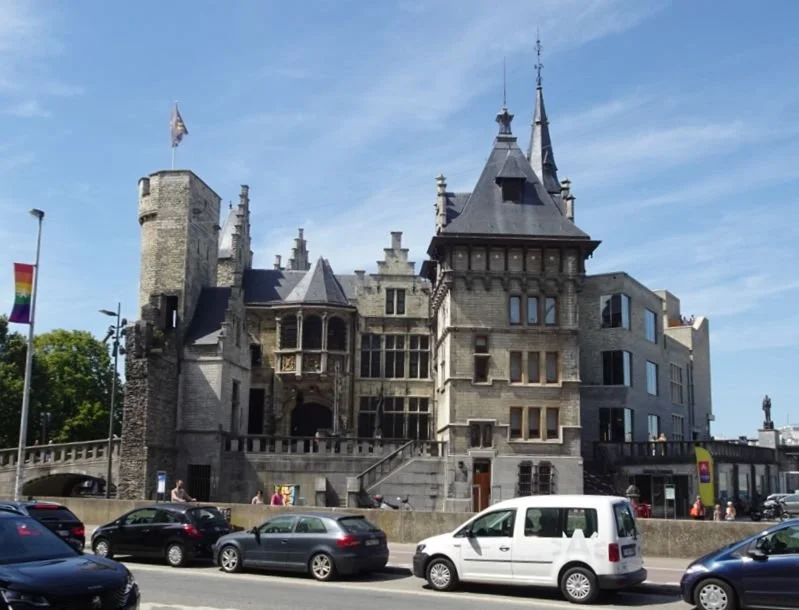
The Castle has medieval origins though very little of that original remains.
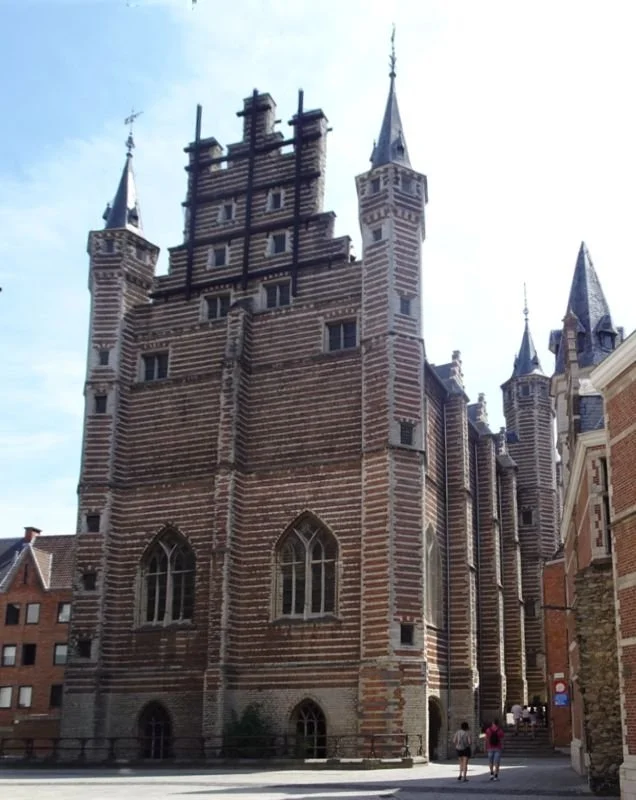
As we crossed the road into the old part of the city, Inge explained that this beautiful building was not a church but the guildhouse of the butchers.
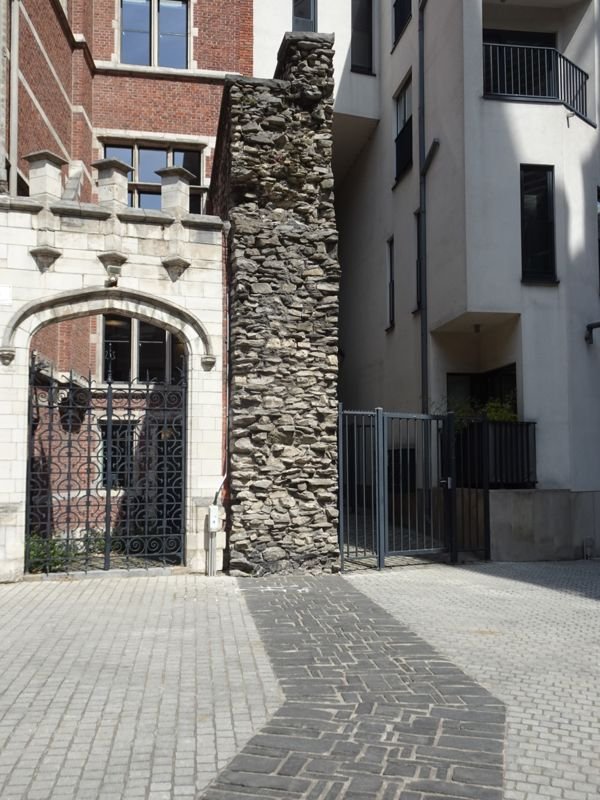
Here, alongside, was the last remains of the city wall, with its route marked on the pavement.
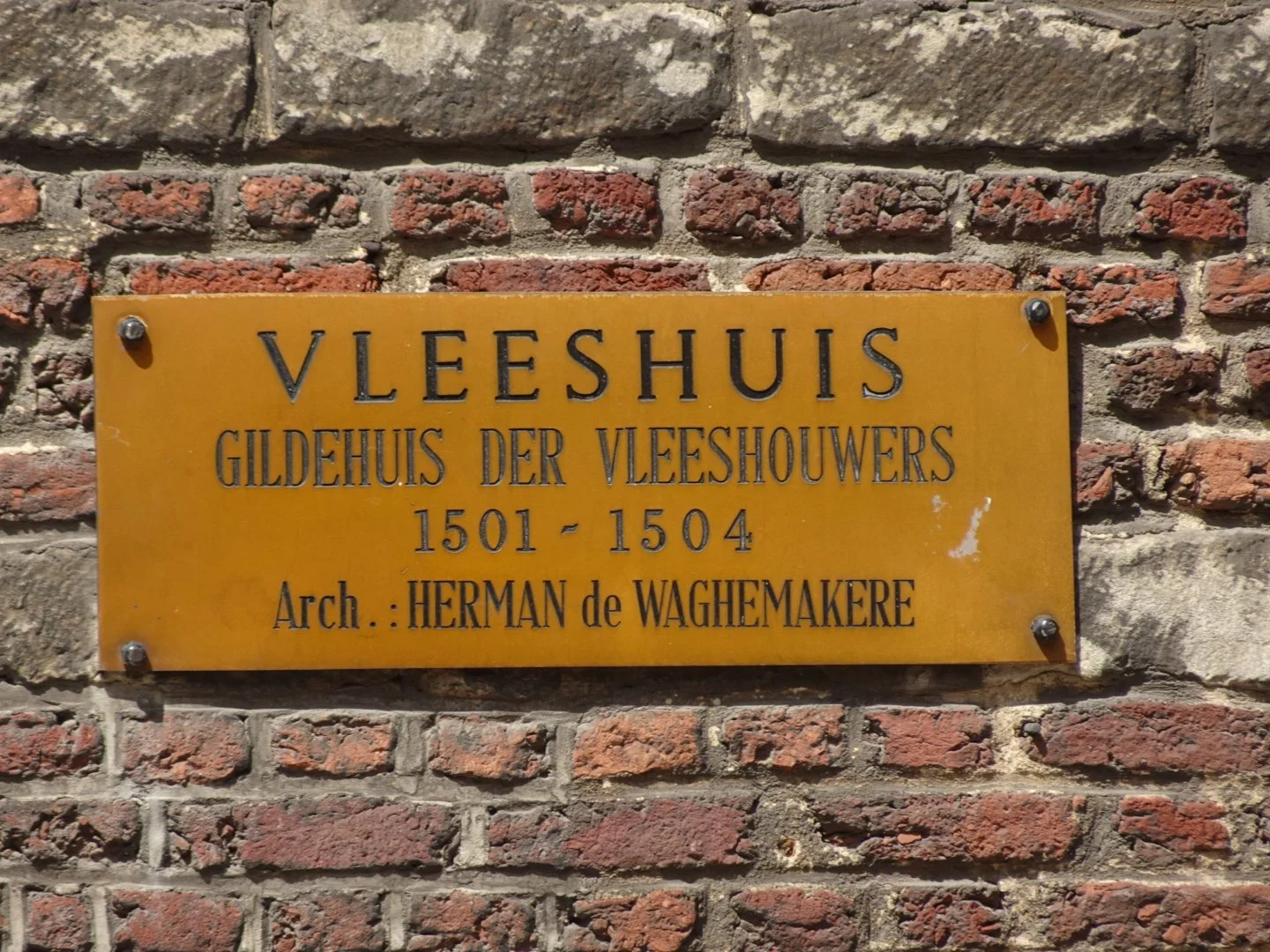
Standing looking up at the Vleeshuis, she described the processed that took place within its walls. hmmm….
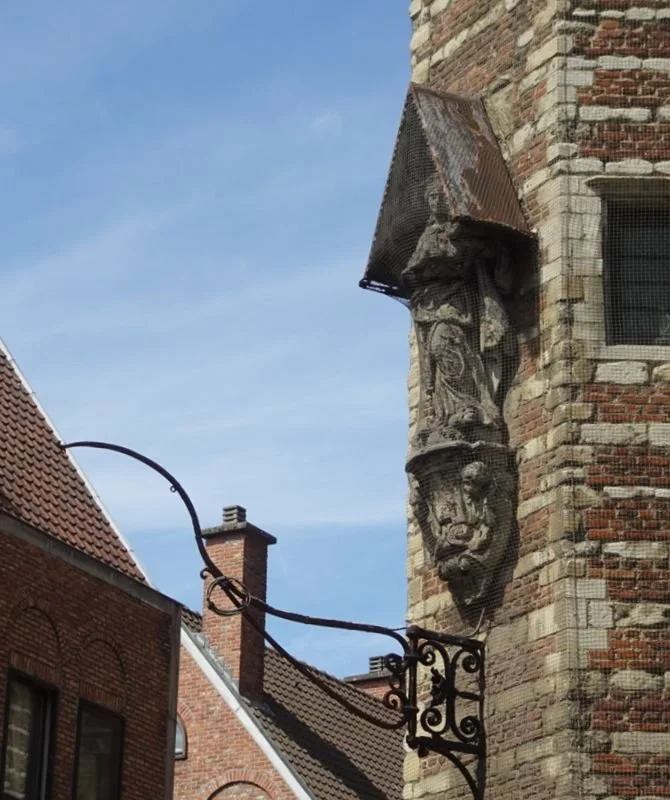
She also pointed out a “Maria” on the corner, of which there are hundreds in the city. Some, like this one, still have the light fittings too.
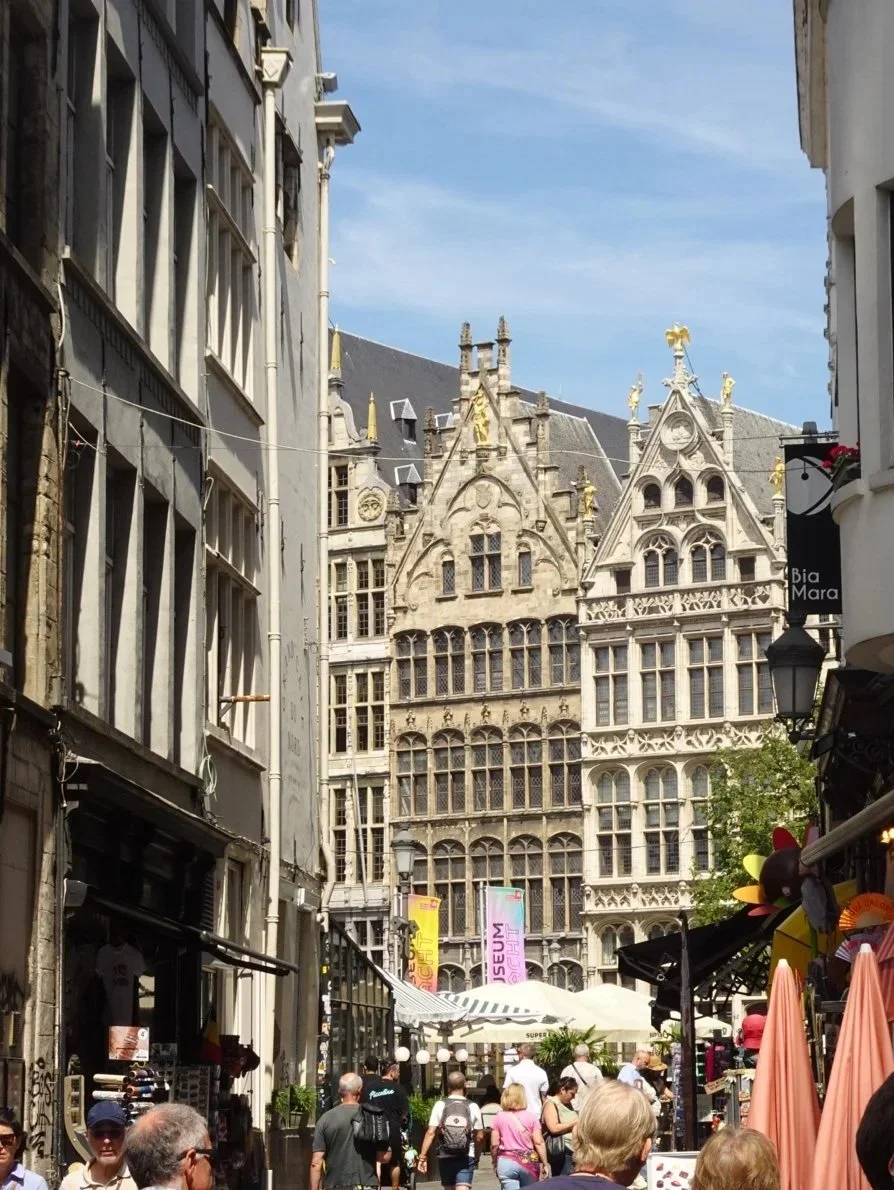
As we walked, she pointed out the landmarks which, since we were wearing earpieces, made it all the more interesting. We walked along different streets from last evening, but still adjacent to the Grote Markt.
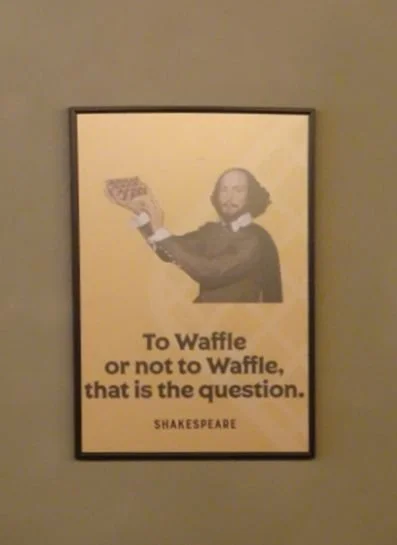
Our first stop was not far from here: The House of Waffles, where a series of amusing posters made us smile.
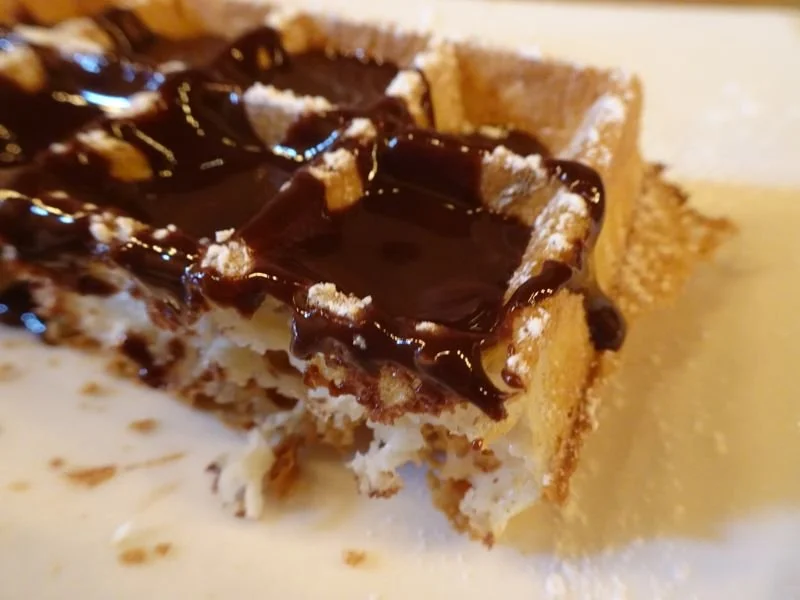
We learned the difference between the light and crisp Brussels waffle we were enjoying and the soft, round doughy waffle from Liege.
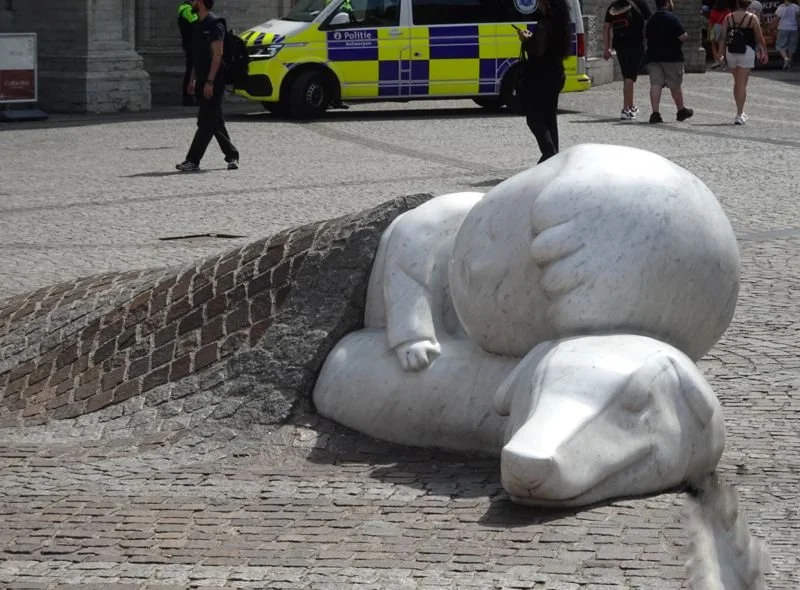
Outside, in the Handschoen Markt we loved this sculpture of a child and their dog, underneath a “blanket” made from the cobblestones. It’s taken from a popular children’s book and a previous iteration of this sculpture was placed here by the Toyota car company as it’s especially popular with Japanese children (and in Korea, the Philippines, Russia and Ukraine according to the Wiki page).
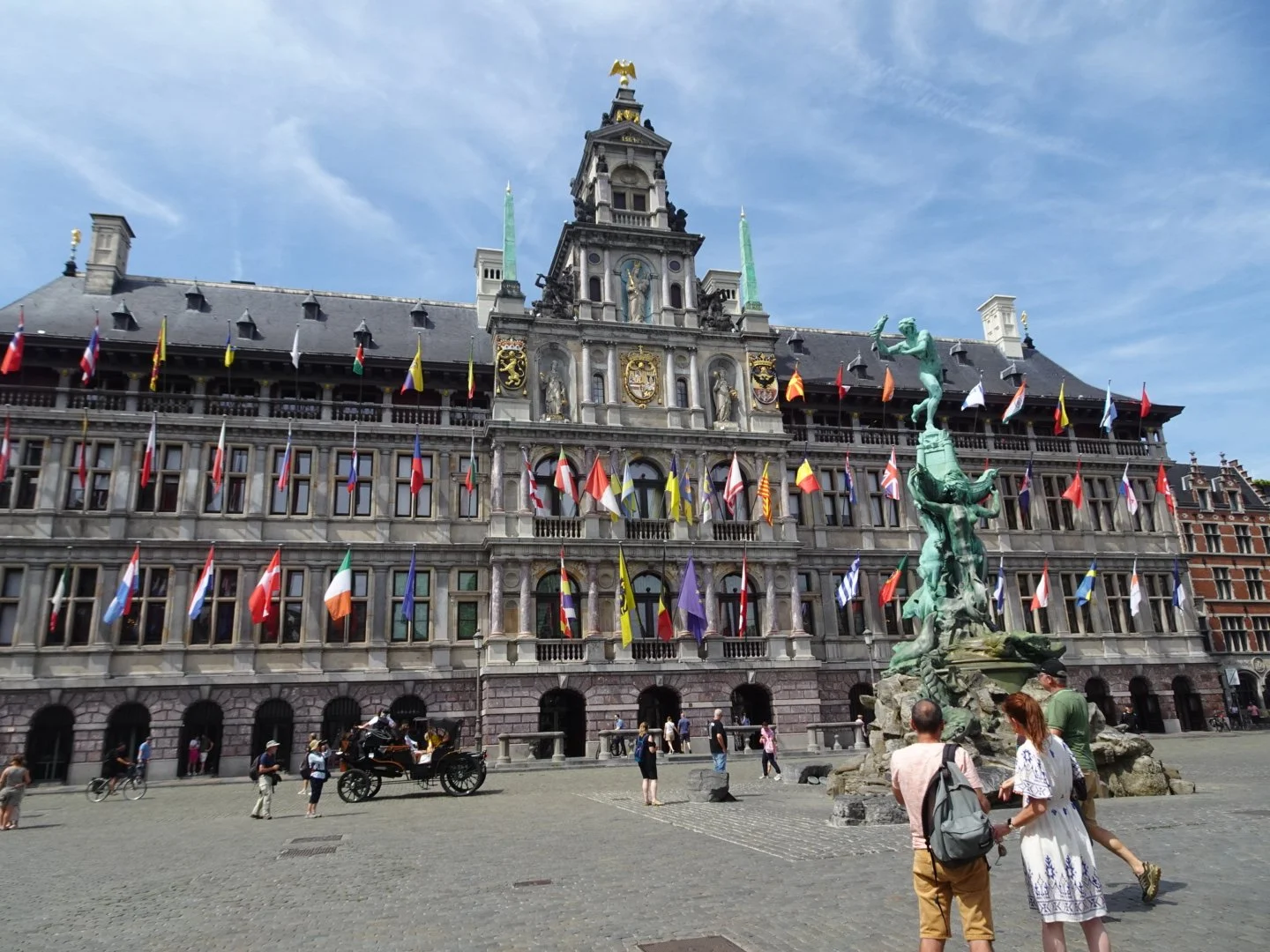
And here we were in the Grote Markt again. We could get a better look today without the remains of the market that was here yesterday and Inge told the story of the fountain, the giant and the thrown hands clarifying what Hans had told us yesterday evening.
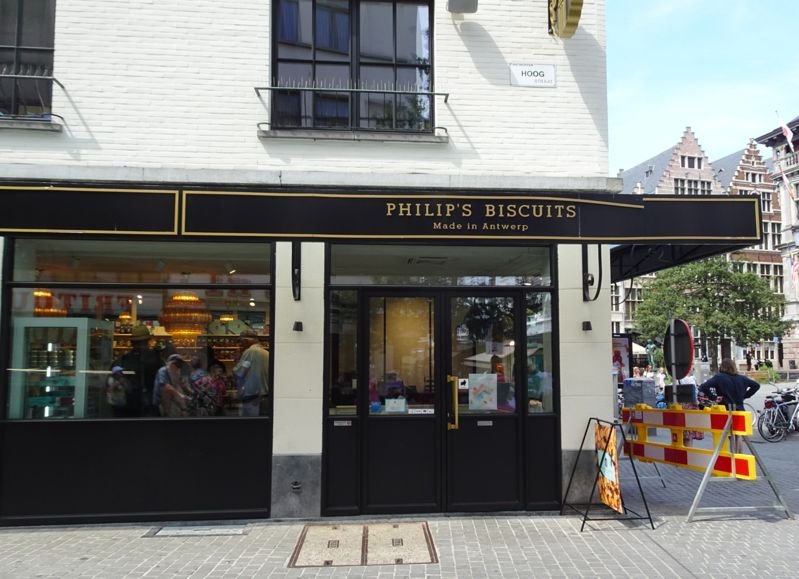
The story of how Antwerp got its name led nicely to our next tasting: biscuits from Philips, just across the way.
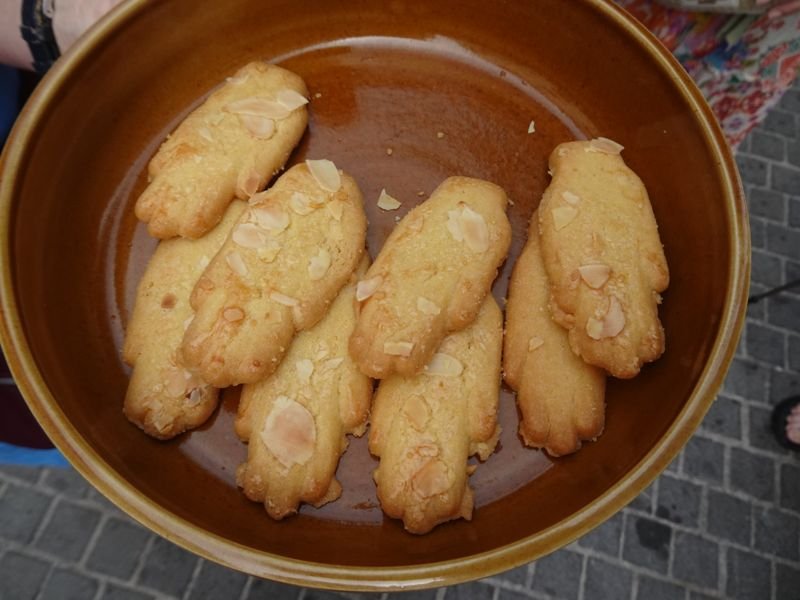
They were hand shaped, buttery, almondy and deliciously light and crisp.
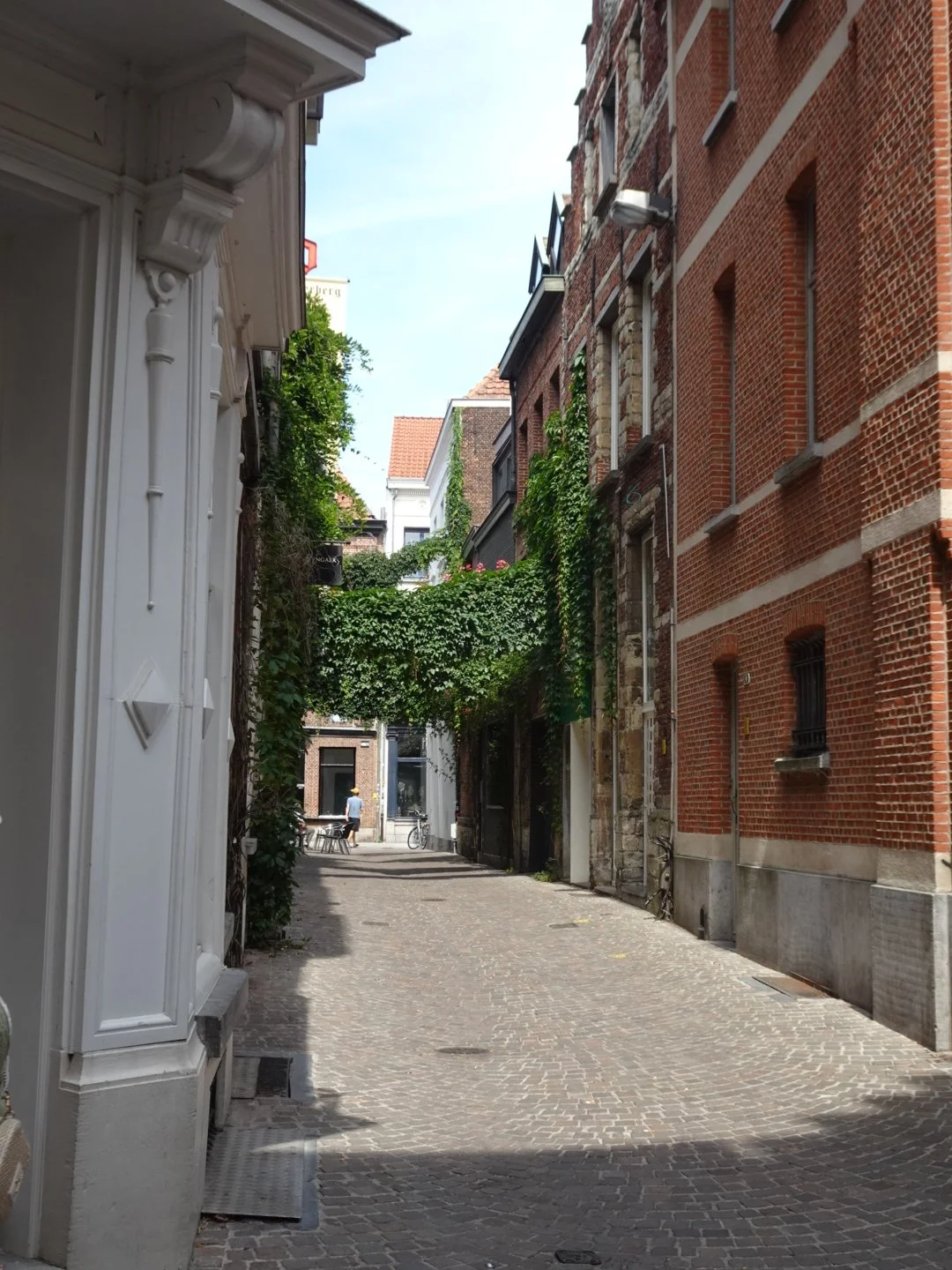
From here, we made our way through small, narrow streets towards Sint Carolus.
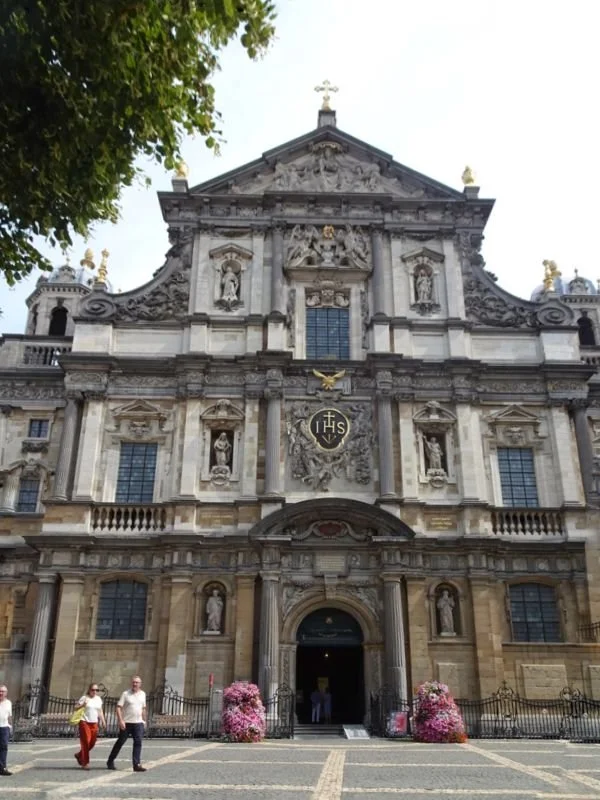
Unusually for Antwerp, the architecture is Baroque in style and the interior lavish - not that we had time to step in and take a look.
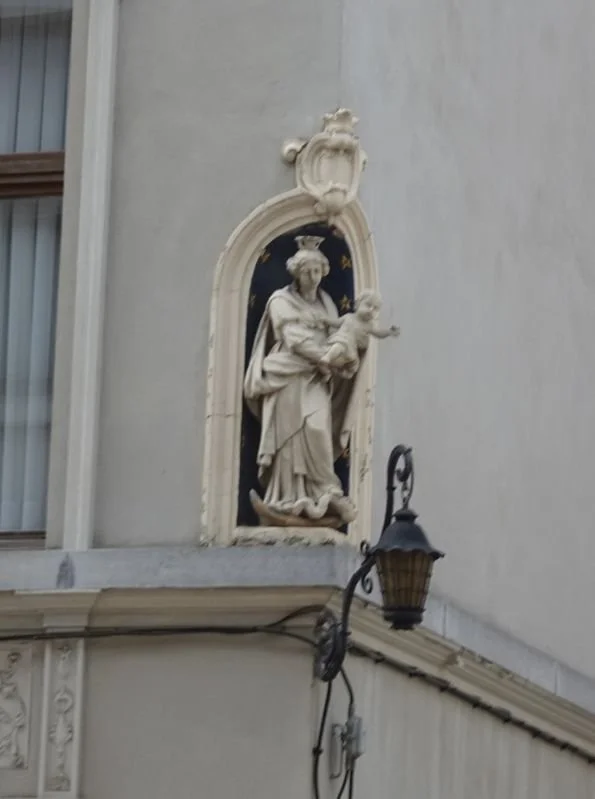
We continued through the narrow streets, noticing the Marias on the corners and feeling the rising temperature as we went.
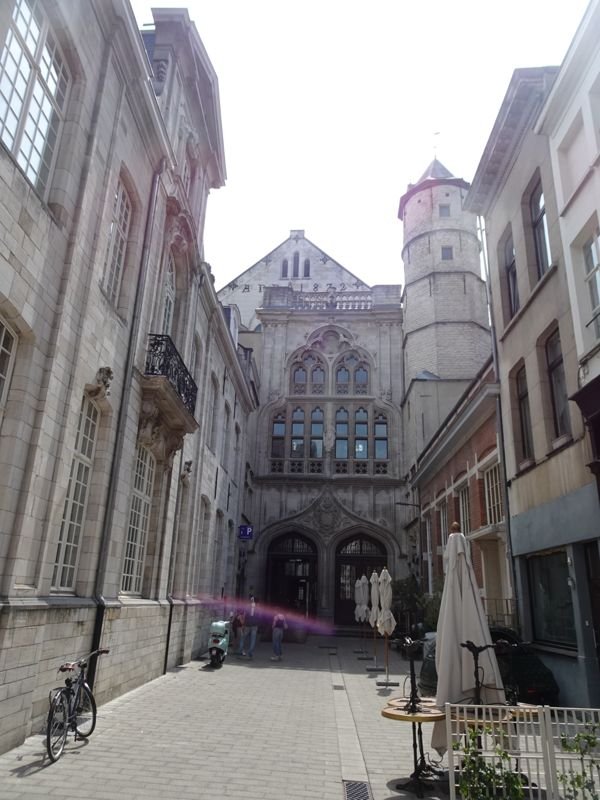
Our next destination was the old Borse; the first purpose built Stock Exchange in the world - 1531. Inge had already described Antwerp as “the Manhattan of the Middle Ages”, with ships waiting four times as long to enter the harbour here as they did in London. This had been a very rich city indeed.
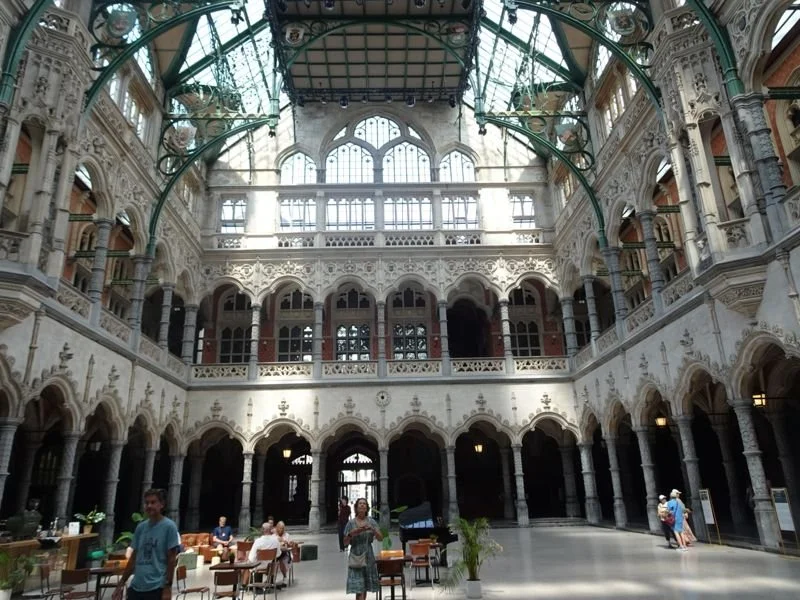
Inside the Borse, we took a break and gazed around us at this beautiful structure.
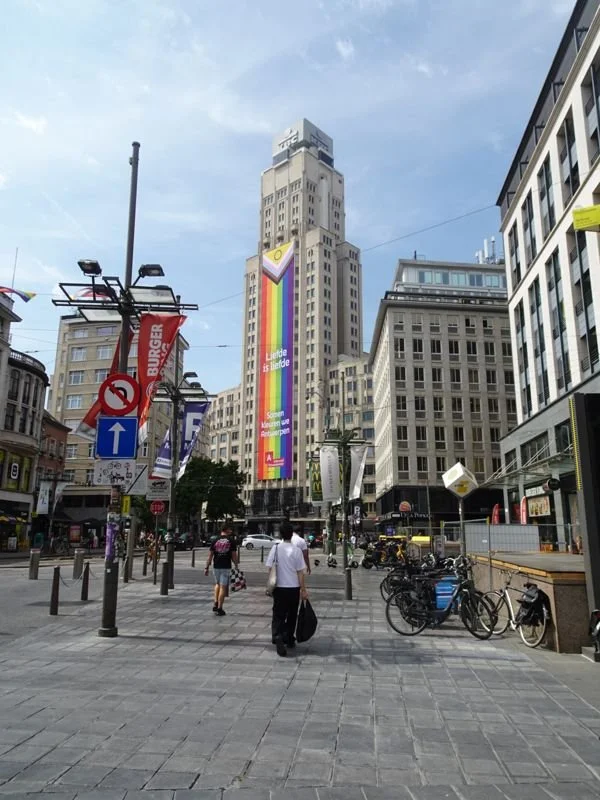
Out the other side, we found ourselves on the main shopping street, with national and international chains along both sides. What was noticeable was the tall skyscraper, built by a man who’d visited Chicago and liked what he saw. Sadly, the building is not currently in use: asbestos has been found in the structure and some renovation is planned.
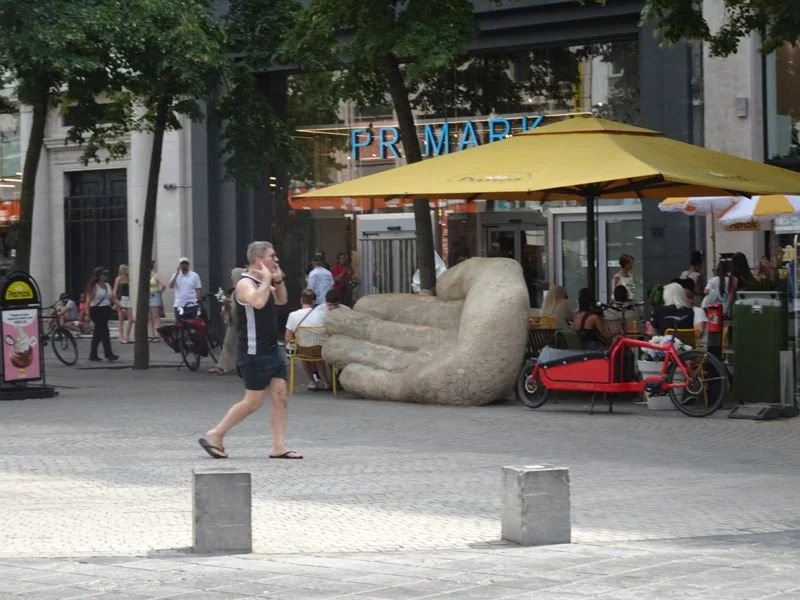
Another hand on the street prompted Inge to remind us of the origin of the name Antwerp: “hand-werfen” (hand throwing) by that giant shown in the fountain.
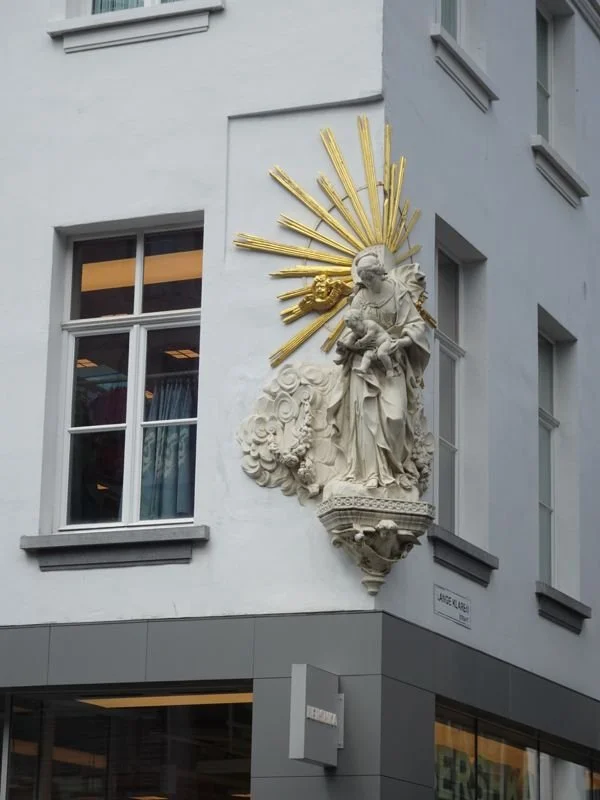
A rather lovely Maria was there on the corner too.
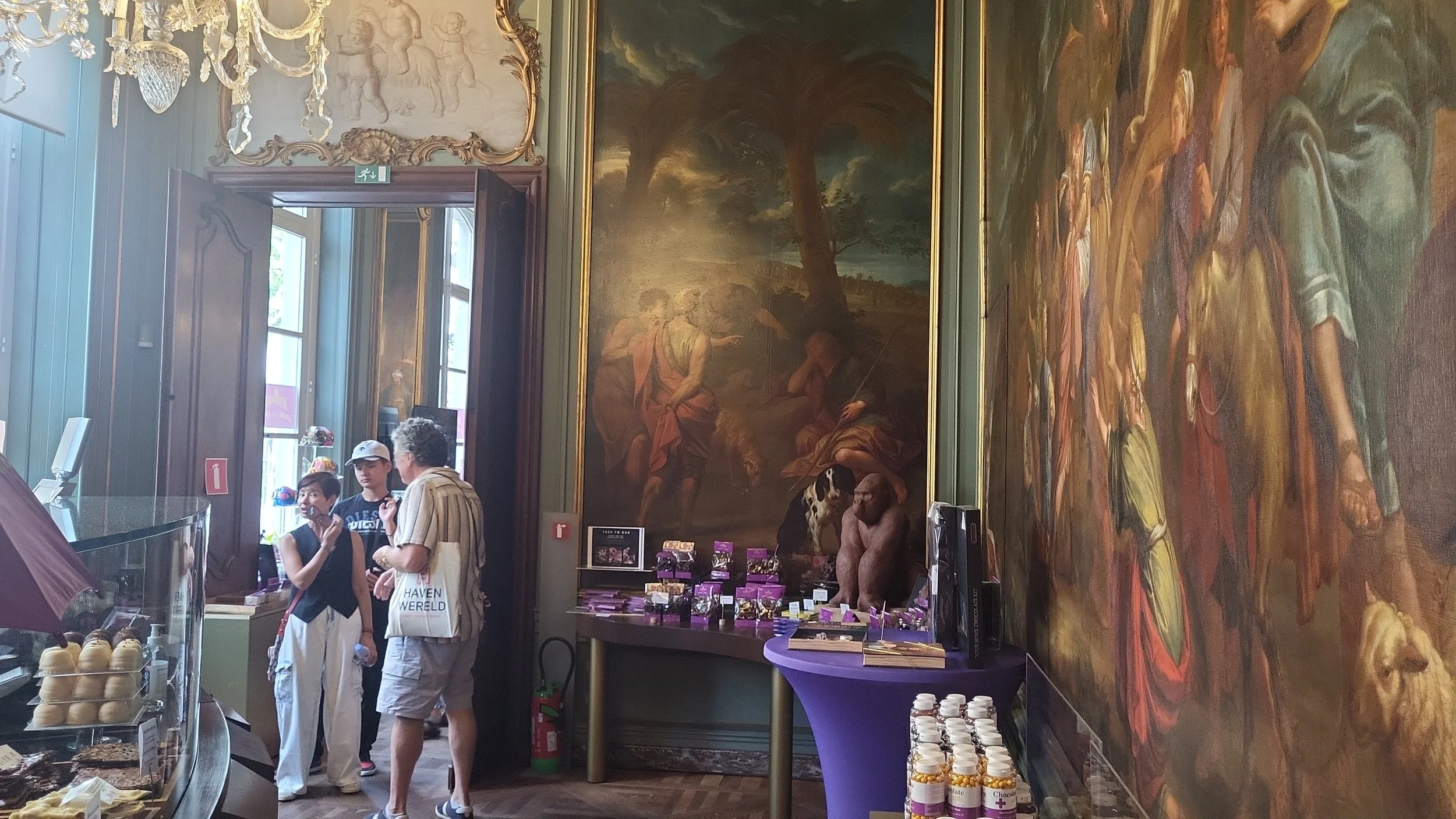
Finally, we stepped inside the cool Chocolate Line shop. An independent chocolatier, this had been voted the best chocolate in the city and though the aroma was wonderful, we were eager to try the taste too!
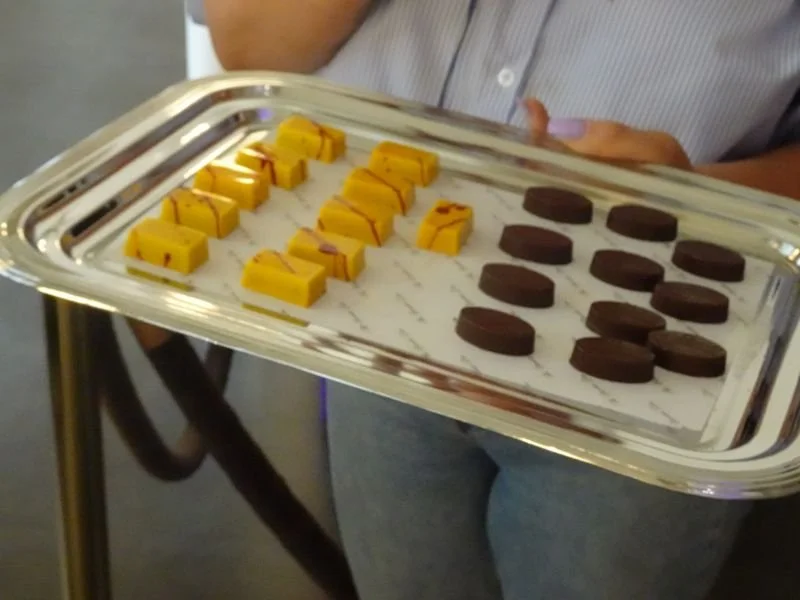
Thankfully, two young women appeared with a tray of dark chocolate truffles and fruit flavoured chocolates.
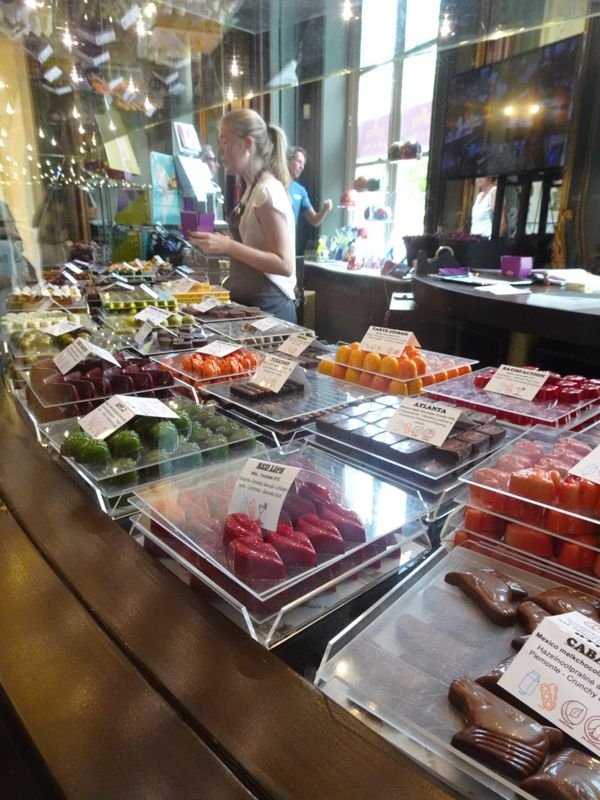
Several purchases were made, though the prices were high: their equivalent to a Mars or Snickers costing well over €5 each and small boxes more like €20. I was not at all confident they would make it back to the ship in these extraordinary temperatures, so resisted the temptation.
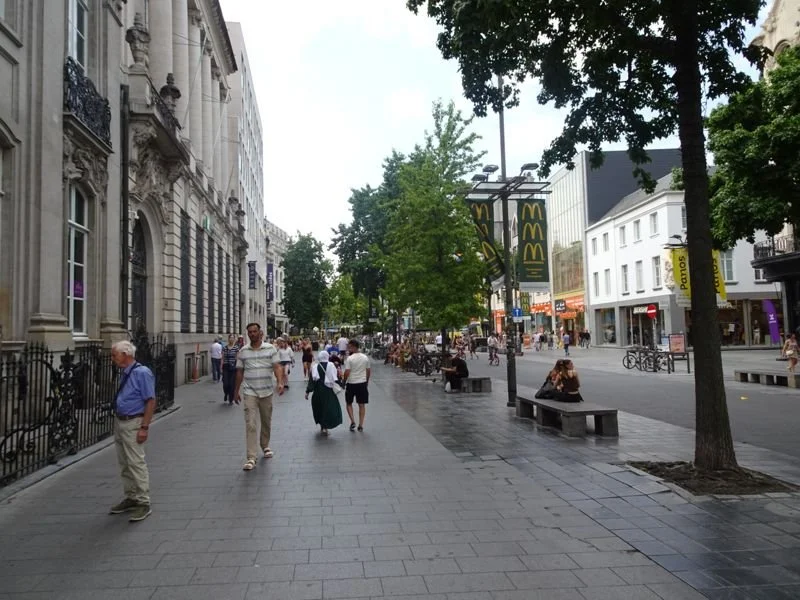
We returned along the shopping street, trying to stay in the shade but still feeling rather overheated by now.
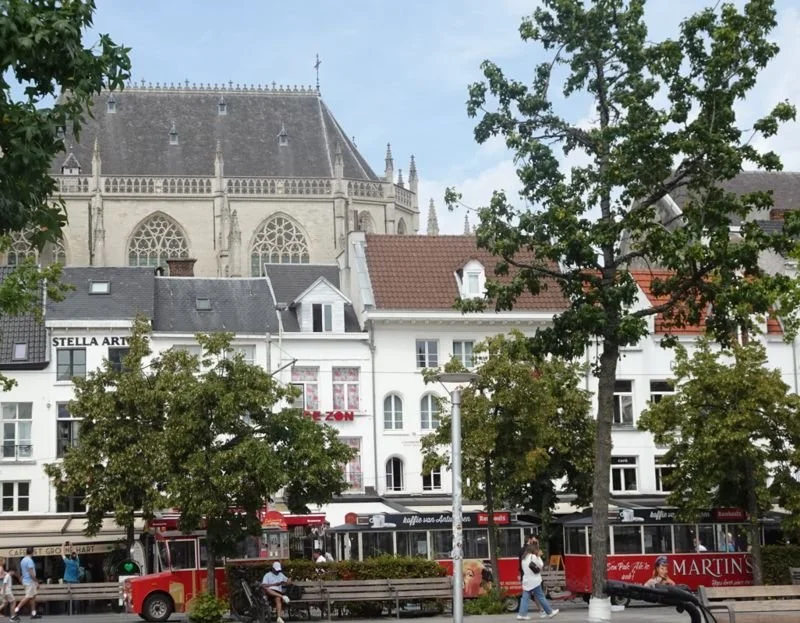
Our way back took us through the Gron Markt, the site of a medieval cemetary until an underground car park was constructed and the whole area concreted over. Inge explained there are plans for a small park here, but so far, nothing has happened. She also pointed out how close to the cathedral were those houses, for when the cathedral was built, no-one thought it would last long!
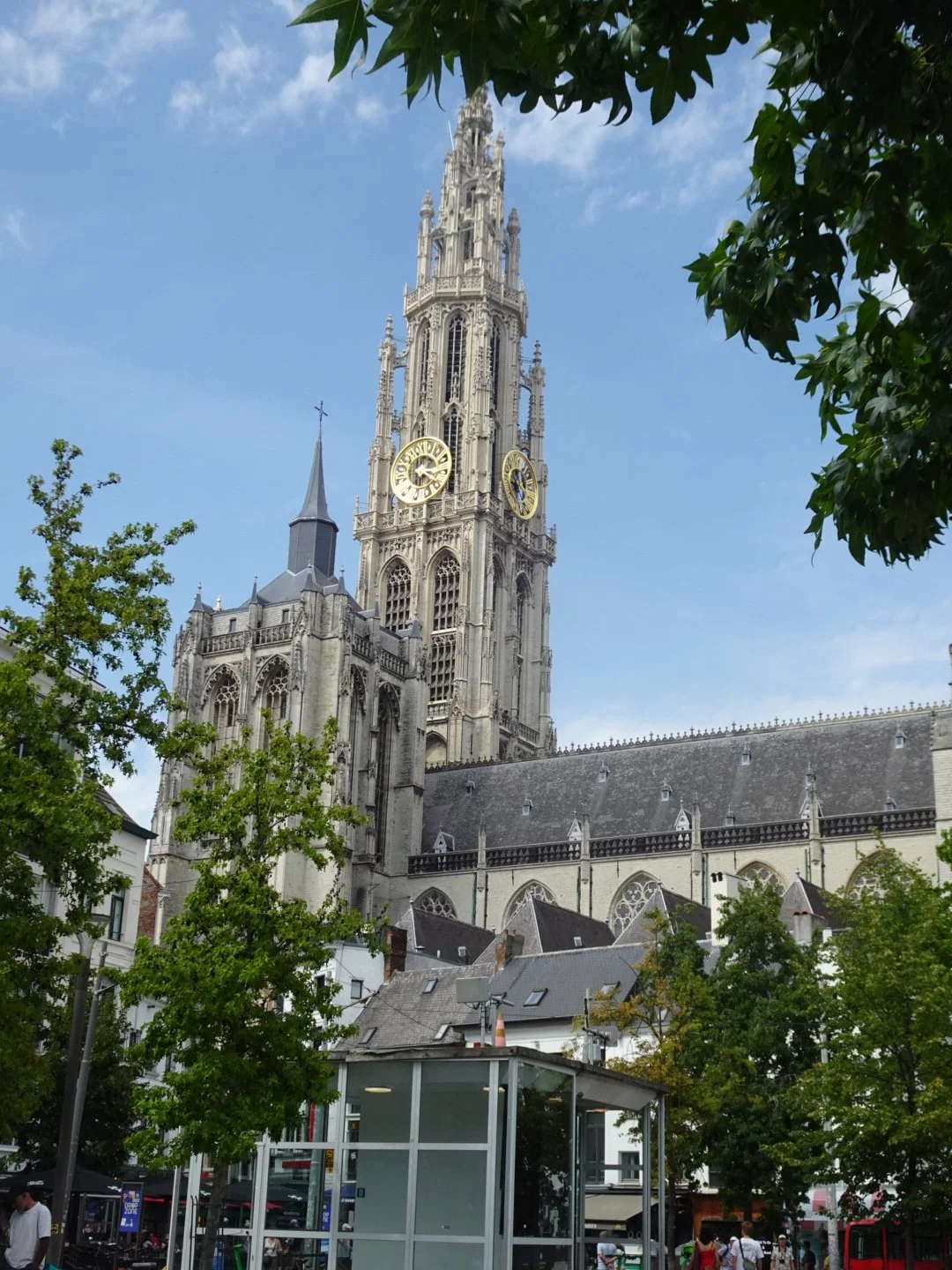
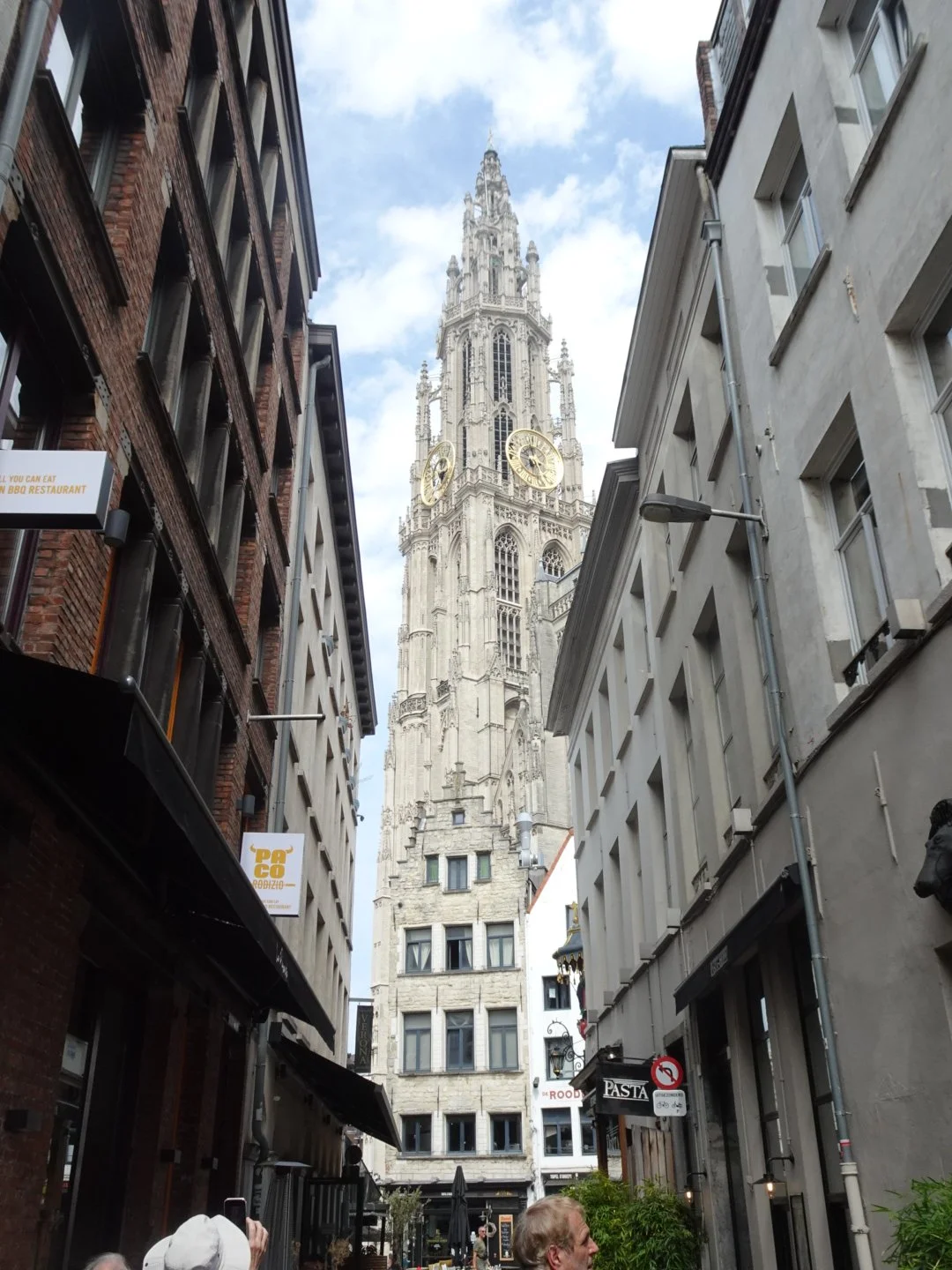
There were lovely views of the tower from here - we learned the clock face is 7m in diameter (useful trivia!)
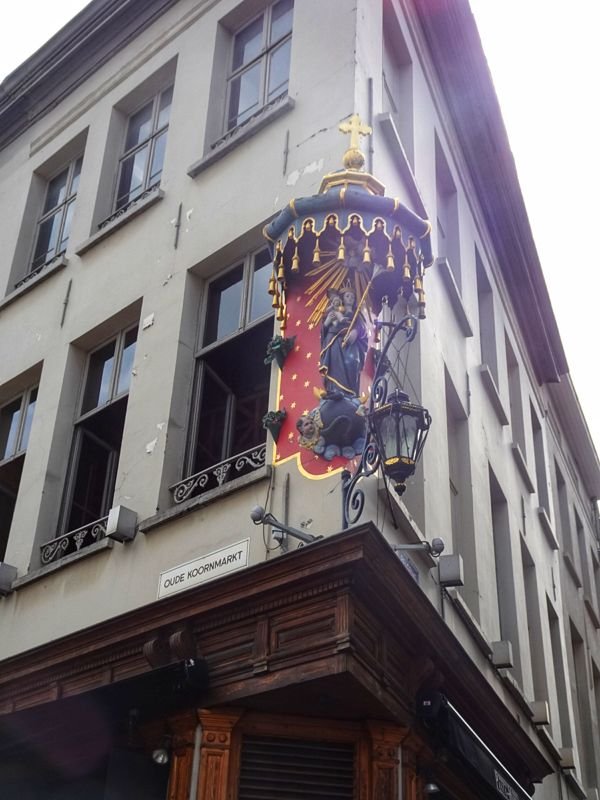
As we turned a corner, we noted another particularly lovely Maria.
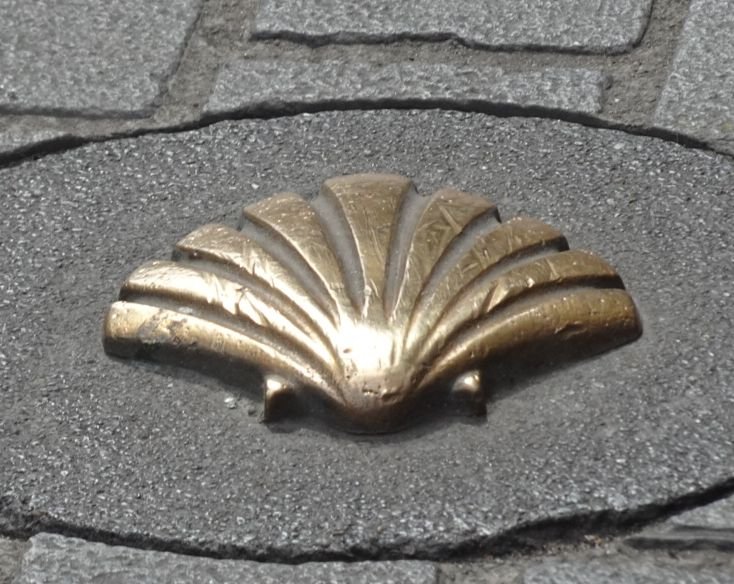
And there, on the pavement at the corner of the street was a brass shell: this is one of the starting points of the Camino, where pilgrims began their journey to Santiago di Compostela.
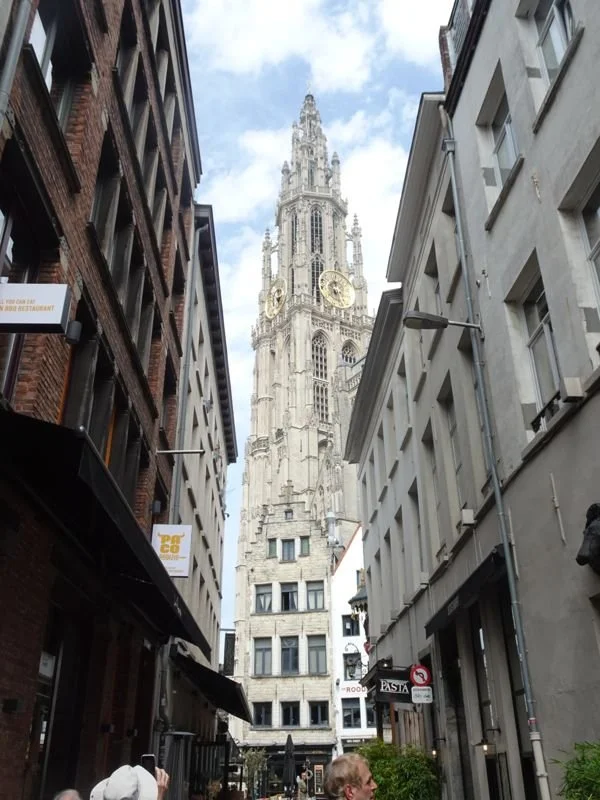
“Turn around and have a look back” Inge suggested, “it’s one of the best views of the Cathedral”
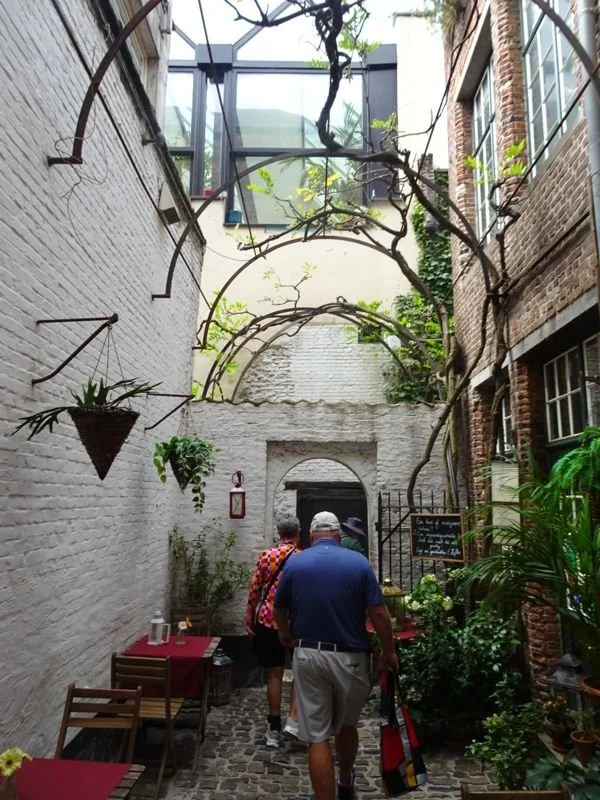
We were about to turn into a series of small passages she referred to as “Pie Street”, for there were a few restaurants here.
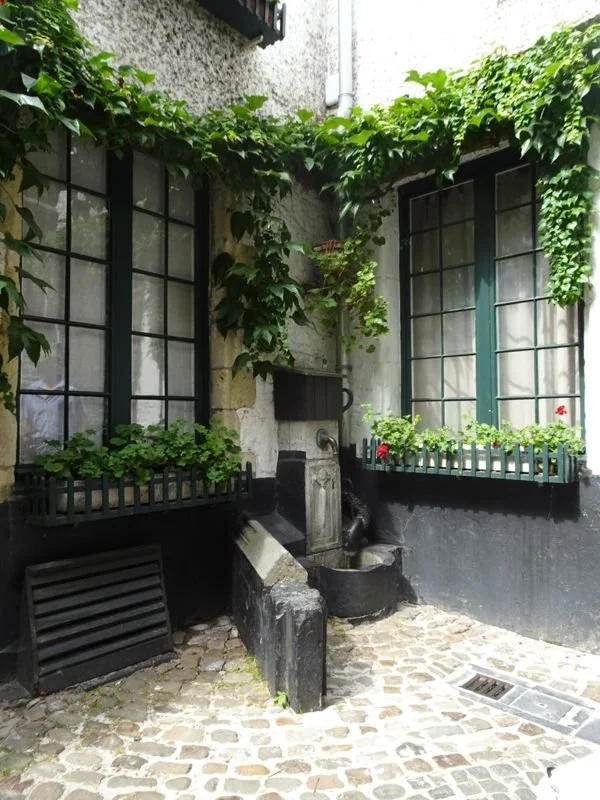
We stopped in a small courtyard where she described how years ago, twenty people had lived in this tiny house. Running water was from the well in the corner, but the water was not clean and sanitation non-exisitent. So, they drank beer…
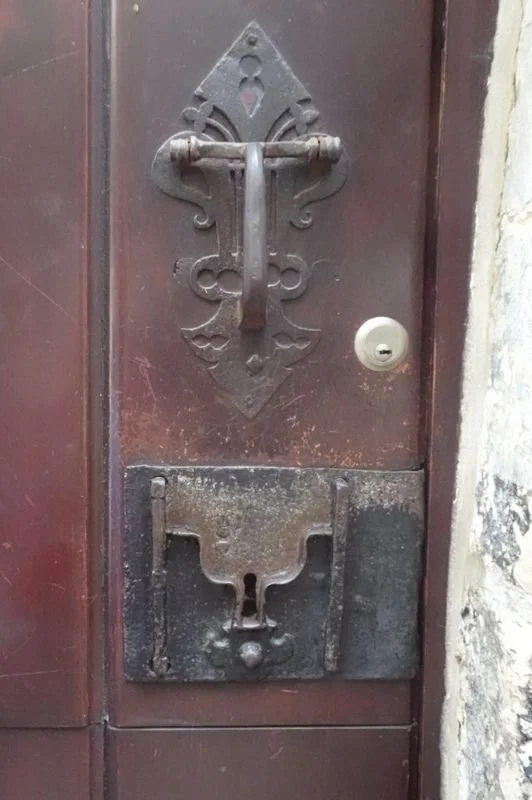
When they came home, they were usually a bit drunk…fitting their key in the keyhole proved challenging, so there was a kind of metal guide to assist…😉
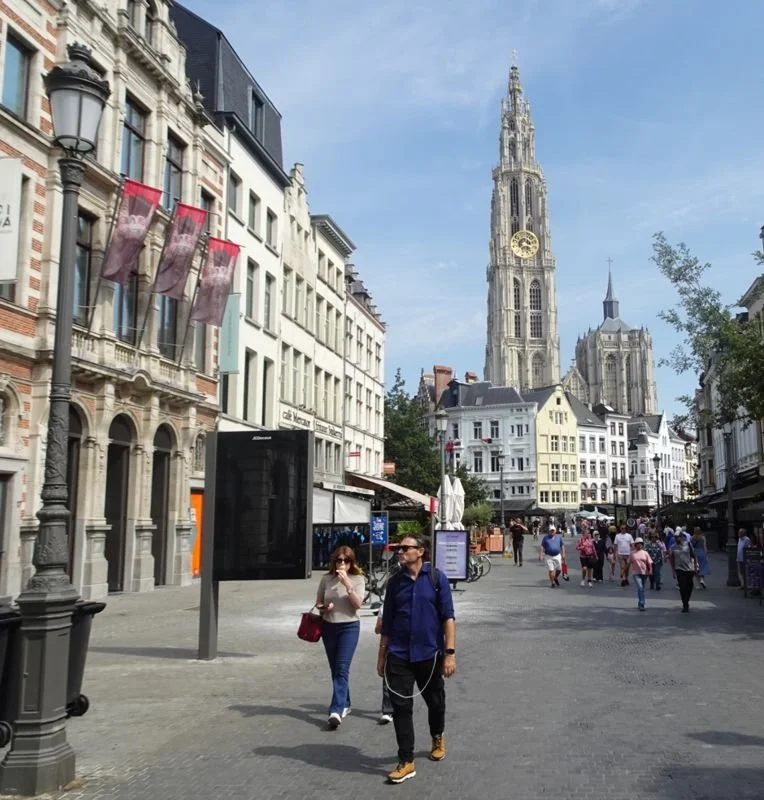
We emerged from the passageway and immediately recognised our location, close to the Grote Markt again. Some of the group peeled off for a cold beer in a nearby pub; the rest of us continued over the road.
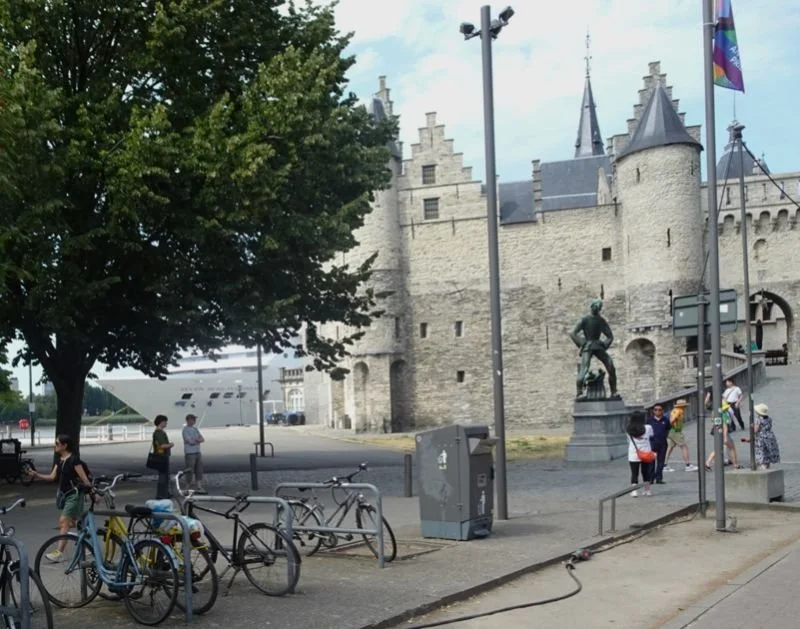
Not only was the Castle right there, but there was a little glimpse of home amongst the trees! Hello Mariner…we’ve had fun but it’s good to be back!